
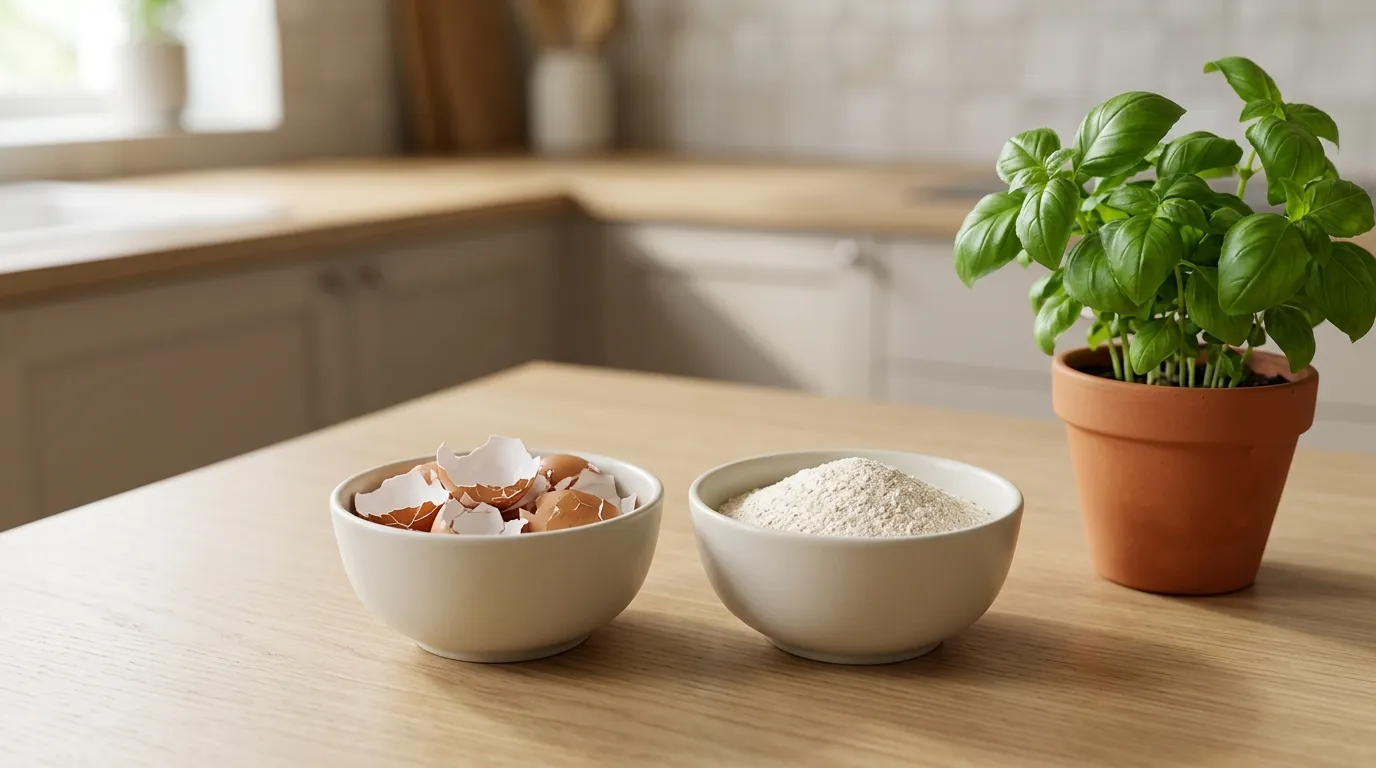
Eggshells for plants are a real source of calcium, just a very slow one. Shells are made mainly of calcium carbonate, the same compound as garden limestone, and in soil they take a long time to break down: University of Illinois Extension says eggshells can take anywhere from one to five years, even when crushed. That makes them a reasonable compost ingredient and a poor quick fix. They won’t cure blossom end rot, they don’t add meaningful nitrogen, and a trial at RHS Wisley found they didn’t stop slugs.
| Claim | What the evidence says |
|---|---|
| Eggshells add calcium | True, slowly. Mainly calcium carbonate; 1 to 5 years to break down (Illinois Extension; NC State Extension) |
| Eggshells prevent blossom end rot | Not in time to help; the usual cause is uneven watering (NC State; Illinois) |
| Eggshells are a nitrogen fertilizer | No meaningful nitrogen; calcium is the main nutrient |
| Eggshells deter slugs | No difference in damage versus no barrier in an RHS trial |
| Grinding helps | Yes: finer particles break down faster (UGA Extension; Penn State on lime fineness) |
| Eggshells change soil pH | Calcium carbonate is a liming material; shells rate 70 to 90% of pure limestone (Penn State) |
Sources: University of Illinois Extension (2025); NC State Extension, Chowan County (2024); UGA Extension, Fulton County (2024); Penn State Extension: Soil Acidity and Aglime; RHS Science: How to stop slugs and snails.
What Is in an Eggshell?
NC State Extension notes that eggshells are composed mainly of calcium carbonate. That is the same compound as calcitic limestone, the most common garden lime. Penn State Extension lists “marl and shells” as liming materials with 70 to 90% of the neutralizing power of pure limestone, and explains that how fast lime works depends on how fine it is.
Two practical consequences follow. Calcium from shells only becomes available as the shell dissolves, and anything made of calcium carbonate nudges soil pH upward as it does. Eggshells contain very little nitrogen, phosphorus or potassium, so they are not a general fertilizer.
Are Eggshells Good for Plants?
They are harmless and mildly useful, mostly over the long term. Calcium is an essential plant nutrient, and Illinois Extension recommends eggshells as a compost ingredient, noting that crushed shells still take a few years to break down but are a better destination than the landfill. UGA Extension adds that simply throwing eggshells in the garden bed won’t yield results quickly, and that the smaller you crush them, the faster they decompose and release calcium.
The catch is need. Many soils already contain plenty of calcium (Illinois Extension says this of Illinois soils), and most potting mixes and fertilizers supply some too. Without a soil test, adding eggshells is a guess. NC State and Illinois both recommend testing soil before adding calcium.
Do Eggshells Prevent Blossom End Rot?
Not reliably. Blossom end rot on tomatoes and peppers is a calcium problem inside the fruit, but NC State Extension explains that it is usually caused by uneven watering, which stops the plant moving calcium that is already in the soil. NC State’s verdict: adding eggshells will not make calcium available to plants in a timely enough fashion to help. Illinois Extension lists the eggshell cure as myth number one.
What actually helps blossom end rot
Water deeply and evenly, especially once plants flower; mulch to keep soil moisture steady; and test the soil before adding any calcium. If a test shows a real shortage, follow its recommendation rather than relying on shells.
Are Eggshells Good for Indoor Plants?
They do little harm in small amounts and little good either. A pot holds a small volume of mix that is replaced every year or two, which is often less time than whole or roughly crushed shells take to break down. Large shell pieces on the surface can also hold moisture and food residue, and moist organic debris on top of the soil is exactly what fungus gnats and molds like; see our guide to mushrooms and fungus in houseplant soil.
- Do: mix a teaspoon or so of finely ground, clean shell powder into fresh potting mix when repotting a medium pot.
- Don’t: scatter large shell pieces on the surface, bury whole shells, or use them on acid-loving plants.
- Better: use a complete houseplant fertilizer for nutrition, and compost shells instead.
How to Use Eggshells for Plants
- Rinse. Wash out egg residue so the shells don’t smell or attract pests.
- Dry. Air-dry, or dry them in a low oven, which also makes them easier to grind.
- Grind fine. Use a blender, coffee grinder or mortar; UGA Extension recommends blitzing them into dust, because finer shells break down faster.
- Add to compost (Illinois and UGA both recommend this) or mix a small amount into soil or potting mix rather than leaving it on top.
- Keep expectations low: think of shells as a slow soil amendment, not a feed.
Shells fit into a wider kitchen-scrap routine; see our guides to homemade plant food, coffee grounds for houseplants, banana peel fertilizer and composting at home.
Eggshell Water and Eggshells in Vinegar
Eggshell water (shells soaked in plain water) is popular online, but calcium carbonate barely dissolves in water, so the liquid carries very little calcium. It is mostly plain water.
Eggshells in vinegar is different chemistry: the acetic acid in vinegar reacts with calcium carbonate, fizzing off carbon dioxide and leaving dissolved calcium acetate. That does put calcium into solution, but we found no extension guidance or trials giving a safe dose for houseplants, and the liquid can stay acidic if unreacted vinegar remains. If you try it, dilute it heavily and use it rarely; a standard fertilizer that contains calcium is a more predictable choice.
Do Eggshells Stop Slugs?
No, according to the best test we found. At RHS Garden Wisley, researchers surrounded lettuces with crushed eggshells, pine bark mulch, copper tape, sharp grit and wool pellets, and left others unprotected. The RHS found no difference in slug and snail damage between protected and unprotected lettuces after six weeks, and concluded these barriers can be unreliable and ineffective.
Which Plants Don’t Like Eggshells?
Because shells are a liming material (Penn State), avoid them around plants that need acidic soil, such as blueberries, azaleas, rhododendrons, gardenias and camellias. Indoors, be cautious with acid-loving houseplants and with plants already showing yellow leaves with green veins, a sign of nutrient lockout that rising pH can worsen. When in doubt, test the soil pH first.
Frequently Asked Questions
Are eggshells good for plants?
Mildly. They add calcium slowly as they break down, which Illinois Extension says can take one to five years. Ground fine and composted, they are a useful soil amendment, but they are not a fertilizer.
Do eggshells add nitrogen to plants?
No. Eggshells are mainly calcium carbonate (NC State Extension) and contain very little nitrogen. Use compost or a fertilizer for nitrogen.
Are eggshells good for indoor plants?
Only in small amounts. Mix a little finely ground shell into fresh potting mix if you like, but don’t scatter pieces on top, where they can attract pests and mold, and don’t use them on acid-loving houseplants.
How do you use eggshells as fertilizer?
Rinse and dry the shells, grind them to powder, and add them to compost or mix them into soil. UGA Extension notes that finer shells break down faster; whole or roughly crushed shells can last for years.
Do eggshells stop blossom end rot?
Not in time to help. NC State Extension says blossom end rot is usually caused by uneven watering, and that eggshells won’t release calcium fast enough. Water evenly and test your soil.
Do eggshells keep slugs away?
No. In an RHS trial, lettuces ringed with crushed eggshells suffered the same slug and snail damage as unprotected plants.
Sources
- University of Illinois Extension: Garden MythBusters, the dos and don’ts of natural remedies (2025)
- NC State Extension, Chowan County: Gardening MythBusters, Eggshells for Calcium (2024)
- UGA Extension, Fulton County: Getting the Most from Eggshells in Your Tomato Garden (2024)
- Penn State Extension: Soil Acidity and Aglime
- RHS Science: How to stop slugs and snails, what works?