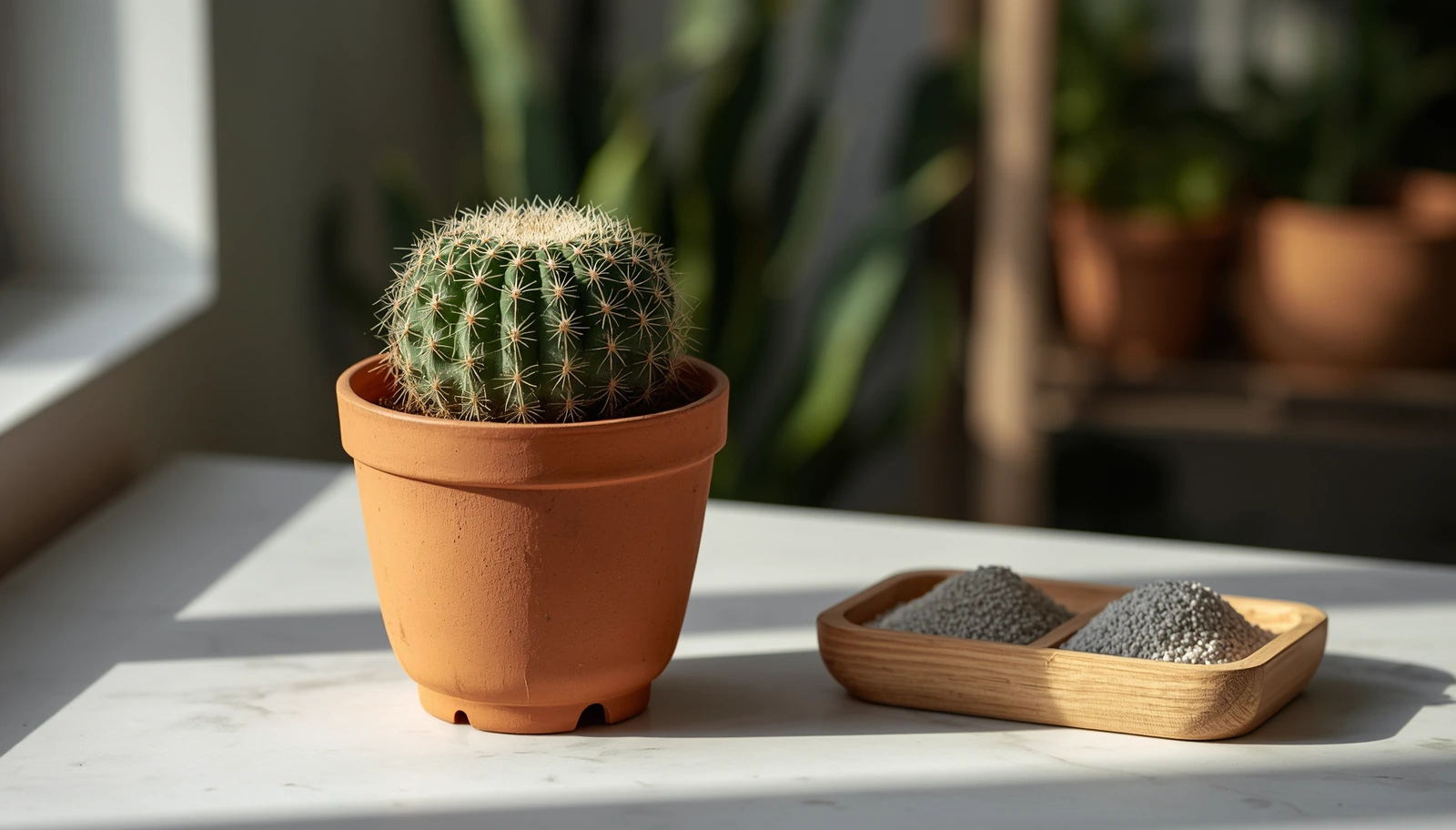
Cactus Care and Grow: The Complete Master Protocol to Stop Root Rot (2026)

<

The number-one reason cacti die indoors is not neglect. It is the opposite: an overwatered plant sitting in moisture-retentive commercial soil inside a glazed ceramic pot with inadequate drainage, placed in a dim corner, spiraling through root rot while its owner assumes they are giving it everything it needs. Every one of those variables is correctable with specific, measurable interventions—and none of them require expertise, only information.

This guide delivers the complete cactus care and grow protocol from the substrate level up: exact soil physics, pot-sizing mathematics, the soak-and-dry method schedule, the light metrics required to prevent structural stretching, a step-by-step propagation protocol with the callus window explained, seasonal dormancy calibration, and a full emergency triage matrix for every failure presentation from yellow mush to skeletal shriveling. Nothing here is vague. Everything here is measurable.

Executive Care Protocol: To grow cactus successfully indoors, select an unglazed terracotta pot sized 10% larger than the current root ball with functional drainage holes. Fill it with a highly porous cactus soil mix consisting of equal parts organic potting soil, coarse sand, and perlite or pumice (by volume) to prevent root zone hypoxia. Employ a strict soak-and-dry method—drench completely, then withhold water until the soil profile is entirely dry 2–3 inches deep. Provide 6+ hours of bright light daily (minimum 2,000+ lumens per square foot or 500+ µmol/m²/s PPFD) to prevent etiolation. Reduce watering cadence to every 4–6 weeks during late autumn and winter dormancy.

Operational Benchmarks: The Data-Driven Cactus Care Matrix

Every recommendation in this guide maps to a measurable parameter. Use this matrix as your reference baseline—any value approaching the pathological threshold column requires immediate intervention.

Cultivation ParameterTarget Operational BaselinePathological Threshold / Warning Sign
Light Radiation6+ hours bright light; 2,000+ lumens/sq ft or 500+ µmol/m²/s PPFD for indoor grow lights, 12–14 hours dailyPale, leaning, elongated stem growth (etiolation); loss of spination density; soft epidermis
Soil Substrate Mix1:1:1 ratio of organic potting soil, coarse sand, and pumice/perlite by volume; pH 6.0–7.0Unamended peat moss or regular potting soil; any mix staying damp more than 72–96 hours
Watering CadenceFully drench only when soil is dry 2–3 inches deep. Active growth: every 14–21 days. Dormancy: every 4–6 weeksCalendar-based watering regardless of soil state; misting with spray bottle; watering on fixed weekly schedule
Container SelectionUnglazed terracotta or clay; wide-base drainage holes; pot feet to elevate above saucer waterSealed glass terrariums; cachepots without drainage; glazed ceramic without drainage holes
Soil Dry-Time WindowSubstrate must reach complete dryness within 48–72 hours post-watering at mid-pot depthSoil remaining damp or cool to the touch past 96 hours signals root zone hypoxia risk
Pot Sizing ThresholdPot diameter exactly 10% larger than the current root ball; 1–2 inches maximum increase at each repotOversized containers that collect unutilized moisture pools in root-free substrate zones
Dormancy TemperatureNight temperatures 8–10°C (46–50°F) with reduced irrigation and zero fertilizationWarm, humid winter conditions forcing metabolic activity and root rot in already-stressed tissue
Fertilizer ProfileLow-nitrogen cactus NPK (e.g., 2-4-6 or 6-4-4) at half-strength, once monthly during active growth onlyHigh-nitrogen all-purpose fertilizer causing rapid, structurally weak vegetative growth susceptible to rot

Container Selection and Sizing: The 10% Rule

Why Pot Size Determines Root Health

The most commonly overlooked variable in indoor cactus care is container volume. When a cactus occupies a pot that is significantly larger than its root ball, the unused substrate surrounding the roots holds moisture that the plant never draws upon. That stagnant moisture creates the anaerobic, low-oxygen environment where root zone hypoxia begins—long before any visible rot is apparent on the surface.

The rule is specific: the pot diameter should be no more than 10% larger than the widest point of the root ball. For a cactus with a 4-inch root spread, that means a 4.4-inch pot—most growers round to the next available size up, typically a 5-inch. At repotting, move up by one container size at a time, never jumping from a 4-inch to an 8-inch regardless of how vigorous the plant appears.

Pro Tip: When buying a cactus from a nursery or big-box store, the plastic grow pot it comes in is almost never the correct long-term container. Nursery substrate is engineered to retain moisture for shipping and display—not for home growing environments where ventilation, humidity, and light are all lower. Repot within 2–4 weeks of bringing the plant home into your own gritty substrate and correctly-sized terracotta.

Material Selection: Terracotta vs. Ceramic vs. Plastic

Unglazed terracotta is the gold standard for cactus cultivation and the recommendation that most distinguishes expert growers from beginners. The porous clay body acts as a passive secondary drainage system: water in the substrate is drawn outward through the clay walls by capillary action and evaporates from the exterior surface, accelerating the substrate’s return to the bone-dry state that cacti require between waterings.

In practical terms, substrate in terracotta reaches the critical dry threshold 30–40% faster than identical substrate in a plastic or glazed ceramic container. During the active growth season, this may shorten the interval between safe watering events from 21 days to 14 days—allowing a slightly more frequent schedule without rot risk. During dormancy, the faster-drying terracotta provides a critical safety margin when seasonal low light and cool temperatures dramatically reduce the plant’s water uptake rate.

Glazed ceramic offers a middle ground—non-porous walls, but often with functional drainage holes and heavier construction that suits larger specimen cacti. Use glazed ceramic only with perfectly calibrated gritty substrate and rigorous soak-and-dry discipline. Plastic pots are viable but require extra caution: the non-porous walls mean all moisture exit is through the drainage holes and the surface, significantly extending dry-time and narrowing the margin for error on watering frequency.

WARNING: The Terrarium Problem. Cacti placed in closed or partially-closed glass terrariums without drainage will die. Sealed glass creates a humidity trap—water evaporating from the substrate cannot escape, the substrate never fully dries, and root rot is guaranteed within weeks regardless of watering discipline. If you want a display vessel, use a decorative cachepot with a nested nursery pot inside. The inner pot provides drainage; the outer vessel provides aesthetics.

The No-Drainage Workaround: Nested Pot Protocol

If you must use a decorative container without drainage holes for aesthetic purposes, the nested nursery pot protocol is the only functional approach. Grow the cactus in a correctly-sized nursery pot with drainage holes, and place that pot inside the decorative container. After each watering event, remove the nursery pot and allow it to drain completely over a sink before returning it to the outer vessel.

For an alternative internal reservoir approach: fill the bottom 1–2 inches of the outer container with a layer of activated horticultural charcoal topped by coarse gravel. This creates a physical air gap between the substrate and any pooled water at the base. The substrate itself should be placed in this arrangement only with the most extreme drainage caution—<cut watering frequency by 30% versus what you would use with a draining container, and check substrate dryness at depth before every single watering event.

Soil Architecture: DIY Gritty Soil Recipes

The Nursery Soil Trap

Commercial “cactus and succulent” mixes sold at garden centers are among the most misleadingly named products in horticulture. The majority are standard potting soil—typically 70–80% peat or coco coir—with a superficial addition of coarse sand or fine grit that improves drainage marginally at best. These mixes are engineered to retain moisture for weeks, which is exactly what nurseries need for the shipping and retail display phase, and exactly what home-grown cacti don’t.

In a commercial greenhouse with professional irrigation systems, high ventilation rates, and dozens of plants per square foot generating ambient humidity, this moisture-retentive substrate functions acceptably. In a home environment—lower light, lower airflow, higher ambient humidity, single plants watered infrequently by hand—this substrate creates the chronic low-level dampness that produces the slow root rot that doesn’t become visible until substantial damage is done.

The Urban Lab 1:1:1 Gritty Cactus Substrate

Combine these three components by volume (not weight) in equal thirds:

  • 1 part organic potting soil — Provides the minimal CEC (cation exchange capacity) for nutrient retention and the microbial baseline for healthy root function. Use a peat-free compost wherever possible; peat’s extreme moisture retention works against you here. A basic coconut coir-based potting mix is the best starting organic component.
  • 1 part coarse horticultural sand — Not play sand (too fine; packs to near-zero porosity). Not builder’s sand. Specifically coarse horticultural or sharp sand with particle size 1–3mm. These angular particles create the persistent interparticle void spaces that allow water to drain through gravity rather than being held by capillary forces.
  • 1 part perlite or pumice — The permanent aeration amendment. Perlite is widely available and inexpensive; pumice is heavier but provides superior drainage and doesn’t compress over time. Either prevents substrate compaction across multiple years and repotting cycles. Never substitute fine vermiculite—it retains moisture and is inappropriate for cactus substrates.

Target performance: Water poured through this substrate from the top should exit through drainage holes within 5–10 seconds. If water pools on the surface or takes longer than 20 seconds to drain, increase the ratio of perlite or coarse sand.

Gravel Topdressing: Function Over Aesthetics

A 1/2-inch layer of decorative gravel mulch over the substrate surface provides two functional benefits beyond appearance: it prevents splash-back of wet substrate onto the cactus stem base during watering events (a common fungal infection pathway), and it accelerates surface drying by creating an insulating air gap that allows the substrate beneath to dry without surface evaporation from the exposed soil competing with subsurface drainage.

Fertilization: The Cactus NPK Protocol

Cacti are adapted to nutrient-poor arid soils. High-nitrogen fertilization produces rapid, structurally weak, water-swollen vegetative growth that cannot support the plant’s spine development and creates soft tissue highly susceptible to rot and pest colonization. Use a low-nitrogen, high-potassium cactus-specific fertilizer with an NPK ratio such as 2-4-6 or 6-4-4—never a general-purpose 10-10-10 or high-N plant food.

Application protocol: dilute to half the manufacturer’s recommended strength and apply once monthly during the active growing season (spring through early autumn). Stop all fertilization completely from late autumn through winter dormancy. The plant’s metabolic rate during dormancy is insufficient to process mineral inputs; unused fertilizer accumulates in the substrate as salts that burn dormant roots and raise the EC (electrical conductivity) of the soil solution to phytotoxic levels.

Key Takeaway: Soil Architecture The substrate is the single variable you control most completely. Commercial cactus mixes fail home growers because they are engineered for nursery conditions. Build the 1:1:1 recipe, confirm drainage in under 10 seconds, and you eliminate the root cause of 70% of all cactus deaths before the plant ever sits in the pot.

The “Soak and Dry” Watering Protocol

Why Misting Kills Cacti

Put the spray bottle down. Misting a cactus does nothing beneficial and multiple things harmful. Cacti absorb water exclusively through their roots—not through their epidermis, spines, areoles, or any surface tissue. A mist of water on the surface of a cactus provides zero hydration to the plant and creates a humid microclimate around the areoles (the spine-producing structures) where fungal spores can germinate and begin attacking the stem tissue.

More critically, misting prevents you from developing the accurate judgment of root zone dryness that soak-and-dry watering requires. If you occasionally mist, the surface appearance of substrate moisture becomes unreliable—the top looks damp from the spray even when the root zone is completely dry. You lose the only visible signal that indicates when to water.

The Soak-and-Dry Method: Execution

The soak-and-dry method is not a watering frequency; it is a protocol with two phases separated by a soil-state verification step. Phase 1: water thoroughly. Phase 2: don’t touch the plant again until the substrate meets dryness criteria. The interval between phases is not fixed—it varies by season, pot size, substrate composition, humidity, and temperature.

Phase 1 — The Soak: Water slowly and thoroughly until water exits the drainage holes freely and steadily—not a few drops, but actual flow, for 5–10 seconds. This ensures complete saturation of the entire substrate column, not just the surface. Bottom-watering (placing the pot in a water basin for 15–20 minutes to absorb moisture from below) is an excellent alternative that ensures complete substrate saturation without surface disturbance.

Phase 2 — The Dry: Do not water again until the substrate is completely dry at a depth of 2–3 inches. Use one of two verification methods: the wooden skewer test (insert a bamboo skewer to 3 inches—if it emerges with any moist soil adhering, wait longer) or a soil moisture meter (wait until it reads 1–2 on a 1–10 scale before rewatering).

The Seasonal Watering Matrix

Season / Growth PhaseTypical Watering IntervalKey Adjustment Triggers
Spring (Active Growth Onset)Every 14–21 days; resume after first spring watering as growth resumesNew growth visible; resume watering after dormancy with a single moderate soak (not a full drench) to re-activate dormant root hairs gradually
Summer (Peak Active Growth)Every 14–21 days if in gritty substrate; as frequently as every 10–12 days in high heat (90°F+)Substrate dries faster in high temperatures; verify dryness at depth before each watering regardless of schedule
Early Autumn (Tapering Off)Every 21–28 days as temperatures drop and day length shortensBegin reducing fertilization in September; substrate takes longer to dry as light and temperature decrease
Late Autumn / Winter (Dormancy)Every 4–6 weeks—some desert-adapted cacti require zero water for the entire dormancy period if temperatures are cool enoughWarm indoor environments force faster substrate drying but also force metabolic activity the plant cannot support without root rot risk; prioritize cool night temperatures
Pro Tip: The most dangerous period for overwatering cactus indoors is the first warm week of spring when new growth appears. Growers, relieved that the plant survived winter, water generously in celebration. The root system exiting dormancy has reduced surface area and uptake capacity—it cannot process a full-volume watering until 2–3 weeks after growth resumes. The first post-dormancy water should be a moderate drench, not a full soak, and the usual 14-day interval should not resume for at least 2–3 watering cycles.

Light Physics: Preventing and Fixing Etiolation

What Is Etiolation?

Etiolation is the morphological response to light deprivation: the cactus stem elongates rapidly, becoming thinner and paler, as the plant expends stored carbohydrates attempting to grow toward a light source it cannot reach. Spination density decreases—the spine-producing areoles are spaced further apart on the elongated stem. The epidermis becomes soft, thin, and less resistant to pathogen entry.

Critically, etiolation is permanent. The stretched, deformed section of stem cannot retroactively compact back to normal proportions—the structural distortion is locked into the cells that formed during light starvation. The only options are preventing further etiolation by improving light conditions, or removing the deformed section through a controlled beheading procedure (detailed below).

Indoor Light Metrics: What Your Cactus Actually Needs

Six hours of what most people call “a sunny windowsill” is frequently insufficient for indoor cactus cultivation. Direct outdoor summer sunlight delivers 50,000–100,000 lux; a south-facing window in a temperate climate on a clear day delivers 5,000–20,000 lux—already a 50–80% reduction. In northern latitudes, through winter glazing, behind a sheer curtain, or on a cloudy day, light levels at the windowsill drop to 1,000–3,000 lux—well below the threshold where cacti maintain compact growth.

For indoor environments where natural light is insufficient (any apartment without unobstructed south-facing windows, any growing space north of 45° latitude in winter), LED grow lights are the functional solution. Target metrics: 2,000+ lumens per square foot or 500+ µmol/m²/s PPFD for 12–14 hours daily. Full-spectrum LED panels at 18–24 inches above the plant canopy typically achieve this range. Avoid “decorative” LED grow bulbs—measure with a PAR meter or dedicated PPFD meter app before trusting any light source for cactus cultivation.

Fixing a Leggy Cactus: The Beheading Procedure

When a cactus has developed a permanently-etiolated section—a narrow, pale, distorted growth above a normal base—the most effective correction is removing the damaged growth through a clean top cut, allowing the base to produce new, compact growth from the areoles below the cut line. The severed top, once callused, can be rooted as a cutting.

  1. Identify the cut point. Locate the transition between normally-formed compact growth (base) and the elongated, thin-walled etiolated section. The cut should be made at or just above this transition point—in the etiolated section—leaving the normal-growth base intact.
  2. Sterilize your blade. Wipe a sharp knife or box cutter thoroughly with 70% isopropyl alcohol and allow to air-dry. This eliminates fungal spores and bacterial contamination from the cut surface. Never use a serrated blade—the tearing damage invites rot at the wound surface.
  3. Execute a single, clean horizontal cut. Cut straight through the stem in one smooth motion, perpendicular to the growth axis. Hesitation or sawing creates ragged wound surfaces that are slower to callus. The cut top (the etiolated section) can be saved for propagation or discarded.
  4. Allow the base to dry and seal. Place the cut base in bright indirect light (not direct sun immediately post-cut) and withhold water completely. A new protective callus will form over the cut surface within 5–7 days. Do not water until the callus is fully dry and the plant shows signs of new areole activity.
  5. Callus and root the top cutting (optional). Set the severed top section in a cool, shaded location with good airflow—not in soil, not in water—for 3–7 days until the cut end forms a hard, dry callus layer. This callus window is non-negotiable: planting a fresh cut end immediately into soil creates direct soil-to-vascular contact and virtually guarantees rot at the wound site.
  6. Plant the callused top cutting. Once the callus is complete (dry, tan-colored, firm to the touch), place the cutting on the surface of dry gritty substrate. Do not push it into the soil—lay it on top, allowing root initials to develop from the callus naturally. Place in bright indirect light.
  7. Initiate the first watering at root confirmation. After 7–14 days, gently tug the base of the cutting. Resistance indicates root development. Only then apply the first light watering—a small amount around the base, not a full drench. Transition to normal soak-and-dry cycles after 2–3 weeks of confirmed root activity.
  8. Transition to direct light gradually. Over 2–3 weeks post-rooting, incrementally increase light exposure to the full intensity the mature plant will receive. Abrupt transition from rooting conditions to direct sun can cause sunscald on propagules that have not yet developed the UV-protective pigmentation and epidermis thickness of fully-established plants.
Key Takeaway: Etiolation Stretching is a one-way door—existing distortion cannot be reversed. The only correct responses are preventing further etiolation (fix the light) and removing existing etiolated growth (the beheading procedure). A cactus beheaded at the correct point will produce new, compact growth from the base areoles within 4–8 weeks under adequate light conditions.

Step-by-Step Propagation Protocol

Taking Cuttings and Removing Offsets

Most cacti produce propagule material in two forms: stem or pad cuttings from the main body, and lateral offsets (pups) that emerge from the base or areoles of the parent plant. Both are effective propagation material; offsets typically root faster because they often arrive with rudimentary root initials already forming at their base.

The critical rule for removing both types: cut, don’t tear. Tearing an offset from the parent plant rips vascular tissue on both the parent and the offset, creating ragged wounds that are slow to callus and highly susceptible to fungal colonization. A single clean cut with a sterile blade is always preferable to mechanical separation.

  1. Select healthy propagule material. Choose cutting material from healthy, compact growth sections—never from etiolated, discolored, or soft tissue. Pads (as in Opuntia) should be at least one full pad-section old (not the most recently formed pad); offsets should be at least one-third the diameter of the parent cactus base to ensure adequate stored reserves for independent establishment.
  2. Sterilize all cutting tools. Wipe the cutting blade with 70% isopropyl alcohol and allow to air-dry. Re-sterilize between cuts if removing multiple propagules—this prevents transferring potential pathogen from one wound site to another.
  3. Make a clean, decisive cut. For stem cuttings: cut at a natural constriction or internode, not through the thickest part of a joint. For pad-producing cacti: cut at the base joint where the pad meets the parent stem. For offsets: cut as close to the parent stem as possible without damaging the parent’s epidermis, leaving the maximum possible base on the offset.
  4. Allow the cutting to callus in open air. Place the cutting in a dry, shaded, well-ventilated location—<not in soil, not in water, not in a humidity dome. Small cuttings (opuntia pads, small offsets): 3–5 days. Large stem sections: 5–10 days. The callus is the single most critical factor in propagation success—it is the physical barrier that prevents substrate-borne pathogens from entering the vascular system through the cut surface.
  5. Set the callused cutting on dry gritty substrate. Lay pads flat (bury no more than 0.5–1 inch of base). Stand columnar cuttings upright with the callused base resting on (not buried in) the dry substrate surface. The roots will seek out the substrate naturally—forcing the cutting deeper does not accelerate rooting and increases rot risk. Add a small amount of coarse gravel at the base for stability if needed.
  6. Provide bright indirect light; withhold water completely. Place the cutting in bright indirect light—not direct sun during the rooting phase. The absence of a root system means the cutting cannot replace any water lost through the epidermis; direct sun at this stage causes desiccation stress before roots form. Do not water for the first 7–14 days.
  7. Confirm rooting before the first watering. After 7–14 days, test for rooting by applying gentle upward pressure to the cutting base. Resistance confirms root development. Deliver the first watering—a small, targeted amount around the base perimeter, not a full drench—only after rooting is confirmed. Transition to the standard soak-and-dry schedule after 2–3 weeks of established rooting.
  8. Transition to direct light gradually. Over 2–3 weeks post-rooting, incrementally increase light exposure to the full intensity the mature plant will receive. Abrupt transition from rooting conditions to direct sun can cause sunscald on propagules that have not yet developed the UV-protective pigmentation and epidermis thickness of fully-established plants.
Pro Tip: Opuntia pads (prickly pear species) are among the fastest-rooting cactus cuttings but also carry the plant’s most irritating spines—the tiny, barbed glochids that embed in skin and are nearly impossible to remove. Handle pads exclusively with thick leather gloves, folded newspaper, or kitchen tongs. Never handle them barehanded regardless of how gentle you intend to be. A single brief contact with a glochid-covered pad can embed hundreds of invisible spines in fingers, palms, and wrists.

Dormancy and Seasonal Recalibration

Reading the Dormancy Signals

Cacti do not announce dormancy—they demonstrate it through a cluster of concurrent signals: new growth rate slows to zero, the substrate takes noticeably longer to dry between waterings (reduced metabolic uptake), and night temperatures in the growing environment drop below 50°F (10°C). Photoperiod shortening in autumn (days becoming shorter) is the primary environmental trigger for dormancy initiation in most desert-adapted species.

Attempting to force active growth through the dormancy period—with heat mats, extended grow light hours, or increased watering and fertilization—produces weak, pale, water-logged tissue that is maximally vulnerable to the first pathogen or temperature stress it encounters. Many indoor cacti that “mysteriously” die in late winter or early spring were actually killed by the cumulative damage of forced winter growth destabilizing their immune function.

The Dormancy Care Protocol

  • Stop fertilizing completely from late September or October in Northern Hemisphere climates. Do not resume until consistent new growth confirms the plant has exited dormancy in spring (typically March–April).
  • Reduce watering to 4–6 week intervals. If the plant is in a genuinely cool location (below 50°F nights), some desert-adapted species can tolerate the entire dormancy period (November–February) without a single watering. Check substrate dryness at depth with the skewer test regardless of interval.
  • Provide cool nights where possible. A night temperature of 8–10°C (46–50°F) is the target for dormancy induction and maintenance. Unheated spare bedrooms, garages kept just above freezing, or placing plants near (but not directly against) cold windows in winter can provide this diurnal temperature drop. This is the signal that triggers the physiological rest that gives desert cacti their longevity—without seasonal cold, they accumulate metabolic stress over years that manifests as chronic poor health.
  • Do not move plants dramatically during dormancy. Relocating a dormant cactus from its winter position to a new location involves compounding stressors (root disturbance from moving, new light conditions, potential temperature change) that can trigger dormancy-exit responses the plant cannot sustain without adequate warmth and light to fuel them.

Semi-Hydroponics with LECA: The Growing Method for Serious Indoor Collectors

LECA (Lightweight Expanded Clay Aggregate) semi-hydroponic cultivation has become a significant trend in the indoor cactus community and offers genuine practical advantages for growers who find soil-based substrate management challenging. Clay balls do not compact, do not decompose, cannot hold excessive moisture in micropores, and provide excellent root zone aeration.

The transition protocol for soil-grown cacti into LECA:

  • Remove the plant from its soil and thoroughly rinse all soil from the root system with lukewarm water. Complete soil removal is essential—any remaining soil creates moisture-retaining pockets in the LECA matrix.
  • Allow the bare root system to air-dry for 24–48 hours before introducing it to LECA. Dry root tips are more resilient during the aquatic adaptation phase.
  • Pre-soak LECA clay balls in clean water for 24 hours to saturate the porous clay structure, then rinse again before use.
  • Plant the cactus with the root ball in LECA inside a net pot or directly in a LECA-filled decorative container. Maintain a passive reservoir of water at the very base—only 0.5 to 1 inch maximum. The LECA above the water line wicks moisture upward by capillary action, keeping root tips damp without root submersion.
  • Allow 4–6 weeks for existing soil roots to transition into “aquatic roots” adapted to the LECA environment. During this period, the plant may look stressed—this is normal as it converts its root architecture. Do not add fertilizer during this transition.
  • After the adaptation period, add diluted cactus fertilizer to the reservoir water at 1/4 standard strength. Change the reservoir water completely every 2–3 weeks to prevent salt accumulation and algae growth.

LECA advantage for busy growers: Once established, the passive reservoir system self-regulates moisture availability. Plants take what they need; unused water sits in the reservoir below the root zone. Overwatering in the traditional sense becomes nearly impossible. The primary maintenance becomes monitoring reservoir level and refreshing the nutrient solution.

Repotting Protocol: The Bubble Wrap Method

When to Repot

Repot when roots visibly emerge from drainage holes, when the plant has become top-heavy and unstable in its current container, or when substrate quality has deteriorated (old substrate compacts, loses drainage capacity, and accumulates salt from years of fertilization). Most cacti benefit from repotting every 2–3 years in active growth. Always repot in spring at the onset of the growing season, never during dormancy—the root system needs active metabolic capacity to recover from repotting disturbance.

  1. Prepare your handling protection. Wrap the cactus body in several layers of folded newspaper or bubble wrap before any handling. For columnar cacti, create a paper tube around the body for hand-free lifting. Kitchen tongs work well for small specimens. Thick leather gloves alone are insufficient for many species with long, hooked, or glochid-bearing spines.
  2. Withhold water for 2–3 days before repotting. A slightly desiccated root ball shrinks fractionally, making it easier to remove from the pot without root damage. Dry roots also tolerate the disturbance of repotting better than turgid, water-filled roots.
  3. Remove the plant and inspect the root system. Gently loosen the root ball from the pot walls with a blade or chopstick around the perimeter before attempting to extract the plant. Once out, examine roots: white or cream-colored firm roots are healthy; brown, black, or mushy roots are diseased and must be removed with sterile shears before replanting.
  4. Prepare the new pot with drainage layer. Add a small layer of coarse gravel or broken pot shards over the drainage holes before adding substrate. This prevents substrate from gradually washing through and clogging the drainage outlet.
  5. Set the plant at the correct depth. The cactus should sit at the same depth it was growing previously—or very slightly higher. Never bury the stem deeper than it was before. The soil line should be at the base of the stem (or the green growing tissue for columnar cacti), leaving the spined portion fully exposed.
  6. Withhold water for 7–14 days post-repotting. Repotting inevitably damages some fine root hairs. These damaged tips are vulnerable to rot if exposed to moisture immediately. Allow 1–2 weeks of dry recovery before the first post-repot watering, which should be moderate rather than a full drench. Resume normal soak-and-dry schedule after the third watering.

Pest Identification and Elimination

Mealybug Infestations

Mealybugs are the most common indoor cactus pest and are visible to the naked eye as white, cottony, waxy clusters nestling in the areoles, between spines, or at the base of the plant where the stem meets the substrate surface. They are sap-sucking insects that weaken the plant by drawing fluids from the vascular tissue, and they excrete honeydew that encourages secondary fungal infections at feeding sites.

Treatment: dip a cotton swab or cotton ball in 70% isopropyl alcohol (not rubbing alcohol at lower concentrations—70% is the correct dilution for membrane disruption) and physically dab every visible mealybug cluster. The alcohol dissolves the waxy protective coating and kills the insect on contact. Repeat every 3 days for 2–3 weeks to catch hatching eggs that survive the initial treatment. Isolate the affected plant from your collection immediately—mealybugs spread rapidly between plants in proximity.

Cochineal Scale

Cochineal scale (Dactylopius coccus and related species) presents as immobile, red-bodied, waxy-coated bumps on cactus pads and stems. When crushed, they release a distinctive bright red-crimson dye (historically used as a textile colorant). Like mealybugs, they are sap-suckers that weaken plant tissue and create entry points for pathogens.

Treatment: physically remove visible scale with a soft brush, then apply 70% isopropyl alcohol with a cotton swab to the affected areas. For heavy infestations covering large surface areas, insecticidal soap (diluted per label instructions) applied as a gentle spray is more practical than swab treatment. Repeat treatment at 5–7 day intervals for 3–4 cycles.

The Emergency Triage Matrix: Diagnosing What’s Killing Your Cactus

The two most common cactus emergency searches—”why is my cactus yellow and soft” and “why is my cactus shriveled and wrinkled”—represent the opposite ends of the watering failure spectrum. The table below provides the differential diagnosis and triage protocol for both and for the three other most common failure presentations.

Visual Plant SymptomPrimary Root-CauseCorrective Triage Protocol
Pads/stems are yellow, translucent, soft, and detach at the slightest touch.Advanced overwatering / early-to-mid root rot. Plant tissue cells are rupturing from accumulated moisture; roots have lost oxygen access in saturated substrate.Emergency Rescue: Remove from pot immediately. Inspect root system—white/cream roots are viable, black/mushy roots must be excised with sterile shears. Allow the bare plant to air-dry in a shaded, ventilated location for 48 hours. Repot in completely dry gritty 1:1:1 substrate in a correctly-sized terracotta pot. Withhold water for 14 days minimum. Then apply a single small-volume watering; assess root recovery before resuming soak-and-dry schedule.
Pads/stems appear shriveled, thin, wrinkled, and physically crisp to the touch.Severe underwatering. The cactus has depleted the internal water storage cells in its parenchyma tissue beyond the recovery threshold and is visibly desiccated.Execute a thorough soak-and-dry watering immediately, ensuring complete drainage. For severely desiccated plants, a 20-minute bottom-water soak can more effectively rehydrate a dried-out root system than top watering alone. Foliage should plump visibly within 24–48 hours of effective watering. If no plumping occurs within 72 hours, inspect the root system—desiccation may have caused root-hair die-off requiring the same bare-root recovery protocol as root rot rescue.
Stem is stretching long, thin, pale, and leaning dramatically toward the window.Etiolation—severe light deprivation. The plant is expending stored carbohydrate reserves in a futile attempt to reach adequate light through stem elongation.Immediately move to the highest available light position. If natural light is insufficient: install an LED grow light delivering 500+ µmol/m²/s PPFD at 12–14 hours daily. The existing deformed stretch cannot be reversed; prevent further damage while the base remains compact. If the deformation is severe, execute the beheading procedure detailed in the Light Physics section above.
White, cotton-like fuzzy clusters in areoles or leaf joints; fine webbing.Mealybug infestation. Sap-sucking insects using the areoles and spine bases as protected feeding and breeding sites.Dab every visible cluster with 70% isopropyl alcohol on a cotton swab. Isolate from the rest of your plant collection immediately. Repeat every 3 days for 2–3 weeks to address hatching eggs. For heavy infestations, use a diluted neem oil or insecticidal soap spray as a supplementary treatment to the isopropyl alcohol approach.
Red, waxy, immobile bumps on pads or stems; red dye if pressed.Cochineal scale infestation. Sap-sucking crustaceans protected by a waxy red-pigmented shell.Physically scrape visible scale with a soft toothbrush, then treat the area with 70% isopropyl alcohol. For wide-coverage infestations: diluted insecticidal soap spray applied thoroughly to affected surfaces, repeated every 5–7 days for 3–4 treatment cycles. Isolate from collection during treatment.

The Community Pain Point Diagnosis: Over or Under Watered?

This question generates more forum posts, Reddit threads, and online searches than any other cactus care question. The differential diagnosis is simple once you know what you’re looking at:

Visual Quick-Reference: Overwatered vs. Underwatered

Diagnostic FeatureOverwateredUnderwatered
TextureSoft, mushy, translucent; tissue collapses under gentle pressureFirm but wrinkled, crisp, papery in severe cases
ColorYellow, gray, or brown; bleached appearanceDuller green, darker than normal; color concentrated rather than bleached
Physical behaviorSegments or pads drop at minimal contact; stem base softPlant feels lighter than usual when lifted; pads feel thin
Substrate conditionStill moist or damp at depth; may smell slightly sulfurousCompletely dry and pulling away from pot edges
RecoverySlow; requires bare-root inspection and 14-day dry recoveryFast; visual plumping within 24–48 hours after thorough watering

Frequently Asked Questions

How often should you water a cactus indoors?

There is no fixed schedule—watering is triggered by substrate dryness, not calendar dates. During active growth (spring and summer), this typically means every 14–21 days in gritty substrate; during winter dormancy, every 4–6 weeks or less. Always verify dryness at 2–3 inches depth with the skewer test before each watering event.

Why is my cactus growing tall and skinny?

This is etiolation—structural stretching caused by insufficient light. The plant is spending stored carbohydrates attempting to reach a light source it cannot access in its current position. Provide 2,000+ lumens per square foot of direct bright light for 6+ hours, or install an LED grow light at 500+ µmol/m²/s PPFD for 12–14 hours daily. Existing stretch cannot be reversed; execute the beheading procedure if the deformation is significant.

Do cacti need direct sunlight?

Yes—most commonly cultivated cacti are adapted to full sun in their native habitats and require bright, direct or near-direct light for compact, spination-dense growth. Indirect light alone is insufficient for most desert cacti. Forest cacti (such as Schlumbergera/Christmas cactus and Rhipsalis) are exceptions—they originate in shaded forest canopy and require bright indirect rather than direct sun.

How do you save an overwatered cactus?

Remove from the pot immediately. Inspect all roots and excise any black, mushy, or foul-smelling root sections with sterilized shears. Allow the bare plant to air-dry in a shaded, ventilated location for 48 hours. Repot in completely dry gritty 1:1:1 substrate in a correctly-sized terracotta pot. Withhold all water for 14 days, then apply a small initial watering. Resume soak-and-dry schedule after confirming root health through 2–3 watering cycles.

Can cacti grow indoors without sunlight?

They can survive—temporarily—but they cannot grow healthily in true low-light conditions. Desert cacti will etiolate under insufficient natural light. The practical solution for apartment or north-facing growing environments is LED grow lights delivering 500+ µmol/m²/s PPFD for 12–14 hours daily. Forest cacti (Christmas cactus, Rhipsalis, Epiphyllum) are better choices for genuinely low-light indoor spaces.

What kind of soil does a cactus need?

A highly porous, fast-draining substrate that reaches complete dryness within 48–72 hours after watering. The proven recipe: equal parts by volume of organic potting soil, coarse horticultural sand, and perlite or pumice. Commercial “cactus mixes” from big-box stores are typically insufficient—they retain moisture far longer than desert-adapted cacti tolerate. Build the 1:1:1 mix yourself or purchase a quality mineral-rich professional cactus blend and verify its drainage rate before use.

Should I mist my cactus?

No. Cacti do not absorb water through surface tissue—only through roots. Misting provides zero hydration benefit while increasing humidity around areoles and stem tissue where fungal spores can germinate. It also undermines your ability to accurately read substrate moisture levels. The spray bottle has no role in any aspect of cactus care.

Do cacti go dormant in winter?

Yes—most desert-adapted cacti experience a genuine physiological dormancy period triggered by shorter day length and cooler temperatures. During this period, metabolic rate slows, new growth ceases, and water and nutrient uptake decreases dramatically. Providing cool night temperatures (46–50°F / 8–10°C) and minimal watering during this period is essential to long-term plant health. Forcing growth with winter heat and irrigation depletes the carbohydrate reserves and tissue resilience that the plant rebuilds during proper dormancy.

How do I propagate cactus cuttings?

Take a clean cut with a sterile blade, then allow the cut end to form a dry callus for 3–7 days in open air before introducing it to any substrate. Lay the callused cutting on dry gritty substrate surface (do not bury or water). In bright indirect light, root initials develop within 7–14 days. Confirm rooting with a gentle tug before applying the first minimal watering. This callus window is the single most critical variable in propagation success—skipping it results in direct-to-rot contact between the vascular system and substrate moisture.

What fertilizer should I use for cactus?

Use a low-nitrogen, high-potassium cactus-specific fertilizer with an NPK ratio such as 2-4-6, 4-2-6, or 6-4-4. Dilute to half the manufacturer’s recommended strength. Apply once monthly during the active growing season (spring through early autumn). Stop all fertilization completely during dormancy. High-nitrogen general-purpose plant food produces soft, structurally weak growth in cacti and increases susceptibility to rot and pest colonization.

Terracotta vs. plastic pots for cactus—which is better?

Unglazed terracotta is superior for cactus cultivation in almost all circumstances. The porous clay body wicks moisture from the substrate through the pot walls and accelerates the critical dry-down phase that the soak-and-dry method depends on. Plastic pots are viable only with precisely calibrated gritty substrate and very disciplined watering restraint—the non-porous walls provide no secondary drainage pathway and leave significantly less margin for timing error between waterings.

How do I repot a cactus without hurting myself?

Wrap the cactus body in multiple layers of folded newspaper, bubble wrap, or thick kitchen towels before any handling. Create a handling collar that allows you to grip without direct contact with spines. For columnar cacti, make a U-shaped paper trough that supports the body while you work with both hands. Thick leather gardening gloves are useful supplementally but are insufficient on their own for species with long or hooked spines. Tongs are effective for small specimens. Never rush the process—a slow, deliberate extraction with proper protection is always safer than a fast one unprotected.

Leave a Comment