
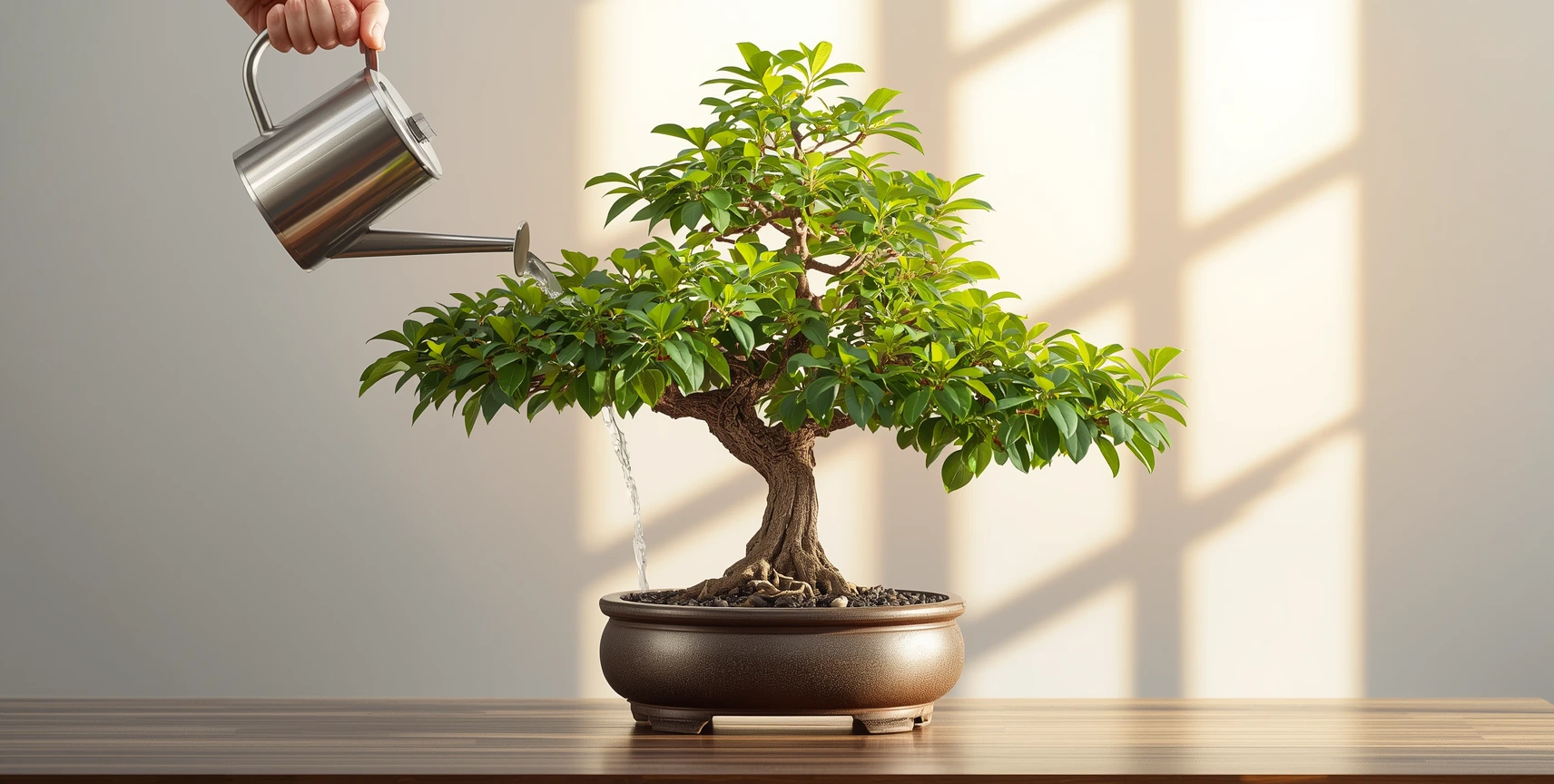
Good bonsai tree care starts with one decision: is your tree an indoor tropical species or an outdoor hardy one? Virginia Tech Extension says bonsai made from forest trees such as junipers, pines and maples must live outdoors, while tropical and subtropical plants such as ficus, jade and serissa can live indoors. After that, the essentials are frequent watering (often daily in summer), a fast-draining bonsai mix, a diluted fertilizer during the growing season, and repotting every two to three years in spring, according to the Royal Horticultural Society.
Most bonsai trouble comes from the wrong location, the wrong watering rhythm, or soil that stays soggy. This guide uses guidance from the RHS, Virginia Tech Extension and the Arnold Arboretum of Harvard University, which maintains a bonsai and penjing collection, and shows where their methods differ.
What Is Bonsai Cultivation?
NC State Extension describes bonsai as “the gardening art of mimicking nature by creating and manipulating a small plant to appear as a mature tree.” A bonsai is not a special species: it is an ordinary tree or shrub kept small in a shallow pot through root pruning, branch pruning and shaping. The RHS notes that most trees and shrubs can be grown as outdoor bonsai.
That is why care depends on the species, not on the word “bonsai” on the label. Many county extension offices and botanical gardens run beginner bonsai classes; NC State’s Robeson County office, for example, has offered hands-on beginner sessions covering root pruning, repotting and wiring.
Indoor or Outdoor? Choose by Species
| Outdoor bonsai | Indoor bonsai | |
|---|---|---|
| Examples | Juniper, pine, maple, elm, boxwood, zelkova (Virginia Tech); Scots pine, larch, Japanese maple, yew, ginkgo (RHS) | Ficus, jade, citrus, jasmine, myrtle, pomegranate, serissa (Virginia Tech); weeping fig, silver jade plant, Chinese elm, olive (RHS) |
| Where it lives | Outdoors all year; Virginia Tech allows only short indoor visits of 2 to 3 hours for viewing | Indoors like a houseplant; the RHS says they need lots of light and steady temperature and humidity |
| Winter | Needs a cold rest; protect below 28°F (Virginia Tech) | No cold rest; keep warm and bright |
The most common beginner mistake
Keeping an outdoor species such as a juniper on a windowsill. Virginia Tech Extension is clear that bonsai from forest trees must live outdoors. If you have no outdoor space, choose a tropical species such as ficus instead.
Chinese elm sits in both lists: the RHS includes it among indoor bonsai, while Virginia Tech groups elms with outdoor trees. In practice, it depends on your climate and where your tree was grown, so ask the seller how it has been kept.
Indoor bonsai need far more light than most houseplants. Put them close to your brightest window, or add a grow light; our guide to the best grow lights for indoor plants covers distances and hours.
How Often to Water a Bonsai
Bonsai pots hold very little soil, so they dry out much faster than ordinary pots. Every source agrees on frequent checking:
| Source | Growing season | Winter |
|---|---|---|
| RHS | As needed; once or twice daily in summer | As needed |
| Virginia Tech Extension | Water the whole plant daily in summer, without waterlogging | May be needed only once a week |
| Arnold Arboretum | At least daily in spring growth; daily minimum on rainless summer days | Trees in cold storage, checked weekly |
Staff check soil moisture by hand, fill the pot to the top, let it drain through, then fill it a second time. The double pass makes sure water reaches the whole root ball, not just the surface.
Pro tip: The RHS recommends rainwater where possible because it reduces mineral buildup in the soil. Collect it in a covered container and use it at room temperature for indoor trees.
What Soil Does a Bonsai Need?
There is no single correct bonsai soil. What every recipe shares is drainage: water must pass through quickly so the roots get air. Here is how three respected sources do it:
Mineral mix
Clay, pumice and lava particles of even sizes. Even particle size keeps fine dust from clogging the gaps between grains.
Peat-free garden mix
2 parts potting compost, 2 parts sharp sand or alpine grit, 1 part John Innes No. 3 (ericaceous compost for acid-loving plants).
Two recipes by tree type
Conifers: one-half sand, one-quarter loam, one-quarter peat. Deciduous trees: one-third each of sand, peat and loam.
Many bonsai growers also use Japanese akadama clay as the clay part of a mineral mix. Whatever you choose, avoid plain bagged potting soil on its own: it is made to hold water in large pots and stays too wet in a shallow bonsai pot.
How to Fertilize a Bonsai
Frequent watering washes nutrients out of a small pot, so bonsai need regular, dilute feeding while they grow:
- RHS: a balanced liquid feed at the recommended low dose once every two weeks during the growing season.
- Virginia Tech Extension: fertilize only before and during active growth, using houseplant fertilizer diluted to one-quarter to one-half strength.
- Arnold Arboretum: a very dilute solution every one to two weeks until mid-July, then every two to three weeks, through October.
Stop feeding outdoor trees once they slow down for winter.
Pruning and Wiring
Pruning keeps the tree small and dense. The Arnold Arboretum removes at least 50 percent of the new growth each time it prunes. Virginia Tech Extension adds that deciduous trees can be pruned back quite severely in late spring or summer to encourage new shoots closer to the trunk, and recommends a concave cutter, a bonsai tool that removes branches without leaving a stub.
Don’t leave wire on too long
Wire bends branches into shape, but it bites into the bark as the branch thickens. Virginia Tech Extension says wire should not stay on a plant longer than one growing season.
When and How to Repot
| Tree | How often (RHS) |
|---|---|
| Most bonsai | Every 2 to 3 years |
| Slow growers such as pines | Root prune every 3 to 5 years |
| Fast growers such as birch | Every year |
The RHS recommends spring, ideally before new growth starts (or autumn in mild areas). Virginia Tech Extension gives timing by type: deciduous trees in early spring, pines and other evergreens in late winter, junipers during the growing season.
- Ease the tree out of the pot.
- Comb out the outer roots. The Arnold Arboretum removes about 2 to 3 centimeters (around 1 inch) of roots and soil from the sides and bottom.
- Cut off any roots thicker than a pencil, as the Arboretum does, to encourage fine feeder roots.
- Cover the drainage holes with mesh, add fresh bonsai mix and work it between the roots.
- Water thoroughly and keep the tree out of strong sun and wind while new roots grow.
Winter Care for Outdoor Bonsai
Outdoor species need winter cold, but their roots are exposed in a small pot. Virginia Tech Extension says that if winter temperatures drop below 28°F, bonsai must be protected in a greenhouse, pit or cold frame. The Arnold Arboretum moves its trees into cold storage kept at 33 to 36°F, typically from mid-November to mid-April, and checks them weekly.
The goal: cold, not frozen solid
Aim to keep the tree dormant and just above freezing, out of drying winds, rather than bringing it into a warm house. Check the soil through winter; Virginia Tech notes watering may be needed about once a week.
Why Is My Bonsai Dying?
| What you see | Likely cause | What to do |
|---|---|---|
| Juniper or pine browning indoors | Outdoor species kept inside | Move it outdoors (harden it off gradually if it has been inside a long time) |
| Dry, crispy foliage; soil pulls away from the pot | Soil dried out between waterings | Check daily; water until it drains, then water again |
| Yellowing, soggy soil, sour smell | Waterlogged soil or poor drainage | Clear the drainage holes; repot into a free-draining mix in spring; see our root rot treatment guide |
| Pale leaves, weak growth | Too little light or no feeding | Brighter spot or grow light; feed every two weeks while growing |
| Bumps on stems, white powder or chewed roots | Scale, powdery mildew or vine weevil (problems the RHS lists) | Isolate and treat early |
For yellow leaves on any plant, our yellow leaves guide walks through the other causes.
Are Bonsai Trees Safe for Pets?
It depends on the species. Two of the most popular indoor bonsai are toxic according to the ASPCA:
Ficus (weeping fig)
The ASPCA lists Ficus benjamina as toxic to dogs, cats and horses, causing gastrointestinal and skin irritation.
Jade plant
The ASPCA lists jade (Crassula) as toxic to dogs, cats and horses, with vomiting, depression and incoordination.
If you suspect your pet has eaten part of a toxic plant, contact your veterinarian or the ASPCA Animal Poison Control Center at (888) 426-4435. For pet-friendly choices, see our cat-safe plants guide.
Frequently Asked Questions
How often should I water my bonsai?
Check it every day. The RHS says bonsai may need water once or twice daily in summer, and Virginia Tech Extension notes winter watering may be needed only once a week. Water whenever the soil starts to dry, until water drains from the bottom.
Can I keep a juniper bonsai indoors?
No. Virginia Tech Extension says bonsai from forest trees such as junipers must live outdoors, coming inside only for 2 to 3 hours at a time for viewing. If you only have indoor space, choose a tropical species such as ficus.
What is the best soil for bonsai?
Any mix that drains fast. Virginia Tech Extension uses evenly sized clay, pumice and lava; the RHS uses 2 parts potting compost, 2 parts grit and 1 part John Innes No. 3. Avoid plain potting soil on its own, which stays too wet in a bonsai pot.
How often should I repot a bonsai?
Every two to three years for most trees, in spring before new growth, according to the RHS. Slow growers like pines need root pruning only every three to five years, while fast growers like birch may need it yearly.
What fertilizer should I use for bonsai?
A balanced liquid fertilizer at a low dose every two weeks during the growing season (RHS), or houseplant fertilizer at one-quarter to one-half strength (Virginia Tech Extension). Feed only while the tree is actively growing.
How do I protect an outdoor bonsai in winter?
Below 28°F, Virginia Tech Extension recommends a greenhouse, pit or cold frame. The Arnold Arboretum stores its trees at 33 to 36°F through winter. Keep the tree cold and dormant rather than bringing it into a warm room.