
Echeveria care is mostly a matter of restraint: bright light, a gritty mix that drains fast, and water only after the compost has dried. The rosette stays tight and colorful when those three are right, and it either stretches or rots when one of them is off.
Echeveria Care at a Glance
| Parameter | What it wants | What causes trouble |
|---|---|---|
| Light | Bright, filtered sun indoors; full sun outdoors in dry air | Deep shade, or hot sun through glass in summer |
| Water | Soak the mix, then let it dry before watering again | A little water every few days, or water left in the saucer |
| Mix | Cactus or succulent compost, gritty and free-draining | Heavy peat or garden soil that stays wet |
| Pot | Drainage holes, only slightly wider than the rootball | Oversized pots without drainage |
| Temperature | Above 50°F (10°C) year round | Cold windowsills and frost |
| Winter | Cooler, drier rest with light watering every few weeks | A warm room plus a regular watering routine |
Sources: Royal Horticultural Society (RHS) Echeveria guide; NC State Extension; University of New Hampshire Extension.
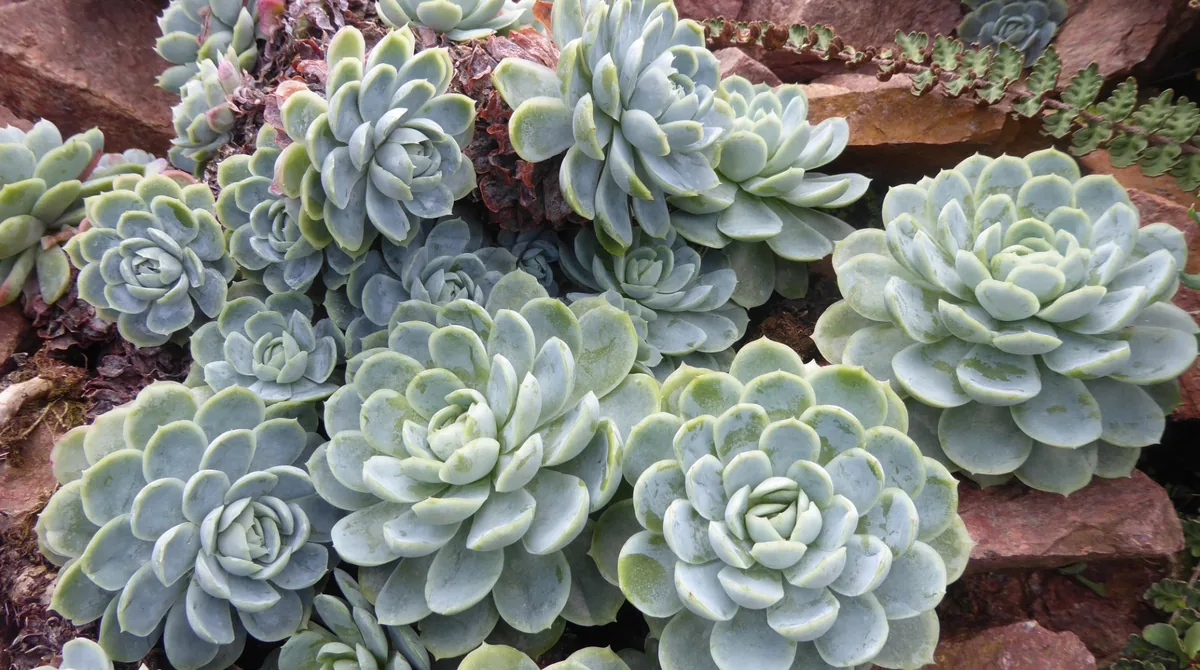
Light: The Difference Between Tight and Stretched
Echeveria light needs are simple: as much bright, filtered sun as a windowsill can give. The RHS says echeverias enjoy bright but indirect light, while NC State Extension reports that the leaf color improves with sunlight and that the plants take full sun outdoors. The two notes describe different settings rather than a contradiction: full sun works outdoors in moving air, and filtered light works behind glass where heat builds.
For an indoor plant, UNH Extension puts the target at about six hours from a south-facing window, and notes that east or west windows usually work too. A sheer curtain is enough to soften a south-facing window in summer.
Signs of too little light
- New growth is weak and spindly, a pattern the RHS links to low light combined with warmth.
- The rosette opens up and the stem shows, as lower leaves wither and drop, which NC State Extension describes as normal aging that speeds up when light is poor.
- Leaf color fades toward plain green instead of the blue, silver or pink tones NC State Extension lists for the genus.
Signs the light is right
- New leaves stay tightly packed in the center of the rosette.
- The powdery coating on the leaves stays intact, the glaucous bloom NC State Extension describes on the stems.
- Growth is slow and compact rather than fast and leggy, which matches the slow growth rate NC State Extension lists for Echeveria elegans.
How to Water Echeveria Without Rotting It
Echeveria watering follows one rule: soak the mix, then let it dry. Overwatering is the most common problem with the plant, according to NC State Extension, which is why it prefers dry, well-drained soil. The RHS gives the practical version: water only when the compost starts to feel dry, never leave the pot sitting in water, and reduce watering in winter to a light watering every few weeks to stop the leaves shrivelling.
UNH Extension adds that succulents should be watered when the soil is rather dry to the touch, and that the saucer should be empty after watering. A soaked mix that stays wet for a week is the setup that rots the roots.
- Check before you pour. Push a finger into the mix. If it is still cool and damp below the surface, wait.
- Water the mix, not the rosette. Fill the pot until water runs from the drainage holes.
- Empty the saucer. Tip out anything that collects within a few minutes, so the pot is never standing in water.
- Wait for dry, then repeat. In winter, stretch the gap and give only enough to keep the leaves from shrivelling, as the RHS advises.
Pro tip: The RHS warns that fluoride in tap water can damage echeveria leaves, so rainwater is the safer choice if you can collect it. The same page notes that the plants dislike being both wet and cold.
Soil and Pot: Drainage Comes First
The RHS recommends a peat-free cactus compost that is gritty and sharply draining, in a pot with plenty of drainage holes. NC State Extension lists good drainage as a basic requirement and describes the genus as tolerant of loam, sand and shallow rocky ground.
Pot size matters as much as the mix. UNH Extension advises choosing a container that holds the plant snugly, because a pot that is too large keeps more compost wet for longer. A bagged cactus mix is a fine base; if a handful holds together in a wet clump, work in perlite or pumice until it starts to fall apart.
Repotting is rarely needed. Echeveria is a slow grower, and a plant that is stable in its pot can stay there for another season. If you do move it up, go one size wider and keep the rosette at the same height it sat before.
Temperature and the Winter Rest
The RHS is direct: keep echeveria above 10°C (50°F). UNH Extension gives the same floor, describing a draft-free spot that does not dip below about 50°F. NC State Extension lists Echeveria elegans as hardy in USDA zones 9a to 11b, which is why most growers in colder states treat it as a houseplant and bring it in before the first frost.
Winter is a rest period, not a growing season. The RHS describes a cooler, drier dormant spell with just a light watering every few weeks. Keep the plant warm and watered on the usual schedule and the RHS says you get weak, spindly growth that spoils the shape of the rosette.
Cold glass and wet feet
A windowsill can be several degrees colder than the room at night. If the glass feels cold to the touch, move the pot back a few inches. Combine that chill with damp compost and you have the two conditions the RHS names as the plant’s main dislikes: wet and cold.
Propagation From Leaves, Offsets and Cuttings
Echeveria propagation is easier than the plant’s neat shape suggests. NC State Extension describes three vegetative routes: detach the offsets, or pups, that form at the base; cut off the crown and plunge the short stem into very well drained soil; or remove a leaf and leave it on the surface until a small rosette forms. All three work because the plant can grow roots from stem or leaf tissue, a method covered in more detail in our guide to leaf propagation.
- Choose a healthy offset. Pick one with a firm rosette and a short piece of stem, not a soft or yellowing pup.
- Let the cut surface dry. Set it in a dry, bright spot away from direct sun while the wound closes.
- Settle it on gritty mix. Press the base into the surface, not deep into wet compost.
- Hold the water until roots form. Then water lightly and return to the normal soak and dry cycle.
Leaf cuttings are slower and less certain than offsets, but they cost nothing and let you save a plant whose stem has rotted. If you are new to succulents, our broader guide to growing succulents covers the same light, mix and watering rules for the whole group.
Problems: Stretched, Soft or Dropping Leaves
| Symptom | Likely cause | What to do |
|---|---|---|
| Long bare stem, small rosette | Too little light, made worse by warmth and regular watering in winter (RHS) | Move to brighter light, cut winter water, behead and reroot if the stem is badly stretched |
| Lower leaves shrivelled and dry | Compost kept too dry for too long (RHS) | Soak the pot, drain it, and resume the dry cycle |
| Soft brown base, falling apart | Overwatering or a mix that holds water (NC State Extension) | Cut above the rot, let it callus, and reroot the healthy rosette in fresh gritty mix |
| White cottony patches in the leaf joints | Mealybugs, one of the pests NC State Extension lists for the genus | Isolate the plant and follow our mealybug treatment plan |
| Sticky new growth with tiny insects | Aphids, also listed by NC State Extension | Wash them off and repeat every few days until they are gone |
Sources: RHS Echeveria guide; NC State Extension Echeveria and Echeveria elegans pages.
Vine weevils are the third pest NC State Extension names for echeveria. The adult insect notches the leaf edges, and the grubs live in the compost and feed on roots. A plant that wilts despite correct watering is worth tipping out of its pot to check.
Are Echeverias Safe for Pets?
The ASPCA’s toxic and non-toxic plant database has no Echeveria entry, so there is no ASPCA toxicity statement for the genus. NC State Extension tags Echeveria elegans as non-toxic for cats, dogs and horses, which is a good sign rather than a guarantee. Keep pots out of reach of chewers and call your vet if a pet vomits or drools after nibbling a leaf. Our lists of cat safe plants and plants safe for dogs cover other options.
Frequently Asked Questions
How often should I water an echeveria?
There is no fixed schedule. The RHS says to water only when the compost starts to feel dry, and in winter to give just a light watering every few weeks. Indoors that usually means a longer gap in winter than in summer, but the mix, pot and light level decide the timing.
Does echeveria care change in winter?
Yes. Echeveria care in winter means less water, cooler air and as much light as the short days allow. The RHS describes a cooler, drier rest period, and warns that warmth plus regular watering produces weak, spindly growth.
Can I keep an echeveria outdoors?
Outdoors it needs a frost-free climate. NC State Extension lists Echeveria elegans as hardy in USDA zones 9a to 11b. Anywhere colder, grow it in a pot and bring it inside before the first frost, as NC State Extension advises for the genus.
Why is my echeveria stem long and bare?
The plant is reaching for light. NC State Extension notes that lower leaves wither and drop as the stem lengthens, and the RHS links weak, spindly growth to low light. Move it somewhere brighter, then behead the rosette and reroot it if the bare stem is too tall to hide.