
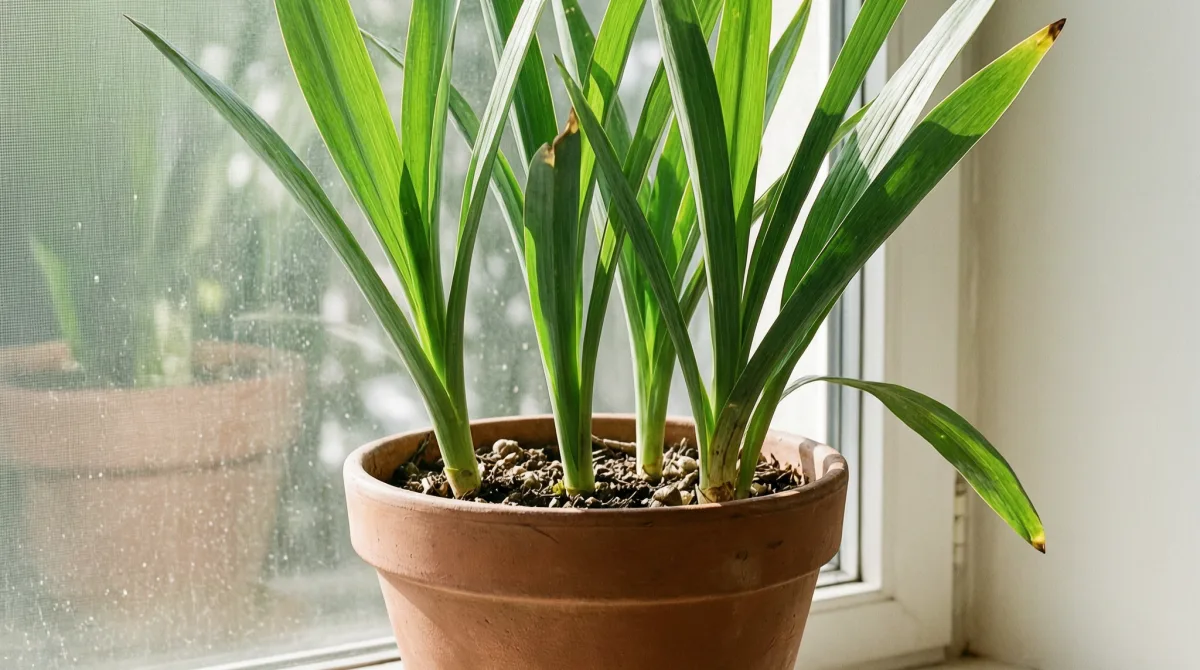
Growing ginger indoors starts with a firm rhizome, a pot at least 12 inches across, and warmth. The University of Vermont Extension puts the minimum at 68 °F, with 70 to 80 °F for sprouting, and warns that the plant should never go below 50 °F. From planting to harvest is 8 to 10 months, so a rhizome started in late winter is ready in late autumn.
Growing Ginger Indoors: The Short Answer
Ginger is a tropical rhizome, not a root, and it grows the way a tropical plant grows: slowly at first, then fast once the soil is warm. The University of Vermont Extension describes the plant as needing at least 68 °F and never tolerating below 50 °F. That single temperature rule explains most failures on a cool windowsill in winter.
Growing ginger indoors in pots is the only practical option in a cold climate, because the plant is hardy outdoors only in zones 9 to 12, according to NC State Extension. The second rule is patience. A rhizome can sit for 3 to 8 weeks before the first green shoot appears, and the plant then needs 8 to 10 months to make a harvestable crop. This is not a windowsill herb that pays back in a month. It is a long-season project that happens to be easy once the pot is warm.
| Stage | What it needs | How long |
|---|---|---|
| Rhizome to first shoot | 70 to 80 °F, moist mix, indirect light | 3 to 8 weeks |
| Active growth | Warm room, bright light, regular water | Most of the season |
| Mature plant | 2 to 3 feet tall in a 12-inch pot | About 8 to 10 months |
| Harvest | Foliage yellows and dies back | 8 to 10 months after planting |
Sources: University of Vermont Extension, Growing Ginger and Turmeric Indoors; NC State Extension Plant Toolbox, Zingiber officinale.
Start With a Firm Rhizome
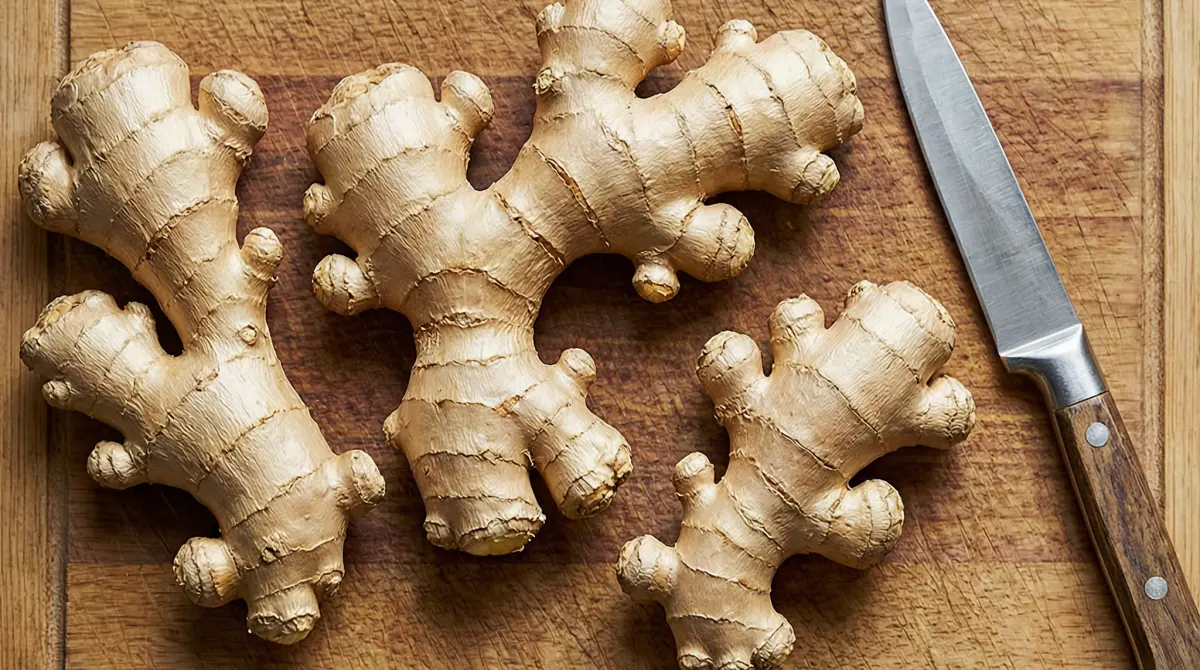
Choose a plump rhizome with several visible eyes, the small buds that look like nubs on the surface. A shriveled piece with no eyes will not sprout, no matter how warm the room is. The University of Vermont Extension recommends cutting the rhizome into 2 to 3 inch pieces, each with 2 to 3 buds.
Let the cut faces callus for a day before planting. This is the same logic as letting a potato seed piece dry: a fresh cut in wet soil is an open door for rot. Plant the pieces horizontally, with the eyes facing up, and cover them with about 2 inches of mix.
A grocery rhizome can work if it is firm and has clear eyes. Cut off any soft or moldy sections and use the solid parts. One rhizome from the produce aisle usually gives two or three planting pieces, which is more than enough for a 12-inch pot.
Pot Size and Mix
Use a pot at least 12 inches across, with drainage holes. Ginger grows a wide mat of rhizomes near the surface, and a small pot runs out of room before the season ends. A 12-inch pot holds one plant comfortably; a 14- or 16-inch pot gives you more rhizome to harvest.
Fill it with a rich, well-drained mix. NC State Extension describes the plant’s native soil as rich and organic, and notes that ginger wants partial shade rather than full sun. A mix with compost and perlite or bark holds moisture without staying soggy, which is the balance the rhizome needs.
Do not bury the rhizome deep. Two inches of mix over the pieces is enough. A deep planting keeps the soil cooler and wetter around the buds, and the shoot has to travel further to reach the light.
Warmth and Light
Temperature is the limiting factor indoors. The University of Vermont Extension gives 70 to 80 °F for sprouting and a floor of 50 °F at all times. A heat mat under the pot is the simplest way to hold that range in a cool house, and it can be switched off once the shoots are up.
After sprouting, move the pot to a sunny window or under a grow light. NC State Extension notes that full sun causes brown leaf tips, so a west or east window with a few hours of direct sun is better than a south-facing pane in midsummer. Our guide to bright indirect light explains how to read a window before you commit the pot to it.
Growing ginger indoors in winter is mostly a heat and light problem, not a watering one. A grow light makes the difference between a plant that holds its leaves and one that stalls. Ginger is tropical and does not go dormant indoors; it keeps growing if the light and warmth hold. If you are buying a lamp for it, the distance rules in our grow light distance guide apply.
Cold windowsills
Glass gets cold at night, and a windowsill can sit 10 degrees below the room. Ginger tolerates that badly. Move the pot a foot back from the glass after dark, or keep it on a table near the window instead of against the pane.
Watering Ginger in a Pot
Water sparingly until the shoots appear, then keep the mix moist but never wet. The University of Vermont Extension uses exactly that wording, and it is the right target: a wrung-out sponge, not a puddle. A pot that stays saturated rots the rhizome before it ever sprouts.
Check the mix with a finger before watering, not on a schedule. In a warm room the pot may need water twice a week; in a cool room, every ten days. The plant is more forgiving of a short dry spell than of a week in standing water, so when in doubt, wait a day.
Use a saucer and empty it after watering. Ginger is prone to rot at the base, and a saucer that holds water keeps the bottom of the pot wet long after the top has dried. Our guide to overwatered vs underwatered plants covers the signs if you are unsure which way you went wrong.
The 8 to 10 Month Timeline
The schedule is long, but it is predictable. Count from the day you plant, not the day the shoot appears, and expect the first green tip somewhere between week 3 and week 8.
The University of Vermont Extension puts the harvest at 8 to 10 months, when the foliage yellows. A plant grown for leaves alone can be kept longer, but the rhizome is the crop.
Feed lightly during active growth. A balanced liquid fertilizer at half strength once a month is enough in a rich mix; more than that pushes leaves at the expense of rhizome. Stop feeding when the foliage starts to yellow, because the plant is shutting down rather than growing.
Harvest and Storage
Harvest when the leaves turn yellow and begin to die back. Tip the pot on its side, slide the root ball out, and break away the rhizomes you want. You can also dig around the edge of the pot and cut off a piece without lifting the whole plant, then leave the rest to keep growing.
Wash the rhizomes and let them dry in a warm, airy place for a few days before storing. The University of Vermont Extension gives a refrigerator life of about 3 months and a freezer life of about 6 months. Fresh rhizomes also freeze well in slices, which is more practical than trying to keep a whole harvest in the fridge.
Keep a few pieces back for the next pot. A harvested rhizome with two or three eyes is the start of the next 8 to 10 months, and the cycle costs nothing but a pot and some patience. Our guide to growing turmeric covers the close relative that follows the same method with a different harvest window.
Problems to Watch For
What goes wrong
- No sprout after 8 weeks: pot too cold, mix too wet, or rhizome had no eyes
- Yellow lower leaves: usually too much water or a cold floor
- Brown leaf tips: dry air, or full sun on a south window
- Soft, smelly rhizome: rot from a saucer left full
What healthy growth looks like
- Firm, pale green shoots that open into lance-shaped leaves
- New shoots from the edge of the pot through the season
- Leaves that stay upright without staking
- A rhizome that is firm when you press it
Container ginger rarely flowers, and that is not a failure. NC State Extension notes that plants in containers seldom bloom and that the flowers, when they come, sit on a separate leafless stem. Treat a flower as a bonus and judge the plant by the size of the rhizome at harvest.
Frequently Asked Questions
Can you grow ginger from a store bought root?
Yes, if the rhizome is firm and has visible eyes. Cut it into 2 to 3 inch pieces with 2 to 3 buds each, let the cuts dry for a day, and plant the pieces horizontally under about 2 inches of mix.
How long does ginger take to grow indoors?
About 8 to 10 months from planting to harvest, according to the University of Vermont Extension. The first shoot can take 3 to 8 weeks to appear, so do not give up on a pot that looks empty.
Can you grow ginger indoors in winter?
Yes, if the room stays above 68 °F and the plant gets bright light. Ginger is tropical and does not need a cold rest. A heat mat and a grow light make winter the easiest time to start a rhizome.
How big does a ginger pot need to be?
At least 12 inches across, with drainage holes. Ginger grows a wide mat of rhizomes near the surface, and a 14- or 16-inch pot gives a bigger harvest.
Why is my ginger not sprouting?
Check three things: the pot is at 70 to 80 °F, the mix is moist rather than soaked, and the rhizome has visible eyes. A cold windowsill or a waterlogged pot can stall a healthy rhizome for weeks.
Can you eat ginger leaves?
The leaves are not the crop. Ginger is grown for the rhizome, and the leaves are left on the plant until they yellow at harvest. Use the rhizome fresh, refrigerated for about 3 months, or frozen for about 6.
Does ginger need full sun indoors?
No. NC State Extension notes that full sun causes brown leaf tips, so give ginger bright light with a few hours of direct sun rather than all-day summer sun through a south window.