
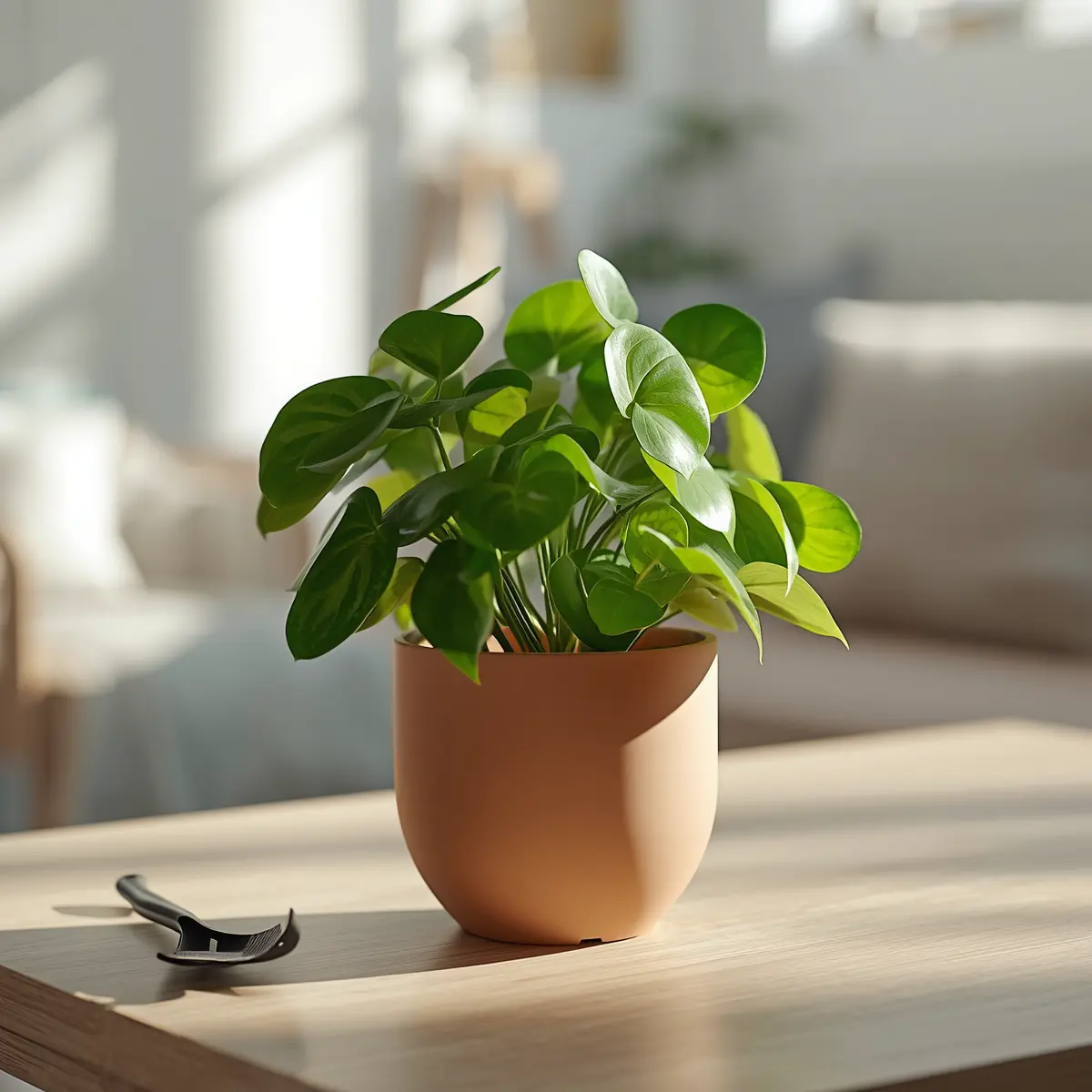
Pilea peperomioides has earned its place as the crown jewel of modern indoor plant collections. Its unmistakable disc-shaped foliage perched on delicate petioles gives the Chinese Money Plant an architectural presence that few other houseplants can rival. Yet beneath that sculptural beauty lies a species notorious for confounding even experienced growers with sudden leaf loss, mysterious white crystalline deposits, and a frustrating tendency to stretch into leggy oblivion.
This guide abandons the recycled generalities found on institutional plant databases. Instead, it delivers an operational roadmap built on verifiable horticultural science, precise environmental metrics, and cultivation data gathered from advanced indoor growing communities. Whether your Pancake Plant arrived yesterday or has occupied your windowsill for two years, the protocols below will give you measurable control over its health and morphology.
To achieve a symmetrical, flat-leaved Pilea peperomioides specimen with vigorous basal pup production, you must maintain bright indirect radiation for 6–8 hours daily, hydrate only after the top 2 inches of substrate have dried completely, and house the root system in a highly aerated, fast-draining matrix with a pH between 6.0 and 7.0. Avoid chronic overwatering in low-light winter conditions, which causes root-zone hypoxia that mimics dehydration while silently destroying the root architecture.
Technical Operational Benchmarks
Before diagnosing any problem, establish whether your current cultivation environment falls within the accepted operational window. The following table contrasts optimal targets against the pathological warning signs that precede irreversible decline.
| Cultivation Parameter | Target Operational Baseline | Pathological Threshold / Warning Sign |
|---|---|---|
| Radiation Intensity | 6–8 hours of bright, indirect solar radiation. Indoor LED supplementation: 12–14 hours at 2,500–3,500 lux. | Etiolated (leggy) growth; extreme internodal elongation; pale, undersized leaves. |
| Hydration Mechanics | Thorough saturation until bottom drainage occurs. Allow top 2 inches to dry fully before next cycle. | Downward leaf doming coupled with soft, dark petioles (indicates root-zone hypoxia). |
| Substrate Architecture | Highly aerated, low-retention matrix. pH baseline: 6.0 – 7.0. | Surface water pooling; soil compaction exceeding 48 hours post-watering. |
| Thermal Range | 65°F to 80°F (18°C to 27°C). Maintain strict protection from cold drafts. | Rapid lower leaf senescence and drop if exposed to ambient temps below 50°F (10°C). |
| Ambient Humidity | 40% – 60% relative humidity. No direct moisture on foliage. | Chronic leaf spotting, edema, or fungal colonization on flat leaf surfaces. |
| Nutrient Delivery | Balanced liquid fertilizer at 1/4 strength every 14 days during active growth (March–September). | Tip burn and marginal necrosis from over-concentration; chlorosis from nitrogen deficiency. |
The Anatomy of Flat Leaves: Pancake Geometry & Light Stress
Every Pilea enthusiast eventually obsesses over the same question: why are my leaves curling? The flat, perfectly circular leaf blade is not merely ornamental. It is a reliable bioindicator of environmental equilibrium. When conditions drift, the leaf geometry changes in predictable, diagnosable ways.
Inward Cupping: The Thermal Stress Response
When leaf margins curl upward to form a shallow bowl, the plant is executing a defensive transpiration reduction. This inward cupping occurs in response to excess direct solar radiation or ambient temperatures pushing above 85°F (29°C). By reducing exposed surface area, the leaf minimizes water loss through the stomata. Move the specimen further from the light source or introduce a sheer curtain to diffuse incoming radiation.
Outward Doming: The Low-Light Survival Adaptation
Conversely, when leaves dome downward like miniature umbrellas, the plant is maximizing its surface area to capture sparse photons. This outward doming is the signature of chronic low-light stress. The petioles will simultaneously elongate and weaken, creating a top-heavy, unstable canopy. If left uncorrected for more than three weeks, the lower foliage will yellow and abscise permanently.
The Rotation Rule: Maintaining Symmetrical Canopy Architecture
Pilea peperomioides exhibits strong phototropism. The apical meristem will actively lean toward its dominant light source within 48 hours of placement. To preserve a vertical, balanced form, execute a strict quarter-turn (90-degree) rotation schedule every 7 days. Consistent rotation prevents the asymmetric petiole elongation that ruins the plant’s architectural symmetry and makes mature specimens prone to toppling.
Pro Tip: Place a small mark or sticker on one side of the pot to track your weekly rotation. If you maintain this discipline from the moment of acquisition, you will never need to correct a leaning specimen later.
Substrate Architecture: Moving Beyond Generic Potting Soil
Retail potting mixes are the single greatest source of Pilea mortality in home environments. Standard houseplant or cactus soils retain moisture at the root core for days beyond what the species tolerates. The result is predictable: root-zone hypoxia, anaerobic bacterial proliferation, and petiole collapse that masquerades as underwatering.
The Perfect Pilea Matrix: A Reproducible Recipe
The following substrate formula has been validated across multiple growing zones and eliminates the compaction issues endemic to commercial mixes. It provides macro-porosity for gas exchange while maintaining enough structural stability to anchor the taproot system.
The Perfect Pilea Matrix
- 50% High-quality organic peat or coco coir baseline (provides root anchoring and mild acidity)
- 30% Coarse pumice or perlite (creates macro-porosity and ensures rapid gas exchange)
- 20% Shredded pine bark or orchid grit (maintains structural layout and prevents drainage pathway collapse)
This matrix dries from saturation to lightly moist at the core within 48 to 72 hours in standard indoor conditions. If your substrate remains visibly wet beyond 72 hours, increase the pumice ratio by 10% and reduce the peat component accordingly.
The Tap Water Contradiction: Eradicating White Leaf Spots
Institutional plant guides frequently state that Pilea peperomioides tolerates tap water. This is technically true in the sense that the plant will not immediately die. However, it is horticulturally irresponsible because it ignores the secondary cosmetic and physiological damage that municipal water inflicts.
The Science of Guttation and Mineral Excretion
The tiny white crystalline dots that appear on leaf undersides and margins are not pests. They are calcium carbonate and mineral salts excreted through hydathodes—specialized water-release structures along the leaf margin. This process, known as guttation, occurs when root pressure forces excess moisture out of the leaves during periods of high soil moisture and high humidity.
While guttation itself is a normal physiological process, heavy tap water containing chlorine, chloramine, and fluoride dramatically exacerbates mineral deposition. Over time, these deposits accumulate on the leaf surface, blocking light absorption and creating necrotic patches at the excretion sites.
The Mitigation Protocol
For immaculate, unblemished foliage, switch entirely to one of the following water sources:
- Distilled water (zero mineral content; ideal but requires purchase)
- Reverse osmosis (RO) filtration (excellent long-term solution for large collections)
- Harvested rainwater (optimal if collected from clean roofing in non-industrial zones)
If you must use tap water as an emergency measure, allow it to stand uncovered for 24 hours to off-gas chlorine. Note that this does not remove chloramine or fluoride, so this is a temporary compromise, not a solution.
Pro Tip: Gently wipe leaf surfaces with a damp microfiber cloth every 14 days. This removes mineral residue, dust, and photon-blocking debris while giving you an opportunity to inspect for early pest colonization.
Surgical Pup Propagation: A Metric-Driven Timeline
One of the greatest rewards of Pilea peperomioides care is the generous production of basal offshoots, commonly called pups. These clones emerge from the mother plant’s root system and, when harvested correctly, establish as independent specimens with a 95%+ success rate.
The Harvest Readiness Metric
Do not guess. A pup is ready for separation only when it meets both of the following criteria: it stands at least 2 to 3 inches tall above the substrate surface, and it possesses a minimum of 4 fully independent, mature leaves. Harvesting earlier risks tearing incomplete root tissue and producing a pup that lacks the carbohydrate reserves to survive the transition.
Step-by-Step Execution Protocol
- Moisten the substrate lightly 2 hours before surgery. This softens the soil matrix and allows cleaner root separation without fracturing delicate tissue.
- Trace the pup’s stem 1 centimeter beneath the soil line to locate its connection to the mother plant’s root system. Use a soft brush or your fingers to expose the connecting subterranean stolon.
- Using a sterilized, sharp scalpel or propagation knife, make a clean vertical cut to sever the connecting stolon. Ensure you retain a small root cluster attached to the pup—this is the single most important factor in post-separation survival.
- Choose the routing protocol based on root development: if the pup has established independent roots, pot it directly into the Perfect Pilea Matrix and water sparingly. If it lacks roots, stabilize it in a clean glass of distilled water under indirect light for 14 days until lateral root branching reaches 1 inch.
The Emergency Triage & Troubleshooting Matrix
When a Pilea declines rapidly, panic leads to counterproductive interventions—usually overwatering a plant that is already drowning. This diagnostic matrix matches visible symptoms to their actual root causes, with precise solution protocols for each scenario.
| Symptom | Root Cause | Solution Protocol |
|---|---|---|
| Lower leaves turning uniform yellow and shedding during winter | Natural winter senescence if limited to 1–2 leaves. If widespread, nitrogen leaching due to chronic overwatering in low-light conditions. | Reduce watering frequency by 50%. Resume quarter-strength fertilization in March. Remove yellow leaves to redirect energy. |
| Petioles drooping severely, but soil is completely wet | Advanced root-zone hypoxia (root rot). Root hairs have collapsed due to oxygen deprivation and can no longer transport water upward. | Remove plant from pot immediately. Trim all black, mushy roots with sterilized shears. Repot into fresh, dry Perfect Pilea Matrix. Do not water for 7 days. |
| Leggy, bare main stalk with tiny crown of leaves at the top | Chronic etiolation. The plant sacrificed lower canopy resources to fuel vertical elongation toward an insufficient light source. | Move to higher light immediately. Execute the beheading protocol described in the next section to reset apical growth. |
| White crusty deposits on leaf undersides | Guttation residue from mineral-heavy tap water. Harmless but cosmetically damaging over time. | Switch to distilled, RO, or rainwater. Wipe existing deposits with damp cloth. |
| Brown, crispy leaf margins | Fluoride/chlorine toxicity or chronic underwatering causing desiccation at the leaf margin. | Verify watering schedule. If hydrated adequately, switch water source and remove worst-affected leaves. |
| Leaves cupping inward like a bowl | Thermal stress or excess direct solar radiation triggering transpiration defense. | Relocate to indirect light. Verify ambient temperature is below 80°F. Increase airflow if needed. |
Advanced Regeneration: Beheading a Leggy Pilea
A mature specimen that has been neglected in low light often develops a bare, woody trunk with all foliage compressed into a small crown at the apex. This is not a death sentence. Pilea peperomioides responds to apical removal with vigorous basal regeneration, making beheading one of the most reliable rejuvenation techniques in indoor horticulture.
Step-by-Step Execution Protocol
- Locate a point on the main woody stem roughly 2 inches below the lowest functional leaf pair of the top canopy crown. This node zone is where new root primordia will emerge most rapidly.
- Make a swift, clean horizontal cut completely through the stalk using a sterilized blade. A crushed or ragged cut invites bacterial infection and delays rooting.
- Place the severed top crown into an opaque water vessel to block light and inhibit algae proliferation. Position under bright, indirect light and change the water every 48 hours. Roots will emerge from the stem nodes within 10 to 14 days.
- Do not discard the bare bottom stalk remaining in the original pot. Reduce its watering frequency by 50% to compensate for the 90% reduction in transpiring leaf surface. Within 21 days, the loss of apical dominance will force dormant nodes along the trunk to push out multiple new clusters of basal pups, creating a bushy replacement plant.
Why Beheading Works: The Botany Behind It
Pilea peperomioides exhibits strong apical dominance mediated by auxin production at the growing tip. As long as the terminal bud remains intact, it suppresses lateral bud development through hormonal signaling. Removing the apex eliminates this suppressive signal, triggering a cascade of cytokinin-driven growth at the dormant lateral nodes. The result is a specimen that often emerges bushier and more symmetrical than the original.
Pro Tip: Spring (March–May) is the optimal window for beheading. The plant’s endogenous growth hormones are at their annual peak, and the longer photoperiod accelerates both root development on the crown cutting and pup emergence on the decapitated stump.
Frequently Asked Questions
Should you mist a Chinese Money Plant?
No. Misting does not increase ambient relative humidity in any meaningful or sustained way. What it does accomplish is depositing standing water on the flat leaf surfaces, creating a microenvironment where fungal spores germinate and bacterial leaf spot colonies establish. If your humidity is below 35%, use a pebble tray or a humidifier positioned at least 3 feet from the plant instead.
Can a Pilea survive in low light?
It will survive but lose its characteristic aesthetic value. In low light, the compact radial form collapses. Leaves dome outward like umbrellas to maximize surface area exposure, petioles become highly elongated and fragile, and the internodal spacing increases dramatically. The plant becomes physiologically unstable and top-heavy. For the signature Pancake Plant silhouette, bright indirect light is non-negotiable.
Why are my Pilea leaves curling?
Leaf curling direction reveals the stressor. Inward cupping (forming a bowl) indicates thermal stress or excess direct radiation. Outward doming (forming an umbrella) signals insufficient light. Check your light intensity and ambient temperature against the operational benchmarks table above, then adjust placement accordingly.
What causes guttation in Pilea peperomioides?
Guttation is the excretion of water and dissolved minerals through hydathodes along the leaf margin, typically occurring at night when root pressure exceeds transpiration rates. It is a normal physiological process but becomes cosmetically problematic when mineral-heavy tap water leaves white crystalline residue. Switch to distilled or rainwater to eliminate deposits.
How often should I water my Pilea?
There is no fixed calendar schedule. Water only when the top 2 inches of substrate have dried completely. In bright, warm conditions with the Perfect Pilea Matrix, this is typically every 7 to 10 days. In winter or low-light environments, the interval may extend to 14 to 21 days. Always verify moisture before adding water.
Why are the bottom leaves turning yellow?
If only one or two lower leaves yellow and drop during winter dormancy, this is natural senescence. If the yellowing is widespread or occurs during the growing season, it indicates nitrogen leaching from chronic overwatering. Reduce watering frequency and resume diluted fertilization in spring.
How do I fix a drooping Pilea?
First, check soil moisture. If the substrate is wet and the plant is drooping, you are dealing with root-zone hypoxia or root rot. Unpot, trim damaged roots, and repot into dry, aerated substrate. If the soil is dry and the plant droops, it is genuinely dehydrated—water thoroughly until drainage occurs.
When is the best time to propagate Pilea pups?
Spring through early summer (March–July) offers the highest success rate. Pups should be at least 2 to 3 inches tall with 4 mature leaves before separation. Root development is fastest during long-day conditions, and the mother plant recovers most quickly from the surgical removal during active growth.
Can Pilea peperomioides tolerate tap water?
It will tolerate it in the sense that it will not die immediately. However, the chlorine, chloramine, and fluoride in municipal water accumulate as white guttation deposits and cause marginal leaf necrosis over time. For pristine foliage, use distilled, reverse osmosis, or harvested rainwater exclusively.
What temperature is too cold for a Pilea?
Sustained ambient temperatures below 50°F (10°C) trigger rapid lower leaf senescence and permanent cellular damage. The species is native to subtropical elevations and has no frost tolerance. Keep it away from drafty windows, air conditioning vents, and exterior doors during cold months.
How do I get my Pilea to produce more pups?
Maximize pup production by ensuring the plant receives adequate light, appropriate hydration, and quarterly rotation. As the root system matures and fills the pot, the plant responds to slight root constriction by generating more basal offshoots. A healthy, well-lit specimen in a moderately root-bound state will produce the highest pup density.
Is Pilea peperomioides toxic to pets?
No. According to ASPCA guidelines, Pilea peperomioides is non-toxic to cats and dogs. While ingestion may cause mild gastrointestinal upset due to the mechanical irritation of plant fiber, there are no known toxic compounds in the species. This makes it an excellent choice for pet-owning households that must avoid true toxicity risks like Dieffenbachia or Philodendron.