
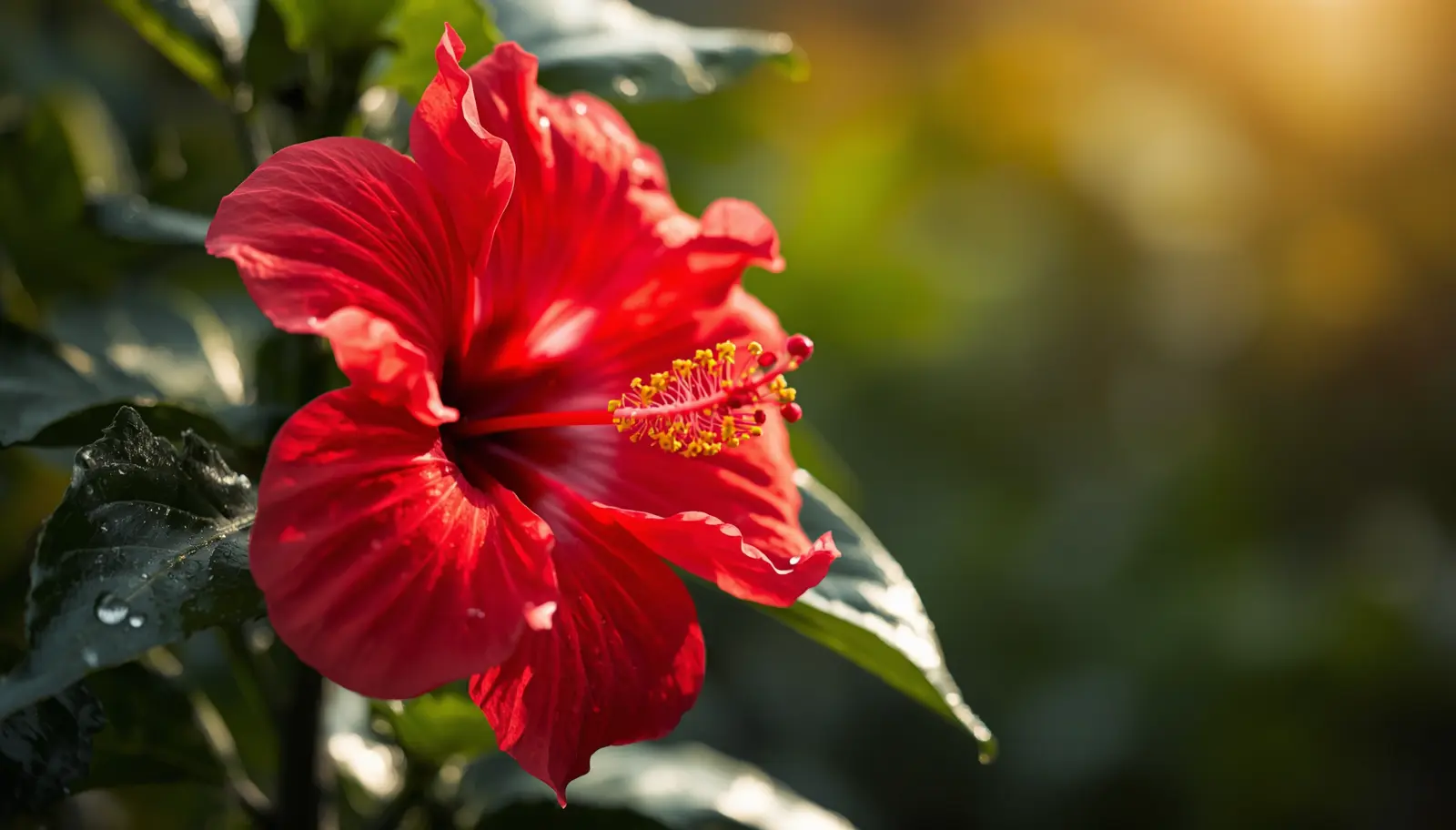
“Hibiscus” covers very different plants. The glossy tropical hibiscus sold in bloom every summer survives winter outdoors only in the warmest zones, while hardy hibiscus dies to the ground each winter and comes back from the roots. Good hibiscus plant care starts with knowing which one you have, then giving it plenty of sun, steady moisture and a stable spot. This guide follows Clemson HGIC, NC State Extension, UF/IFAS and Chicago Botanic Garden.
Hibiscus Care at a Glance
| Need | Tropical hibiscus (H. rosa-sinensis) | Hardy hibiscus (H. moscheutos) |
|---|---|---|
| Hardiness | USDA zones 9 to 11 (NC State, Clemson) | USDA zones 4 to 9 (Clemson) |
| Light | Full sun or light afternoon shade (Clemson) | Full sun; more sun, more flowers (Clemson) |
| Soil | Rich, well-drained, plenty of organic matter | Rich, well-drained, stays moist |
| Water | Freely in the growing season (Clemson) | Plenty of water for the most blooms (Clemson) |
| Flowers | About 3 to 8 inches, many colors incl. yellow and orange | About 6 to 12 inches, white, pink and red |
| Winter | Bring indoors when nights reach the low 50s°F | Dies back; cut old stems to 3 to 6 inches in late winter |
| Pruning | Early spring; flowers form on new growth (NC State) | Late winter or early spring (Clemson) |
Sources: Clemson HGIC 1179 Hibiscus (2024) and Hardy Hibiscus (2026); NC State Extension Plant Toolbox.
Tropical vs Hardy Hibiscus
Tropical or Chinese hibiscus (Hibiscus rosa-sinensis) is an evergreen shrub native to Asia. Clemson HGIC describes flowers 4 to 8 inches wide, single or double, in nearly every color including the yellows, apricots and oranges that hardy types lack. NC State lists it as hardy only in USDA zones 9a to 11b, so in most of the US it is grown as a summer annual, a patio plant or a houseplant.
Hardy hibiscus or rose mallow (Hibiscus moscheutos) is a Southeastern US native of marshes and wet meadows, hardy in zones 4 to 9. It has been bred into the “dinner plate” hybrids, with flowers 7 to 12 inches wide according to Clemson HGIC 1179. It dies back to the ground every winter and regrows from the roots.
A third common type, rose of Sharon (Hibiscus syriacus), is a hardy deciduous shrub for zones 5 to 9 (Clemson) and needs no winter protection.
The quickest way to tell them apart: tropical hibiscus has glossy, dark green leaves and keeps a woody frame, while hardy hibiscus has duller leaves on soft stems that die back in fall, and much bigger flowers.
Light
Clemson recommends full sun or light afternoon shade for tropical hibiscus, and full sun for hardy hibiscus, noting that more sun means more flowers and that shade reduces vigor and flowering. NC State lists tropical hibiscus as suited to full sun through partial shade. Indoors, it needs bright light (NC State, Chicago Botanic Garden): the sunniest window you have, or a grow light; see our grow light guide.
Watering and Soil
Both types like rich, well-drained soil with plenty of organic matter (Clemson, NC State). Clemson says to water tropical hibiscus freely during the growing season, and that perennial hibiscus need plenty of water for the most abundant blooms; some hardy species even tolerate permanently damp soil.
- In pots: keep the mix consistently moist but never leave the pot standing in water (Chicago Botanic Garden). Check with a finger and water thoroughly when the top inch or so is dry. Pots in full summer sun can dry out quickly, so check them daily in hot weather.
- In the ground: water new plants often until established, then during dry spells (Clemson).
- Both too much and too little water can make buds drop (UF/IFAS).
Fertilizer
Feeding advice for hibiscus is less precise than many guides suggest:
- Chicago Botanic Garden recommends starting a well-balanced fertilizer every two weeks in spring for overwintered tropical hibiscus.
- UF/IFAS Charlotte County Extension warns that too much nitrogen spurs leaf growth and can make unopened buds drop.
- For hardy hibiscus, Clemson suggests a 2-inch layer of compost each year and, if needed, a slow-release all-purpose fertilizer in late spring.
Many hibiscus hobby growers recommend a low-phosphorus, high-potassium formula, but we could not find an extension or research source that tests a specific ratio for home-grown hibiscus. A balanced fertilizer at label rates during active growth, with no heavy nitrogen and no feeding in winter, is a safe default. Our synthetic vs organic fertilizer guide explains the options.
Hibiscus in Pots and Indoors
Tropical hibiscus is the type usually grown in pots. NC State notes it needs a large container and bright light as a houseplant. Use a pot with drainage holes and a rich, well-drained potting mix, and move up only one pot size at a time, in spring.
Moving the plant is the biggest risk. NC State says tropical hibiscus is sensitive to environmental change and that moving it can cause leaf and bud drop. Clemson advises acclimating plants gradually to the stronger light and cooler temperatures outdoors in spring, and Chicago Botanic Garden says the same. Expect a few dropped buds after bringing a new plant home; they recover once it settles.
Summer Care and Pruning
Each flower lasts only about a day (UF/IFAS Gardening Solutions; Clemson), but healthy plants keep producing new buds through summer. Keep the soil evenly moist and check for pests regularly.
Pruning tropical hibiscus: NC State suggests cutting back about half the height in early spring for a compact plant, because flowers form on new growth. Clemson recommends pruning old wood back by about a third in spring, and Chicago Botanic Garden says to cut back leggy growth in late winter on plants kept indoors.
Hardy hibiscus: Clemson suggests pinching the growing tips in spring for bushier plants, staking tall stems, and removing spent flowers. To encourage more blooms on perennial types, remove old flowers before they set seed or cut plants back by a third after a flush of bloom (Clemson HGIC 1179).
Hibiscus Buds Falling Off
Hibiscus buds falling off before they open is the most common complaint. UF/IFAS Charlotte County Extension lists these causes:
| Cause | What to check |
|---|---|
| Too much or too little water | Check the soil before watering; keep moisture steady |
| Too much nitrogen | Cut back on high-nitrogen feeds |
| Extreme heat | Expect some drop in heat waves; give pots light afternoon shade |
| High (alkaline) soil pH | Test the soil in garden beds |
| Insects inside the buds | Open a fallen bud: the hibiscus bud midge and small caterpillars feed inside |
| Nematodes on the roots | More likely in Southern garden soils than in fresh potting mix |
| Double-flowered cultivars | Doubles drop buds more often than singles |
Source: Mitchell, R.E., UF/IFAS Charlotte County Extension (2017, updated 2022). NC State adds that moving the plant can cause leaf and bud drop.
Pests
| Pest | Signs | Control |
|---|---|---|
| Aphids, whiteflies, mealybugs | Clusters on leaves and buds; sticky honeydew; black sooty mould | Insecticidal soap or horticultural oil early on (UF/IFAS) |
| Scale | Bumps on stems and leaves | Horticultural oil; see our scale guide |
| Japanese beetles, sawfly caterpillars (hardy hibiscus) | Chewed, skeletonized leaves | Pick off by hand into soapy water (Clemson) |
| Hibiscus bud midge, caterpillars | Buds yellow and drop | Pick up and bin fallen buds |
Sources: UF/IFAS Gardening Solutions; UF/IFAS Charlotte County; Clemson; NC State (scale).
UF/IFAS Gardening Solutions warns never to use malathion on hibiscus. UC IPM notes that ants tend aphids for their honeydew and protect them from natural enemies, so ants climbing the stems are a clue to look for aphids. Chicago Botanic Garden says whiteflies are a common problem on hibiscus brought indoors, so check plants before moving them in.
Hibiscus Care in Winter
Tropical hibiscus
- Bring it in early. Clemson says to bring Chinese hibiscus indoors when nighttime temperatures fall into the lower 50s°F; Chicago Botanic Garden says well before the first fall frost. UF/IFAS notes that even a slight cold wave can yellow and drop the lower leaves.
- Check for insects first, especially whiteflies, and treat before the plant comes inside (Chicago Botanic Garden).
- Give it bright light and warmth indoors, keep the soil consistently moist but never standing in water (Chicago Botanic Garden), and hold off on feeding until spring.
- Expect leaf drop. Chicago Botanic Garden says losing all its leaves shortly after moving indoors is normal, and new growth follows.
- Prune leggy growth in late winter, start feeding in spring, and move it back outside only after all danger of frost has passed, acclimating it gradually (Chicago Botanic Garden, Clemson).
Hardy hibiscus
Hardy hibiscus freezes back to the ground each winter in most areas (Clemson HGIC 1179). Clemson’s 2026 hardy hibiscus guide suggests leaving the dead stems standing over winter to house solitary native bees, then cutting them back to about 6 inches in late winter. HGIC 1179 says old stems can be cut back to the ground once new growth emerges in spring. Mark where the plant is so you don’t disturb it before the new shoots appear.
Hibiscus Leaves Turning Yellow
| Pattern | Likely cause | What to do |
|---|---|---|
| Lower leaves yellow and drop after a cool night or a move indoors | Cold or a change in conditions (UF/IFAS, NC State, Chicago Botanic Garden) | Keep it warm and in one spot; new leaves follow |
| Young leaves yellow with green veins | Iron chlorosis, usually from high soil pH (Colorado State) | Test pH in beds; repot pots into fresh mix |
| Yellowing with soggy soil | Overwatering, poor drainage | Let the top of the mix dry; check drainage holes |
| Yellowing with dry, shrinking soil | Underwatering | Water thoroughly and check more often |
| Yellow, sticky leaves with sooty mould | Sap-sucking insects (UF/IFAS) | Check leaf undersides; treat |
Sources: UF/IFAS Gardening Solutions; NC State; Chicago Botanic Garden; Colorado State CMG GardenNotes #231.
On hibiscus leaves turning yellow with green veins: Colorado State Extension explains that iron chlorosis shows as interveinal yellowing on young leaves, and that the iron is usually present but unavailable because the soil pH is high. For container plants, see our pH lockout guide, and for general yellowing our yellow leaves guide.
Is Hibiscus Toxic to Pets?
The ASPCA lists hibiscus (its entry is Hibiscus syriacus, rose of Sharon) as non-toxic to dogs, cats and horses. NC State lists the flowers of tropical hibiscus as edible. Any plant can still cause a mild stomach upset if a pet eats a lot of it, and pesticide residues on garden plants are a separate risk. For more options, see our cat-safe plants list.
For other flowering houseplants, see our guides to jasmine indoors.
Frequently Asked Questions
Why are my hibiscus buds falling off?
UF/IFAS lists too much or too little water, too much nitrogen, extreme heat, high soil pH, insects inside the buds such as the hibiscus bud midge, and nematodes. NC State adds that moving the plant can cause bud drop. Double-flowered types drop buds more often.
Why are my hibiscus leaves turning yellow?
The most common causes are cold or a recent move (often lower leaves), uneven watering, and, if young leaves are yellow with green veins, iron chlorosis from high soil pH. Sticky yellow leaves point to sap-sucking insects.
Do I cut back hibiscus for the winter?
Hardy hibiscus: Clemson suggests leaving the dead stems over winter for native bees and cutting them back to about 6 inches in late winter. Tropical hibiscus: prune leggy growth in late winter or early spring rather than before bringing it indoors.
Can a tropical hibiscus survive the winter indoors?
Yes. Bring it in before nights fall into the low 50s°F, check it for insects, and give it bright light and warmth. Chicago Botanic Garden says it is normal for it to drop all its leaves soon after the move; new growth follows.
How long does a hibiscus flower last?
Usually about a day; Clemson says hardy hibiscus flowers last one to two days. Healthy plants keep opening new buds through the season.
Do I need to deadhead hibiscus?
Not for tropical hibiscus, whose flowers drop on their own. For perennial hibiscus, Clemson says removing old flowers before they set seed, or cutting back by a third after a flush of bloom, encourages reblooming.
Sources
- Clemson HGIC 1179: Hibiscus (revised 2024)
- Long, G.E. (2026). Hardy Hibiscus: How to Grow and Care for Hardy Hibiscus. Clemson HGIC
- NC State Extension Gardener Plant Toolbox: Hibiscus rosa-sinensis
- UF/IFAS Gardening Solutions: Hibiscus
- Mitchell, R.E. (2017). Bud drop and other hibiscus horror stories. UF/IFAS Charlotte County Extension
- Chicago Botanic Garden: Overwintering Tropical Hibiscus
- Colorado State University Extension: CMG GardenNotes #231, Plant Nutrition
- UC IPM: Aphids
- ASPCA: Hibiscus