
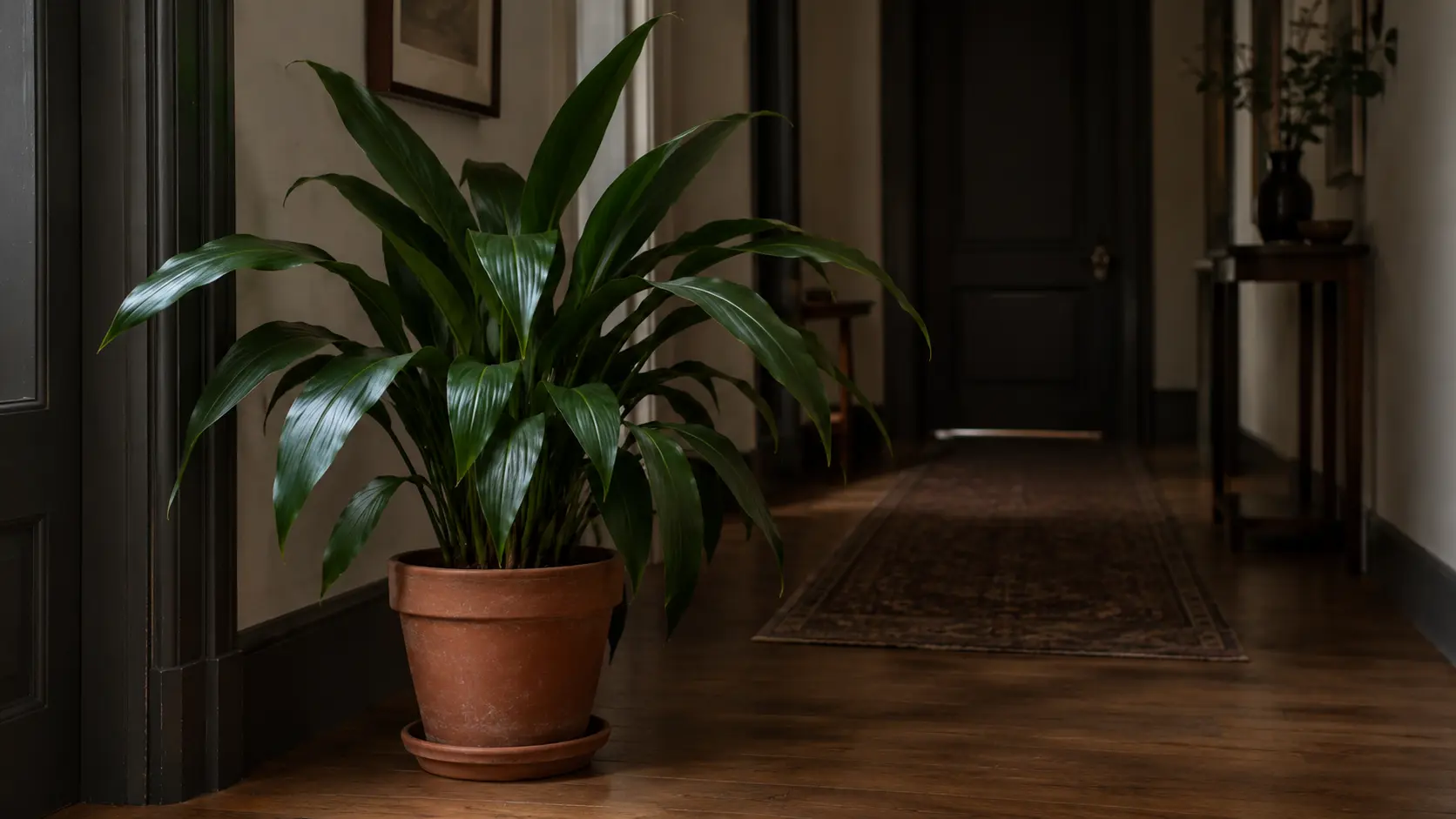
Cast iron plant care is the closest thing to a no-fail houseplant: deep shade is fine, missed waterings are forgiven, and the plant is non-toxic to cats, dogs, and horses. Give Aspidistra elatior a spot out of direct sun, water it when the top few inches of soil dry, and it will outlive almost every other plant you own.
This is not an exaggeration. The cast iron plant was a fixture of dim Victorian parlors, so familiar that George Orwell titled a novel Keep the Aspidistra Flying. A century and a half later, it remains the professional’s answer for dark hallways, north-facing offices, and anyone who has killed a fern. Here is exactly how to keep one thriving, not just surviving.
Cast iron plant needs indirect or low light, watering only when the top 2 to 3 inches of soil dry out, and any well-drained potting mix. It tolerates average room temperatures, needs no humidity support, and requires little to no fertilizer. It is fully non-toxic to pets, which makes it one of the only deep-shade houseplants safe for cats and dogs.
Table of Contents
- What Makes the Cast Iron Plant So Tough?
- How Much Light Does a Cast Iron Plant Need?
- How Often Should You Water a Cast Iron Plant?
- The Best Soil Mix for Cast Iron Plant
- Temperature and Humidity
- Fertilizing: Optional, Not Required
- How to Propagate Cast Iron Plant by Division
- Common Problems and What Causes Them
- Is the Cast Iron Plant Safe for Pets?
- Frequently Asked Questions
| Parameter | Ideal | Avoid |
|---|---|---|
| Light | Low to medium indirect; tolerates deep shade | Direct sun, which bleaches and scorches leaves |
| Water | When top 2-3 inches of soil dry out | Standing water, weekly schedules, soggy mix |
| Soil | Any well-drained potting mix | Compacted garden soil, no drainage hole |
| Temperature | Average room conditions | Winter drafts and cold windowsills outdoors of zone 7-11 |
| Humidity | Average household air | None; no misting needed |
| Fertilizer | Optional; diluted feed in spring or summer | Heavy feeding, which burns leaf tips |
What Makes the Cast Iron Plant So Tough?
The cast iron plant (Aspidistra elatior) is an evergreen, rhizomatous perennial native to Japan, according to the NC State Extension Plant Toolbox. NC State explains its common names: barroom plant, for its ability to withstand “spittoonish conditions”, and iron plant, for its ability to withstand neglect.
The plant grows as an upright clump of leathery, lance-shaped leaves that rise directly from the soil on petioles 7 to 12 inches long. Each leaf can reach 20 to 24 inches. What looks like a stem is actually just the leaf stalks; the plant is acaulescent, meaning it has no true above-ground stem. Growth is slow, and the plant spreads over time through underground rhizomes, gradually thickening into a dense clump rather than outgrowing its pot.
A note on the variegated versions: cultivars like ‘Variegata’, ‘Milky Way’, and ‘Asahi’ carry cream stripes or speckles, and UF/IFAS Gardening Solutions notes that variegated cultivars tend to be less vigorous than solid green ones. If you want maximum indestructibility, buy the plain green one. If you want the striped look, accept slightly slower growth and give it a touch more light.
How Much Light Does a Cast Iron Plant Need?
Less than almost any other houseplant. NC State lists its light range as dappled sunlight through to deep shade, meaning less than two hours of direct sun per day or none at all. It is one of the few plants that genuinely tolerates a north-facing room or a hallway with no window in sight.
The one hard rule is to keep it out of direct sun. UF/IFAS Gardening Solutions warns against planting it in full sun, and indoors the same applies: direct afternoon light through glass bleaches and scorches the leaves. A few feet back from an east or north window is ideal. The plant will also live happily under artificial office lighting, which is why it has furnished dim lobbies for decades.
If you bought a variegated cultivar, aim for the brighter end of low light. The pale sections of the leaf carry less chlorophyll, so variegated plants grow best with medium indirect light rather than true deep shade.
How Often Should You Water a Cast Iron Plant?
Water when the top 2 to 3 inches of soil feel dry, which works out to roughly every 10 to 14 days in most homes during spring and summer, and every 3 to 4 weeks in winter. NC State recommends regular watering from spring to autumn and sparingly in winter, and UF/IFAS confirms the plant is drought-tolerant once established.
Overwatering is the only realistic way to kill this plant. The rhizomes store water, so the plant shrugs off forgotten waterings for weeks. Consistently wet soil, on the other hand, rots the roots and rhizome crown. When in doubt, wait. If you have struggled to read soil moisture on other plants, our overwatered vs underwatered diagnostic shows exactly how to tell the difference before damage sets in.
The Best Soil Mix for Cast Iron Plant
Almost any well-drained potting mix works. NC State lists tolerance for clay, loam, and sand textures, across acidic, neutral, and alkaline pH, and notes it even tolerates nutrient-poor soil. The only non-negotiable is drainage: the mix must not stay waterlogged.
Reliable Potting Mix Recipe
- 2 parts standard indoor potting mix
- 1 part perlite or coarse sand for drainage
- Optional: 0.5 part pine bark fines for structure
Use a pot with a drainage hole, and size up only one inch in diameter when repotting. Because the plant grows slowly, repotting every 3 to 4 years, or when rhizomes visibly crowd the pot, is enough. Our soil amendment guide explains what each ingredient does if you want to tweak the recipe further.
Temperature and Humidity
Average household conditions are ideal, and no humidity support is needed. The leathery leaf surface resists moisture loss, so heated winter air that crisps a calathea leaves a cast iron plant untouched. Indoors, treat it as a room-temperature plant and keep it away from cold drafts in winter.
Outdoors, the cast iron plant is hardy in USDA zones 7 through 11, where it works as an evergreen groundcover in deep shade. NC State advises sheltering it from winter winds in the colder end of that range. If you garden in zone 7b or colder, keep it as a houseplant or bring containers inside before hard frosts.
Fertilizing: Optional, Not Required
UF/IFAS notes the plant does not require regular fertilization but responds well to feeding in spring or summer. That means one or two diluted applications per year is the entire fertilizer program. Use a balanced liquid houseplant fertilizer at half the label strength.
More is not better here. Heavy or frequent feeding builds up salts that scorch the leaf tips, which is one of the few ways this plant shows distress. If you see brown tips and you fertilize monthly, flush the soil with plain water and skip feeding for the rest of the season.
How to Propagate Cast Iron Plant by Division
Cast iron plant cannot be propagated from leaf cuttings; each leaf is just a leaf, with no stem node to root from. The reliable method is division, done in spring when the plant resumes active growth. Because the plant spreads by rhizomes, a mature clump almost divides itself.
- Water the plant the day before dividing so the root mass is hydrated and flexible.
- Slide the plant out of its pot and gently shake or rinse away enough soil to see the rhizomes.
- Identify natural clumps where 2 to 3 leaves share a connected section of rhizome with roots attached.
- Pull the sections apart by hand, or cut through the rhizome with a clean, sharp knife. Each division must have both leaves and roots.
- Pot each division in fresh, well-drained mix at the same depth it grew before.
- Water lightly, place in low indirect light, and hold off on fertilizer for the first 6 to 8 weeks while new roots establish.
Divisions grow slowly at first. Do not judge success by new leaves in the first month; judge it by the existing leaves staying firm and green.
Common Problems and What Causes Them
NC State lists no serious pest or disease problems for this species, which is accurate as long as the soil dries between waterings. The issues that do appear trace back to a short list of causes.
| Symptom | Likely Cause | Fix |
|---|---|---|
| Yellowing leaves | Overwatering or waterlogged soil | Let soil dry deeper; check drainage hole; see our yellow leaves diagnostic |
| Brown, crispy leaf tips | Salt buildup from fertilizer or hard water | Flush soil with plain water; cut feeding back |
| Bleached or scorched patches | Direct sun exposure | Move out of direct light; damage will not reverse |
| Fine webbing, dull speckled leaves | Spider mites in hot, dry air | Rinse foliage; repeat insecticidal soap weekly; see our miticide guide if severe |
| No new growth for a year | Normal; growth is genuinely slow | Nothing. Patience is the care requirement |
Is the Cast Iron Plant Safe for Pets?
Yes, completely. The ASPCA lists Aspidistra elatior as non-toxic to cats, dogs, and horses. There are no calcium oxalate crystals, no toxic alkaloids, and no part of the plant that requires keeping out of reach.
That combination is rarer than it sounds. Most famously tough, low-light houseplants, including pothos, philodendron, and ZZ plant, are toxic to pets. The cast iron plant gives you the same indestructibility with none of the risk, which makes it the default recommendation for dark rooms in homes with curious cats or dogs. For more verified options, see our full cat-safe plants guide.
Frequently Asked Questions
How fast does a cast iron plant grow?
Slowly. NC State classifies its growth rate as slow, and a new plant may produce only a few leaves per year. The upside is that it never outgrows its space quickly and rarely needs repotting. Expect a modest clump to take several years to fill an 8-inch pot.
Why is my cast iron plant turning yellow?
Overwatering is the cause in most cases. Check that the top 2 to 3 inches of soil actually dry between waterings and that the pot drains freely. A single old yellow leaf at the base is normal aging; several yellowing leaves at once means wet roots.
Can a cast iron plant live outside year-round?
Yes, in USDA zones 7 through 11, where it makes an excellent evergreen groundcover for deep shade, according to both NC State and UF/IFAS. In colder zones, grow it in a container and bring it indoors before hard frost.
Is a cast iron plant the same as a snake plant?
No. They are different species that share a reputation for toughness. The snake plant (Sansevieria) is a succulent with upright, sword-shaped leaves, while the cast iron plant (Aspidistra elatior) has broad, arching, hosta-like leaves. One practical difference for pet owners: snake plant is toxic to cats and dogs, while cast iron plant is non-toxic. Our snake plant care guide covers that species in detail.
The cast iron plant will not reward you with fast growth or flowers, but it will still be standing in that dark corner a decade from now when flashier plants have come and gone. For more low-light options, browse the care guides in The Lab, including our Aglaonema care hub, or check The Infirmary if an existing plant is already struggling.