
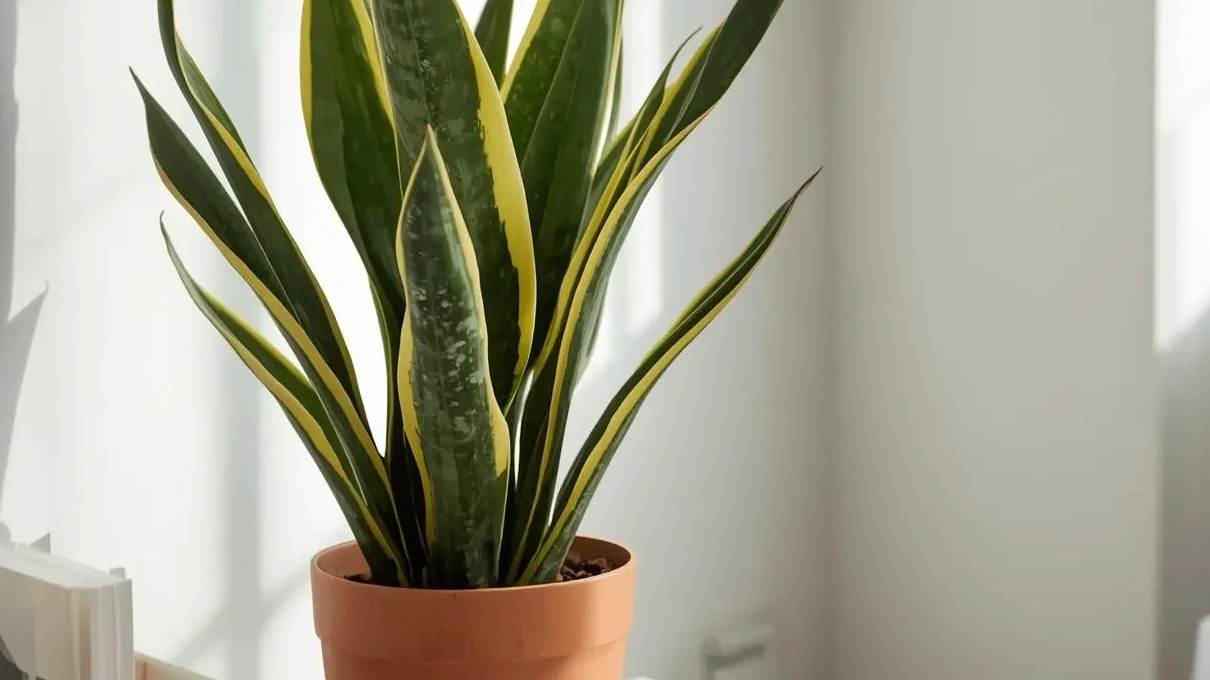
The snake plant (Dracaena trifasciata, formerly Sansevieria trifasciata) has a reputation as the houseplant you can’t kill. It does tolerate low light, dry air and forgotten waterings, but it is easy to kill with too much water. Snake plant care comes down to bright to moderate light, a gritty mix in a pot with drainage, and letting the soil dry out between waterings, especially in winter. This guide follows NC State Extension, the RHS, Iowa State, Penn State, UF/IFAS and the ASPCA.
Snake Plant Care at a Glance
| Need | What the sources say |
|---|---|
| Light | 2 to 6 hours of direct sun preferred; tolerates very low light (NC State); bright, lightly shaded, no summer midday sun (RHS) |
| Water | Let soil dry between waterings spring to autumn; every 1 to 2 months in winter (NC State) |
| Soil | Cactus compost, or 2 parts loam-based compost : 1 part grit (RHS) |
| Temperature | Ideally 15 to 24°C (60 to 75°F), no cold draughts (RHS); tolerates about 50°F (NC State) |
| Humidity | Tolerates low humidity (NC State) |
| Feeding | Monthly April to September, houseplant or cactus feed (RHS) |
| Size | Leaves up to 4 ft long, 2 to 4 in wide (NC State) |
| Pets | Toxic to cats and dogs; saponins (ASPCA) |
Sources: NC State Extension Plant Toolbox; RHS sansevieria growing guide; ASPCA.
Light
NC State Extension says the snake plant prefers direct sun for part of the day, 2 to 6 hours, and will tolerate very low light. The RHS says it ideally likes a bright, lightly shaded position but copes with lower light, and warns that summer midday sun can scorch the leaves.
That tolerance is real: Penn State Extension describes snake plants as often placed in north-facing windows and measured one growing at about 25 foot-candles. But growth in dim spots is very slow. For new leaves, give it a bright window; for a dark room, it is one of the best survivors (see our north-facing window plants guide). If you move a plant from a dim spot into strong sun, do it gradually.
How Often to Water a Snake Plant
Overwatering is the main way snake plants die. NC State says well-drained soil and careful watering are a must, warns that the roots rot if overwatered, and recommends letting the soil dry between waterings from spring to autumn and watering only every one to two months in winter. The RHS says to check the compost with your finger rather than watering on a routine, and that in winter plants barely need water unless they are in a warm spot.
- Check first: push a finger or a wooden chopstick deep into the mix; water only when it is dry well below the surface.
- Water thoroughly until it drains, then empty the saucer: the RHS warns that standing in water leads to root rot.
- In winter, stretch the gap to every month or two (NC State), or longer in a cool room.
When in doubt, wait. A thirsty snake plant recovers quickly after a drink; a rotted one often doesn’t. See our overwatered vs underwatered guide.
Soil, Pots and Repotting
The RHS recommends a free-draining, peat-free cactus compost, or two parts peat-free loam-based compost to one part horticultural grit or fine gravel, in a pot with plenty of drainage holes that is only slightly larger than the old one. NC State lists loam and sand textures with good drainage. Terracotta dries faster than plastic, which suits this plant.
Repot only when the roots and leaves have completely filled the pot, or when they start to deform it (RHS). Snake plants are top-heavy, so a heavier pot helps keep tall plants upright.
Temperature, Humidity and Feeding
Temperature: the RHS suggests typical room temperatures, ideally 15 to 24°C (60 to 75°F), away from cold draughts. NC State says it tolerates cool temperatures around 50°F. Keep it away from cold windows in winter.
Humidity: NC State says it tolerates low humidity, so there is no need to mist.
Feeding: the RHS suggests a liquid houseplant or cactus feed monthly from April to September. Don’t feed in winter. Plants in low light need little feeding.
Snake Plant Varieties
| Cultivar | Description (NC State) |
|---|---|
| ‘Laurentii’ | Dark green with lighter green zigzags and yellow edges |
| ‘Hahnii’ | Dwarf, with 6 to 12 leaves in a short, funnel-shaped rosette |
| ‘Moonshine’ | Silvery-gray leaves with light green blotches and narrow dark green margins |
Source: NC State Extension Plant Toolbox, Dracaena trifasciata.
The cylindrical snake plant is a different species; see our Sansevieria cylindrica guide. For folklore and feng shui beliefs, see our snake plant spiritual meaning guide.
Snake Plant Propagation
NC State lists division and cuttings, and the RHS describes both below. For every method step by step, including potting up pups and rooting leaf sections in water, see our full guide to snake plant propagation.
- Division (keeps the cultivar true): in spring, take the plant out of its pot and split the clump into several pieces, each with leaves attached to roots (RHS). Pot each piece in gritty compost and water lightly.
- Leaf cuttings: cut off a mature leaf at the base, slice it widthways into 5 cm (2 in) sections, and insert them bottom end down into damp cuttings compost (RHS). Keep track of which end was the bottom, because upside-down pieces won’t root. Rooting takes several weeks.
Problems: Soft Leaves, Wrinkles, Brown Tips
| Symptom | Likely cause | What to do |
|---|---|---|
| Soft, mushy or yellowing leaves at the base; sour smell | Overwatering, root and rhizome rot (NC State, RHS) | Stop watering; unpot, cut away soft or dark roots and rhizome, repot healthy parts in fresh dry gritty mix |
| Wrinkled, thin leaves; very dry mix | Underwatering | Water thoroughly and let it drain; leaves should firm up |
| Snake plant leaves falling over | Too little light, wet soil, or a weak root system | More light, let the mix dry, support leaves while it recovers |
| Pale, stretched new leaves | Too little light | Move to a brighter spot gradually |
| Scorched patches | Summer midday sun (RHS) | Light shade at midday |
| White cottony clusters at the leaf bases | Mealybugs (RHS, NC State) | See our mealybug guide |
Sources: NC State Extension; RHS.
For rot, our root rot guide explains what to cut, and our hydrogen peroxide guide explains why peroxide is not a proven cure. For mealybugs, see our rubbing alcohol guide. NC State also lists spider mites, thrips and scale.
Is the Snake Plant Toxic to Pets?
Yes. The ASPCA lists the snake plant as toxic to cats and dogs because of saponins, with nausea, vomiting and diarrhea as the signs. NC State rates its poison severity as low and notes the sap can irritate skin; the RHS suggests wearing gloves when handling cut leaves. Keep it out of reach and call your veterinarian or the ASPCA Animal Poison Control Center at (888) 426-4435 if a pet chews it. See our cat-safe plants list.
For more easy houseplants, see our guides to pilea, peace lily care and dracaena care, and our list of the 10 best low-maintenance indoor plants. Have a dog? See our list of plants safe for dogs. For other succulents, see our guides to ponytail palm care. It is one of our picks in our guide to bathroom plants.
Frequently Asked Questions
How often should I water a snake plant?
Only when the mix has dried out, from spring to autumn, and every one to two months in winter (NC State). Check the soil rather than watering on a schedule (RHS).
Can a snake plant live in low light?
Yes. NC State says it tolerates very low light, and Penn State notes it is often grown in north-facing windows, but growth is much faster with a few hours of direct or bright light.
Why are my snake plant leaves soft and mushy?
Usually overwatering and root rot (NC State). Stop watering, unpot it, remove soft roots and rhizome, and repot healthy pieces in dry gritty mix.
Why did my snake plant cutting lose its yellow edges?
The RHS says cuttings from variegated cultivars tend to revert to green. Divide the plant to keep the variegation.
Do snake plants flower?
Occasionally. The RHS says they may produce starry white flowers on long, thin stalks; NC State says it rarely blooms as a houseplant. Cut the stalk off once it fades.
Is a snake plant toxic to cats?
Yes. The ASPCA lists it as toxic to cats and dogs because of saponins.