
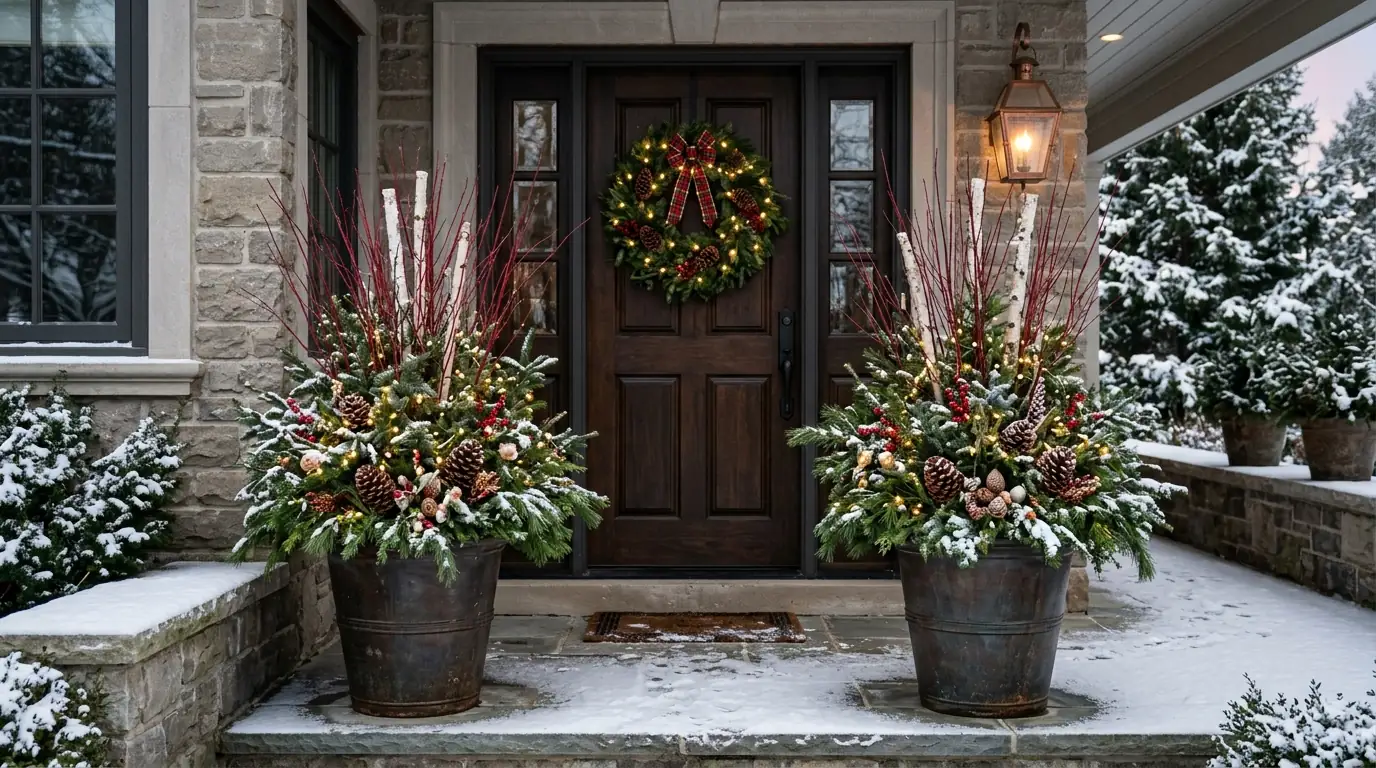
When summer annuals die back, the empty pots by the front door don’t have to sit bare until spring. Filled with fresh evergreen boughs, colorful branches, pinecones and berries, they become winter porch pots that, according to the University of Minnesota, can last all winter until spring in cold climates. This guide gathers the best Christmas planter ideas, shows step by step how to build winter porch pots, which greens last longest, how to harvest your own from the yard, and how to keep outdoor Christmas planter ideas looking good all winter. It follows University of Minnesota Extension and Illinois Extension.
What to Put in a Christmas Planter
| Role | Materials | Source |
|---|---|---|
| Base greens | Spruce tips, white pine, fir, cedar, yew, arborvitae, juniper, boxwood, holly; Illinois says these cut greens last for many weeks | Illinois Extension, UMN |
| Height and color | Red twig dogwood, birch, curly willow | Illinois Extension, UMN |
| Texture and accents | Pinecones, dried hydrangea blooms, eucalyptus, birch logs | UMN |
| Berries | Holly berries, or permanent artificial berries | Illinois Extension |
| Finishing | Lights, bows, ornaments | Illinois Extension |
Sources: University of Minnesota Extension, Fresh Cut Greens and Winter Decor (2025); Illinois Extension, Creating Eye-Catching Winter Evergreen Containers (Anderson 2015) and Seasonal Decorating with Evergreens (Anderson 2014).
The University of Minnesota notes that “spruce tips” sold for porch pots are not the tops of large spruces, just small trees or branches. Fraser fir and balsam tend to stay fresh longest, which is why they are favorites for garland and wreaths, while pine and cedar do better in cool spots.
How to Make Winter Porch Pots, Step by Step
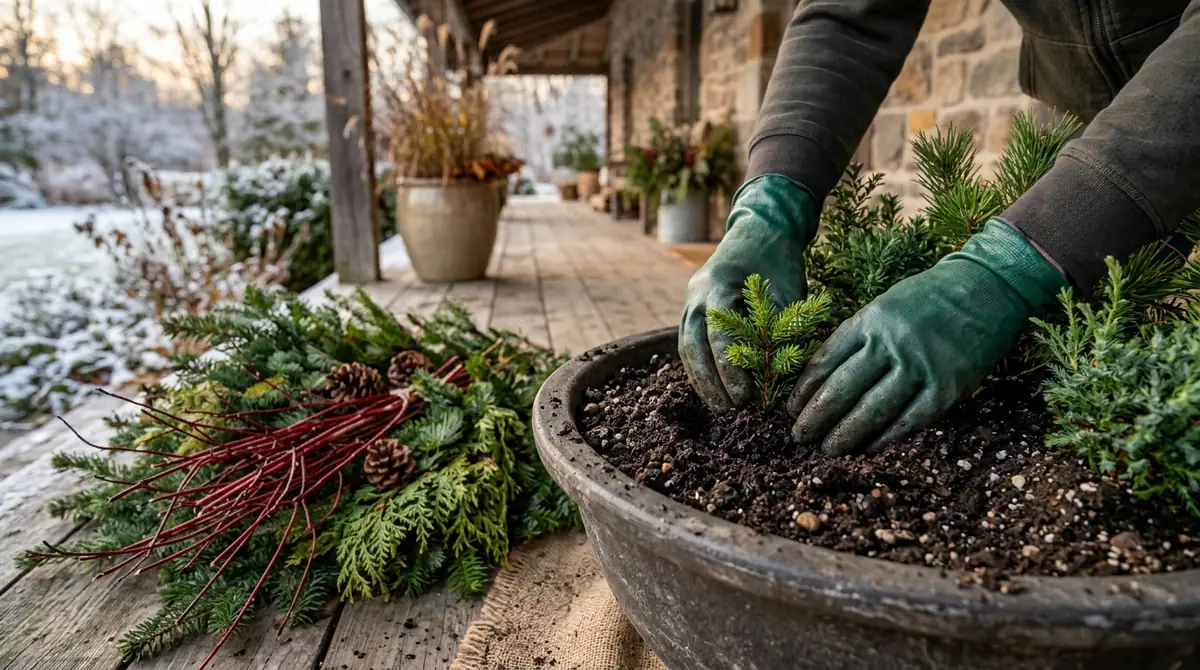
- Start with the pot you have. Illinois Extension suggests reusing a summer or fall container: cut back the old plants and use the soil already in the pot as the base. Use a container that can stay outside through freezing weather.
- Moisten the soil. Dry potting mix won’t hold stems well; wet it before you start so the boughs go in firmly.
- Build the center. Push the tallest spruce tips or branches into the middle of the pot. UMN says spruce tips are pushed into the soil and then watered in.
- Fill around them. Insert cut evergreens at various angles all around for a full, layered look (Illinois Extension), with softer, drooping pieces like cedar or pine at the front edge to spill over the rim.
- Add height. Tuck red twig dogwood, birch or curly willow branches between the greens (Illinois Extension).
- Accessorize. Add pinecones, berries, dried hydrangeas or eucalyptus (UMN), plus lights if you like (Illinois Extension).
- Water it in. Soak the soil after arranging. UMN explains that the water freezes the soil and keeps the evergreens from drying out.
7 Christmas Planter Ideas for the Front Porch
| Idea | What goes in | Tip |
|---|---|---|
| Classic red and green | Spruce, pine, red twig dogwood, holly berries, a red bow | Use an odd number of dogwood stems for a natural look |
| Woodland | Cedar, white pine, birch branches, pinecones, birch log slices | UMN lists birch logs and pinecones as good additions |
| Snowy white | Flocked greens, white birch, white ornaments | UMN warns rain or wet snow can wash flocking off |
| Matching pair | Two identical pots flanking the front door | Build both at the same time with split bundles of greens |
| Lit porch pot | Any arrangement plus outdoor-rated string lights | Wrap lights around the branches before adding accents |
| Rustic | Juniper, boxwood, eucalyptus, dried hydrangea, curly willow | UMN lists all of these for winter decor |
| Window box version | Short greens laid along the box with cones and berries | Same method: push into moist soil and water in |
Material suggestions follow University of Minnesota Extension (2025) and Illinois Extension (2014, 2015); arrangement tips are our own design suggestions.
Harvesting Greens From Your Own Yard
You can cut much of what you need from your own shrubs, which doubles as winter pruning. Illinois Extension’s tips:
- When: after a hard frost, when the plant is dormant and holds its needles longer (Illinois Extension, 2020).
- How: cut branch tips 2 to 4 feet back, just above a node, leaving live foliage on the plant; never leave a stub or cut into the branch collar (Illinois Extension, 2020).
- How much: spread cuts around the plant so it keeps its shape. The two Illinois articles differ on the limit: never more than 25% of the plant (2020), or no more than one third of a branch or the plant’s foliage (2014). Staying under a quarter is the safer choice.
- Good candidates: eastern red cedar, pines, spruces, yew, boxwood, junipers and holly, plus red twig dogwood stems (Illinois Extension, 2020). Only female hollies have red berries.
For the basics of where to cut, see our guide on how to prune; the cut-above-a-node rule is the same outdoors.
Keeping It Fresh All Winter
| Situation | What to do | Source |
|---|---|---|
| Normal winter weather | Nothing: frozen soil holds the greens and keeps them from drying | UMN |
| Long stretch above freezing | Water the pot as you would summer flowers | UMN |
| Warm, sunny spell | Move the pot into shade, if you can, so the soil stays frozen | UMN |
| Greens drying in wind or sun | Spray with an antitranspirant to seal in moisture, but not on juniper berries, cedar or blue spruce, where it damages the waxy coating | Illinois Extension (2014) |
| Rain on flocked greens | Expect some flocking to wash off; keep flocked pots under cover | UMN |
Sources: University of Minnesota Extension (2025); Illinois Extension (2014).
UMN says porch pots can last all winter until spring arrives. In mild climates where the soil never freezes, plan on watering more often and refreshing faded greens.
Christmas Planter Ideas Indoors
Cut greens dry out much faster in a heated home. Illinois Extension recommends soaking cut greens overnight before bringing them inside, keeping them out of sun and away from heat, and misting them regularly. UMN suggests Fraser fir or balsam near a fireplace or other warm spots because they stay fresh longer, and pine or cedar for cooler rooms and tabletop arrangements in water or floral foam.
For a living indoor planter, combine potted holiday plants instead: a Norfolk Island pine, a rosemary tree or a Christmas cactus in a decorative basket. See our list of Christmas plants for which ones are pet-safe, and our Norfolk Island pine care guide.
Pets and Safety
Holly berries look festive but are toxic: the ASPCA lists holly as toxic to cats and dogs, and Penn State Extension says the leaves and berries have low toxicity, usually causing vomiting, diarrhea and depression. Mistletoe is more serious (Penn State). If your dog spends time on the porch, use artificial berries instead; Illinois Extension lists permanent botanical berries among its suggested accessories. For safer choices indoors, see our lists of plants safe for dogs and cat-safe plants.
Frequently Asked Questions
How do you make a Christmas planter?
Use a container with soil left from summer, push evergreen boughs or spruce tips firmly into the moist soil, add tall branches and accents such as pinecones and berries, then water it in so the soil freezes around the stems (Illinois Extension, UMN).
What do you put in winter porch pots?
Spruce tips, pine, fir, cedar, boxwood, juniper or holly as the base; red twig dogwood, birch or curly willow for height; and pinecones, dried hydrangea, eucalyptus, berries or lights as accents (UMN, Illinois Extension).
How long do winter porch pots last?
In cold climates they can last all winter until spring, according to the University of Minnesota, because frozen soil keeps the greens from drying out.
Do you water porch pots in winter?
Water them in when you build them. After that, UMN says to water only during long periods above freezing, the way you would water summer flowers.
Which evergreens last longest outdoors?
Illinois Extension says white pine, yew, fir, arborvitae, holly and spruce last for many weeks as cut greens. UMN says Fraser fir and balsam stay fresh longest for garland and wreaths.
When should I make my Christmas planters?
Once your summer annuals are done. If you cut greens from your own shrubs, Illinois Extension suggests waiting until after a hard frost, when the plants are dormant and hold their needles longer.
Are porch pot plants safe for pets?
Not all. The ASPCA lists holly as toxic to cats and dogs, and Penn State says mistletoe is more serious. Use artificial berries where pets can reach the pot.
Sources
- University of Minnesota Extension, Clay County: Fresh Cut Greens and Winter Decor (2025)
- Anderson, C. Illinois Extension: Creating Eye-Catching Winter Evergreen Containers (2015)
- Anderson, C. Illinois Extension: Seasonal Decorating with Evergreens (2014)
- Illinois Extension: Harvesting Evergreens for Holiday Decorations (2020)
- Miklas, L. Penn State Extension: Holiday Plants and Pets (2025)
- ASPCA: Toxic and Non-Toxic Plant List, Dogs