
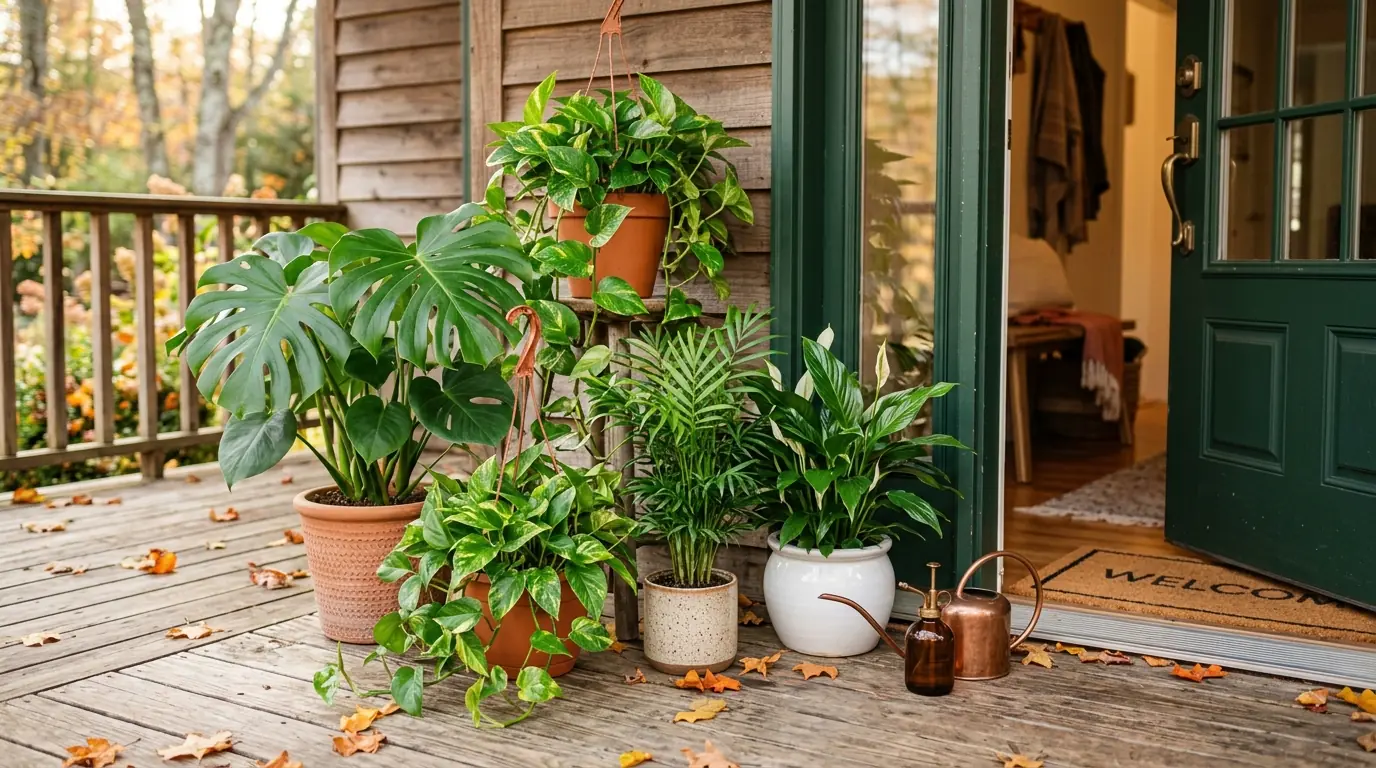
Houseplants that spent the summer on a patio or balcony need to come back in before the cold does them damage, and the move itself is where most problems start: pests hitch a ride indoors, and the sudden drop in light makes leaves yellow and fall. Bringing plants indoors for winter goes best in four steps: move them in on time, clean off pests, ease them into lower light, and then water and feed less. This guide follows University of Illinois Extension, University of Minnesota Extension and Clemson HGIC, and the steps are the same whether you are moving plants indoors for winter for the first time or bringing houseplants back inside after their usual summer outdoors.
When to Bring Plants Inside
Most houseplants are tropical, and they do not have to freeze to be harmed. Chill injury starts well above freezing, so watch the night temperatures in your forecast, not the frost date.
| Source | When to move plants in |
|---|---|
| University of Illinois Extension | When temperatures drop below 55°F |
| University of Minnesota Extension | When fall nights begin to cool (late September in Minnesota); depending on the species, temperatures below 45 to 50°F can cause damage |
| Clemson HGIC | 50°F or lower can damage many tropical plants; move them when outdoor and indoor temperatures are about the same, before the heating comes on |
Sources: University of Illinois Extension (2020); University of Minnesota Extension (reviewed 2026); Clemson HGIC 1454 (2023).
Clemson’s timing tip is the useful one: if you move plants while the house and the yard are at about the same temperature, they adjust to the lower light before they also have to cope with dry, heated air. Waiting for the first cold snap means doing everything in a rush, so start bringing plants inside for winter as soon as the forecast shows nights in the 50s.
Step 1: Check and Clean Off Pests
Aphids, mealybugs, whiteflies and other pests are rarely a big problem on plants outdoors, but University of Minnesota Extension warns that they can quickly become a major infestation once they are indoors for the winter. Illinois Extension lists aphids, whiteflies, scale and spider mites as the pests to look for on the foliage, and both sources say to check the soil too.
| What to check | What to look for | What the sources suggest |
|---|---|---|
| Leaf undersides and stems | Aphids, whiteflies, scale, spider mites, mealybugs | Spray with a strong stream of water; if that fails, insecticidal soap for soft-bodied insects, following the label (Illinois) |
| Soil surface and pot | Earwigs, ants and other insects | Flush the pot with water to drive insects out; repot if ants are present (Illinois) |
| Root ball and drainage holes | Insects that crawled in from the ground | Slide the plant out of its pot and look, especially for pots that sat on the ground (Clemson) |
| Outside of the pot | Dirt, eggs, hitchhikers | Wash the pot (Minnesota) |
Sources: University of Illinois Extension; University of Minnesota Extension; Clemson HGIC 1454.
The sources describe slightly different cleaning routines:
- Clemson HGIC: wash the leaves and stems with a hose and let them dry, then spray the upper and lower leaf surfaces, the soil and the pot with insecticidal soap. Leave the plants outside for several more days, reapply the soap, and bring them in two to three days later.
- University of Minnesota Extension: some experts recommend soaking the plant in a bucket of water with mild dishwashing soap. For plants too big for a bucket, spray off dust and soft-bodied insects with water, wash the tops and undersides of the leaves with soapy water and rinse, and make sure the soapy water reaches the soil too.
- Illinois Extension: start with a strong water spray, move to insecticidal soap if that fails, and throw away plants that are heavily infested rather than bringing the problem inside.
Soap can burn some plants. Clemson says to check the label for your plant, test a small area first if it isn’t listed, and wait, since burn can take seven to ten days to show. A commercial insecticidal soap is made and labeled for plants, which makes it the more predictable choice than kitchen soap.
Step 2: Prune, Repot or Divide
A summer outdoors often means a growth spurt. University of Minnesota Extension notes that some plants will have outgrown their pots and need a bigger one, while others will be too large for the indoor space and need pruning, dividing or propagating. This is also the moment to remove dead or broken stems and fallen leaves sitting on the soil, which can hide pests.
Keep repotting to plants that really need it. A plant that is about to face lower light will grow slowly all winter, so a much larger pot of wet mix is a root rot risk.
Step 3: Acclimate Them to Lower Light
Outdoor light, even in shade, is far brighter than light inside a house. University of Minnesota Extension compares the move to hardening off seedlings in reverse and warns that an abrupt change can cause yellow leaves, wilting, dieback or even death.
- Illinois Extension and Clemson HGIC: over about a week, move the plants into progressively shadier spots outside (Clemson: sun, then light shade, then heavy shade) before they come in.
- University of Minnesota Extension: once inside, put the plant in a very sunny window at first, then gradually reduce its sun before moving it to its winter spot.
Both approaches do the same thing: they step the light down instead of cutting it all at once.
Step 4: Pick the Right Spot Indoors
Illinois Extension recommends the brightest, sunniest window available, usually south- or west-facing, and supplemental lighting if you don’t have one. Clemson suggests matching the indoor light to what the plant had outdoors as closely as you can. If your windows are dim in winter, our grow light guide explains how much light each type of plant needs.
Heated indoor air is also dry. Illinois Extension says raising the humidity, along with adding light, can reduce leaf drop after the move. Our guide to dry indoor air covers the options.
Watering and Feeding After the Move
This is where plants that survive the move often fail later. Illinois Extension says plants grow more slowly indoors, so they need less water and less fertilizer than they did outside.
- Let the mix dry slightly between waterings. Illinois suggests pushing a finger into the soil to the second knuckle and skipping the watering if it still feels moist; a pot that feels light when you lift it is another sign it needs water.
- When you water, water until some drains from the holes, and empty the saucer after about 30 minutes.
- Cut back on feeding for the winter.
Not sure whether droopy leaves mean too much or too little water? See our overwatered vs underwatered guide and the bottom watering guide.
Why Plants Drop Leaves After Coming Inside
Some leaf loss is normal. Illinois Extension says plants often yellow and drop leaves after moving indoors and generally adjust over time, and Clemson HGIC says leaf yellowing or drop can still happen even after careful acclimation, as the plant adjusts to lower light. Weeping figs are famous for this; see our guide to ficus dropping leaves.
| What you see | Likely cause | What to do |
|---|---|---|
| Older leaves yellowing and dropping in the first weeks | Adjusting to lower light | Give it the brightest spot you have or add a grow light; wait it out |
| Wilting, yellowing, dieback right after the move | Abrupt change in conditions (shock) | Acclimate gradually next year; keep conditions steady now |
| Yellow leaves with soil that stays wet | Watering as if it were still summer | Water less; check the soil before each watering |
| Sticky leaves, webbing, speckling | Pests brought in from outside | Rinse and treat with insecticidal soap |
| Damaged leaves after a cold night outdoors | Chill injury (50°F or lower harms many tropicals, per Clemson) | Remove badly damaged leaves; bring plants in earlier next year |
Sources: University of Illinois Extension; University of Minnesota Extension; Clemson HGIC 1454.
Holiday Cacti and Cuttings
Holiday cacti are the exception to bringing everything in early. University of Minnesota Extension suggests leaving Thanksgiving and Christmas cacti outdoors in a protected spot until just before frost danger, because shorter days and cooler nights trigger flower buds. Check them for pests before they come in, like any other plant. See our guides to getting a Christmas cactus to bloom and poinsettia care.
Some summer plants are easier to keep as cuttings than as whole plants. University of Minnesota Extension says geraniums, coleus, begonias and impatiens can be propagated from cuttings about 4 inches long, taken from vigorous, healthy plants, with the lower leaves removed and rooted in a light medium such as vermiculite.
For overwintering tips, see our guides to winter houseplant care. Bringing in a lemon tree or geraniums? See our guides to Meyer lemon trees and overwintering geraniums.
Frequently Asked Questions
When should I bring my plants inside for winter?
Before nights fall to about 50 to 55°F. Illinois Extension says to bring plants in when temperatures drop below 55°F, and Clemson HGIC says 50°F or lower can damage many tropical plants. Moving them while indoor and outdoor temperatures are similar is easiest on the plant.
How do I get rid of bugs before bringing plants inside?
Spray the leaves and stems with a strong stream of water, check the leaf undersides, the soil and the drainage holes, and treat with insecticidal soap if pests remain (Illinois Extension, Clemson HGIC). Flush the pot with water to drive out soil insects, and throw away heavily infested plants.
Should I spray plants with insecticidal soap before bringing them inside?
Only if you find pests. Clemson HGIC describes washing the plants, spraying leaves, soil and pot with insecticidal soap, reapplying a few days later and bringing them in two to three days after that. Check the label first, since some plants are sensitive to soap.
Why are my plants dropping leaves after bringing them inside?
Mostly because of the drop in light. Illinois Extension and Clemson HGIC both say yellowing and leaf drop are common after the move and that plants usually adjust. More light and higher humidity can reduce it (Illinois).
Can I leave houseplants outside at 50 degrees?
Not for long if they are tropical. Clemson HGIC says temperatures of 50°F or lower can damage many tropical plants, and University of Minnesota Extension says damage can start below 45 to 50°F depending on the species.
How long does it take plants to adjust to being indoors?
Plan on about a week of gradual acclimation before the move (Illinois Extension, Clemson HGIC), and expect a few weeks of leaf drop or slower growth afterward while the plant adapts to indoor light.
Sources
- Johnson, K. (2020). Bring houseplants indoors before the first frost. University of Illinois Extension
- Trott, R. When to bring houseplants inside for the winter. University of Minnesota Extension (reviewed 2026)
- Clemson HGIC 1454: Moving Houseplants Indoors & Outdoors (revised 2023)
- University of Minnesota Extension: Holiday cacti