
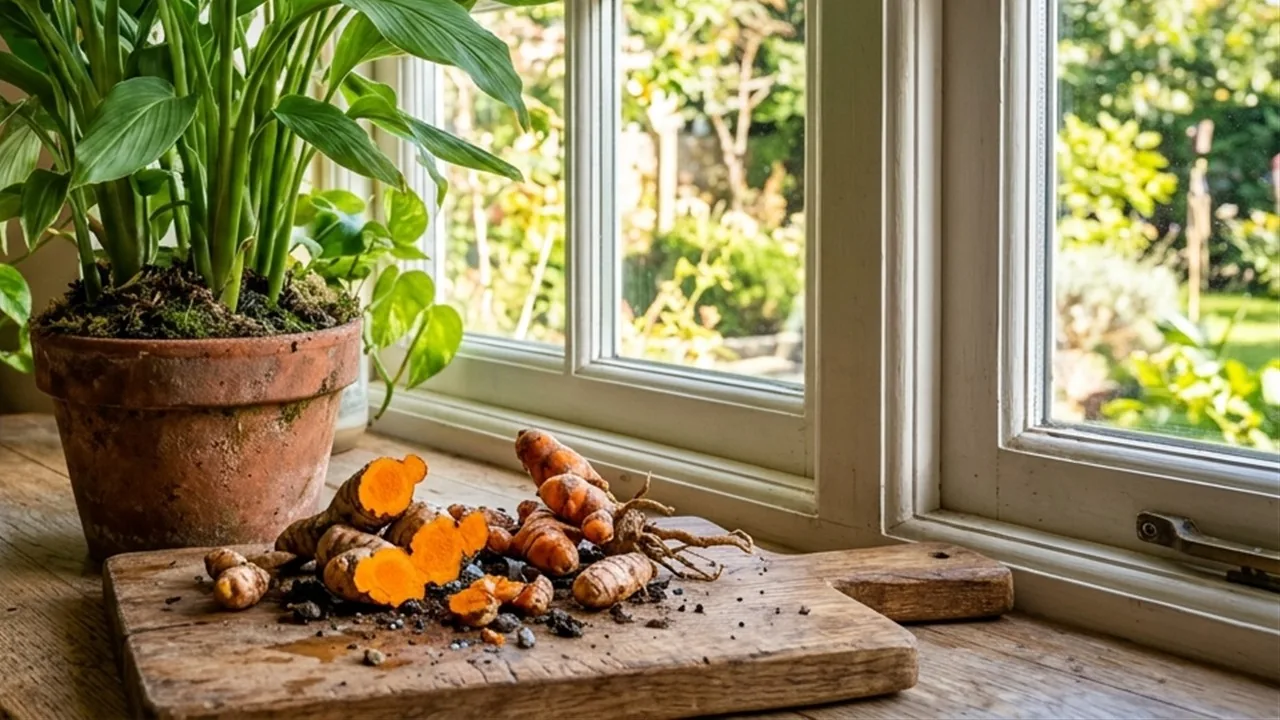
Turmeric is one of the easiest spices to grow at home, and you don’t need a garden center: the fresh roots sold in grocery stores will sprout. It is a tropical plant with big, glossy leaves that grows happily in a pot indoors, then rewards you with a harvest of bright orange rhizomes about 8 to 10 months later. This guide covers how to grow turmeric step by step, including how to grow turmeric from store bought roots, how to grow turmeric in pots, and how to grow turmeric indoors in a cold climate. It follows the University of Vermont, UF/IFAS, NC State and UC Master Gardeners.
How to Grow Turmeric at a Glance
| Need | What the sources say | Source |
|---|---|---|
| Plant | Curcuma longa, a ginger-family perennial grown for its rhizome | UC Master Gardeners |
| Hardiness | USDA zones 8 to 11; grow as a container plant or annual elsewhere | NC State, UC Master Gardeners |
| Size | 3 to 4 feet tall | NC State, UVM |
| When to plant | Early spring outdoors; indoors any time you can keep it warm | UF/IFAS, UC Master Gardeners, UVM |
| Rhizome pieces | 1 to 3 inches, with buds (“eyes”) | UF/IFAS, UC Master Gardeners, UVM |
| Planting depth | About 1 inch (UF/IFAS), about 2 inches (UVM), 2 to 4 inches (UC Master Gardeners) | See sources |
| Pot | At least 12 inches wide, well-drained, nutrient-rich mix | UVM |
| Temperature | 70 to 80 F to sprout; at least 68 F to grow; never below 50 F | UVM |
| Light | Partial shade to full sun; morning sun with afternoon shade | UF/IFAS, NC State, UC Master Gardeners |
| Water | Moist but never wet; sparingly until shoots appear | UVM, UC Master Gardeners |
| Harvest | 8 to 10 months after planting, when leaves yellow and dry | UVM, NC State |
Sources: University of Vermont Extension (Benoit 2019); UF/IFAS Gardening Solutions; NC State Extension Gardener Plant Toolbox; UC Master Gardeners of Santa Clara County.
How to Grow Turmeric From Store-Bought Rhizomes
You don’t need special stock. UVM Extension says rhizomes can come from a mail-order nursery or the grocery store, and suggests trying an organic market if your supermarket doesn’t carry them. UC Master Gardeners agree that fresh, plump grocery rhizomes can be planted.
- Pick well. Choose a rhizome that is firm, not shriveled, several inches long, with several buds or “eyes” (UVM).
- Cut it up. Cut it into 2 to 3 inch pieces with at least 2 to 3 buds each (UVM). UF/IFAS uses smaller 1 to 1½ inch sections with at least one eye.
- Let the cuts dry. Leave the pieces out for a day or two (UC Master Gardeners) or a few days (UF/IFAS) so the cut surfaces seal, which helps prevent rot.
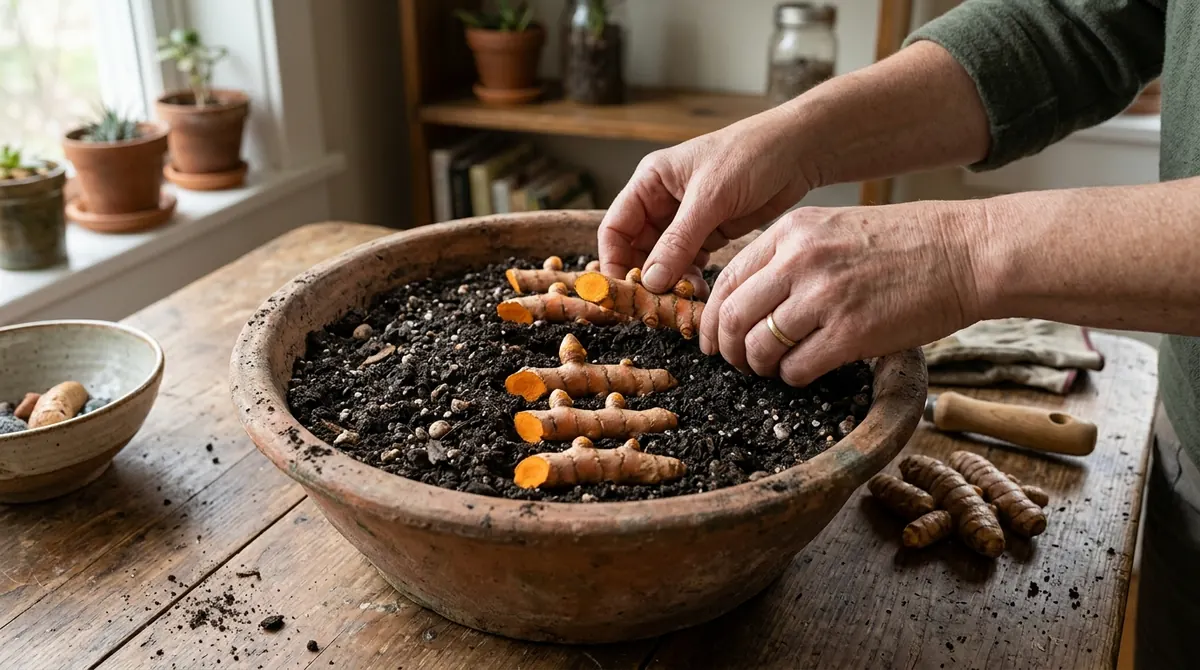
- Plant buds up. Lay each piece horizontally with the eyes facing up and cover with about 2 inches of mix (UVM).
- Be patient. Sprouts take 3 to 8 weeks, and turmeric is usually slower than ginger (UVM). Plant a few extra pieces in case some don’t sprout.
How to Grow Turmeric in Pots
- Size: at least 12 inches in diameter (UVM). The plant grows 3 to 4 feet tall, and NC State notes the thick rhizomes can even split a container open, so give it room and repot if it gets crowded.
- Mix: fill almost to the top with a nutrient-rich mix that drains well (UVM). NC State describes rich, slightly acidic soil high in organic matter with good drainage. A good-quality potting mix works; see our guide on how to repot a plant for mix basics.
- Drainage: a pot with drainage holes is essential, because wet mix rots the rhizome (UVM).
- Water once growing: NC State says container-grown turmeric needs a lot of water once it is in active growth, while the mix should still never be soggy.
How to Grow Turmeric Indoors
In a cold climate, turmeric is best grown indoors, at least for part of the year. UVM’s indoor routine:
- Warmth to sprout: keep the pot at 70 to 80 F. In a cool room, a seed-starting heat mat warms the mix; remove it once sprouts appear.
- Light after sprouting: move the pot to a sunny spot near a window, and add a grow light if needed.
- Minimum temperature: at least 68 F for good growth, and never below 50 F.
- Summer outside (optional): once the plant has leafed out and days are at least 68 F with nights above 50 F, move it outdoors, introducing it to sun gradually over several days so the leaves don’t scorch. Bring it back in when nights drop below 50 F.
Timing matters: count back 8 to 10 months from when you want to harvest. Starting rhizomes indoors in late winter gives a fall harvest, matching the spring planting UF/IFAS and UC Master Gardeners recommend outdoors. UC Master Gardeners add that indoor turmeric may go dormant in winter from cooler temperatures and low light, and that you should not water a dormant plant until growth resumes in spring. For winter light, see our guides to bright indirect light and grow lights.
Light, Water and Temperature
| Factor | Source | Recommendation |
|---|---|---|
| Light | UF/IFAS (Florida) | Grows well in partial to full shade |
| NC State | Morning sun with afternoon shade; tolerates full sun or part shade | |
| UVM (indoors, Vermont) | A sunny window, plus a grow light if needed | |
| Water | UVM, UC Master Gardeners | Moist but never wet; water sparingly until new growth starts |
| Humidity | UVM, NC State | UVM suggests misting if the air is dry; NC State says it prefers hot, humid conditions |
| Temperature | UVM | 70 to 80 F to sprout, 68 F or more to grow, never below 50 F |
Sources: UF/IFAS Gardening Solutions; NC State Extension Gardener Plant Toolbox; UVM Extension (2019); UC Master Gardeners of Santa Clara County.
The light advice looks contradictory, but it reflects climate: under Florida’s strong sun, shade protects the leaves, while in a northern home a sunny window is the brightest light available. Indoors, give it your brightest spot. For dry winter air, our guide on how to increase humidity for plants explains what works better than misting.
When and How to Harvest Turmeric
- When: after 8 to 10 months, when the foliage begins to fade, yellows and dries (UVM). Outdoors, harvest in late fall or early winter when the plant goes dormant (UF/IFAS, UC Master Gardeners), or in fall when the leaves start to wilt and dry (NC State).
- How: dig up the whole plant, brush off the soil and cut off the stalks (UVM).
- Replant some: save a piece or two of rhizome to replant (UVM), or leave some in the ground if you want it to grow back next spring (UC Master Gardeners).
- Store: whole rhizomes keep in the refrigerator for up to three months and cut pieces in the freezer for up to six months (UVM). UF/IFAS suggests freezing and grating straight from the freezer.
Problems and Fixes
| Problem | Likely cause | Fix |
|---|---|---|
| Rhizome rots before sprouting | Mix too wet, cut surfaces not dried | Dry cuts for a day or two; water sparingly until shoots appear (UVM, UC Master Gardeners) |
| Nothing happens for weeks | Too cool; turmeric is slow | Keep at 70 to 80 F with a heat mat; allow up to 8 weeks (UVM) |
| Leaves yellow and die back in late fall | Normal dormancy, harvest time | Harvest, or stop watering until spring (UC Master Gardeners) |
| Leaves scorched after moving outside | Sun introduced too quickly | Acclimate over several days (UVM) |
| Fine speckling on older leaves | Red spider mites, especially in dry soil (NC State) | Keep evenly watered; see our spider mite guide |
| Holes in young leaves outdoors | Slugs and snails (NC State) | Hand-pick; raise pots off the ground |
Sources: UVM Extension (2019); UC Master Gardeners of Santa Clara County; NC State Extension Gardener Plant Toolbox.
Pets: the ASPCA plant list has no entry for turmeric, and NC State does not list it as toxic. As with any plant, keep pets from chewing it, and ask your vet if they eat a lot of it.
Frequently Asked Questions
How do you grow turmeric?
Plant pieces of fresh rhizome with 2 to 3 buds each, buds up and about 2 inches deep, in a well-drained pot at least 12 inches wide. Keep it at 70 to 80 F until it sprouts, then give it bright light and harvest after 8 to 10 months (UVM).
Can you grow turmeric from store-bought turmeric?
Yes. UVM Extension and UC Master Gardeners both say fresh, firm, plump rhizomes from the grocery store can be planted. Pick pieces with visible buds and let the cuts dry for a day or two first.
How long does turmeric take to grow?
Sprouts appear in 3 to 8 weeks, and the rhizomes are ready to harvest about 8 to 10 months after planting, when the foliage yellows and dries (UVM).
Can turmeric grow indoors?
Yes. UVM recommends a sunny window or a grow light, temperatures of at least 68 F and never below 50 F. UC Master Gardeners note it may go dormant indoors in winter.
How deep do you plant turmeric?
Sources vary: about 1 inch (UF/IFAS), about 2 inches (UVM) or 2 to 4 inches (UC Master Gardeners), always with the buds facing up.
What size pot does turmeric need?
At least 12 inches in diameter (UVM). The plant grows 3 to 4 feet tall, and NC State notes the rhizomes can split a container that is too small.
Does turmeric need full sun?
No. UF/IFAS says it grows well in partial to full shade in Florida, and NC State recommends morning sun with afternoon shade. Indoors in cooler climates, a sunny window works best (UVM).