
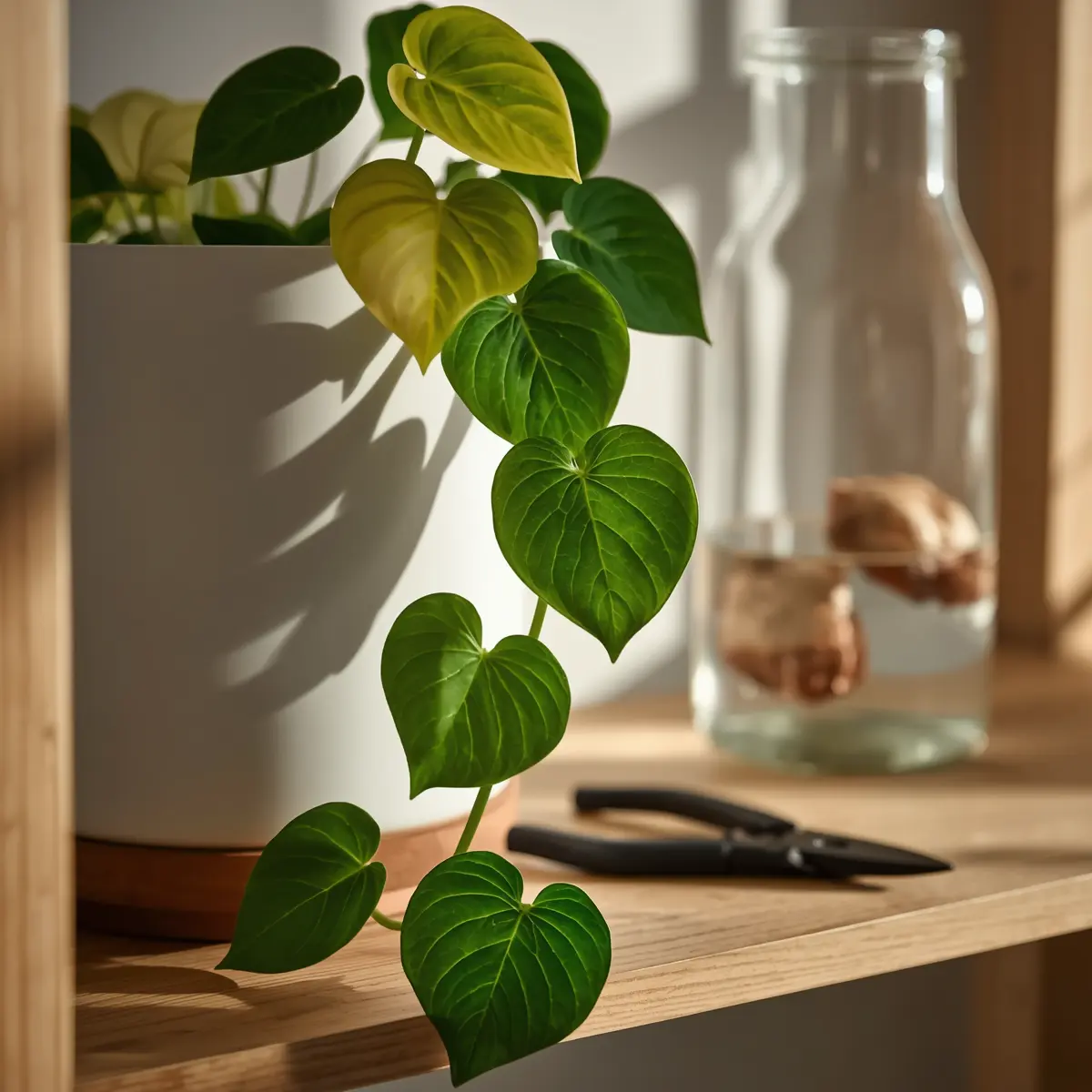
How to prune a pothos plant: with clean scissors, cut each long or bare vine back to just above a leaf node (the bump where a leaf joins the stem), in spring or summer if you can. New growth comes from the nodes left on the stem, so the plant fills in from where you cut. NC State Extension recommends pruning stems back to maintain a bushy habit, because over time pothos drops its older leaves and keeps most of its foliage at the stem tips. Root the pieces you cut off and plant them back in the same pot for an even fuller plant.
| Factor | What pothos needs |
|---|---|
| Light | Bright, indirect light; tolerates low light, but variegated types may lose color |
| Water | Let the soil dry between waterings, then water thoroughly |
| Humidity | Prefers 50 to 70%, tolerates typical home humidity |
| Temperature | 60 to 70 °F at night, 70 to 85 °F during the day |
| Soil | Airy, well-draining mix; repot every year or two |
| Feeding | Houseplant fertilizer every other month in spring and summer |
| Pruning | Prune stems back to keep the plant bushy |
Sources: Clemson Cooperative Extension HGIC 1568; NC State Extension Plant Toolbox.
How to Prune a Pothos for Fuller Growth
- Pick your timing. Any time works for removing dead or yellow growth, but the plant regrows fastest in spring and summer while it is actively growing.
- Clean your scissors or pruners with rubbing alcohol so you do not spread disease between plants.
- Find a node. Nodes are the slightly swollen points on the vine where a leaf joins the stem, often with a small brown aerial root. New shoots grow from nodes.
- Cut just above a node, leaving a short piece of stem above it. Choose the length you want each vine to be and cut at the nearest node.
- Cut some vines short. For a fuller look at the top of the pot, cut a few vines back hard, close to the soil, and leave others longer. The short ones regrow from near the base.
- Keep the cuttings. Any piece with at least one node can be rooted (see below) and planted back in the pot.
Clemson notes pothos can be grown in hanging baskets and will do so beautifully with regular pruning. Bare vines with leaves only at the tips are the clearest sign it is time to cut back.
Light: Why Pothos Gets Leggy
Pothos prefers bright, indirect light but will tolerate lower light (Clemson). In dim spots it keeps growing, but more slowly and more sparsely, and NC State and Clemson both note that low light can cause variegated pothos to lose some of their coloring. Pruning a leggy plant without moving it somewhere brighter usually just produces more leggy vines.
Varieties differ. Clemson describes ‘Marble Queen’ and ‘Snow Queen’ as needing more light than other varieties, ‘Pearls and Jade’ as needing lots of light to keep its color, and ‘Neon’ and ‘Jessenia’ as tolerating lower light. See our comparisons of Golden Pothos vs Marble Queen and N’Joy vs Pearls and Jade.
Watering
Let the soil dry between waterings, then water thoroughly so the water reaches all the roots (Clemson). NC State warns that overwatering can cause root rot and blackening of the leaf margins. Empty the saucer after watering, and expect to water less often in winter and right after a hard prune, when the plant has fewer leaves using water. Our guide to bottom watering covers another option.
Soil and Repotting
Clemson recommends an airy, well-draining soil mix and repotting every year or two, or when roots show through the drainage holes or the plant becomes root-bound. A good indoor potting mix with some extra perlite or bark works well. Spring, when you are pruning anyway, is a convenient time to repot. For mix options, see our aroid soil mix guide.
Rooting the Cuttings in Water
NC State notes that pothos vines easily root in water, and Clemson adds that cuttings root readily in soil or water but should have at least one node. To root your prunings:
- Cut the vine into pieces with one or two leaves and at least one node each.
- Remove any leaf that would sit underwater.
- Stand the cuttings in a jar of clean water with the nodes submerged, in bright indirect light.
- Change the water whenever it looks cloudy. If a stem turns soft or smelly, cut it back to firm tissue; our guide to cuttings rotting in water explains why it happens.
You can also skip the water step and push the cut ends straight into the moist soil of the parent pot, which is the quickest way to make it fuller.
Moving Water-Rooted Cuttings to Soil
Once the cuttings have a few healthy roots, plant them in moist potting mix with the nodes just below the surface. Keep the soil a little more evenly moist than usual for the first couple of weeks while the roots adjust, then go back to letting it dry between waterings. Some drooping in the first days is common. There is no need to wait for very long roots, and cuttings left in water for months can take longer to adjust to soil.
Training Pothos Up a Moss Pole
In nature pothos climbs tree trunks, and Clemson notes that growing it up a moss pole or wooden rod lets it show its climbing habit and produce larger leaves (and, depending on the variety, holes in the leaves). NC State likewise says that with a climbing support and adequate light, the plant produces large, mature leaves. Tie the vines to the pole loosely, with the aerial roots against it, and keep a moss pole slightly damp so the roots attach. Our sphagnum moss guide covers working with moss.
Is Pothos Toxic to Cats and Dogs?
Yes. The ASPCA lists golden pothos as toxic to dogs and cats because of insoluble calcium oxalates, which cause oral irritation, drooling, vomiting and difficulty swallowing. Clemson calls all parts of the plant mildly toxic if eaten, and NC State notes the sap can irritate skin. Wear gloves if you have sensitive skin, keep prunings away from pets, and see our cat-safe plants guide for alternatives.
Yellow or Brown Leaves After Pruning
| Symptom | Likely cause (Clemson, NC State) | What to do |
|---|---|---|
| Yellow leaves, soil staying wet | Overwatering or root rot | Let the soil dry; check roots and repot in fresh, well-draining mix if they are soft |
| Yellow leaves, plant otherwise fine | Low fertility | Feed every other month in spring and summer |
| Dark, blackened leaf edges | Overwatering | Water less often |
| Scorched leaves or dry tips | Low humidity or intense light | Bright indirect light; keep away from vents and hot or cold windowsills |
| Variegation fading | Low light | Move somewhere brighter |
| Long bare vines | Older leaves dropping, often with low light | Prune back and improve the light |
Sources: Clemson Cooperative Extension HGIC 1568; NC State Extension Plant Toolbox.
For a wider guide to yellowing, see plant leaves turning yellow.
For other trailing aroids, see our guides to Scindapsus pictus and pothos care.
Frequently Asked Questions
Where do you cut a pothos to make it bushier?
Just above a leaf node. New shoots grow from the nodes left on the vine, and cutting some vines back close to the soil fills in the top of the pot. NC State recommends pruning stems back to keep pothos bushy.
Can I cut my pothos back hard?
Yes. Pothos regrows well from the nodes left on the stem, as long as each vine keeps at least one node and the plant gets reasonable light.
When is the best time to prune pothos?
Spring and summer, when the plant is actively growing and recovers fastest. Dead or yellow leaves can be removed at any time.
Can you put pothos cuttings back in the same pot?
Yes. Cuttings with at least one node root readily in soil or water (Clemson), so you can push them into the parent pot’s soil or root them in water first.
How often should I water my pothos?
When the soil has dried, water thoroughly. Clemson advises letting the soil dry between waterings; the interval depends on light, pot size and season.
Are pothos toxic to pets?
Yes. The ASPCA lists pothos as toxic to dogs and cats because of insoluble calcium oxalates.