
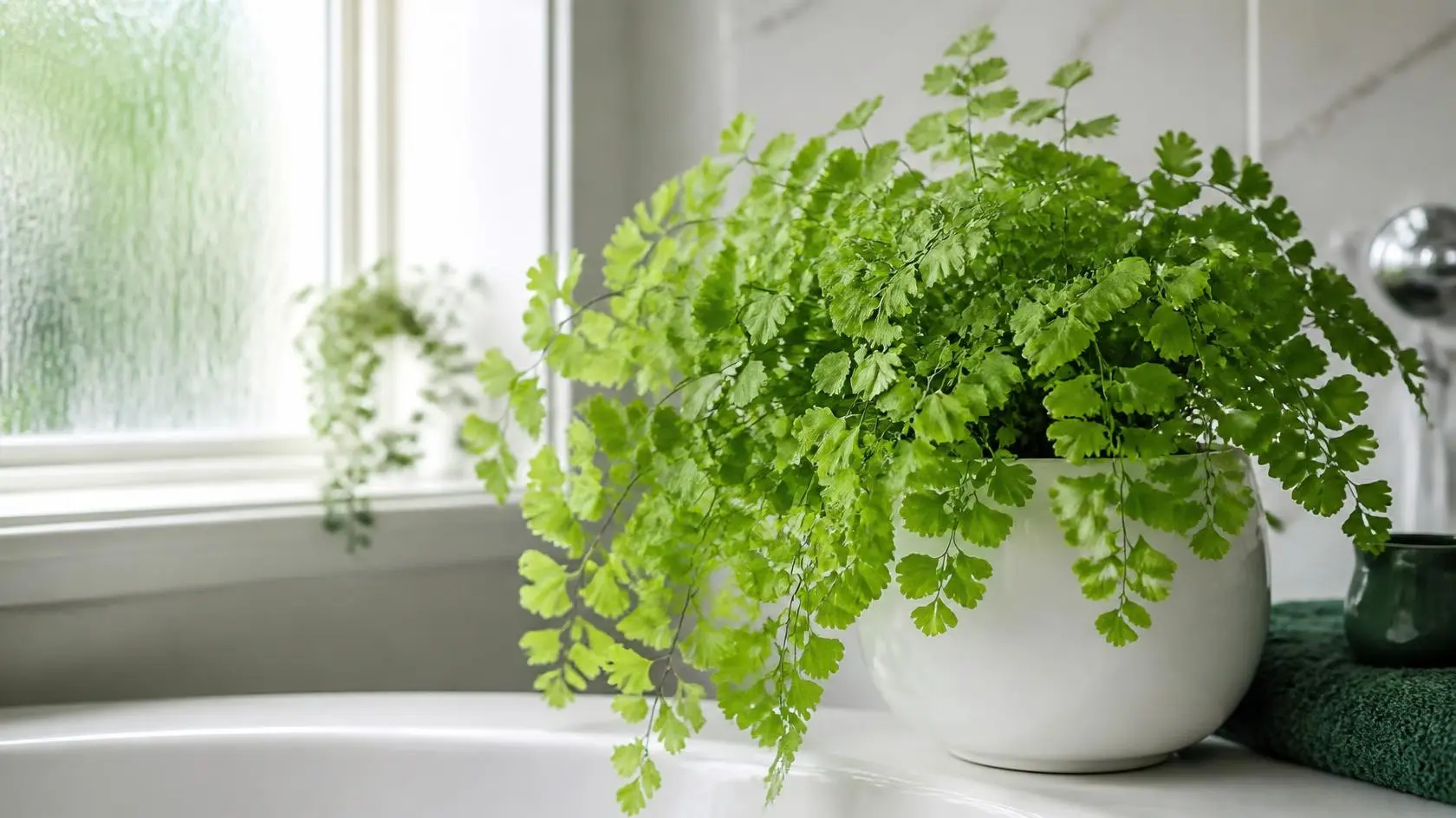
Maidenhair fern care has a reputation problem. The plant sits in garden centers looking like a cloud of green lace, and somewhere between the checkout line and your living room it usually turns into a tray of brown thread. Ask around and you will hear the same verdict everywhere: difficult, dramatic, not for beginners.
That verdict is half right. The maidenhair fern is unforgiving of one specific mistake, and nearly everyone makes that mistake. Understand it, correct it, and this becomes one of the most rewarding plants you can grow indoors.
Quick answer: Maidenhair fern care comes down to three non-negotiables: bright indirect light without direct sun, soil that stays consistently moist but never soggy, and high humidity (many growers aim for 60 percent or more). Dry air, not dry soil, is what kills most maidenhairs; extra watering cannot compensate for it, so a humidifier or humidity tent matters more than your watering can.
Maidenhair Fern Care Snapshot
| Parameter | Ideal | Avoid |
|---|---|---|
| Light | Bright indirect light or diffused sun | Direct sun (scorches fronds), deep full shade |
| Water | Consistently moist, well-drained soil; never let roots fully dry | Drying out, even once; soggy waterlogged soil |
| Humidity | High (many growers aim for 60%+); humidifier, pebble tray or enclosed terrarium | Relying on misting alone in a dry room |
| Temperature | Warm and steady, average household range | Cold drafts, chilly windowsills, heating vents |
| Soil | Moisture-retentive but fast-draining mix | Heavy compaction, salty buildup |
| Fertilizer | Half-strength or weaker, only in spring and summer | Full-strength feeding; fertilizing in winter |
| Water quality | Distilled, rain, or filtered water if leaf tips brown | Hard tap water with heavy mineral content |
| Revival | Cut to soil level if rhizomes are still firm; raise humidity | Assuming a browned plant is dead before checking |
| Pet safety | Generally treated as non-toxic, but unconfirmed by ASPCA | Letting pets chew any houseplant freely |
Meet the Maidenhair Fern
The maidenhair ferns belong to the genus Adiantum, a group found in tropical and subtropical regions around the world, and the plant you will most often see for sale is Adiantum raddianum, the Delta maidenhair fern. UF/IFAS describes the genus as a shade and partial-shade plant with poor drought tolerance, which tells you most of what you need to know about its temperament before you ever water it.
Learn the plant’s morphology, because it explains its fragility. Each frond rises on a thin, wiry stem that is dark brown to near-black, and the stem branches into small, fan-shaped leaflets arranged like overlapping petals on a flower. Those leaflets are thin to the point of translucence, with no waxy protective layer, and the whole structure is wired to a creeping underground rhizome. The visible plant is essentially a humidity meter made of lace. When the air dries, the leaflets crisp within hours; when the air is humid and the soil moist, the same plant grows with surprising speed.
That is the first reframe for this guide: the maidenhair is not slow, weak, or inherently fussy. It is a fast-growing fern whose entire leaf architecture assumes rainforest air. Give it rainforest air and it thrives like a weed.
Light: Bright but Never Direct
Shade-loving does not mean dim-loving. Missouri Botanical Garden’s Plant Finder entry for A. raddianum describes it as responding best to bright indirect light, including diffused sun, while disliking direct sun and losing vitality in full shade. UF/IFAS lists shade to partial shade as its requirement in the landscape.
In a home, that translates to a spot near an east or north window, a few feet back from a south or west window behind a sheer curtain, or a bright bathroom window. Direct rays through glass will scorch the fan-shaped leaflets within an afternoon, bleaching them pale and then brown at the points of contact. But a dark hallway, which many people instinctively choose for a “shade plant,” causes the fronds to weaken, stretch, and thin out over a few months.
If your apartment’s windows are small or north-facing, this is one of the few plants where a grow light genuinely helps more than it would for a succulent. Our grow light guide for indoor plants covers placement so you can supplement a dim room without frying the fronds.
Water: Moist, Never Soggy, Never Dry
The Missouri Botanical Garden is unambiguous on watering: use a consistently moist but well-drained potting soil, and never allow the roots to dry out. UF/IFAS rates the genus’s drought tolerance as poor. NC State Extension’s genus guidance matches: maidenhair ferns generally prefer soils that are organic, moist and well-drained, meaning damp but never swampy.
Practically, check the plant two or three times a week. Water when the surface of the mix feels just barely dry to the touch, and water thoroughly until it drains from the bottom. Then dump the saucer. A maidenhair will forgive you for a small lapse in timing; it will not forgive a weekend away in a dry, heated apartment, where the entire plant can brown and collapse in two days. That is the single most common way these ferns die.
Humidity Is the Real Dealbreaker
Here is the distinction that separates owners who keep maidenhairs alive from those who keep replacing them. The Missouri Botanical Garden says this fern needs a very humid atmosphere, calls it a difficult plant for that reason, and suggests a tray of wet pebbles or a spot in a bathroom, where humidity is generally higher. Many growers aim for 60 percent or more. Extra watering cannot make up for dry air: in most homes the air, not the soil, is the limiting factor.
Why? The leaflets transpire water constantly through their enormous combined surface area and their thin, unprotected tissue. In dry air the plant loses moisture faster than its roots can replace it, and the leaflets crisp from the margins inward no matter how wet the soil is. If your maidenhair has ever looked like it needs water while sitting in visibly moist soil, you have met this mechanism personally.
Ranked from most to least effective: a small humidifier running near the plant is the reliable solution. A closed or partially closed glass terrarium creates a self-maintaining humid microclimate and is arguably the most forgiving way to grow this fern. A humidity tent (a clear plastic bag or cloche over the pot) works well and costs nothing. A pebble tray raises humidity only in the immediate zone around the pot. Misting, the most popular advice online, evaporates within minutes and mainly entertains the owner; do it if you enjoy it, but do not rely on it.
A bright bathroom is the classic placement for a reason: shower steam supplies genuine humidity several times a day, and the window supplies the bright indirect light. It is the one room where the plant’s two hardest requirements meet without equipment.
Soil, Salt Sensitivity, and Feeding
The mix must hold moisture without suffocating roots. A standard peat-based indoor mix cut with perlite and a little orchid bark hits the target: water-retentive enough that the plant never fully dries, open enough that the roots get oxygen between waterings. Fern roots are fine and shallow, so avoid dense, compacted soils entirely.
UF/IFAS lists poor soil salt tolerance for the genus, and this has two practical consequences. First, fertilize at half strength or weaker, and only in spring and summer; the soft roots burn easily on fertilizer salts. Second, watch your water. If your tap water is hard, mineral salts accumulate at the rhizome level and show up as brown, crispy leaf tips while the rest of the plant looks healthy. If you see that pattern, switch to distilled, filtered, or rainwater. Our guide to choosing the best water for sensitive houseplants covers the testing and options in detail; the same principles apply here.
Temperature and the Right Room
Keep it warm and boring. Average warm household temperatures suit the plant, and stability matters more than the exact number on the thermostat. The two placement rules: keep the pot away from cold drafts and off chilly windowsills in winter, where glass temperatures drop well below room temperature, and keep it out of the blast path of air-conditioning and heating vents, which deliver dry air and wild temperature swings in one package. Terracotta pots dry faster than plastic; in a very dry home, a plastic nursery pot inside a decorative outer pot retains moisture more forgivingly.
Revive a Browned Maidenhair in Four Steps
Before you compost that sad-looking fern, check one thing. Maidenhairs grow from creeping underground rhizomes, and the rhizome is far tougher than the foliage it produces. A plant whose fronds have browned completely can push entirely new growth if the rhizome survived.
- Check the rhizomes before deciding anything. Gently dig into the top of the soil with a finger and feel the dark, wire-like rhizomes. Firm and pale inside when snapped means alive. Brittle, hollow, or mushy means dead, and at that point the plant is genuinely gone.
- Cut everything back to soil level. Remove every browned frond and stem cleanly at the surface with scissors or by pinching. The plant will look like a pot of dirt. That is correct.
- Rebuild the microclimate. Water lightly to moisten the mix, then place the pot under a clear plastic bag or inside a large glass container with the lid cracked, in bright indirect light. The enclosure traps evaporating moisture and holds humidity near 100 percent around the recovering plant.
- Be patient and keep it consistent. Keep the soil barely moist and the air humid. New fiddleheads can take two to six weeks to appear, and they are fragile; do not open the enclosure to check daily. When several new fronds are open and firm, acclimate the plant gradually by opening the enclosure a little more each day over a week.
Common Mistakes That Kill Maidenhairs
- Treating it like a shade plant. It needs bright indirect light, not a dark corner. Dim rooms cause thinning, weak fronds.
- Watering more to fix crispy leaves. Crisping in moist soil is a humidity problem. Raise the humidity instead, or you will rot the roots while the air still dries the leaves.
- Letting it dry out “just once.” One full dry-down can kill the fine roots faster than the plant can rebuild them, especially in winter.
- Direct sun “to brighten it up.” Even an hour of unfiltered afternoon sun through glass damages the fan-shaped leaflets.
- Full-strength fertilizer. Salt burn shows up as brown tips that mimic underwatering. Feed weakly, or not at all, through fall and winter.
- Assuming brown means dead. Check the rhizomes first, every time. Countless maidenhairs have been composted with living roots.
Is Maidenhair Fern Safe Around Pets?
Here is an honest answer, because most sources skip it: maidenhair fern does not have its own dedicated entry in the ASPCA’s Toxic and Non-toxic Plants database, so there is no official classification to cite one way or the other. The broader consensus treats true ferns, including Adiantum, as non-toxic to cats and dogs, and no toxic principle has been established for the genus in extension literature. NC State Extension does not flag it as a problem species.
The practical guidance: the plant is very likely safe, but “not listed” is not the same as “verified non-toxic,” and any plant material can cause mild stomach upset if a pet eats enough of it. Keep the fern on a shelf or in a hanging pot away from enthusiastic chewers, discourage plant grazing generally, and call your veterinarian if a pet eats any houseplant in quantity and seems unwell.
Frequently Asked Questions
Why is my maidenhair fern turning brown and crispy?
Almost always dry air or one full dry-out of the soil, sometimes both. Check whether the soil is moist: crisping in moist soil means humidity is the problem, and extra watering will not fix it. Raise humidity with a humidifier or enclosure, and trim the damaged fronds so the plant can redirect energy.
How often should I water a maidenhair fern?
Check the soil two or three times a week and water when the surface feels just barely dry, which usually means every few days in summer and less in winter. The real rule from Missouri Botanical Garden is simpler: the roots must never dry out completely, and the soil must never sit waterlogged.
Can a brown, crispy maidenhair fern come back?
Often, yes. Feel the rhizomes in the soil: if they are firm rather than brittle or mushy, the plant is alive. Cut all fronds back to soil level, keep the soil barely moist, and enclose the pot in a clear bag or terrarium in bright indirect light. New growth can take two to six weeks.
Is maidenhair fern really that hard to grow?
It is unforgiving of one mistake, not generally difficult. Dry air and complete dry-outs kill it fast, but a bright bathroom, a terrarium, or a small humidifier satisfies its needs entirely. Growers who meet the humidity requirement routinely report it growing quickly and even becoming weedy.