
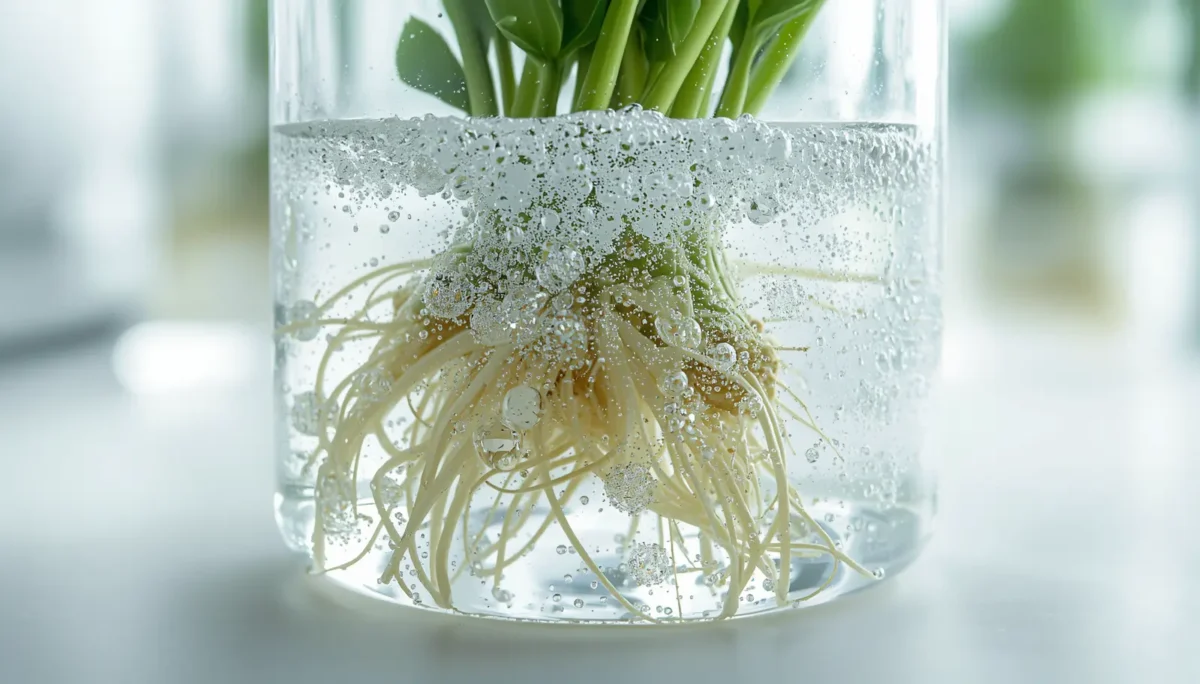
Treating root rot with hydrogen peroxide is popular advice, but the evidence behind it is thin. Extension plant pathologists recommend a simpler fix: cut away the rotted roots, repot in fresh pasteurized mix, and water less. Clemson Extension says that if only a few roots are infected, you should cut them out and repot in sterile soil. The one controlled study we found on peroxide root dips, on phalaenopsis orchids, recorded minor root damage from plain 3% peroxide and lasting damage at 6% and 12%. If you use peroxide at all, keep it to drugstore 3%, diluted, as a short rinse after surgery, never as the cure.
| Question | What the sources say |
|---|---|
| Main cause | Soil-borne water molds and fungi (Pythium, Phytophthora, Rhizoctonia, Fusarium) in wet soil (Wisconsin Extension) |
| First-line treatment | Cut out infected roots, repot in sterile soil (Clemson); reduce soil moisture (Wisconsin) |
| Fungicides at home | Not recommended for houseplants: limited products, often cost more than the plant (Wisconsin; Clemson) |
| Hydrogen peroxide | 3% dip: minor root damage; 6% and 12%: lasting damage; no cure shown (Goossen and Williams, 2021) |
| Tools | 10% bleach or 70% alcohol for at least 30 seconds (Wisconsin) |
| Old mix and pots | Don’t reuse the mix or drainage water; throw out plastic pots, disinfest clay pots (Wisconsin) |
Sources: University of Wisconsin Plant Disease Diagnostics Clinic; Clemson HGIC 2251; Goossen and Williams, HortTechnology 31(6), 2021.
What Causes Root Rot in Houseplants?
According to the University of Wisconsin Plant Disease Diagnostics Clinic, root rot is caused by a large number of soil-borne organisms, most commonly Pythium, Phytophthora, Rhizoctonia solani and Fusarium. They have wide host ranges, most prefer wet soil, and Pythium and Phytophthora produce spores that survive for long periods in soil or plant debris. Clemson adds that the spores spread through splashing water and moving infested soil.
The trigger is almost always soil that stays wet. Wisconsin’s summary is blunt: root rot organisms grow and reproduce best in wet soils, so moderating soil moisture is the most important control. Pots without drainage, saucers of standing water, oversized pots and dense mixes all keep roots wet longer. For a closer look at the most common water mold, see our Pythium root rot guide.
How Do You Know If Your Plant Has Root Rot?
Wisconsin Extension says gardeners usually notice root rot when a plant wilts even though the soil is wet. Affected plants are often stunted, with yellow or red leaves that look like a nutrient deficiency. Clemson notes that stems may be girdled at or near the soil line by a ring of brown or black tissue.
The only way to confirm it is to look at the roots. Rotted roots are soft and brown to black and may smell bad (Wisconsin; Clemson). Healthy roots are firm and white to light tan. If the outer layer of a root slides off when you pinch it, leaving a thin thread, that root is rotted. Yellow leaves have many causes, so check the roots before treating; our yellow leaves guide covers the others.
Does Hydrogen Peroxide Kill Root Rot?
Hydrogen peroxide is an oxidizer, and it can kill microorganisms on contact. That does not make it a root rot treatment. We found no controlled study showing that a peroxide soak cures root rot in houseplants, and the extension services above don’t recommend it. The closest research is a 2021 HortTechnology study by Goossen and Williams, which tested peroxide root dips on phalaenopsis orchids because consumers use them to treat root decay. A single 3% dip caused minor root damage, and it did not even kill the algae in the root zone. The authors concluded that consumers should be wary of using hydrogen peroxide on roots and should focus on care and watering instead.
The fizz is not the rot dying
Peroxide foams on roots because plant cells, healthy ones included, contain catalase, an enzyme that splits hydrogen peroxide into water and oxygen gas. A slice of potato fizzes the same way. Bubbling tells you peroxide is breaking down, not that pathogens are being destroyed.
Peroxide also can’t fix the two things that decide whether the plant survives: how much healthy root is left, and whether the new mix stays waterlogged. Cutting away dead roots and correcting the watering do the real work.
How Much Hydrogen Peroxide Do You Use for Root Rot?
If you decide to use it, stay well below the concentrations that harmed roots in the orchid study:
- Use only 3% drugstore hydrogen peroxide. In the orchid study, 3% caused minor damage, while 6% and 12% damaged root health permanently and the plants wilted by week 4.
- Dilute it. Mixing 1 part 3% peroxide with 2 parts water gives roughly 1%, a third of the strength that already caused minor damage. No study has tested whether this strength helps against root rot; it is simply gentler.
- Keep the dip short. The study used a single 3-minute dip. Longer soaks were not tested, so there is no evidence that 15 or 20 minutes does more good.
- Never use 35% “food grade” peroxide on plants or skin. It is a corrosive concentrate that needs gloves and eye protection.
Do it once, after cutting away the rotted roots, then rinse the roots in clean water and repot.
How to Treat Root Rot Step by Step
- Decide whether the plant is worth saving. Wisconsin Extension says the most cost-effective option is often to throw the plant out. If most roots are gone but the stems are firm, take healthy stem cuttings instead; our sphagnum moss propagation guide shows how.
- Unpot and clean the roots. Remove all the old mix and rinse the roots in lukewarm water so you can see every root.
- Cut out the rot. Using scissors disinfected with 70% alcohol or 10% bleach for at least 30 seconds (Wisconsin), cut each soft, brown root back to firm, light-colored tissue. Clemson recommends this when only some roots are infected. Disinfect the blades again between plants.
- Optional peroxide dip. If you want to, dip the trimmed roots briefly in diluted 3% peroxide as described above, then rinse in clean water. Skipping this step is fine.
- Repot in fresh mix. Use new pasteurized commercial potting mix, never the old mix or garden soil (Wisconsin), in a pot with drainage holes that is only slightly larger than the remaining roots. Throw out a plastic pot that held a rotted plant; disinfest a clay pot with 10% bleach (Wisconsin).
- Water carefully. Water just enough to settle the mix, let it drain completely, and don’t let the plant sit in drainage water. Wait until the top of the mix has dried before watering again.
- Give it time. Keep the plant in bright, indirect light, out of hot sun, and hold off on fertilizer until it shows new growth.
Pro tip: Don’t reuse drainage water or old mix for any plant. Wisconsin Extension notes that both can carry root rot organisms to healthy plants.
Can Hydrogen Peroxide Damage Healthy Plant Roots?
Yes. Peroxide doesn’t distinguish between pathogens and plant cells. In the orchid study, root health ratings (5 = very healthy) fell from 5 to about 4.1 after a single 3% dip and to about 1.1 after a 12% dip, and root and leaf fresh weights dropped as the concentration rose. The authors note that long-term effects even of the 3% dip are unknown.
Leaves are even more sensitive. In a 2019 HortTechnology study by Eicher-Sodo, Gordon and Zheng, daily sprays of just 25 mg per liter of peroxide (0.0025%) increased leaf damage on most microgreen and lettuce crops tested. Drugstore peroxide is 3%, or 30,000 mg per liter, so don’t spray it on foliage.
What Is the Best Soil Mix After Root Rot Treatment?
Use fresh, pasteurized commercial potting mix, never garden soil, which Wisconsin Extension says often contains root rot fungi. Clemson also calls for sterilized soil and pots. Choose a pot with drainage holes, and skip the gravel layer at the bottom: Wisconsin notes it can actually inhibit drainage.
For aroids such as monstera and philodendron, an airy mix with bark and perlite dries faster than straight potting soil; our aroid soil mix guide gives recipes. Plants that rot repeatedly may do better in an inorganic substrate; see our guide to Lechuza PON semi-hydro. Whatever the mix, the rule doesn’t change: let it dry partly between waterings.
Is Monstera Toxic to Cats and Dogs?
Yes. Monstera and philodendron, two of the plants most often rescued from root rot, are toxic to pets. The ASPCA lists Monstera deliciosa (ceriman) as toxic to dogs, cats and horses because of insoluble calcium oxalates, with signs including oral irritation, swelling of the mouth, drooling, vomiting and difficulty swallowing. It lists split leaf philodendron as toxic to dogs and cats for the same reason. Keep trimmed roots, discarded mix and peroxide out of pets’ reach, and call your vet or the ASPCA Animal Poison Control Center at (888) 426-4435 if a pet chews the plant. For safer choices, see our cat safe plants list.
Frequently Asked Questions
How long until I see new root growth after treating root rot?
There is no reliable timeline: it depends on the species, how many healthy roots remain, light and temperature. Look for new white root tips and new leaves over the following weeks. If the stems turn soft or the plant keeps declining, take healthy cuttings while you still can.
Can I use hydrogen peroxide as a preventative treatment?
There’s no evidence that routine peroxide drenches prevent root rot, and the orchid study authors advise focusing on care and watering instead. Wisconsin Extension says moderating soil moisture is the most important control: use pots with drainage holes and never let plants sit in drainage water.
Should I fertilize after treating root rot?
Hold off until the plant shows new growth. A damaged root system takes up little, and extra fertilizer salts in a small root zone add stress. Then resume with a light feeding.
Can hydrogen peroxide treat fungal leaf diseases?
It’s not a good choice. A 2019 HortTechnology study found leaf damage on most crops tested from daily sprays as weak as 25 mg per liter, far below drugstore strength. Remove affected leaves, improve air flow, and keep foliage dry instead.
Why did my plant die after treating root rot?
Usually because too few healthy roots were left, rotted tissue was missed, or the new mix stayed wet. Wisconsin Extension notes that root rots are often acute and can kill the plant, and that throwing it out is often the most cost-effective option.
How do I prevent root rot from coming back?
Wisconsin Extension recommends pots with drainage holes and no gravel layer, pasteurized commercial potting mix, never reusing old mix or drainage water, disinfecting tools, and above all watering only as much as the plant needs.
Sources
- Hudelson and Jull, University of Wisconsin: Root Rots on Houseplants (D0096)
- University of Wisconsin: Root Rots in the Garden (D0095)
- Clemson Cooperative Extension HGIC 2251: Houseplant Diseases and Disorders
- Goossen and Williams (2021): Phytotoxic Effects of Hydrogen Peroxide Root Dips on Hybrid Phalaenopsis Orchid Plants, HortTechnology
- Eicher-Sodo, Gordon and Zheng (2019): Phytotoxic Effects of Hydrogen Peroxide on Microgreen Species and Lettuce Cultivars, HortTechnology
- ASPCA: Ceriman (Monstera deliciosa)