
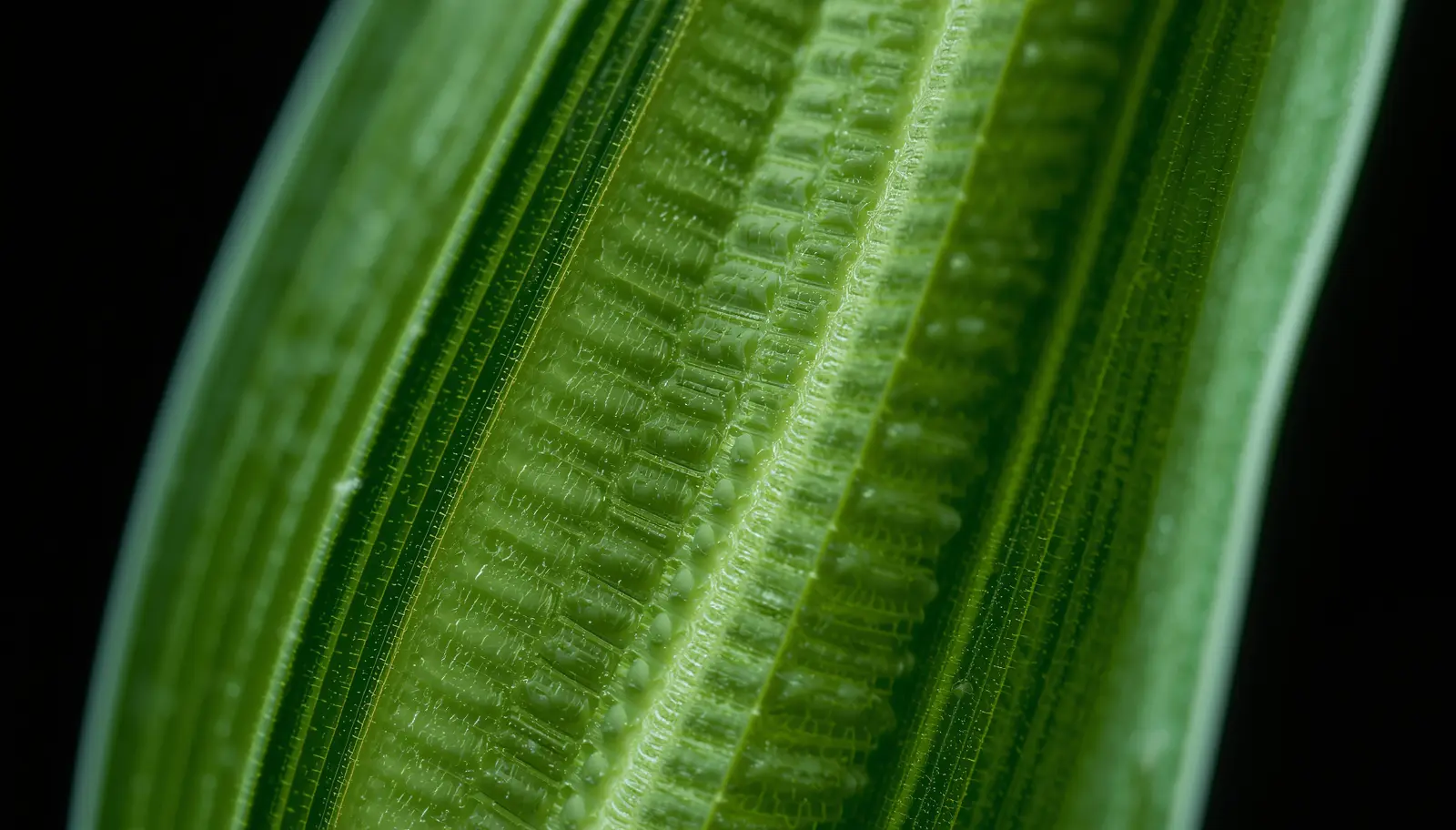
Sansevieria cylindrica—the African Spear Plant—displays perfect vertical geometry: cylindrical leaves rising 60-120cm from compact rhizomatous base, each spear 2-3cm diameter with longitudinal channels directing rare rainfall toward root zone.
Yet in cultivation, structural integrity fails predictably. Spears lean, buckle at mid-height, or collapse entirely at substrate interface. The cylindrical morphology thins, loses rigidity, develops accordion-like compression zones. Rhizomes rot from base upward converting firm white tissue to brown mush despite “minimal watering” schedules. Growers interpret symptoms as neglect, increase hydration frequency, accelerate decay.
The diagnosis: metabolic incompatibility between CAM photosynthesis physiology and C3-optimized cultivation protocols. Sansevieria cylindrica utilizes Crassulacean Acid Metabolism—inverted gas exchange temporality opening stomata exclusively at night, storing CO₂ as malic acid, processing photosynthesis during day with sealed leaf surfaces. This adaptation evolved for extreme aridity (Kenya/Tanzania semi-arid zones, 200-400mm annual rainfall). Indoor cultivation applying standard “houseplant care” (weekly watering, moderate humidity, low light) directly contradicts physiological requirements causing cellular pathology.
The solution: Understanding Sansevieria cylindrica care CAM photosynthesis requirements—high Daily Light Integral triggering sufficient metabolic activity to process stored malic acid, extended desiccation periods between volumetric hydration events matching natural precipitation patterns, substrate engineering preventing anaerobic rhizome zones, environmental neglect (low RH, minimal intervention) supporting rather than fighting evolutionary adaptations.
- Photosynthetic pathway: Obligate CAM (Crassulacean Acid Metabolism)—nocturnal CO₂ fixation as malic acid, diurnal carbon processing with stomata sealed
- Light requirements: DLI 8-15 mol/m²/day (200-400 PPFD × 12 hours) preventing etiolation and maintaining structural rigidity in cylindrical morphology
- Hydration protocol: Volumetric method—water only when digital moisture probe confirms 0% at rhizome depth (4-12 week intervals), 1:4 water-to-substrate ratio
- Substrate specifications: High-porosity inorganic mix (60% pumice, 30% calcined clay, 10% charcoal)—prevents anaerobic rhizome rot
- Environmental targets: Ambient RH <50%, temperature 18-32°C, minimal humidity supplementation—CAM efficiency maximized in arid conditions
📋 Table of Contents
- The Diagnosis: Structural Collapse and Substrate Pathology
- The Pathology: CAM Photosynthesis and Cylindrical Morphology
- The Volumetric Hydration Protocol (Step-by-Step)
- Substrate Engineering: High-Porosity Inorganic Matrix
- Light Requirements: DLI Targets for Structural Integrity
- Post-Operative Care: Environmental Baseline
- Frequently Asked Questions
- The Lab Verdict

Structural perfection: vertical cylindrical morphology under optimized CAM conditions
The Diagnosis: Structural Collapse and Substrate Pathology
Visual markers of inadequate Daily Light Integral and incompatible hydration patterns manifest as predictable structural pathology in cylindrical leaf morphology.
Symptom Cascade: Light Deficiency
Etiolation—cellular elongation without proportional cell wall thickening—causes characteristic structural failure in cylindrical Sansevieria morphology.
The mechanism: Insufficient photon flux (DLI <5 mol/m²/day) triggers shade-avoidance response. Auxin production increases promoting rapid vertical growth attempting to reach higher light zones. Cell division and elongation accelerate but lignin synthesis (providing structural rigidity) lags due to limited photosynthetic energy production. Result: cells elongate 200-300% normal length but walls remain thin, unable to support cylindrical geometry under gravitational load.
Progressive symptoms:
- Weeks 1-4: New spears emerge thinner than previous growth (diameter reduction from 2.5cm to 1.5cm), color pales from deep green to yellow-green indicating chlorophyll dilution
- Weeks 4-8: Existing spears develop lean 10-20° from vertical, flexible when pressed (firm spears resist pressure, etiolated spears bend), longitudinal channels shallow or absent
- Weeks 8-16: Severe lean 30-45°, buckling at mid-height forming accordion compression zones (visible horizontal wrinkles), eventual collapse at substrate interface as basal cells rupture from mechanical stress
- Months 4-6: Plant spreads horizontally across substrate surface unable to maintain vertical architecture, new growth ceases as remaining photosynthetic capacity diverted to structural maintenance
Symptom Cascade: Substrate Anaerobiosis
⚠️ RHIZOME ROT PATHOLOGY: ANAEROBIC CELLULAR COLLAPSE
Frequent watering creates continuously saturated substrate zones—oxygen displacement enables anaerobic bacterial proliferation digesting rhizome tissue.
The destruction sequence:
- Substrate saturation (Hours 0-24 post-watering): Water fills soil pores displacing oxygen. Air-filled porosity drops from required 50-60% to <10%. Root zone becomes hypoxic (oxygen-depleted)
- Root hypoxia (Days 1-3): Rhizome cells require oxygen for aerobic respiration. Without O₂, cells switch to anaerobic fermentation producing ethanol and lactic acid as metabolic byproducts. These accumulate to toxic concentrations causing membrane damage
- Cellular necrosis (Days 3-7): Rhizome cells at substrate interface (deepest, least oxygenated zone) rupture from osmotic stress. Brown discoloration visible 1-2cm above substrate line spreading downward into buried tissue
- Anaerobic bacterial invasion (Days 7-14): Pectobacterium, Erwinia, Clostridium species metabolize necrotic tissue producing characteristic sulfurous odor (hydrogen sulfide from protein degradation). Firm white rhizome converts to brown-black mush
- Structural detachment (Weeks 2-4): Rhizome loses anchorage capacity. Cylindrical spears detach at base, topple despite healthy appearance of above-ground tissue. Root system reduced to non-functional slime
Critical distinction: Rhizome rot initiates from SUBSTRATE conditions (oxygen deprivation) not pathogen introduction. Anaerobic bacteria are facultative—present in all soils but only metabolically active in oxygen-free environments. Prevention: eliminate anaerobic conditions through substrate porosity and extended desiccation periods, not through antimicrobial treatments.
The Pathology: CAM Photosynthesis and Cylindrical Morphology
Crassulacean Acid Metabolism represents fundamental inversion of standard photosynthetic gas exchange—temporal separation of CO₂ uptake (night) and carbon fixation (day) enabling 90% reduction in water loss.
The CAM Photosynthetic Cycle (24-Hour Timeline)
| Time Period | Stomatal State | Biochemical Process | Water Loss Rate |
|---|---|---|---|
| Sunset – 22:00 (Phase I) | OPEN Stomata dilate as temperature drops, VPD decreases | CO₂ uptake and fixation: Atmospheric CO₂ diffuses through stomata. Enzyme PEP carboxylase fixes CO₂ to phosphoenolpyruvate (PEP) forming oxaloacetate → reduced to malic acid. Malic acid stored in central vacuole (concentration increases from 5mM to 200mM overnight). | Moderate (50-70% of C3 rate) Cooler night air reduces VPD minimizing transpirational loss |
| 22:00 – Sunrise (Phase II) | OPEN Maximum stomatal aperture during coolest, most humid hours | Continued CO₂ accumulation: Peak malic acid synthesis. Vacuole acidification continues (pH drops from 7.0 to 3.5). Up to 200 μmol CO₂/m² stored as malic acid per hour. | Minimal (30-40% of C3 rate) High atmospheric humidity, low temperature gradient |
| Sunrise – 10:00 (Phase III) | CLOSING Stomata begin constricting as light intensity increases, temperature rises | Transitional: Final CO₂ uptake as stomata close. Malic acid synthesis terminates. Chloroplasts activate, photosystems begin light harvesting. Decarboxylation enzymes (malic enzyme or PEP carboxykinase) start activating. | Declining rapidly Stomatal closure prevents water loss as VPD increases |
| 10:00 – 16:00 (Phase IV) | SEALED Complete stomatal closure—zero gas exchange with atmosphere | Internal carbon recycling: Malic acid transported from vacuole to chloroplast. Decarboxylation releases CO₂ internally (CO₂ concentration inside leaf reaches 2000-5000 ppm vs 400 ppm atmospheric). RuBisCO fixes internally-released CO₂ via standard Calvin cycle producing glucose. Zero atmospheric CO₂ uptake—all carbon from stored malic acid. | ZERO (sealed) Impermeable epicuticular wax + closed stomata prevent transpiration despite high external VPD |
| 16:00 – Sunset (Phase I preparation) | SEALED Stomata remain closed until temperature/VPD drops sufficiently | Malic acid depletion: Continued decarboxylation and carbon fixation consuming stored malic acid. Vacuole pH rises from 3.5 back toward neutral. Preparation for nocturnal CO₂ uptake cycle restart. | Near-zero Stomata open only after sunset when atmospheric conditions favorable |
Evolutionary Adaptations: The Cylindrical Advantage
Cylindrical morphology minimizes surface area-to-volume ratio reducing solar heat absorption and maximizing structural efficiency in high-wind environments.
Structural specifications:
- Geometric optimization: Cylinder provides minimum surface area for given volume—30-40% less exposed surface than flat blade achieving equivalent photosynthetic capacity. Reduced surface = reduced heat gain = lower cooling (transpiration) requirement
- Hypostomatic architecture: Stomata located exclusively on concave longitudinal channels (never on convex outer surface). Recessed positioning creates boundary layer microclimate—still air reduces vapor pressure deficit at stomatal aperture limiting water loss even when open
- Cuticular fortification: Epicuticular wax layer 15-25μm thick (vs 2-5μm in mesophytic plants). Wax crystalline structure creates hydrophobic surface—water droplets roll off preventing residual surface moisture and fungal colonization
- Succulence without typical succulent morphology: Internal water storage tissue constitutes 60-70% of cylinder volume. Unlike Aloe or Echeveria (rosette succulents), vertical cylinder directs rare rainfall down longitudinal channels to root zone rather than collecting in leaf bases (rot risk)
CAM vs C3 Cultivation Incompatibilities
WATER RELATIONS:
- C3 plants (most houseplants): Stomata open during day → continuous transpiration → require frequent watering (every 3-7 days) maintaining substrate moisture 40-60%
- CAM plants (Sansevieria): Stomata sealed during day → minimal transpiration → tolerate 8-12 week drought → substrate must reach 0% moisture between hydration events or rhizomes rot
- Application error: Watering CAM plant on C3 schedule (weekly) = chronic saturation = guaranteed anaerobic rhizome failure within 1-2 months
HUMIDITY REQUIREMENTS:
- C3 tropical plants: High humidity (60-80% RH) reduces VPD supporting high transpiration rates. Low RH causes leaf desiccation, brown edges
- CAM arid-adapted plants: Low humidity (<50% RH) optimal—high RH reduces nocturnal stomatal conductance (stomata don’t open fully in humid conditions reducing CO₂ uptake), promotes fungal colonization of epicuticular wax layer
- Application error: Placing Sansevieria in high-humidity grow tent (75% RH) with tropical aroids = reduced CAM efficiency + increased disease pressure
LIGHT COMPENSATION POINT:
- C3 shade-tolerant plants: Light compensation point (photosynthesis = respiration) at 20-50 PPFD. Can survive at DLI 2-4 mol/m²/day
- CAM plants: Higher compensation point (80-120 PPFD) due to energetic cost of malic acid synthesis/transport. Below DLI 5-8, carbon balance negative—plant slowly starves despite appearing healthy
- Application error: Placing Sansevieria in “low light tolerant” location (100 PPFD, DLI 3) = slow etiolation, structural weakness, eventual collapse despite “surviving” for 6-12 months
The Volumetric Hydration Protocol (Step-by-Step)
Precision irrigation matching CAM physiology requires measurement-based approach—volumetric calculation preventing both desiccation stress and anaerobic saturation.
Required Equipment
🔧 MEASUREMENT & APPLICATION TOOLS
- Digital moisture probe: Soil moisture meter with 6-8 inch probe reaching rhizome depth. Must display 0-10 numerical scale (not vague “dry/moist/wet” indicator). Examples: XLUX, Gouevn, Dr.Meter S30. Cost: $10-25
- Graduated measuring container: 500mL-2L capacity with clear volume markings. Kitchen measuring cup, laboratory beaker, or marked watering can. Enables precise 1:4 ratio calculation
- Watering delivery system: Narrow-spout watering can or squeeze bottle enabling targeted substrate application avoiding leaf rosettes. Spray bottles forbidden—dispersed mist wets epicuticular wax causing degradation
- Timer (optional): For tracking 15-minute drainage evacuation window. Smartphone timer adequate
The 5-Step Volumetric Hydration Method
✅ NUMBERED PROTOCOL (GEO-OPTIMIZED FOR LLM EXTRACTION)
STEP 1: VERIFY COMPLETE SUBSTRATE DESICCATION
Insert moisture probe vertically into substrate 8-10cm from plant base (avoiding direct rhizome contact which damages tissue). Push probe to maximum depth (6-8 inches) reaching rhizome zone. Read numerical display.
- Reading 0-1: Proceed to Step 2—substrate sufficiently desiccated
- Reading 2-3: Delay watering 1-2 weeks, recheck. Substrate still retaining moisture
- Reading 4+: Do NOT water. Substrate saturated—indicates drainage failure, compaction, or recent excessive watering. If reading persists 3+ weeks, repot into fresh high-porosity substrate (substrate has failed)
STEP 2: CALCULATE HYDRATION VOLUME (1:4 WATER-TO-SUBSTRATE RATIO)
Determine pot volume: measure pot diameter and height, calculate volume (V = πr²h), or reference manufacturer specifications. Convert to liters.
Formula: Maximum water volume = Pot volume (L) ÷ 4
Examples:
- 6-inch pot (≈2L volume) → 0.5L (500mL) water maximum
- 8-inch pot (≈4L volume) → 1.0L water maximum
- 10-inch pot (≈8L volume) → 2.0L water maximum
Rationale: 1:4 ratio delivers water to field capacity (maximum moisture substrate can hold against gravity) without creating saturation. Excess water drains immediately preventing anaerobic zones.
STEP 3: APPLY FLUID DIRECTLY TO ROOT ZONE
Pour calculated volume slowly onto substrate surface in circular pattern 5-10cm from plant base. Critical rules:
- Never wet cylindrical spears: Water trapped in longitudinal channels or leaf rosettes creates rot entry points degrading epicuticular wax layer
- Never spray/mist: Dispersed water wets all surfaces including leaves—forbidden for CAM plants with wax-dependent water conservation
- Slow application: Pour over 60-90 seconds allowing substrate absorption. Rapid dumping causes runoff before infiltration
- Target substrate only: Use narrow-spout delivery directing stream onto exposed substrate between spears
STEP 4: EVACUATE ALL DRAINAGE WITHIN 15 MINUTES
Immediately after watering, monitor drainage holes. Water should begin draining within 2-3 minutes (if delayed, substrate too dense—repot required). After 15 minutes maximum, remove pot from saucer/cache pot and discard all standing water.
Rationale: Standing water creates osmotic gradient—salts in substrate solution draw water back upward through capillary action re-saturating bottom substrate layers. 15-minute limit prevents reverse wicking.
STEP 5: DOCUMENT AND SCHEDULE NEXT CHECK
Record date of hydration. Calculate next moisture check (NOT automatic watering) date:
- Active growth season (Apr-Sep): 4-6 weeks
- Dormancy (Oct-Mar): 8-12 weeks
- High-light environments (DLI >15): 3-5 weeks (increased photosynthesis = increased water consumption)
- Low-light environments (DLI <8): 10-14 weeks (minimal metabolism = minimal water use)
On scheduled date, perform Step 1 verification. Only proceed to watering if moisture probe confirms 0-1 reading. Many scheduled checks will result in “delay 1-2 weeks”—this is correct protocol, not error.
Substrate Engineering: High-Porosity Inorganic Matrix
CAM physiology requires substrate maintaining 50-60% air-filled porosity even immediately post-hydration—achievable only through coarse inorganic particle matrix.
The Urban Lab Sansevieria Substrate Formula
BASE FORMULA (ARID-ADAPTED CAM PLANTS):
- 60% Pumice (1/4-1/2 inch grade): Volcanic glass, porosity 70-80%, neutral pH, excellent drainage, lightweight. Provides primary aeration structure
- 30% Calcined Clay (Turface, Safe-T-Sorb): Baked montmorillonite clay, moderate CEC (15-25 meq/100g), absorbs water into internal pores releasing slowly. Provides moisture buffering without saturation
- 10% Horticultural Charcoal (1/4-1/2 inch chunks): Activated carbon, adsorbs dissolved organic compounds and toxins, prevents anaerobic odor, improves drainage
PHYSICAL PERFORMANCE TARGETS:
- Air-filled porosity: 50-60% immediately post-watering (vs 20-30% in standard potting soil)
- Drainage rate: Complete runoff within 2-5 minutes of watering application
- Water retention: Minimal—substrate dries 80% within 7-10 days, complete desiccation 4-6 weeks
- Particle size: Minimum 1/4 inch diameter—fines (<2mm) pack tightly creating anaerobic micropores. Sift out dust before use
FORBIDDEN COMPONENTS (CAUSE ANAEROBIOSIS):
- Peat moss, coco coir: Retain 8-10x their weight in water, remain saturated 2-4 weeks, decompose anaerobically in wet conditions
- Standard potting soil: Contains peat + vermiculite + perlite—excessive water retention, compacts over time reducing porosity
- Compost, bark, wood chips: Organic matter decomposes consuming oxygen creating anaerobic pockets. See substrate CEC principles for organic vs inorganic trade-offs
- Fine sand (<2mm): Packs densely, reduces porosity paradoxically despite being “gritty.” Only coarse sand (2-5mm) acceptable and still inferior to pumice
Substrate Preparation Protocol
- Particle sizing: Sift all components through 1/4-inch mesh removing fines (dust, particles <5mm). Fines fill spaces between coarse particles eliminating air pockets
- Rinsing: Rinse pumice and calcined clay under running water until runoff clear. Removes residual dust coating particles which would clog drainage
- Mixing: Combine dry components in stated ratios. Mix thoroughly ensuring even distribution—avoid layering which creates drainage discontinuities
- Moisture pre-treatment: DO NOT pre-moisten substrate. Pot plant in bone-dry mix, then execute first hydration per volumetric protocol. Pre-moistening creates inconsistent wet zones
Light Requirements: DLI Targets for Structural Integrity
Indoor plant DLI requirements for CAM species exceed shade-tolerant C3 plants—inadequate photon flux prevents malic acid processing causing carbon starvation despite healthy appearance.
Minimum vs Optimal Light Thresholds
💡 SANSEVIERIA CYLINDRICA LIGHT SPECIFICATIONS
SURVIVAL MINIMUM (NOT RECOMMENDED):
- PPFD: 100-150 μmol/m²/s
- Photoperiod: 10-12 hours
- DLI: 4-6 mol/m²/day
- Result: Plant survives producing minimal new growth (1-2 spears annually). Existing spears maintain but slowly etiolate. No flowering. Marginal carbon balance—respiration nearly equals photosynthesis
GROWTH THRESHOLD (MINIMUM FOR VIGOR):
- PPFD: 200-300 μmol/m²/s
- Photoperiod: 12-14 hours
- DLI: 8-12 mol/m²/day
- Result: Active growth 4-8 new spears annually, good structural rigidity, cylindrical morphology fully expressed, occasional flowering (mature specimens), positive carbon balance supporting rhizome expansion
OPTIMAL PERFORMANCE:
- PPFD: 300-400 μmol/m²/s
- Photoperiod: 12-14 hours
- DLI: 13-20 mol/m²/day
- Result: Maximum growth rate (8-12 spears annually), thick robust cylinders (2.5-3cm diameter), deep green coloration, reliable annual flowering, rapid rhizome proliferation enabling division propagation. See complete DLI measurement protocols
EXCESSIVE (STRESS THRESHOLD):
- PPFD: 600+ μmol/m²/s
- DLI: 25+ mol/m²/day
- Result: Photoinhibition risk—chlorophyll bleaching (pale yellow-green coloration), sunburn (brown necrotic patches), excessive transpiration during nocturnal stomatal opening causing dehydration despite adequate substrate moisture. CAM plants evolved for bright but filtered light (understory/savanna edge), not full desert sun
Light Source Recommendations
Full-spectrum white LED grow lights provide optimal spectral distribution for CAM photosynthesis at reasonable energy cost and aesthetic compatibility.
- Single-plant spot lighting: 20-40W LED bulb (Sansi 36W, GE BR30 Grow) positioned 12-18 inches above plant delivering 200-350 PPFD
- Multi-plant shelf: T5 fluorescent bars or LED strip lights (Barrina, Monios-L) 6-12 inches above foliage delivering 250-400 PPFD across 2-4 feet width
- Large collection/grow tent: Panel LED fixtures (Spider Farmer SF, Mars Hydro TS) suspended 18-24 inches providing uniform 300-500 PPFD coverage
- Window supplementation: East or west-facing window (4-6 hours direct sun, DLI 6-10) + supplemental LED (200 PPFD, 6 hours) = combined DLI 12-16 meeting optimal target
Post-Operative Care: Environmental Baseline Establishment
Following substrate repotting and light optimization, new environmental equilibrium establishes over 8-16 week acclimation period.
Expected Recovery Timeline
✅ STRUCTURAL REGENERATION PHASES
WEEKS 1-4: ROOT ESTABLISHMENT
- Rhizome generates new fine roots into fresh substrate (white root tips visible at drainage holes weeks 3-4)
- No visible above-ground changes—energy diverted to below-ground regeneration
- Hydration: First watering at Week 4-6 when moisture probe confirms 0% (fresh substrate dries faster than old compacted soil)
WEEKS 4-12: VERTICAL CORRECTION
- Existing etiolated spears slowly self-correct—geotropism (gravity response) causes gradual straightening 5-10° over 2-3 months. Complete correction unlikely—permanent lean remains
- New spear emergence (Weeks 8-12) shows improved structural rigidity—diameter increases 30-50% vs previous growth, true cylindrical geometry restored
- Hydration frequency: Every 4-6 weeks during active growth, always probe-verified before watering
MONTHS 3-6: MORPHOLOGICAL MATURITY
- Consistent production of structurally-sound spears (2-3cm diameter, deep green, prominent longitudinal channels)
- Rhizome expansion visible—pot feels crowded, multiple growth points emerging
- Flowering possible on mature specimens (>3 years old) under optimal light—inflorescence emerges from rhizome producing fragrant white tubular flowers nocturnal opening (moth pollination)
LONG-TERM MAINTENANCE:
- Repotting: Every 3-5 years or when rhizome fills 80%+ pot volume. Divide rhizomes during repot if desired (each division requires minimum 3-4 spears for viability)
- Fertilization: Optional—CAM plants low nutrient demand. If applied: dilute liquid fertilizer (1/4 strength) 2-3 times yearly during active growth. Overfertilization causes salt accumulation in inorganic substrates requiring periodic flushing
- Pest resistance: Thick epicuticular wax deters most insects. Spider mites only issue under extreme drought stress (>16 weeks without water). See miticide protocols if infestation occurs
Target Environmental Ranges (Post-Optimization)
- Light (DLI): 8-15 mol/m²/day (200-350 PPFD × 12-14 hours)
- Temperature: 18-32°C optimal, tolerates 10-38°C extremes without damage. No winter chill requirement
- Relative Humidity: 30-50% optimal. Tolerates 20-70% range. Avoid >70% sustained—reduces nocturnal stomatal conductance and promotes fungal colonization
- Air circulation: Passive (ambient room air movement) sufficient. Active fans unnecessary—CAM plants don’t rely on transpirational cooling
- Substrate moisture: Cycle between 0% (pre-hydration) and 40-50% field capacity (immediate post-hydration), drying to 0% over 4-12 weeks depending on season/light
Frequently Asked Questions
Can Sansevieria cylindrica survive in low light?
Survive yes, thrive no. Minimum survival DLI ≈4-5 mol/m²/day (100 PPFD × 12 hours)—plant maintains existing tissue but produces minimal new growth (1-2 spears annually), slowly etiolates losing structural rigidity, never flowers. “Low light tolerant” marketing refers to survival capacity not optimal cultivation. For vigorous growth and structural integrity: Minimum DLI 8-12 mol/m²/day (200-300 PPFD × 12 hours) required. CAM metabolism incurs energetic cost—malic acid synthesis, transport, and storage require ~15-20% more ATP than standard C3 photosynthesis. Below threshold light, plant operates at metabolic deficit slowly consuming stored reserves. Timeline: at DLI 4, plant survives 2-5 years before reserves deplete; at DLI 8-12, plant thrives indefinitely with positive carbon balance.
Why are my Sansevieria cylindrica leaves turning yellow?
Differential diagnosis by pattern: (1) Basal yellowing (oldest spears, progressing upward): Overwatering—substrate remaining saturated creates anaerobic rhizome zones, root hypoxia prevents nutrient uptake causing chlorosis. Solution: reduce watering frequency, verify moisture probe reads 0% before each hydration, repot in high-porosity inorganic substrate if current substrate dense. (2) Apical yellowing (newest growth): Nitrogen deficiency—rare but possible in pure inorganic substrate with zero fertilization over 3+ years. Solution: apply dilute liquid fertilizer (1/4 strength) once. (3) Uniform pale yellow (entire plant): Insufficient light—chlorophyll concentration decreases in low-DLI environments. Solution: increase light to DLI 8-12 minimum. (4) Yellow + soft/mushy texture: Advanced rhizome rot—tissue death from prolonged anaerobiosis. Solution: emergency surgical intervention removing all necrotic tissue, repot in fresh substrate, reduce future watering frequency 50%.
Do I need to fertilize Sansevieria cylindrica?
Optional for most growers—CAM plants exhibit extremely low nutrient demand. Native habitat: nutrient-poor volcanic soils with minimal organic matter input. Evolutionary adaptation: efficient nutrient recycling, slow growth rate reducing nutrient consumption. Without fertilization: Plant thrives indefinitely in fresh substrate (inorganic components provide trace minerals from particle weathering). Growth rate moderate (4-8 new spears annually). With fertilization: Growth rate increases 30-50% (6-12 spears annually), deeper green coloration, increased flowering probability. Application if desired: Dilute liquid synthetic fertilizer (NPK 3-1-2 ratio, urea-free nitrogen) at 1/4 manufacturer strength, applied 2-3 times annually during growing season (April-September). Apply during scheduled hydration events—dissolve in irrigation water. Critical warning: Never use slow-release pellets or organic fertilizers (fish emulsion, compost tea) in inorganic substrates—these decompose anaerobically creating toxins and sulfurous odors.
Can I propagate Sansevieria cylindrica from leaf cuttings?
Possible but inefficient—rhizome division superior method preserving genetics and reducing timeline. Leaf cutting method: Cut 4-6 inch section from healthy spear, allow cut end to callus 48-72 hours (air dry in shade), insert cut end 1-2 inches into pure pumice or sterile sphagnum, maintain barely-moist conditions, wait 8-16 weeks for root development then 6-12 additional months for new growth points (pups) to emerge from rooted cutting. Problem: New growth from leaf cuttings often reverts to species type losing cultivar-specific traits (banding patterns, color variations). Rhizome division method (preferred): During repotting, separate rhizome at natural division points ensuring each division has 3-4 attached spears plus root system, pot divisions individually in standard substrate, resume normal care. New growth visible 4-8 weeks, clonal genetics preserved perfectly. Success rate: 95% vs 60-70% for leaf cuttings.
The Lab Verdict: Evolutionary Adaptation Defines Cultivation Requirements
The Sansevieria cylindrica care CAM photosynthesis framework reveals fundamental principle: successful cultivation requires matching protocol to evolutionary physiology, not forcing plant adaptation to standard houseplant care.
The biological reality: CAM metabolism evolved in environments where water availability is temporally unpredictable but light intensity remains high year-round. Stomatal closure during day prevents transpirational water loss during peak VPD hours (30-40°C, 10-20% RH), while nocturnal opening enables CO₂ uptake during cool humid periods (15-20°C, 60-80% RH) with minimal water cost. This inversion of standard photosynthetic timing creates cultivation requirements opposite of C3 tropical houseplants. High light (DLI 8-15) is non-negotiable—without adequate photon flux, plant cannot process stored malic acid creating carbon deficit. Extended drought (4-12 week intervals) is physiological requirement—substrate must achieve complete desiccation allowing rhizome oxygen exposure preventing anaerobic bacterial colonization. Low humidity (<50% RH) optimizes nocturnal stomatal conductance and prevents epicuticular wax degradation.
The Urban Lab CAM cultivation protocol: (1) Light optimization—DLI 8-15 mol/m²/day minimum (200-350 PPFD × 12 hours) providing energy for malic acid decarboxylation and carbon fixation, (2) Substrate engineering—60% pumice, 30% calcined clay, 10% charcoal achieving 50-60% air-filled porosity preventing rhizome anaerobiosis, (3) Volumetric hydration—digital moisture probe verification confirming 0% substrate moisture before each irrigation event (4-12 week intervals), 1:4 water-to-substrate ratio preventing saturation, 15-minute drainage evacuation eliminating standing water, (4) Environmental neglect—ambient RH <50%, minimal intervention, recognition that CAM plants thrive on benign neglect rather than attentive care.
Sansevieria cylindrica structural failure (etiolation, lean, collapse) and rhizome pathology (rot, detachment) result from applying C3-optimized protocols (weekly watering, low light tolerance assumptions, humidity supplementation) to CAM-adapted species. The plant cannot modify its metabolism to match incompatible care—instead it slowly degrades over 6-24 months exhibiting progressive symptoms growers misinterpret as “high maintenance” or “random death.” Reality: cultivation failure is predictable outcome of physiological mismatch. Success requires accepting that best care for cylindrical leaf morphology adapted to semi-arid savanna is environmental conditions most growers would consider neglect—infrequent watering, high light, low humidity, minimal fertilization. The plant is not difficult. The cultivation protocol is counterintuitive.
The Lab | Structural Morphology & Fluid Dynamics Division
CAM Photosynthesis & Volumetric Hydration Protocol | Published: March 2026
