
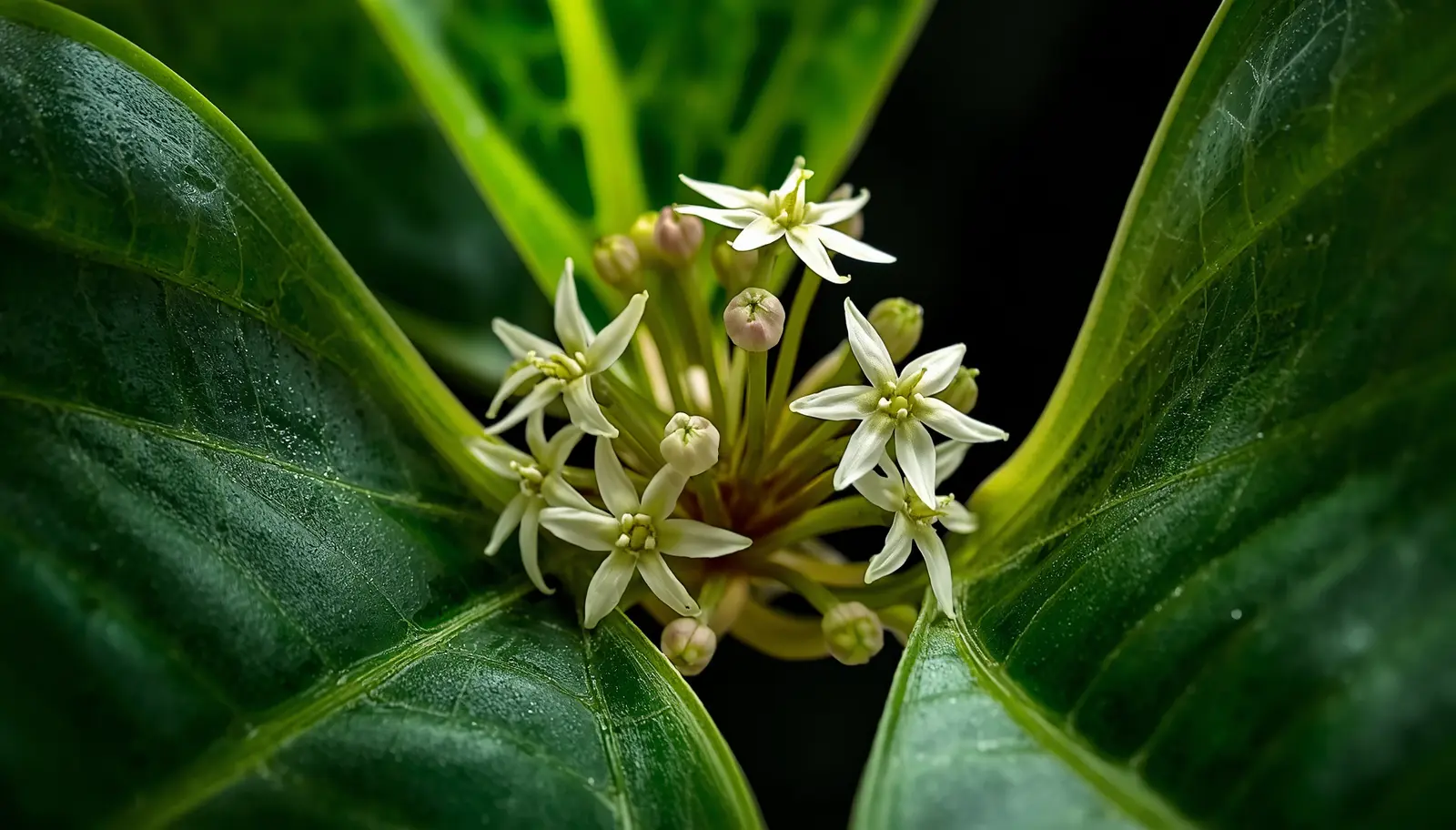
The wax plant, Hoya carnosa, makes round clusters of star-shaped, waxy, pale pink flowers that smell sweet, especially at night. Plenty of healthy hoyas never flower, though. Iowa State University sums up the fix as “more light, patience, and consistent care.” This guide explains how to get Hoya carnosa to bloom: enough light, a mature plant, a snug pot, light feeding, and one rule above all: never cut off the flower spurs. It follows Iowa State, NC State, Clemson HGIC and the RHS.
Why Is My Hoya Carnosa Not Blooming?
| Cause | Clues | Fix |
|---|---|---|
| Too little light | Thin, stretched growth, long gaps between leaves (Iowa State) | Brighter window or a grow light |
| Plant too young | Small plant, under 2 to 3 years old (NC State) | Patience; keep conditions good |
| Spurs cut off | Flowers once, then never again where you deadheaded | Leave peduncles in place (Iowa State, NC State) |
| Pot too big | Recently moved to a much larger pot; mix stays wet | Keep it slightly pot-bound (Iowa State, NC State) |
| Feeding issues | No feeding at all, or feeding through winter | Light feeding spring and summer only (Iowa State) |
| Buds form then drop | Plant moved or watering, temperature or light changed | Keep care steady during bud development (Iowa State) |
Sources: Iowa State University Extension (2026); NC State Extension Gardener Plant Toolbox; Clemson HGIC 1460 (2025).
If your hoya carnosa is not blooming but looks healthy, Iowa State says light is the primary driver: many plants that never bloom simply are not getting enough light indoors.
Light: The Main Trigger
Iowa State says hoyas thrive in bright, indirect light and that low light generally leads to thin, stretched growth and little or no flowering. Clemson HGIC suggests an east, west or south window, acclimating plants gradually to a south window to avoid leaf burn, and an LED grow light where light is low. The RHS recommends bright, filtered light under glass. NC State recommends bright indirect light year-round, with partial shade outdoors in summer.
- Too dark: long, bare stems and no flowers. Move it closer to the window or add a grow light; see our grow light guide.
- Too much hot sun: yellowed or scorched leaves. Step it into stronger light gradually.
- Variegated forms such as ‘Krimson Queen’ have less green tissue, so they generally need the brighter end of the range to grow and flower well.
The Peduncle Rule: Never Cut the Spurs
This is the rule that catches out most owners. Hoya flowers grow from short, woody stalks called peduncles or spurs. Iowa State calls this the “golden rule” for flowering: many species rebloom from the same peduncle repeatedly, and cutting them off can delay flowering for a long time because it removes future flower sites. NC State says to resist pruning the spur where flowers were produced, because spurs can keep flowering over several years.
Peduncles are short, stubby stalks that stick out from the stem at a leaf node. They are different from aerial roots, which are thin and grow toward a surface, and from new vine tips, which carry small leaves.
Pot, Soil, Water and Feeding
Pot size
Iowa State says hoyas commonly flower better when slightly pot-bound and warns that oversized containers let the soil stay wet longer. NC State says the plant doesn’t mind being pot-bound, to repot only when it outgrows its container and is not budding or flowering, and to go up no more than about 2 inches in pot width.
Soil
Clemson recommends equal parts potting soil, orchid bark and perlite. NC State asks for a loose, fast-draining mix with plenty of organic matter in a pot with good drainage. A chunky, airy mix suits a plant that grows on trees in the wild.
Water
Clemson says to let the soil dry out completely between waterings, using the weight of the pot as a guide, and calls overwatering the most common problem. NC State says to let the soil dry between waterings, notes that very wet or very dry soil can make leaves drop, and recommends room-temperature water.
Feeding
Iowa State says not to fertilize in winter, which lets the plant rest and promotes better flowering in the warmer months, and to provide adequate fertilization during growth. Clemson recommends a liquid fertilizer with an N-P-K ratio of 2:1:2 or 3:1:2, preferring liquid over slow-release granules because hoyas are watered infrequently.
Temperature and support
Iowa State says the best growth and flowering occur in warm conditions with slightly cooler nights. NC State says to bring plants indoors when nights fall below 50°F. Iowa State also notes that a small trellis, hoop or stakes can encourage fuller growth and more flowering sites than a vine left to trail.
How to Get a Hoya to Bloom, Step by Step
- Increase the light. Move the plant to your brightest window without harsh midday sun, or add a grow light (Iowa State, Clemson).
- Check the pot. If it is much bigger than the root ball, wait until the plant fills it; don’t pot up a plant that is budding (NC State).
- Water on the dry-down rule. Water thoroughly, then let the mix dry before watering again (Clemson, NC State).
- Feed in spring and summer with a liquid fertilizer such as 2:1:2 or 3:1:2 (Clemson), and stop in winter (Iowa State).
- Give it support with a trellis or hoop (Iowa State).
- Protect the spurs. Never cut peduncles; let old flowers drop (Iowa State, NC State).
- Keep everything steady once buds appear. Don’t move or turn the plant (Iowa State).
For general hoya care, see our hoya care guide. Other houseplants that refuse to flower often need similar fixes; see our Christmas cactus not blooming guide.
How Long Until a Hoya Blooms?
NC State says most plants will not flower until they are 2 or 3 years old, and Iowa State says hoyas often take several years to reach maturity. A plant grown from a small cutting therefore needs patience. NC State lists spring, summer and fall as bloom seasons, and Iowa State says flowers typically appear in summer. Clemson notes that, once buds form, the clusters can last weeks or months.
Growing new plants from cuttings? See our hoya propagation guide. A single Hoya kerrii heart leaf without a node will never become a vine, let alone flower; see our hoya kerrii single leaf guide.
Buds Falling Off (Bud Blast)
Iowa State says sudden changes in watering, temperature or light can make buds drop before opening, and recommends keeping care steady during bud development and not moving the plant. Check also for pests: Clemson lists mealybugs (dab with isopropyl alcohol on a cotton swab, or use insecticidal soap), spider mites in winter, and flat mites, which cause deformed leaves and grayish scarring. See our rubbing alcohol for mealybugs guide.
NC State notes that the flowers may produce a sticky sap. That is normal nectar, not a pest, but sticky residue on leaves away from flowers can be honeydew from sap-sucking insects.
Is Hoya Safe for Pets?
Yes. The ASPCA lists Hoya carnosa (honey plant, wax plant) as non-toxic to dogs, cats and horses, and NC State tags it as non-toxic. See our cat-safe plants list.
For other flowering houseplants, see our guides to hibiscus.
Frequently Asked Questions
Why is my hoya carnosa not blooming?
Usually not enough light (Iowa State), a plant that is still too young (NC State says 2 to 3 years), or spurs that were cut off after earlier blooms. An oversized pot and feeding through winter can also hold flowering back.
Should I cut hoya flower stems after blooming?
No. Iowa State says to let spent flowers fall naturally and never cut them off, because hoyas rebloom from the same peduncles. Cutting them removes future flower sites.
What is a hoya peduncle?
The short, woody stalk the flower cluster grows from. It stays on the vine after the flowers drop and produces new buds in later seasons (Iowa State, NC State).
Why has my hoya stopped blooming?
Check whether the spurs were removed, whether the plant was moved somewhere darker, whether it was repotted into a much bigger pot, or whether it is being fed through winter. Iowa State and NC State cover each of these.
How do I get my hoya to bloom indoors?
Bright, indirect light (or a grow light), slightly pot-bound roots, dry-down watering, light feeding in the growing season, a trellis, and patience. Keep the spurs and keep conditions steady once buds appear.
Is Hoya carnosa toxic to cats?
No. The ASPCA lists Hoya carnosa as non-toxic to dogs, cats and horses.