
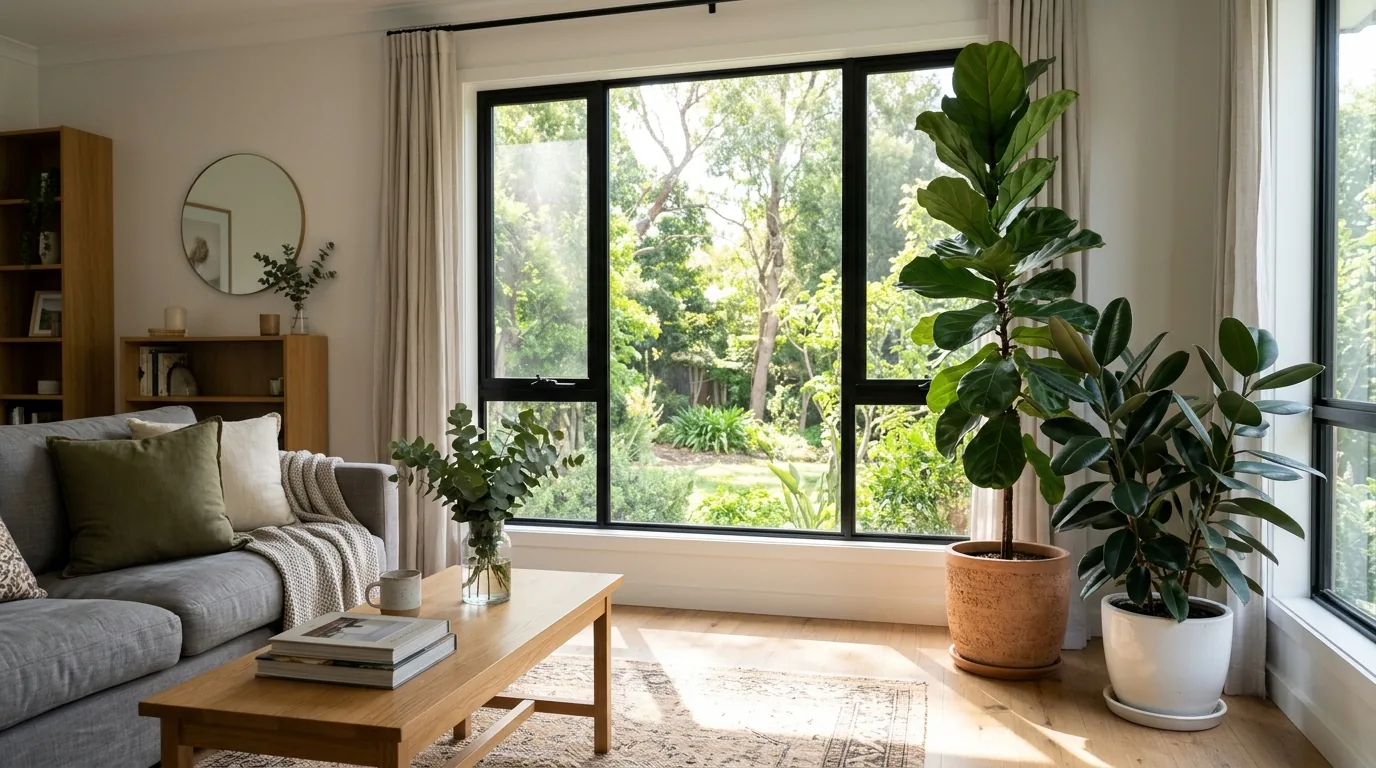
“Bright indirect light” is printed on almost every houseplant tag, and almost nobody explains it. It is the single most important care instruction, because the University of Missouri calls lack of adequate light the most common factor limiting plant growth in the home. This guide explains what bright indirect light means in plain terms and in foot-candles, how to find it in your home window by window, what bright indirect light for plants looks like compared with low and direct light, and how to read your plant’s houseplant light requirements. It follows University of Missouri Extension, Illinois Extension, Clemson HGIC, the University of Minnesota and the University of Maryland.
What Does Bright Indirect Light Mean?
Break the phrase into its two parts:
- Bright: the spot gets a lot of daylight for most of the day. Near a window, not across the room: the University of Missouri says even low-light plants usually don’t get enough light more than 10 feet from an average window.
- Indirect: the sun’s rays don’t fall straight on the leaves for hours at a time. Missouri warns that plants that don’t need bright light can be sunburned by the strong light at south windows from late spring to early fall.
So bright indirect light is the zone between “sunny windowsill” and “dim corner”: a bright window with the sun filtered or moving past quickly, or the area just back from a sunny window. Plant tags use it for most tropical foliage plants, such as rubber plants, fiddle leaf figs and peace lilies.
Houseplant Light Requirements: Low, Medium, Bright, Direct
Light intensity is measured in foot-candles. The categories on plant tags come from tables like these, and the two extension sources we compared draw the lines very differently:
| Category | University of Missouri (G6515) | Illinois Extension |
|---|---|---|
| Low light | 50 to 250 foot-candles | About 75 foot-candles |
| Medium light | 250 to 1,000 foot-candles; best growth above 750 | About 150 foot-candles |
| High or bright light | At least 1,000 foot-candles | About 300 foot-candles |
| Direct sun | Not given as a separate band | About 1,500 foot-candles |
Sources: University of Missouri Extension G6515, Lighting Indoor Houseplants (Trinklein, revised 2016); Illinois Extension, Houseplants: Lighting.
Two takeaways matter more than the exact numbers. First, Missouri says these categories generally indicate the minimum light a plant needs, and growth is often best at the higher end. Second, Illinois notes that outdoor sunlight can reach 10,000 to 12,000 foot-candles, so even a “bright” indoor spot is a small fraction of the light outside. When in doubt, give a plant more light, not less, and increase it gradually.
Where to Find Bright Indirect Light, Window by Window
| Window (Northern Hemisphere) | Low light | Medium light | Bright light | Direct sun |
|---|---|---|---|---|
| North | A few feet away | Directly in front | Not available | Not available |
| East or west | 3 to 10 feet away | A few feet away | Directly in front | Not available |
| South | 15 to 20 feet away | 3 to 10 feet away | Up to 5 feet away | Directly in front |
Source: Illinois Extension, Houseplants: Lighting.
Missouri describes the same pattern: south windows give the brightest light for the longest time and suit plants that want bright light and some direct sun; east and west windows suit many medium-light plants; north windows suit only plants that need lower light. In winter, Missouri adds, any houseplant benefits from a south window.
- Size and shade matter. Large windows let you place plants farther back, and the best windows aren’t shaded by a big overhang, trees or buildings (Missouri).
- Light changes with the seasons. Move plants closer to windows gradually in spring, over one to two weeks; the University of Minnesota says pale patches or crispy edges mean the move was too fast. Our guide to winter houseplant care covers the dark months.
- A sheer curtain turns a direct-sun south or west window into bright indirect light for plants that would otherwise scorch.
How to Measure Light
Missouri’s advice is blunt: the human eye is a poor judge of light intensity because it adjusts to different light levels automatically. A room that looks bright to you may give a plant a fraction of what it needs. Your options:
- A light meter that reads foot-candles (Missouri). Measure at leaf level, at midday, on a bright day.
- A light-meter app on a phone gives a rough reading; treat it as a guide, as Missouri says of all light measurements.
- The plant itself. Missouri says the plant’s growth pattern is a good indication of whether it is getting enough light (see the next section).
For precise numbers on one plant, see our guide to monstera light requirements, which explains PPFD and DLI.
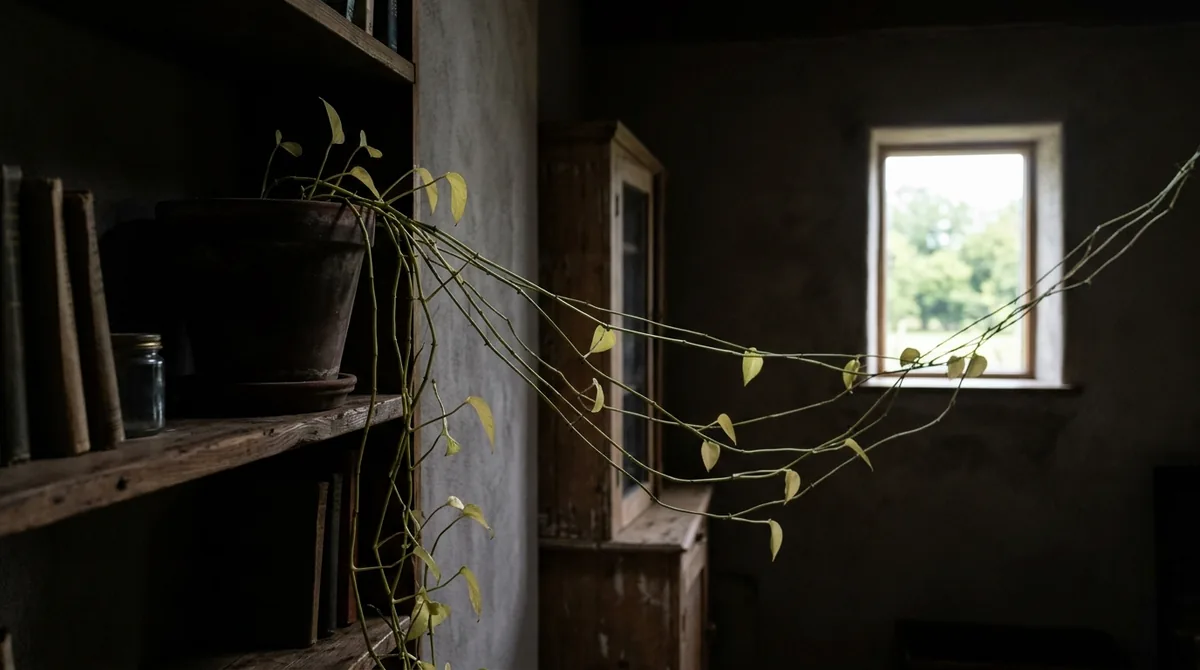
Signs of Too Little or Too Much Light
| What you see | Likely cause | Source |
|---|---|---|
| Long gaps between leaves (stretched stems) | Too little light | Missouri |
| New leaves smaller than normal | Too little light | Missouri |
| Pale green stems and leaves | Too little light | Missouri |
| Lower leaves yellowing and dropping | Too little light (also check watering) | Missouri |
| Variegated or colorful plants fading | Too little light for good color; Missouri says crotons need high light for color | Missouri |
| Bleached or whitened patches | Too much light or sunburn | UMD |
| Pale patches or crispy edges after a move | Moved into bright light too quickly | UMN |
Sources: University of Missouri Extension G6515; University of Maryland Extension, Diagnose Indoor Plant Problems (2025); University of Minnesota Extension, Spring Houseplant Care (2026).
Plants That Want Bright Indirect Light
| Light | Examples (per Missouri G6515) | Our guides |
|---|---|---|
| Tolerates low light | Cast iron plant, Chinese evergreen, heartleaf philodendron, pothos, snake plant (grows best in medium to bright) | cast iron plant, aglaonema, snake plant |
| Medium to bright indirect | Ficus (rubber plant, fiddle leaf fig), dieffenbachia, peace lily (needs medium to flower), hoya (high light to flower), African violet | rubber plant, fiddle leaf fig, peace lily, hoya, African violet |
| Bright light, some direct sun | Cacti and succulents, crotons, citrus, culinary herbs | cactus, croton, Meyer lemon, basil |
Source: University of Missouri Extension G6515, Plants for indoor lighting.
Notice how many “low light” plants actually grow best with more light: Missouri says peace lilies adapt to low light but need medium light to flower, and hoyas tolerate low light but need high light to flower. “Tolerates low light” means survives, not thrives. For a list of tough picks, see our best low-maintenance indoor plants.
Bright Indirect Light With Grow Lights
If no window gives you bright indirect light, Missouri says supplementary electric lighting is usually the easiest and least expensive fix. Its guidelines:
- Distance: keep the tips of most plants 6 to 12 inches from the light source; intensity drops quickly with distance.
- Hours: 16 to 18 hours a day for plants that get no outdoor light, or 12 to 14 hours if they get some window light. Illinois advises not exceeding 16 hours for low-light plants, which need a rest period.
- Timer: lights should go on and off regularly, so a timer is a valuable asset (Missouri).
- Short-day bloomers: poinsettias and chrysanthemums can be kept from flowering by long lighting hours; give them about 10 hours a day to bloom (Missouri).
Our guide to the best grow lights for indoor plants compares setups.
Frequently Asked Questions
What does bright indirect light mean?
A spot that is bright most of the day but where the sun’s rays don’t fall directly on the leaves for long, such as right in front of an east or west window or a few feet back from a south window (Illinois Extension).
What is an example of bright indirect light?
A plant on a table directly in front of an east-facing window, or about 3 to 5 feet back from a south-facing window, or behind a sheer curtain in a sunny window.
How many foot-candles is bright indirect light?
Sources disagree. Illinois Extension puts bright light at about 300 foot-candles; the University of Missouri puts medium light at 250 to 1,000 and high light at 1,000 or more, and says these are minimums.
Is a north-facing window bright indirect light?
Usually not. Illinois rates directly in front of a north window as medium light, and Missouri says north windows suit only plants that need lower light.
Can a grow light give bright indirect light?
Yes. Missouri recommends keeping plant tips 6 to 12 inches from the light for 12 to 18 hours a day, depending on how much window light the plant also gets.
How do I know if my plant needs more light?
Missouri lists long gaps between leaves, smaller-than-normal leaves, pale stems and foliage, and yellowing, dropping lower leaves as signs a plant isn’t getting enough light.
Can plants get too much light indoors?
Yes, especially after a sudden move. Bleached or whitened leaves mean too much light or sunburn (UMD); move plants to brighter spots gradually over one to two weeks (UMN).