
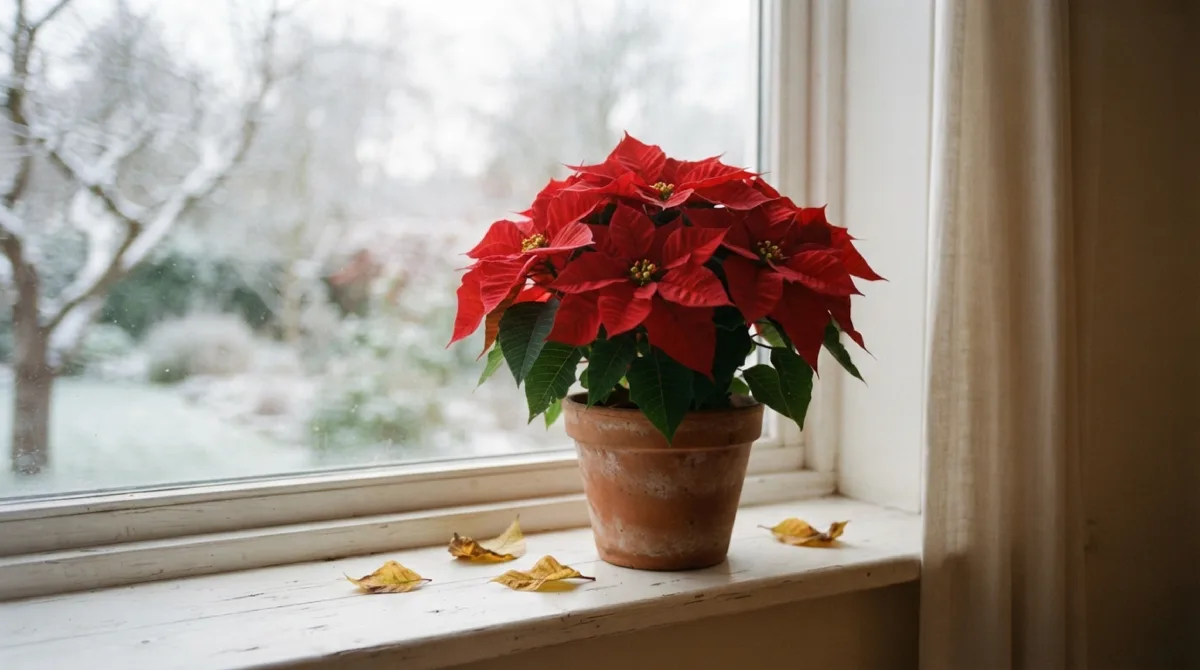
A poinsettia that was full and red in the shop can be half bare by New Year. The leaves yellow, curl and fall, and the red bracts follow. This guide covers poinsettia dropping leaves: the six causes that explain most cases, how to tell a care problem from the plant’s normal cycle, and the recovery steps that work. It also covers poinsettia dropping leaves in winter, the difference between poinsettia drooping leaves and true leaf drop, and what to expect from poinsettia losing leaves after christmas. It follows Clemson HGIC and Illinois Extension.
Quick Diagnosis: Normal or a Problem?
Start with the pattern of the drop. A few lower leaves yellowing in January is different from a plant that sheds most of its leaves in a week.
| What you see | Most likely cause | First check |
|---|---|---|
| Leaves yellow and fall after a cold trip home or a drafty doorway | Chilling below 50°F | Move it to a warm room away from doors and windows |
| Leaves yellow and drop near a radiator, fire or heat vent | Excess heat and dry air | Move it out of the hot air stream |
| Leaves droop, then fall, and the soil is soggy | Overwatering or standing water | Lift the pot out of the decorative cover and check the drainage hole |
| Leaves wilt and the soil is bone dry | Underwatering | Water thoroughly until it drains, then let the surface dry |
| Leaves pale and the plant is in a dark corner | Too little light | Move it to bright, indirect light |
| Stem soft, soil sour, leaves dropping fast | Root rot | Check the roots and the smell of the mix |
| Bracts fade and drop in March or April | Normal end of the season | Prune back in spring and repot |
Sources: Clemson HGIC 1561, Poinsettia; University of Illinois Extension, Poinsettia.
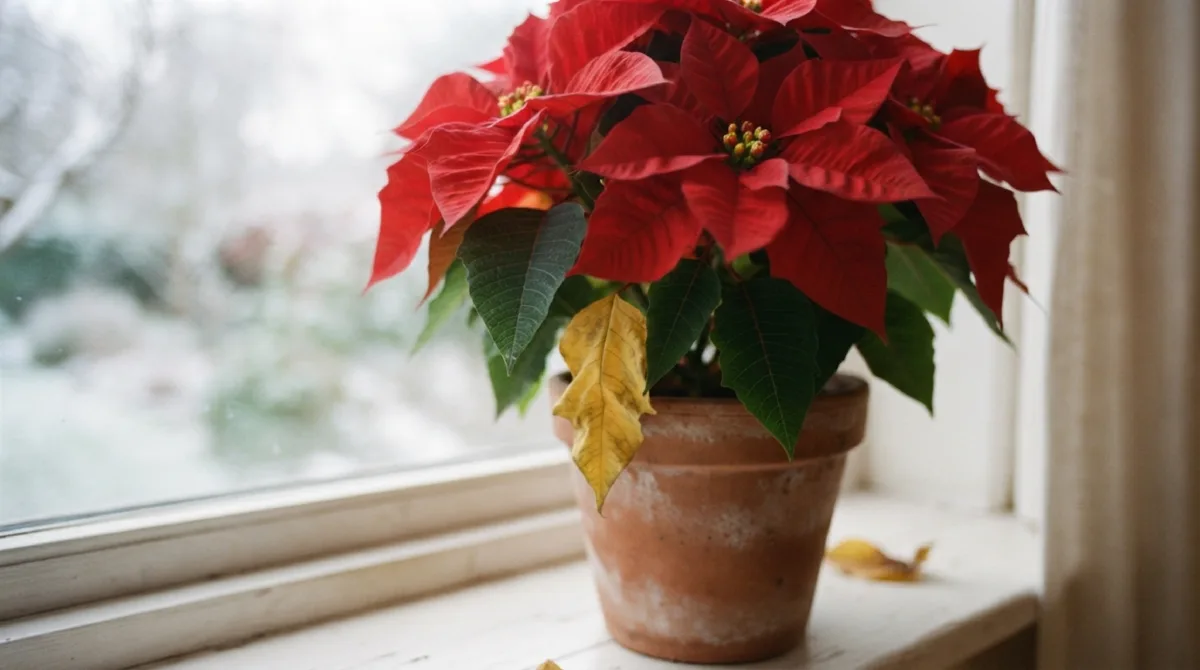
Cause 1: Cold Drafts and Chilling
Poinsettia is a tropical plant from Mexico, and it does not tolerate cold. Clemson says chilling injury can cause premature leaf drop if the temperature drops below 50°F. The damage often happens before the plant reaches your home: a few minutes in a cold car, a walk from the shop, or a stop on a cold porch is enough.
Inside, the same problem shows up near a door that opens to the outside, a single-pane window on a freezing night, or a windowsill where the curtain traps cold air. Illinois Extension recommends having the plant sleeved or covered when outdoor temperatures are below 50°F, which is a good rule for the trip home as well.
Fix: keep the plant in a room that stays between 60 and 70°F, away from exterior doors and cold glass. If a leaf touches a cold window, move the pot back a few inches.
Cause 2: Heat, Dry Air and Hot Drafts
Heat is the other half of the temperature problem, and it is more common indoors. Clemson says excess heat makes the leaves yellow and fall off and makes the bracts fade early, and that the daytime temperature should not exceed 70°F. The same source warns against drafts, excessive heat, and dry air from appliances, fireplaces and ventilating ducts.
A poinsettia on top of a radiator, beside a wood stove, or under a heating vent is being dried from two directions at once: hot air pulls water from the leaves, and the soil dries faster than the roots can replace it. The result is crispy edges, yellow lower leaves and a plant that drops leaves from the bottom up.
Fix: move it to a bright spot with still air. If the room is very dry, a humidifier nearby helps, but do not mist the bracts; water sitting on the colored bracts can leave marks.
Cause 3: Watering Problems
Clemson is specific: poinsettias require moderately moist soil, water thoroughly when the soil surface feels dry, never let the mix dry out completely, and never let the plant sit in standing water. When you water, take the plant out of its decorative pot cover, water until it runs out of the drainage hole, and let it drain before putting it back.
Both extremes cause the same visible result. A bone-dry pot makes leaves wilt and fall. A soggy pot suffocates the roots, and the leaves yellow and drop. The decorative foil or cachepot that poinsettias are sold in is the usual culprit, because it holds water around the base of the pot with no way out.
If the leaves droop right after watering, the mix is probably waterlogged or the pot is sitting in water. If they droop before watering and recover after, the plant was simply dry. Our guide to bottom watering explains a slower method that keeps the surface drier, and our repotting guide covers drainage if the pot has no holes.
Cause 4: Light and the Short-Day Confusion
Clemson recommends at least six hours of bright, indirect sunlight each day. Direct sun can fade the bracts, so a bright room with a sheer curtain is better than a south-facing sill in full sun. Poor light is one of the causes Clemson lists for premature leaf drop.
The short-day part confuses people. Poinsettia is a short-day plant: it needs a long, continuous dark period at night to color its bracts. That is why a plant kept in a living room with lamps on all evening may hold its color poorly, and why reflowering requires 14 hours of darkness from early October. For the plant you bought in December, the bracts are already colored; your job is bright light by day, not darkness.
Cause 5: Root Rot and Fungus Gnats
Clemson notes that root rotting fungi can occur in overwatered or poorly drained soils. Once the roots are damaged, the plant cannot take up water even if the soil is wet, so the leaves wilt and drop while the pot feels damp. A sour smell, a soft stem or white mold on the surface are warning signs.
Fungus gnats often follow. They breed in wet potting mix, so a poinsettia that stays soggy can produce a cloud of small black flies. The gnats are a symptom of the moisture problem, not the cause of the leaf drop. Our guide to getting rid of fungus gnats covers the soil-drying routine, and our root rot treatment guide explains what to do if the roots are already brown and mushy.
Cause 6: The Natural Post-Holiday Decline
Some drop is normal. The red parts are bracts, which are modified leaves, not petals. Clemson explains that the true flowers are the small yellow cyathia in the center, and that the bracts are leaves that turn red to attract pollinators. Leaves and bracts do not last forever.
Clemson’s after-holiday advice is to prune the plant back to about 8 inches in March or April, when the colorful bracts fade. The plant looks bare after pruning, then sends new green growth. If your poinsettia is dropping leaves in late winter and the stem is still firm, that is the plant cycling out of its holiday season, not a failure.
How to Stop the Drop: 7-Step Recovery
- Move it out of the draft and away from heat. Aim for 60 to 70°F, away from doors, radiators, fireplaces and vents.
- Take it out of the decorative cover. Set the grow pot on a saucer so excess water can drain. Empty the saucer after watering.
- Check the soil before you water. Water thoroughly when the surface feels dry, then wait. Do not water on a fixed schedule.
- Give it six hours of bright, indirect light. A sheer curtain in a bright room is ideal. Avoid direct sun on the bracts.
- Stop fertilizing while it is in bloom. Clemson says not to fertilize a poinsettia when it is in bloom.
- Check for rot if the stem is soft. Look at the roots, smell the mix, and repot into fresh, draining soil if the roots are brown and mushy.
- Wait to prune. Do not cut the plant back now. Prune to about 8 inches in March or April, when the bracts fade, as Clemson advises.
Can You Keep It for Next Christmas?
Yes, but it takes planning. Clemson’s schedule is the clearest one to follow:
- March to April: when the bracts fade, prune the plant back to about 8 inches and repot with fresh mix that has organic matter.
- Spring and summer: water and fertilize normally, and pinch back the shoot tips to keep the plant bushy. Do not pinch after September 1.
- Early autumn: when night temperatures fall to 55 to 60°F, bring the plant indoors to a sunny spot.
- First week of October: give it 14 continuous hours of darkness every night for 8 to 10 weeks, plus six to eight hours of bright sun each day.
That dark period is the part most people miss. A closet or a large box works, as long as the plant gets no light at all during the 14 hours. If the schedule slips, the bracts may stay green or color late.
For the rest of the winter routine, see our winter houseplant care guide and our guide to cold damage on houseplants. For the bigger holiday plant picture, see Christmas plants and our full poinsettia care guide.
Frequently Asked Questions
Why is my poinsettia dropping leaves?
The usual causes are chilling below 50°F, excess heat above 70°F, drafts, dry air, watering problems and root rot. Clemson HGIC lists cold, poor light and poor nutrition as causes of premature leaf drop, and says excess heat makes leaves yellow and fall.
Is it normal for poinsettias to lose leaves?
Some loss is normal as the bracts age in late winter. Losing most leaves in a week in December, while the bracts are still bright, points to a care problem rather than the normal cycle.
Should I water a poinsettia when it is dropping leaves?
Check the soil first. If the surface is dry, water thoroughly and let it drain. If the mix is soggy or the pot is sitting in water, do not water; fix the drainage and let it dry out.
Can a poinsettia recover after losing all its leaves?
Sometimes. If the stem is firm and the roots are healthy, keep watering and give it bright light, then prune in March or April. A soft stem and brown, mushy roots usually mean the plant will not recover.
Do poinsettias drop leaves after Christmas?
Many do. The bracts fade and the plant enters its quiet season. Clemson advises pruning back to about 8 inches in March or April, when the bracts fade, and repotting with fresh mix.
How often should I water a poinsettia indoors?
Water when the soil surface feels dry, not on a fixed schedule. Water until it drains, empty the saucer, and never let the pot sit in standing water. Do not let the mix dry out completely either.
Are poinsettias toxic to pets?
The ASPCA lists poinsettia as toxic to cats and dogs, and the sap can irritate the mouth and stomach. Keep the plant out of reach of pets that chew, and call your veterinarian if a pet eats a large amount.