
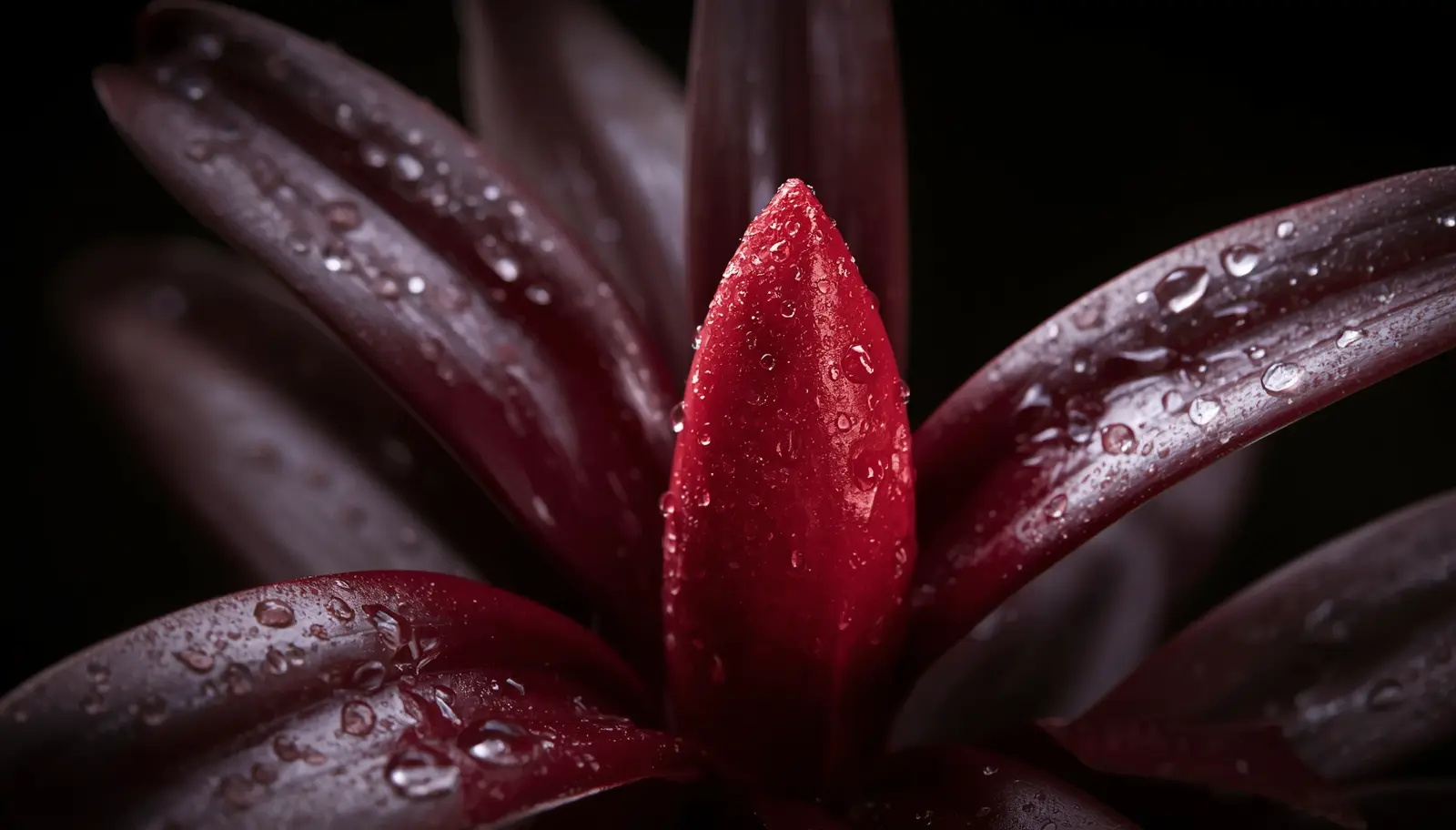
Lipstick Plant Care: Bloom Induction & Bud Blast Fix

Lipstick plant care requires bright indirect light for 6 to 8 hours daily, a coarse epiphytic substrate that drains within 30 seconds, and a deliberate cool-rest period with night temperatures of 15 to 18 degrees Celsius for 4 to 6 weeks to trigger blooming. Aeschynanthus radicans is a tropical epiphyte native to Southeast Asian forest canopies. It will not flower in constant warm indoor temperatures because it never receives the seasonal stress signal that activates reproductive hormones.

Most growers fail with this species for two predictable reasons. They pot it in standard peat-based mix that suffocates the fibrous epiphytic root system within 6 weeks. Then they maintain 20 to 24 degrees Celsius year-round, which keeps the plant in permanent vegetative growth. According to The Spruce, lipstick plants need bright filtered light, consistent moisture during the growing season, and a loose, well-draining potting medium. The missing piece that no generic care guide explains is the structured thermal induction protocol. This article provides the exact cool-rest schedule, substrate recipe, and bud blast prevention system required for reliable annual bloom cycles.

Quick Answer: To care for a lipstick plant, provide 6 to 8 hours of bright indirect light, use a substrate of 60 percent coarse perlite, 20 percent orchid bark, and 20 percent horticultural charcoal, and water when the top 2 inches dry. To force blooming, reduce night temperatures to 15 to 18 degrees Celsius for 4 to 6 weeks beginning in late autumn while allowing the substrate to dry 70 percent between waterings.
ParameterIdealAvoid
Light6 to 8 hours bright indirect light, DLI 10-16 mol/m²/dayFull afternoon sun, dark north-facing rooms
Substrate60% perlite, 20% orchid bark, 20% charcoalStandard peat potting mix, pure coco coir
WaterWhen top 2 inches dry; soak until drainageFrequent light misting, cold tap water below 15°C
TemperatureDay 20-24°C; induction nights 15-18°CCold drafts below 13°C, constant warm year-round
Humidity50-65% RH during bloomBelow 40% RH during calyx development
FertilizerBalanced liquid at 1/4 strength; high-K during bloomFull-strength synthetic, organic fertilizers in pots

What Conditions Does a Lipstick Plant Need?

A lipstick plant needs 6 to 8 hours of bright indirect light, temperatures between 20 and 24 degrees Celsius during the day, and humidity of 50 to 65 percent relative humidity. It is an epiphyte that evolved in Southeast Asian forest canopies, so it requires excellent air circulation and a substrate that mimics bark surface conditions rather than terrestrial soil.

Light is the primary growth regulator. According to The Spruce, too much direct sunlight scorches leaves while too little light prevents flowering and causes leaf drop. An east or west-facing window provides ideal intensity. A south-facing window works if the plant is set back 1 to 2 meters or shielded by sheer curtain. North-facing windows rarely provide enough energy for bloom production.

Temperature requirements are specific. Daytime temperatures of 20 to 24 degrees Celsius support vegetative growth. Night temperatures should drop to 18 to 22 degrees Celsius during the growing season. The critical reproductive trigger is a sustained night temperature of 15 to 18 degrees Celsius for 4 to 6 weeks. This simulates the tropical dry season and elevates abscisic acid, the hormone that initiates flower bud primordia. Without this cool-rest period, the plant remains in vegetative state indefinitely.

Air circulation is essential. Stagnant air around dense foliage promotes fungal infection and pest establishment. A small oscillating fan on low speed for 2 to 4 hours daily prevents botrytis and powdery mildew without creating cold drafts. For light supplementation during winter, see our best grow lights for indoor plants guide.

What Is the Best Soil for a Lipstick Plant?

The best substrate for a lipstick plant is a coarse epiphytic mix of 60 percent porous mineral base, 20 percent medium orchid bark, and 20 percent horticultural charcoal or coarse sand. This blend maintains 55 to 65 percent air-filled porosity after watering, which prevents the root anaerobiosis that standard potting mix causes.

According to University of Wisconsin Extension, epiphytes require substrate air-filled porosity above 50 percent to maintain aerobic root respiration. Standard peat-based mixes compact after the first watering, dropping air-filled porosity below 20 percent. Aeschynanthus roots are fine and fibrous, 0.5 to 1.5 millimeters in diameter, with high internal aerenchyma content. They cannot penetrate dense peat.

The exact recipe: 60 percent coarse perlite number 3 grade or pumice 6 to 12 millimeters, 20 percent medium fir bark 6 to 12 millimeters, and 20 percent horticultural charcoal or coarse sand 2 to 4 millimeters. Do not use peat moss, coco coir, or fine vermiculite. These retain water and eliminate oxygen exchange. For a comparison of mineral amendments, see our guide on vermiculite versus perlite.

Verify drainage before potting. Fill a container with your dry mix and pour one cup of water onto the surface. Water should exit the drainage hole within 15 to 30 seconds. If it pools or takes longer than 60 seconds, increase the perlite ratio to 70 percent. Unglazed terracotta pots accelerate evaporation and reduce drying time by 30 to 50 percent compared to sealed ceramic or plastic.

How Do You Water a Lipstick Plant?

Water a lipstick plant when the top 2 inches of substrate are dry to the touch, typically every 5 to 8 days in spring and summer and every 10 to 14 days in winter. Soak the substrate until water drains freely from the bottom of the pot, then discard the saucer contents immediately. Never use cold tap water below 15 degrees Celsius.

Water temperature is critical. According to Penn State Extension, cold irrigation water causes thermal shock in tropical species. Cell membrane lipids transition from fluid to gel state below 15 degrees Celsius, disrupting ion pumps and causing cellular damage. For Aeschynanthus, cold water triggers abscission responses that make buds and lower leaves drop within 24 to 48 hours.

Always use tepid water at 18 to 21 degrees Celsius. Allow tap water to equilibrate to room temperature for 30 to 60 minutes before application. Apply water directly to the substrate surface, not the foliage. Water trapped in tight leaf axils invites fungal infection. During the cool-rest induction phase, allow the substrate to reach 70 percent dryness between waterings. Use pot weight as your trigger rather than a calendar schedule. For detailed watering technique, see our guide on how to bottom water plants.

How Do You Make a Lipstick Plant Bloom?

You make a lipstick plant bloom by executing a 4 to 6 week cool-rest period with night temperatures of 15 to 18 degrees Celsius beginning in late autumn. This thermal reduction elevates abscisic acid, which switches the plant from vegetative growth to reproductive mode and initiates calyx and flower bud primordia formation.

Constant warm indoor temperatures of 20 to 24 degrees Celsius year-round maintain the plant in permanent vegetative state. It produces trailing stems and leaf pairs but never initiates the hormonal shift required for flowering. The cool-rest protocol mimics the dry season of its native Southeast Asian habitat, where reduced rainfall and lower night temperatures trigger annual bloom cycles.

The induction protocol follows four phases. First, verify root health. Unpot the plant and inspect roots. They should be white and firm. If more than 30 percent are brown and mushy, repot into fresh epiphytic mix and delay induction for 8 to 10 weeks. Second, beginning in late October or November, reduce night temperatures gradually over 2 weeks to avoid cold shock. Move the plant to a cooler room at night, position it near a single-glazed window, or use a programmable thermostat. Maintain 15 to 18 degrees Celsius for 4 to 6 weeks while keeping daytime temperatures at 20 to 24 degrees Celsius. Third, reduce watering frequency to every 10 to 16 days, allowing the substrate to dry to 70 percent between events. Fourth, restore normal temperatures and watering once flower tubes emerge from the calyces. For more on indoor plant environments, visit our indoor plants hub.

Why Is My Lipstick Plant Not Flowering?

The most common reason a lipstick plant does not flower is the absence of the cool-rest thermal trigger. Other causes include insufficient light below DLI 8 mol/m²/day, excessive nitrogen fertilization promoting leafy growth over blooms, and immature plant age. Most non-blooming specimens are healthy plants missing one reproductive variable.

Diagnose systematically. Check your night temperature history with a min-max thermometer. If the overnight minimum never dropped below 19 degrees Celsius during autumn and winter, the plant did not receive the ABA elevation required for flower initiation. Check light intensity. If the plant sits more than 3 meters from a window or faces north, it likely receives under DLI 6, which is insufficient for energy-intensive bloom production. Check fertilizer. High nitrogen formulas stimulate vegetative growth at the expense of reproductive tissue. Switch to a balanced 1-1-1 or bloom-focused 1-3-2 formula at one-quarter strength.

Plant maturity matters. Young specimens with fewer than 6 stem tips often lack the stored carbohydrate reserves to support inflorescence construction. Allow the plant to build biomass for 12 to 18 months before expecting reliable bloom. If all environmental parameters are correct and the plant is mature, execute the full cool-rest protocol described above. Calyx formation typically appears 3 to 8 weeks into the induction period.

Why Are My Lipstick Plant Buds Falling Off?

Bud blast, the premature dropping of unopened flower buds, is caused by localized VPD disruption during the 2 to 3 week window when petal tubes extend from the calyces. Primary triggers are cold water application below 15 degrees Celsius, sudden humidity drops below 40 percent relative humidity, cold drafts below 15 degrees Celsius, and moving the plant during active bud development.

The developmental sequence has three phases. Calyx formation takes 4 to 8 weeks and is relatively stress-tolerant. Petal tube extension takes 2 to 3 weeks and is highly vulnerable. Full anthesis takes 2 to 4 weeks and has moderate tolerance. Bud blast occurs almost exclusively during phase 2, when petal tube cells are thin-walled and operating at maximum turgor.

SymptomCauseFirst Correction
Intact closed calyces yellow at base and drop wholeCold water shock below 15°CUse only tepid water 18-21°C; allow tap water to equilibrate 30-60 min
Visible petal tubes wilt and shrivel before openingHumidity drop below 40% RHAdd pebble tray or humidifier; maintain 50-65% RH
Buds drop after plant was moved to new locationCombined light, temp, and humidity disruptionLocation-lock plant from first calyx through end of bloom
Buds drop near windows or exterior doorsCold draft below 15°C at bud surfaceRelocate away from drafts; insulate window with thermal film

Prevention is absolute. Lock the plant in place from the moment calyces appear until the final flower fades. Monitor relative humidity with a digital hygrometer. Never apply cold water. Never reposition the pot. A single disruptive event during the narrow petal tube window can abort the entire inflorescence cycle.

How Do You Propagate a Lipstick Plant?

Propagate a lipstick plant from soft stem cuttings in spring or summer. Cut a 10 to 15 centimeter section of healthy new growth, remove the lower leaves to expose 2 to 3 nodes, allow the cut end to callus for 1 to 3 days in dry air, then insert into a moistened mix of perlite and vermiculite. Roots establish in 2 to 4 weeks.

Leaf cuttings do not work for this species. Aeschynanthus requires nodal tissue to produce adventitious roots. Choose stems without blooms, as flowers divert energy from root formation. Use clean, sharp pruners sterilized with 70 percent isopropyl alcohol. Dip the cut end in rooting hormone powder to accelerate establishment. Keep the cutting in bright indirect light and maintain humidity at 60 to 70 percent using a clear plastic dome or bag for the first 2 weeks. Vent the cover daily for 30 minutes to prevent mold.

Water propagation is possible but produces weaker roots. Soil-propagated cuttings develop drought-tolerant root systems adapted to the epiphytic substrate. Transplant rooted cuttings into the standard 60/20/20 epiphytic mix once roots reach 2 to 3 centimeters in length. For more propagation techniques, see our troubleshooting hub.

How Do You Prune a Lipstick Plant After Blooming?

Prune flowered stems back to 15 centimeters above the nearest healthy leaf node immediately after the bloom cycle ends. Use alcohol-sterilized shears and cut at a 45 degree angle slanted away from the node. This forces axillary bud activation, which doubles or triples stem density and future bloom point count.

Timing is critical. Wait until the final flowers fade, then prune within 1 week. Delaying allows the plant to waste energy on seed development. Cutting too early removes stems that may still produce secondary buds. Remove no more than 30 to 40 percent of total foliage per session to avoid excessive stress.

Non-flowered stems may be tipped by removing the top 2 to 4 nodes to encourage bushier growth. This maintains compact form on leggy specimens. Never prune during the cool-rest induction phase. The plant needs all available energy for calyx formation, not wound recovery. After pruning, resume normal vegetative care and allow 4 to 6 months of growth before the next induction cycle.

Pro Tip: Use the Pot Weight Method Lift the pot before and after watering to establish a mental baseline for saturated and dry weight. Water only when the pot feels light, indicating 70 percent substrate dryness. This prevents both overwatering rot and underwatering stress more reliably than finger tests or moisture meters.
Warning: Cold Water Kills Buds Instantly A single watering with tap water below 15 degrees Celsius can trigger mass bud blast within 24 hours. The thermal shock disrupts cell membrane fluidity at the root surface, sending an abscission signal to all developing flowers. Always let tap water sit at room temperature for 30 to 60 minutes before use.

Are Lipstick Plants Safe for Pets?

Yes. The ASPCA lists Aeschynanthus humilis and related species in the genus as non-toxic to cats, dogs, and horses. The ASPCA Toxic and Non-Toxic Plants database confirms no toxic principles are identified. According to UF/IFAS Extension, lipstick plant is classified as non-poisonous and safe for multi-species homes.

While non-toxic, ingestion of large quantities of any plant material may cause mild gastrointestinal upset in cats or dogs. The greater risk is physical damage to the trailing stems from batting or chewing. Hang the plant in a macrame holder or place it on a high shelf to keep both the plant and your pet safe. For a complete list of verified safe species, see our cat safe plants guide.

What Are the Most Common Lipstick Plant Problems?

Why are the lower leaves falling off my lipstick plant?

Sudden lower leaf drop is a cold-shock abscission response triggered when leaf surface temperature drops below 13 degrees Celsius. Check for cold drafts from windows, exterior doors, or air conditioning vents. Relocate the plant and remove the cold source. Leaf production resumes in 4 to 8 weeks.

Can I keep a lipstick plant in a bathroom?

Only if light is adequate. Bathroom humidity of 55 to 75 percent is ideal, but most bathrooms lack sufficient light. Position the plant within 1 meter of an east or west window, or supplement with a 40 watt full-spectrum grow light on a 12 to 14 hour timer.

How long do lipstick plant flowers last?

Individual flowers last 1 to 2 weeks. An umbel cluster lasts 3 to 6 weeks. A well-branched plant with 15 to 20 stem tips can produce continuous bloom for 6 to 12 weeks as clusters initiate and terminate in sequence.

Why is my lipstick plant leggy?

Leggy growth with wide gaps between leaves indicates insufficient light. The plant is stretching toward the light source. Move it to a brighter location or add a grow light. Severely leggy stems can be beheaded and rerooted.

How often should I fertilize a lipstick plant?

Apply balanced liquid fertilizer at one-quarter strength every 2 weeks during spring and summer. Switch to a high-potassium 1-3-2 formula during active bloom. Cease nitrogen fertilization during the cool-rest induction phase.

Can I use a self-watering pot for a lipstick plant?

No. Self-watering pots maintain constant substrate saturation that causes root anaerobiosis in epiphytes. Use a standard pot with a drainage hole and water only when the substrate is partially dry.

Key Takeaway Lipstick plants fail when treated like terrestrial houseplants. Use a coarse epiphytic substrate with 60 percent perlite. Water with tepid water only when the top 2 inches dry. Force blooming with a 4 to 6 week cool-rest period at 15 to 18 degree Celsius nights. Lock the plant in place during bud development to prevent VPD disruption. Prune flowered stems to 15 centimeters above the node immediately after bloom to double next season’s flower count.

For more indoor plant care guides, visit our indoor plants collection. For fertilizer recommendations, read our synthetic versus organic fertilizer guide. For root rot treatment protocols, see our Pythium root rot treatment guide.

Validate this page’s structured data at Google Rich Results Test and Schema Markup Validator before publishing.

Leave a Comment