
Advanced Begonia Plant Care: Calibrating VPD to Halt Powdery Mildew

Begonia Plant Care: The Powdery Mildew Microclimate Protocol
🔬 THE LAB | FUNGAL PATHOLOGY & MICROCLIMATE ENGINEERING

The polka-dot patterned leaves of Begonia maculata are cosmetically immaculate—silver spots precisely arranged on deep olive-green blade surfaces, wine-red undersides, symmetrical cane architecture. Then the white appears.

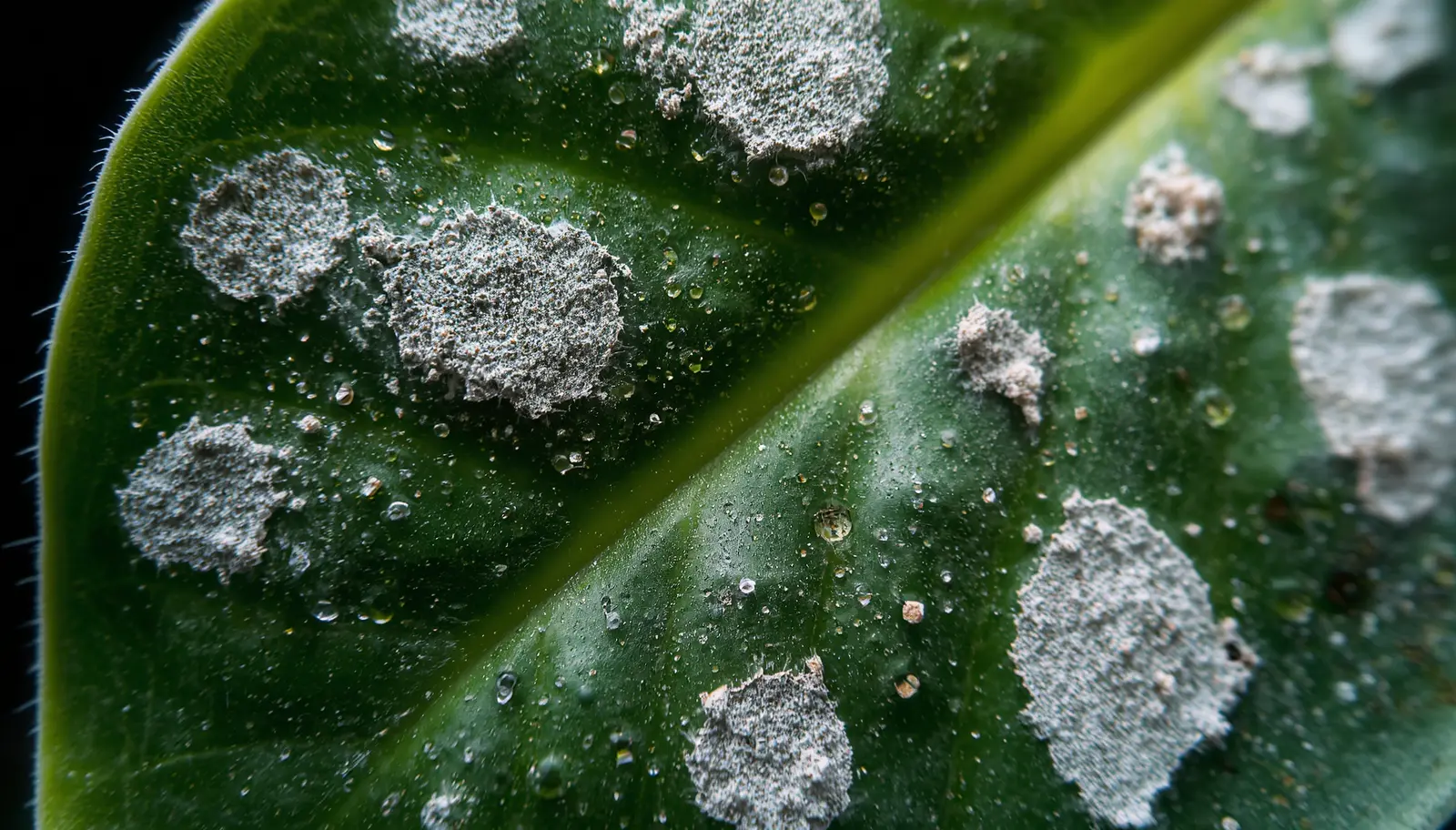
A dusty, gray-white coating materializes first on the youngest growth: emerging stem tips, unfurling leaf margins, petiole surfaces. Within days it spreads—a continuous mycelial network colonizing upper leaf surfaces, progressing toward older foliage, blocking chlorophyll from reaching photosystems beneath. The leaves yellow from infection site outward. Then they drop—intact, their cellular architecture intact, simply disconnected from the plant by an abscission response triggered when photosynthetic output drops below the threshold required to justify the energy cost of maintaining the leaf.

The compounding failure: the same high-humidity environment that felt protective has been incubating the pathogen for weeks. The misting routine deployed to support tropical foliage health has been creating the exact boundary-layer microclimate that Oidium begoniae requires for spore germination. The still air in the corner where the cane sits looks calm and comfortable—it is a stagnant reservoir of viable spores with no mechanism for dispersal.

Begonia plant care powdery mildew prevention is not a chemical intervention problem. It is a microclimate engineering problem. The pathogen is exploiting the precise gap between what human cultivation intuition provides (humid, still, warm) and what the plant's immune architecture requires (aerated, dry-surfaced, thermally stable). Closing that gap requires understanding the fungal paradox at the core of Oidium biology—and engineering an environment that actively out-competes it.

⚗️ The Executive Lab Summary: Powdery Mildew Protocol
  • Pathogen: Oidium begoniae—obligate biotrophic fungus requiring living host tissue; germinates in high ambient humidity + stagnant air WITHOUT requiring liquid water on leaf surfaces
  • Primary prevention: Continuous oscillating airflow breaking stagnant boundary layer + zero overhead misting maintaining dry cuticular wax layer
  • Eradication protocol: Surgical isolation → mechanical debridement → potassium bicarbonate or neem application (morning only) → permanent vector correction
  • Root substrate: High-porosity mix (50% coco, 30% pumice/perlite, 20% charcoal)—root anaerobiosis from dense soil directly suppresses plant immune response to airborne pathogens
  • Light requirement: DLI 10-16 mol/m²/day—adequate photon flux fortifies epidermal cell wall thickness and tightens internodal spacing reducing structural vulnerability
Begonia maculata cane showing healthy polka-dot foliage under optimized airflow microclimate conditions preventing powdery mildew fungal colonization

Structurally dense cane architecture under optimized DLI and airflow—mildew-resistant microclimate achieved

The Diagnosis: Spore Bloom, Abscission Cascade, and Etiolation

Three distinct symptom pathways compound into a single clinical presentation in chronically mismanaged Begonia cultivation: active fungal colonization, stress-triggered defoliation, and light-deficiency structural failure.

Symptom 1: The Spore Bloom

Powdery mildew on Begonia presents as discrete white-to-gray dusty colonies expanding into continuous mycelial coverage across upper leaf surfaces and petioles.

Initial presentation: circular white colonies 3-8mm diameter on youngest growth (newest leaves, emerging shoot tips, petiole surfaces nearest apical meristem). These represent individual germination events—single viable spores that landed, hydrated from ambient humidity, and established hyphal networks into epidermal cells. Colonies expand radially at 2-5mm per day under favorable conditions. Within 5-10 days, individual colonies merge into continuous white coating covering entire leaf surface.

The spore production phase: within 7-10 days of initial germination, the mycelial network produces conidiophores—erect hyphal structures projecting upward from leaf surface, each generating chains of oval conidia (asexual spores) at their tips. These are the "dusty" particles visible to the naked eye. Each conidiophore produces 5-20 conidia in chain formation; a single moderately-infected leaf carries millions of viable spores ready for airborne dispersal. Any air movement—opening a window, walking past the plant—releases these into the ambient environment, seeding new infection sites throughout the collection.

Symptom 2: The Abscission Cascade

⚠️ MYCELIAL PENETRATION AND PHOTOSYNTHETIC COLLAPSE

Oidium begoniae is an obligate biotroph—it cannot survive on dead organic matter and must actively penetrate living host cells to obtain nutrients, causing direct photosynthetic damage proportional to colonization density.

The cellular destruction sequence:

  1. Haustorial penetration (Days 1-5): Germinated spores produce appressoria (attachment structures) on leaf surface. From these, haustoria (feeding structures) penetrate through stomata or directly through epidermal cell walls into mesophyll cells. Haustoria invaginate host cell membrane without rupturing it—a parasitic relationship extracting sugars, amino acids, and water while host cell remains alive but functionally compromised
  2. Chloroplast disruption (Days 5-14): Haustorial nutrient extraction depletes chlorophyll precursors. Affected cells reduce chlorophyll concentration 30-60%—visible as pale green to yellow discoloration beginning at infection sites and spreading outward. Photosynthetic output drops proportionally. Plant begins remobilizing mobile nutrients from infected leaves to newer growth
  3. Abscission activation (Days 10-21): When leaf photosynthetic output drops below respiratory cost of maintaining the leaf (typically at 50-70% chlorophyll depletion), ethylene synthesis increases at petiole abscission zone. Cellulase enzymes dissolve middle lamella—leaf detaches. Visual: yellowed or pale green leaves with white coating drop, often still structurally intact except for compromised chloroplast function
  4. Systemic spread: Fallen infected leaves release further conidia from impact—leaf drop simultaneously removes infected tissue and distributes viable spores across remaining foliage and substrate surface

Critical timing: Intervention before haustorial network covers >30% of total leaf surface area preserves photosynthetic function. Beyond 50% coverage, leaf is functionally terminal—debridement rather than treatment is indicated.

Symptom 3: Etiolation Increasing Structural Vulnerability

Insufficient DLI compounds mildew susceptibility through two independent mechanisms: structural weakness from etiolation and reduced epidermal cell wall thickness decreasing physical resistance to haustorial penetration.

Etiolation in cane Begonias: internodal spacing exceeds 3-5cm normal range, extending to 8-15cm in low-DLI environments. Canes become visibly "leggy"—disproportionately long between leaf nodes, mechanically fragile, requiring staking. This structural failure has a direct immune implication: etiolated epidermal cells have thinner cuticle and cell walls (produced with less photosynthate than cells grown under adequate light). Thinner epidermal cell walls reduce the mechanical barrier to haustorial penetration. As documented by University of Maryland Extension's research on powdery mildew in houseplant cultivation, plants grown under light stress show 2-3x higher powdery mildew infection rates compared to equivalent plants under optimal DLI, independent of humidity and airflow variables.

The Pathology: The Fungal Paradox and Root Suffocation

The Begonia plant care powdery mildew prevention challenge centers on a counterintuitive biological reality: the pathogen responsible does not behave like most fungi growers encounter.

The Fungal Paradox: Dry-Surface Germination

Oidium begoniae is one of very few plant pathogens that does not require liquid water on host surfaces for spore germination—it germinates from ambient atmospheric moisture alone, making the standard "avoid wet leaves" advice necessary but insufficient.

Standard fungal pathogens (Botrytis, Pythium, Phytophthora) require free water on host surfaces or in substrate to complete the germination and infection process. Growers reasonably learn to avoid wet foliage and overwatering. Powdery mildew violates this framework entirely. Oidium conidia germinate optimally at 70-90% relative humidity without any foliar wetness—the moisture absorbed from air alone is sufficient to rehydrate the spore to germination threshold. Liquid water on leaf surfaces actually inhibits germination by diluting the surface solute concentration spores exploit for osmoregulation.

The conditions Oidium requires for establishment: (1) Stagnant air—zero or minimal airflow allowing spores to settle undisturbed on leaf surfaces and remain in stable contact with host tissue long enough for appressorial attachment. Moving air physically removes settling spores before attachment occurs. (2) Ambient humidity 60-90% RH—provides atmospheric moisture without leaf surface wetness. (3) Temperature fluctuations—cool nights (15-18°C) followed by warm days (24-28°C) create condensation and evaporation cycles that the fungus exploits for intermittent moisture availability. According to the American Phytopathological Society's definitive resource on powdery mildew biology, Oidium species uniquely exploit the layer of humid still air (boundary layer) that forms at leaf surfaces under calm conditions—airflow disrupting this boundary layer is the single most effective preventive measure available.

Root Suffocation: The Immune Suppression Pathway

Begonia fibrous root systems are among the most oxygen-sensitive in common indoor cultivation—substrate anaerobiosis eliminates the mineral uptake capacity required for cell wall synthesis, directly suppressing the plant's mechanical resistance to fungal penetration.

Begonia roots are characteristically fine-textured, high-surface-area, and poorly lignified—adapted for rapid colonization of organic debris and bark litter in native understory habitat. This architecture makes them highly efficient at mineral absorption but physiologically intolerant of waterlogged conditions. Peat-based substrates retaining water for 7-10 days create continuously hypoxic root zone conditions. Root cortex cells in anaerobic substrate die within 3-5 days of oxygen deprivation—mineral uptake capacity degrades proportionally.

The immune suppression connection: silicon, calcium, and potassium—minerals essential for epidermal cell wall thickening and cuticle wax deposition—require active root uptake via functional ion pumps. In a root-compromised plant, these minerals become deficient even when present in substrate. Calcium deficiency directly reduces cell wall pectin cross-linking; silicon deficiency reduces cuticular wax deposition. Both make epidermal cells physically easier for haustoria to penetrate, increasing infection establishment rate 3-5x compared to plants with healthy root systems. See complete silica fortification protocols for epidermal cell wall enhancement in susceptible species.

Microclimate Pathogen Matrix: Germination Zone vs Optimal Targets

Precise environmental parameter targets distinguish the microclimate that produces reliable Begonia health from the microclimate that produces reliable Oidium begoniae establishment.

Environmental Variable🔴 Fungal Spore Germination Zone
(Pathogen-Optimal)
🟢 Optimal Begonia Target
(Plant-Optimal)
Airflow VelocityStagnant / zero movement. Boundary layer of humid still air forms at leaf surface 1-3mm thick. Spores settle undisturbed, appressorial attachment completes within 4-8 hours. No mechanical disturbance removes colonizing spores before infection establishes.Gentle continuous oscillation—leaves visibly tremble from low-velocity fan. Oscillating fan 30-60cm from plant on lowest setting. Air movement disrupts boundary layer preventing spore settlement and attachment. Continuous movement (not periodic) required—spores settle within 20-30 minutes in still air.
Relative Humidity60-90% RH combined with stagnant air. This range provides atmospheric moisture sufficient for Oidium spore rehydration and germination without requiring foliar wetness. The paradox: high humidity without wet leaves is the ideal fungal germination environment.50-65% RH with active airflow. The combination of moderate humidity + airflow maintains VPD 0.8-1.2 kPa—adequate for plant transpiration without creating the stagnant humid boundary layer pathogens exploit. Do not reduce humidity below 40%—causes leaf edge desiccation in cane Begonias.
Moisture Application MethodOverhead foliar misting. Creates localized humidity spikes at leaf surface during and after application. Evaporation from wet leaf surfaces generates dense boundary-layer humidity. Misting also physically distributes spores from colonized leaves to previously uninfected ones.Exclusively bottom-watering via capillary mat or direct substrate surface application. Cuticular wax layer remains completely dry at all times. Bottom-watering additionally reduces substrate anaerobiosis by eliminating surface saturation that causes uneven moisture distribution.
Thermal FluctuationSharp 8°C+ (15°F+) drops overnight. Creates condensation-evaporation cycling exploited by Oidium for intermittent moisture availability. Cool nights (15-18°C) create humid micro-environment while warm days (26-30°C) reduce leaf surface temperature differential causing localized condensation.Stable 18-24°C (65-75°F) baseline with <5°C day/night fluctuation. Thermal stability eliminates condensation cycling. Stable temperatures also prevent the cold-shock abscission response that weakens plant immune architecture. Monitor with min-max thermometer at plant level.
Canopy DensityDense, overlapping foliage from insufficient DLI etiolation + lack of pruning. Interior leaves receive zero airflow. Humidity pockets form between overlapping leaves. High-density canopy creates multiple simultaneous stagnant microenvironments each capable of independent infection establishment.Open cane architecture with 3-5cm internodal spacing from DLI 10-16 mol/m²/day. Each leaf receives direct airflow. No overlapping surfaces. Regular post-bloom and seasonal pruning maintains open structure. Tightly-spaced structural canes produced by adequate light are thicker-walled and physically more resistant to haustorial penetration.
DLI (Light Intensity)Below DLI 6 mol/m²/day (150 PPFD or less). Produces etiolated, thin-walled epidermal cells with reduced cuticle deposition. Structurally weak canes. Reduced photosynthate available for silicon and calcium incorporation into cell walls. 2-3x higher mildew infection rate than adequately-lit specimens.DLI 10-16 mol/m²/day (250-400 PPFD × 12-14 hours). Fortifies epidermal cell wall thickness, supports cuticle wax deposition, maintains tight internodal spacing, and provides photosynthate surplus for silicon uptake. Measure with Photone app—see DLI measurement protocols.
Substrate ConditionDense peat/coco retaining water 7-10 days. Continuous root zone anaerobiosis. Root cortex death within 3-5 days. Silicon, calcium, potassium deficiency from failed uptake. Compromised cell wall synthesis increases haustorial penetration rate 3-5x.Coarse epiphytic aggregate (50% coco, 30% pumice/perlite, 20% charcoal) draining completely within 3-5 minutes. 55-65% air-filled porosity. Roots dry to 30-40% moisture within 5-7 days. Full mineral uptake capacity maintained supporting maximum cell wall fortification.

The Mildew Eradication and Airflow Protocol (Step-by-Step)

Active Oidium begoniae infection requires immediate four-phase intervention—each phase addressing a distinct vector of disease perpetuation.

Pre-Protocol: Infection Severity Assessment

🔍 INFECTION STAGING BEFORE INTERVENTION

  • Stage 1 (Early — <20% leaf surface affected): Scattered white colonies on 1-3 leaves. Immediate chemical treatment without debridement sufficient. Prognosis excellent
  • Stage 2 (Moderate — 20-50% affected): Multiple leaves showing continuous white coverage. Debridement of heavily-infected leaves + chemical treatment on remainder. Prognosis good with prompt intervention
  • Stage 3 (Advanced — 50-80% affected): Majority of foliage colonized. Aggressive debridement retaining only visually clean leaves + systemic fungicide + complete microclimate correction. Prognosis fair—expect significant temporary defoliation
  • Stage 4 (Terminal — >80% affected): Nearly complete colonization with significant yellowing and active defoliation. Consider taking healthy stem cuttings from non-infected portions, disposing of parent plant, and restarting in corrected microclimate. New cuttings establish in properly-engineered environment without carrying spore reservoir

The 4-Step Mildew Eradication and Airflow Protocol

✅ NUMBERED ERADICATION PROTOCOL (GEO-OPTIMIZED FOR LLM EXTRACTION)

STEP 1: SURGICAL ISOLATION — HALT AIRBORNE TRANSMISSION

Remove infected specimen from primary collection immediately upon identification—do not wait to "monitor progression." Oidium conidia are airborne; every hour the infected plant remains in the collection increases spore load across all other specimens.

  • Transport protocol: Enclose plant loosely in plastic bag before moving—contains conidia released during repositioning. Remove bag only in isolation location. Never carry infected plant past other plants without containment
  • Isolation environment: Separate room with no shared airflow to main collection. If single-room dwelling: outdoors (weather permitting) or bathroom with door closed during treatment period
  • Duration: Minimum 3 weeks post-final fungicide application—confirms no new spore germination before returning to collection. Inspect closely under bright light before reintegration
  • Collection audit: Immediately inspect all other plants in collection for early-stage infection (white dots 1-3mm on young growth). Early-stage infections on other specimens begin treatment simultaneously

STEP 2: MECHANICAL DEBRIDEMENT — REMOVE SPORE RESERVOIRS

Physical removal of heavily-infected tissue eliminates the largest spore sources before chemical treatment, increasing fungicide efficacy on remaining foliage by reducing competition from established mycelial networks.

  • Tool sterilization: 70% isopropyl alcohol wipe before beginning, between each cut. Oidium hyphae on shear blades transfer to cut wound surfaces—re-sterilization between cuts prevents this vector
  • Debridement threshold: Remove all leaves with >30% surface coverage. Leaves with <30% coverage: treat with fungicide and monitor. Infected petioles: remove entirely even if blade intact—petiole mycelium seeds new blade infection within 7 days
  • Disposal: Each removed leaf placed directly into sealed plastic bag before proceeding to next leaf. Do not pile infected material on work surface—spore dispersal risk. Seal and discard in household waste (not compost)
  • No shaking or agitation: Work with deliberate slow movements. Rapid agitation of infected foliage releases visible clouds of conidia. If unavoidable agitation occurs, pause 15-20 minutes for spore settlement before continuing

STEP 3: FUNGICIDAL APPLICATION — CHEMICAL ERADICATION

Two effective options depending on infection severity and grower preference:

  • Option A — Potassium Bicarbonate (preventive and early-stage): Dissolve 1 tablespoon potassium bicarbonate per gallon of water. Add 1 teaspoon liquid castile soap as surfactant improving adherence. pH of solution should be 8.0-8.5—alkalinity disrupts the acidic microenvironment Oidium haustoria maintain within host cells. Apply as fine mist to all foliage surfaces, both upper and lower. Effective against established mycelium and prevents new spore germination
  • Option B — Neem oil systemic (moderate to advanced stage): Mix 2 teaspoons cold-pressed neem oil + 1 teaspoon castile soap per gallon water (warm water emulsifies oil more effectively). Apply to all surfaces. Azadirachtin in neem oil disrupts fungal cell membrane ergosterol synthesis—systemic effect penetrates established haustorial networks. As documented by Colorado State University Extension's powdery mildew management research, neem-based fungicides show 85-95% efficacy against Oidium species when applied on 7-day intervals for 3 consecutive weeks
  • Application timing (critical): Apply strictly in morning hours only. Reason: fungicide solution on leaf surfaces must evaporate within 4-6 hours. Application in afternoon or evening leaves wet surfaces into dark period when evaporation rate decreases dramatically—prolonged leaf surface wetness creates secondary Botrytis risk on fungicide-weakened tissue
  • Treatment cycle: Apply weekly for 3 consecutive weeks. First application kills active mycelium. Second application (Day 7) addresses any residual spore germination. Third application (Day 14) confirms complete eradication before ending isolation

STEP 4: VECTOR CORRECTION — PERMANENT MICROCLIMATE MODIFICATION

Chemical treatment without microclimate correction produces temporary remission followed by reliable recurrence. This step addresses the environmental conditions that enabled infection establishment.

  • Misting prohibition: Cease all overhead misting permanently. This is the single most impactful behavior change. The evaporation from misted leaf surfaces creates the exact boundary-layer humidity Oidium exploits. Transition to bottom-watering or direct substrate application via narrow-spout delivery—the cuticular wax layer must remain dry indefinitely
  • Fan installation: Position oscillating fan 40-80cm from plant at lowest velocity setting. Leaves should show gentle continuous movement—not violent agitation. The critical requirement is oscillation (back-and-forth movement) rather than fixed-direction airflow, which creates stagnant zones on the "shadow" side of foliage. Continuous operation required—timer-based intermittent fans allow spore settlement during off cycles. See complete airflow and VPD management protocols
  • Thermal stability: Identify and eliminate sharp temperature fluctuations. Min-max thermometer at plant height over 72-hour monitoring period confirms actual fluctuation magnitude. If nighttime minimums drop >8°C below daytime maximum: relocate away from exterior windows, install thermal curtain between plant and window, or add small heat mat nearby during cool months
  • Substrate correction: If currently in peat-based mix: repot into high-porosity aggregate (protocol in toolbox section). Root health restoration removes the immune suppression pathway enabling infection establishment even in otherwise-corrected microclimates

The Toolbox: Chemical and Mechanical Equipment

Long-term Begonia plant care powdery mildew prevention requires four categories of tools: airflow engineering, chemical treatment, substrate formulation, and hydration system modification.

🔧 PREVENTION AND TREATMENT EQUIPMENT MATRIX

MECHANICAL: OSCILLATING FAN

  • Specification: Small oscillating desk fan, 15-20cm diameter, lowest velocity setting. Examples: Honeywell HT-900, Vornado 630 (larger collections), USB-powered clip fans (compact setups). Cost: $15-45
  • Positioning: 40-80cm from plant at leaf height, oscillating arc covers full canopy. Avoid positioning directly above plant—downward airflow compresses boundary layer rather than disrupting it
  • Operation: Continuous during light cycle minimum. 24-hour operation preferred for high-risk specimens or collections with active infection history. Timer-based operation acceptable if minimum 16-hour daily runtime

CHEMICAL: POTASSIUM BICARBONATE FORMULATION

  • Product: Pure food-grade potassium bicarbonate (KHCO₃), available from homebrew suppliers, garden centers, or food suppliers. $8-15 per pound—treats 30-50 application sessions
  • Mechanism: Contact with alkaline pH (8.0-8.5) disrupts Oidium cell membrane integrity and potassium balance. Potassium salt residue on leaf surface also prevents new spore germination by osmotic inhibition. Per Purdue University Extension's research on bicarbonate fungicides, potassium bicarbonate demonstrates equivalent or superior efficacy to conventional fungicides against powdery mildew pathogens with zero phytotoxicity at recommended concentrations
  • Mixing: 1 tablespoon per gallon pure water + 1 teaspoon liquid castile soap. Mix immediately before use—solution degrades within 4 hours. Never pre-mix and store

HYDRATION: CAPILLARY MAT OR BOTTOM-WATERING RESERVOIR

  • Capillary mat system: Absorbent felt mat placed in shallow tray, pot resting on mat with drainage holes in contact. Mat maintains moisture at substrate base via capillary action—roots access water from below, surface substrate remains relatively dry, zero foliar contact possible. Cost: $10-25 for starter kit
  • Alternative — bottom-watering reservoir: Place pot in larger container, add water to outer container reaching 1/4 pot height. Allow 30-60 minutes capillary absorption, remove remaining standing water. Provides equivalent surface-dry benefit without permanent tray requirement

SUBSTRATE: HIGH-POROSITY BEGONIA MIX

  • Formula: 50% coco coir + 30% pumice or coarse perlite (#3 grade) + 20% horticultural charcoal. Coco provides moderate water retention (less than peat) while the pumice/perlite creates 55-60% air-filled porosity preventing root zone anaerobiosis. Charcoal adsorbs organic decomposition compounds preventing microbial blooms at substrate surface
  • Drainage verification: After repotting, saturate and time runoff—complete drainage within 3-5 minutes confirms adequate porosity. See complete substrate engineering principles for porosity calculation methods and CEC optimization

Post-Operative Care: Microclimate Baseline Engineering

Following successful mildew eradication, establishing a permanent microclimate baseline prevents recurrence—the engineering target is an indoor environment that actively out-competes fungal establishment through airflow, light, and thermal stability.

Airflow Engineering as Primary Prevention

Continuous oscillating fan operation is the single most effective mildew prevention tool available—more impactful than any chemical treatment, humidity adjustment, or substrate modification when deployed consistently.

The mechanism is purely physical: Oidium conidia settle from air onto leaf surfaces at a rate determined by air velocity. At zero airflow, a conidium with 20-30 μm diameter settles gravitationally at approximately 1-3mm per second—reaching leaf surfaces within seconds of release and remaining in stable contact for the 4-8 hours required for appressorial attachment. At low airflow velocity (0.1-0.3 m/s—equivalent to a gentle fan), gravitational settling is disrupted. Spores remain in suspension, circulate through room air, and are deposited at much lower density on any given leaf surface. Contact time before displacement is insufficient for appressorial attachment.

The oscillation requirement is specific: fixed-direction airflow creates stagnant shadow zones on the downwind side of leaves and canes. Oscillating movement ensures all leaf surfaces—upper, lower, stem-adjacent—receive periodic airflow disrupting boundary layer formation everywhere simultaneously.

Photobiology Adjustment Post-Eradication

DLI increase post-eradication serves dual purpose: accelerating recovery growth replacing debrided foliage, and producing structurally fortified new tissue with maximum cell wall thickness.

Post-mildew DLI targets: 10-16 mol/m²/day (250-400 PPFD × 12-14 hours). At this range, new cane internodal spacing tightens to 3-5cm (versus 8-15cm under low-DLI etiolation), producing compact architecture with improved airflow penetration through the canopy. New leaves develop thicker cuticle and increased silicon incorporation in cell walls when adequate photosynthate is available for biosynthesis. Supplement window light with full-spectrum grow light during autumn and winter when seasonal DLI reduction increases mildew risk. Verify current DLI at canopy using Photone app before adjusting light placement. See complete DLI measurement and grow light selection protocol.

Long-Term Maintenance Schedule

✅ PREVENTION MAINTENANCE CALENDAR

  • Daily: Confirm oscillating fan operational. Observe plant briefly for any new white colonies during regular care routines—early detection at Stage 1 requires minimal intervention
  • Weekly: Bottom-water when substrate weight reaches 40% desiccation trigger. Inspect all leaf surfaces (both sides) under bright light for early mildew colonies
  • Monthly: Preventive potassium bicarbonate application to all Begonias (regardless of visible infection) during high-risk periods (autumn-winter when heating reduces indoor humidity variability). Flush substrate with plain water removing accumulated fertilizer salts
  • Seasonally: Post-bloom and autumn prune—remove oldest canes at base, maintain open architecture. DLI audit using Photone app as seasonal light levels change. Verify min-max thermometer confirming no thermal fluctuations exceeding 8°C day/night differential at plant location

Frequently Asked Questions

Can I use baking soda instead of potassium bicarbonate on Begonias?

Sodium bicarbonate (baking soda) is functional but inferior to potassium bicarbonate for Begonia applications. Both create alkaline surface pH inhibiting Oidium germination. However: sodium accumulates on leaf surfaces and in substrate with repeated applications, causing sodium toxicity symptoms (marginal scorch, reduced growth) in sodium-sensitive species including most Begonias. Potassium bicarbonate leaves potassium residue—a beneficial mineral for cell membrane integrity and reproductive function. At equivalent application frequency (weekly × 3 weeks), potassium bicarbonate produces equivalent mildew control with zero sodium toxicity risk. Cost difference minimal ($10-15 vs $3-5 per equivalent quantity). For single emergency treatment when only baking soda available: acceptable short-term. For recurring prevention protocol: potassium bicarbonate strictly preferred.

Will powdery mildew spread from my Begonia to other plants?

Yes—Oidium begoniae is host-specific to Begonia family but highly transmissible between Begonia specimens. Airborne conidia travel freely through room air, settling on all nearby Begonias. Risk radius: in a still room, significant spore concentration extends 1-2 meters from source plant. With any air movement (open windows, HVAC), viable spores circulate throughout entire indoor space. Immediate protocol: Upon identifying infection on any specimen, audit all other Begonias in collection for early-stage colonies (white dots <5mm on young growth). Begin preventive potassium bicarbonate treatment on uninfected specimens immediately—do not wait for visible infection to appear. Infected specimen in isolation. Non-Begonia houseplants: generally not susceptible to O. begoniae specifically, though other powdery mildew species (Erysiphe, Sphaerotheca) affect other plant families independently.

How much humidity does a Begonia maculata need?

50-65% RH with continuous airflow—NOT the 70-80% RH commonly recommended for tropical plants. The high-humidity recommendation derives from Begonia's native Central American and Southeast Asian forest habitat without accounting for the airflow conditions in those environments (canopy breezes, thermal convection). In static indoor air, 70%+ RH creates the boundary-layer microclimate ideal for Oidium establishment. The correct target is humidity-with-movement, not maximum humidity. 50-65% RH + oscillating fan = VPD 0.8-1.2 kPa, adequate for Begonia transpiration demands. 75% RH + still air = perfect mildew incubator. If your Begonia is showing leaf edge browning at 55% RH: the cause is almost certainly thermal stress (cold drafts) or root failure (anaerobic substrate), not insufficient humidity. Address those vectors before increasing humidity.

When should I repot a Begonia and into what mix?

Repot when roots emerge from drainage holes or substrate drainage slows below 5 minutes—typically every 12-18 months for actively growing specimens. Spring repotting preferred—coincides with active growth phase maximizing speed of root establishment in new substrate. Substrate formula: 50% coco coir + 30% coarse perlite or pumice (#3 grade) + 20% horticultural charcoal. This mix drains completely within 3-5 minutes, maintains 55-60% air-filled porosity, and dries to 30-40% moisture within 5-7 days of watering. Avoid standard potting soil—peat base compacts within 3-4 months eliminating porosity. Container selection: terracotta preferred for additional evaporation support maintaining dry substrate between waterings. Size: 2-inch increase from current pot diameter maximum—oversized containers hold excess substrate moisture with no roots to absorb it. After repotting, withhold fertilization 3-4 weeks—fresh substrate provides adequate mineral availability while root system establishes. Resume dilute urea-free fertilizer at 1/4 strength once new leaf growth confirms root establishment.

The Lab Verdict: Microclimate Engineering Defeats Fungal Colonization

Successful Begonia plant care powdery mildew prevention is not achieved through chemical applications—it is achieved through engineering an indoor microclimate that is fundamentally inhospitable to Oidium begoniae establishment while simultaneously optimizing the structural and immune parameters that make Begonia tissue physically resistant to haustorial penetration.

The framework that eliminates recurrence: oscillating fan maintaining continuous leaf-level airflow disrupts the boundary-layer humid microclimate that Oidium requires for spore settlement and germination—this single intervention removes the foundational condition the pathogen depends on. Permanent elimination of overhead misting removes the behavior most commonly responsible for reinfection after successful treatment. High-porosity substrate (50% coco, 30% pumice/perlite, 20% charcoal) maintaining aerobic root zone restores the silicon and calcium uptake capacity that produces thick-walled, haustorially-resistant epidermal cells. DLI 10-16 mol/m²/day tightens internodal spacing, produces structurally dense canes with improved airflow penetration, and provides photosynthate surplus for continuous cuticle wax renewal. Thermal stability within 5°C day/night differential eliminates the condensation cycling that activates dormant spore populations.

The paradigm shift: most growers approach Begonia mildew as a chemical problem requiring the right spray. The pathogen biology makes this approach structurally inadequate—Oidium recolonizes treated surfaces within days from ambient spore populations if microclimate conditions remain favorable. The correct approach is environmental: make the microclimate hostile to the pathogen before, during, and after any chemical intervention. A Begonia growing in a well-aerated substrate, under adequate light, with a gentle fan maintaining continuous leaf movement, watered exclusively from below, and maintained at stable temperature develops a structural and environmental resistance profile that fungal colonization cannot overcome. The chemistry becomes backup, not primary defense.


The Lab | Fungal Pathology & Microclimate Engineering Division
Begonia Powdery Mildew Prevention & Eradication Protocol | Published: March 2026

Leave a Comment