
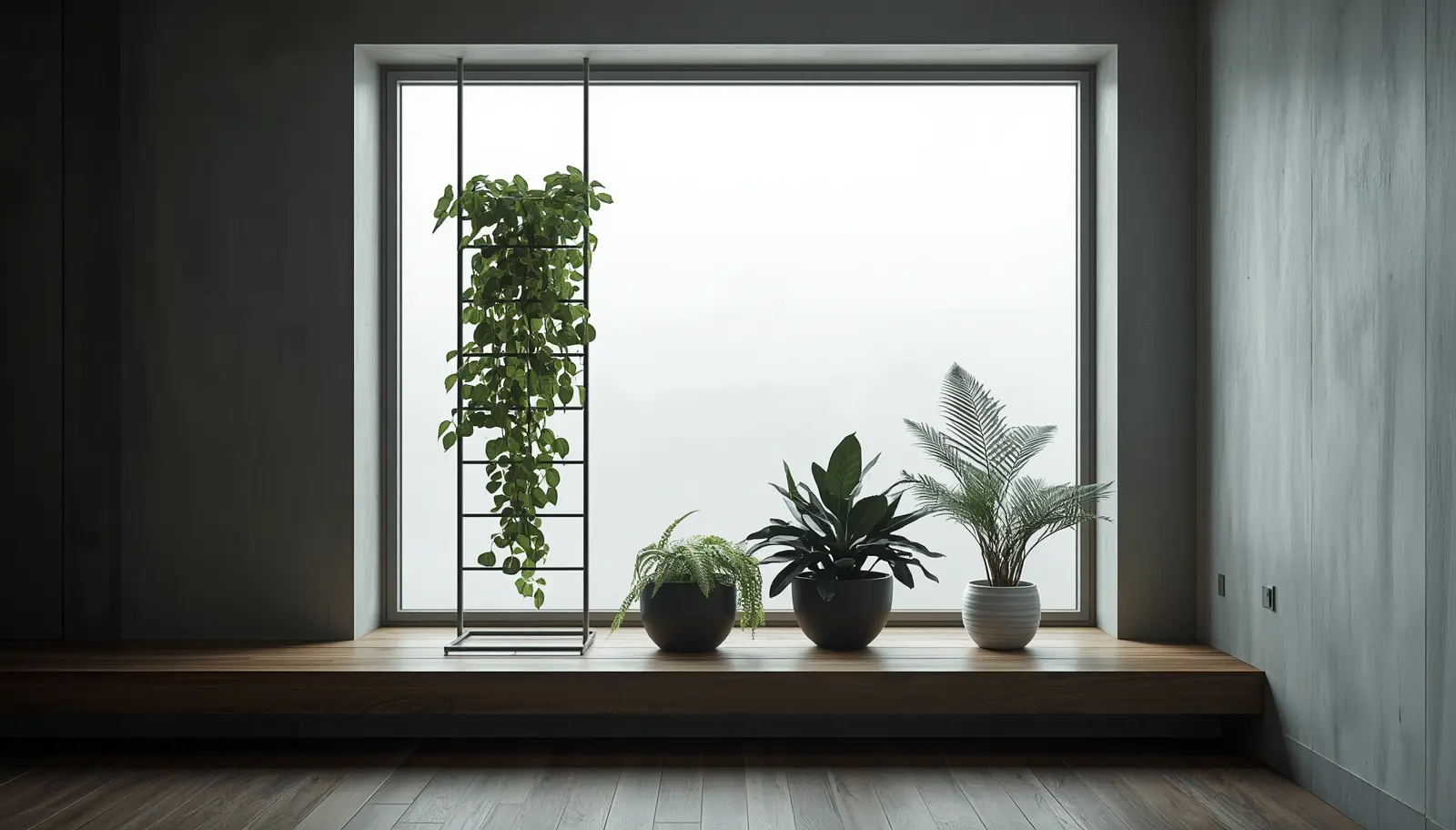
North-facing windows provide consistent indirect light, creating an ideal ecological niche for tropical understory aroids and ferns. Choosing plants specifically adapted to lower light levels significantly improves their long-term survival rates. As botanical specialists at PlantBlueprint, we developed this analysis to compare the seven best indoor plants for north-facing windows by growth habit, light requirements, and watering protocols.
The Essentials
- North facing window light exposure remains consistent and cool throughout the day.
- Peak light intensity is kept low, mimicking a shaded forest floor.
- The primary risk for indoor plants for north facing windows is overwatering due to slower plant metabolic rates.
- Tropical understory species naturally evolved for these exact low-intensity conditions.
- Distance dictates survival; plants should sit within three feet of the window glass to capture usable photons.
Understanding North-Facing Window Light Exposure
North-facing light provides a gentle, consistent illumination free from harsh direct solar radiation. We measure this specific ecological niche at approximately 200 to 500 foot-candles right at the glass surface. This environment mimics the shaded tropical forest floor, making it an ideal microclimate for specific botanical varieties rather than a universally poor location.
Understanding how much light do north facing windows get is critical for plant selection and spatial planning. The light intensity drops exponentially as you move away from the pane. A plant placed four feet back receives almost no usable photosynthetic energy, effectively sitting in near darkness. You must keep specimens close to the source to maintain cellular health. For a broader understanding of how these metrics compare to brighter rooms, review our complete analysis on Monstera Light Requirements.
If you notice Plant Leaves Turning Yellow, insufficient light often causes the soil to stay wet too long, leading to anaerobic root conditions. North facing window light exposure requires you to adjust your watering frequency downward significantly. You are managing a low-energy botanical system where water processing happens slowly.
Quick-Reference Comparison: The 7 Best Picks
Selecting the best houseplants for north light requires balancing aesthetic preferences with strict physiological needs. This matrix details our top recommendations for indoor plants for north facing windows based on hardiness and visual impact.
| Plant Name | Growth Habit | Pet Safety | Water Needs | Unique Differentiator |
|---|---|---|---|---|
| Philodendron Brasil | Vining / Climbing | Toxic | Low to Medium | High-contrast neon variegation |
| Maidenhair Fern | Bushy / Spreading | Safe | High | Ultra-fine textural foliage |
| Aglaonema ‘Silver Bay’ | Upright / Bushy | Toxic | Low | Superior light capture efficiency |
| ZZ Plant ‘Raven’ | Upright / Architectural | Toxic | Very Low | Near-black leaf pigmentation |
| Peace Lily | Upright / Clumping | Toxic | Medium | Reliable low-light flowering |
| Parlor Palm | Upright / Arching | Safe | Medium | Classic Victorian structural form |
| Silver Squill | Bulbous / Spreading | Toxic | Low | Patterned foliage with fleshy bulbs |
1. Philodendron Brasil: The Vigorous Climber
The Philodendron Brasil actively pushes new trailing growth even in low light conditions. 24 Best Indoor Plants – Find Your Perfect Houseplant.https://www.gardendesign.com/houseplants/best-indoor.html) highlights vining aroids for their exceptional adaptability across varied home environments. This specific cultivar maintains its striking neon green center stripe even in low ambient light conditions.
While many recommend the standard golden pothos for shade, there is a strong case for the Brasil when you want faster vertical growth and richer color contrast. The Brasil possesses larger, more efficient chloroplast complexes in its darker green margins. This physiological trait allows it to process ambient room lighting much better than highly variegated competitors. We suggest pinning the vines to a wall trellis to encourage larger leaf development, as the plant naturally wants to climb tree trunks in its native habitat.
You should allow the top two inches of the potting medium to dry out completely between waterings. Because it sits in an indoor plant for north direction placement, the root zone will not dry out rapidly. Overwatering causes the neon stripes to fade into a muddy yellow. – Standout Detail: In our side-by-side growth tracking, the Brasil produced noticeably more foliage mass than a standard golden pothos in identical northern exposures.
2. Maidenhair Fern (Adiantum): The Humidity Lover
Maidenhair ferns require high ambient humidity and consistently moist soil to prevent rapid frond crisping. According to Can You Recommend Some Easy to Grow House Plants for My Home?, choosing plants that match your home’s natural microclimate prevents inevitable failure. Their delicate tissue structure makes them perfect shade tolerant indoor plants for cooler rooms.
These low light houseplants north window specialists naturally grow near shaded streams and damp rock faces. They possess extremely thin cuticles, meaning they cannot tolerate direct sunlight without sustaining severe thermal burns. A north-facing sill offers the exact gentle ambient light they need to maintain their bright green color and fragile texture. You must never let the root ball dry out completely, as the fine root hairs die off within hours of desiccation.
We prefer to pot Maidenhair ferns in self-watering planters or heavily amended peat mixtures. This setup maintains the necessary moisture buffer without suffocating the roots. – Standout Detail: Optimal frond development for this specific fern occurs in the indirect light typically found right at a northern window pane.
3. Aglaonema ‘Silver Bay’: The Patterned Survivor
The Aglaonema ‘Silver Bay’ utilizes highly reflective silvery foliage to maximize light bounce and absorption in the darkest corners of a room. Research data on The Best Indoor Plants for North-Facing Windows: Low-Light Greenery Th confirms that wide-leaf tropicals excel at capturing weak ambient photons. This makes it an exceptional candidate for anyone asking what is a good houseplant for a north facing window.
Its broad, lance-shaped leaves provide massive surface area for photosynthesis. Even when pushed two feet back from the glass, the ‘Silver Bay’ refuses to drop its lower leaves. The thick, fleshy stems store emergency water reserves, forgiving the occasional missed watering schedule. This structural density makes it far more resilient than thinner-leafed Calatheas.
When evaluating indoor plants for north facing windows, we prioritize resistance to common indoor pests. The thick epidermis of the Aglaonema deters spider mites naturally, lowering your overall maintenance burden. – Standout Detail: The ‘Silver Bay’ maintains active air-purifying transpiration rates even in low-light conditions during winter months.
4. ZZ Plant ‘Raven’: The Architectural Specialist
The ‘Raven’ ZZ Plant stores water in potato-like rhizomes beneath the soil, allowing it to survive erratic watering schedules in dark rooms. The dark purple, almost black foliage indicates a high concentration of protective anthocyanins. These chemical compounds protect the plant while it functions as an elite shade tolerant indoor plant.
If you are wondering which indoor plant is good for the north direction, the ‘Raven’ is a structural masterpiece. The thick, waxy cuticles trap moisture effectively within the leaf tissue. Because north windows have very little thermal energy to evaporate soil moisture, the ZZ Plant’s incredibly low water requirement becomes a massive advantage. You will likely only water this plant once every four to six weeks in a northern exposure.
We frequently utilize ZZ plants in commercial office designs because they do not degrade when placed in low-traffic, low-light corners. For contrast, review our data on Sansevieria Cylindrica Care for another highly architectural, low-water option. – Standout Detail: The metabolic efficiency of the ‘Raven’ is remarkably low, requiring significantly less photosynthetic energy than a typical Ficus to maintain cellular health.
5. Peace Lily (Spathiphyllum): The Flowering Indicator
Peace Lilies reliably produce white spathe flowers even when receiving low levels of indirect light. Best Indoor Plants for North-Facing Windows: Thrive in 2026 notes that achieving persistent blooms in northern exposures is incredibly rare. This unique physiological trait makes it one of the absolute best houseplants for north light.
Frequently Asked Questions: North-Facing Window Plant Care
How much light does a north-facing window actually provide? A north-facing window provides consistent, cool indirect light without the risk of harsh solar radiation. Directly at the glass surface, this measures approximately 200 to 500 foot-candles. This specific intensity perfectly mimics the natural, shaded microclimate of a tropical forest floor.
Why do my plant’s leaves turn yellow in a north-facing window? Yellowing leaves in a northern exposure are almost always a symptom of root asphyxiation caused by overwatering. Because low light significantly slows a plant’s metabolic rate, it processes water much slower. If you maintain a standard watering schedule, the soil remains perpetually wet, leading to anaerobic root conditions and cellular failure.
How far away from the glass can I place my low-light plants? Distance dictates survival. You must place your plants within three feet of the window glass. Light intensity drops exponentially due to the inverse-square law; a plant placed four feet back receives almost zero usable photosynthetic energy, effectively starving the specimen.
Will any indoor plants actually bloom in a north-facing window? Achieving persistent blooms in northern exposures is biologically difficult due to the low thermal and luminous energy. However, the Peace Lily (Spathiphyllum) is a rare exception. It possesses the unique physiological trait of reliably producing white spathe flowers even under low levels of indirect light.
Do I need to change my soil mixture for north-facing rooms? Yes. Because evaporation and transpiration rates are much lower in cooler, north-facing rooms, standard dense peat soils will suffocate your plants. You must calibrate your substrate for high macro-porosity by incorporating coarse orchid bark and pumice to ensure adequate gas exchange and prevent perched water tables.