
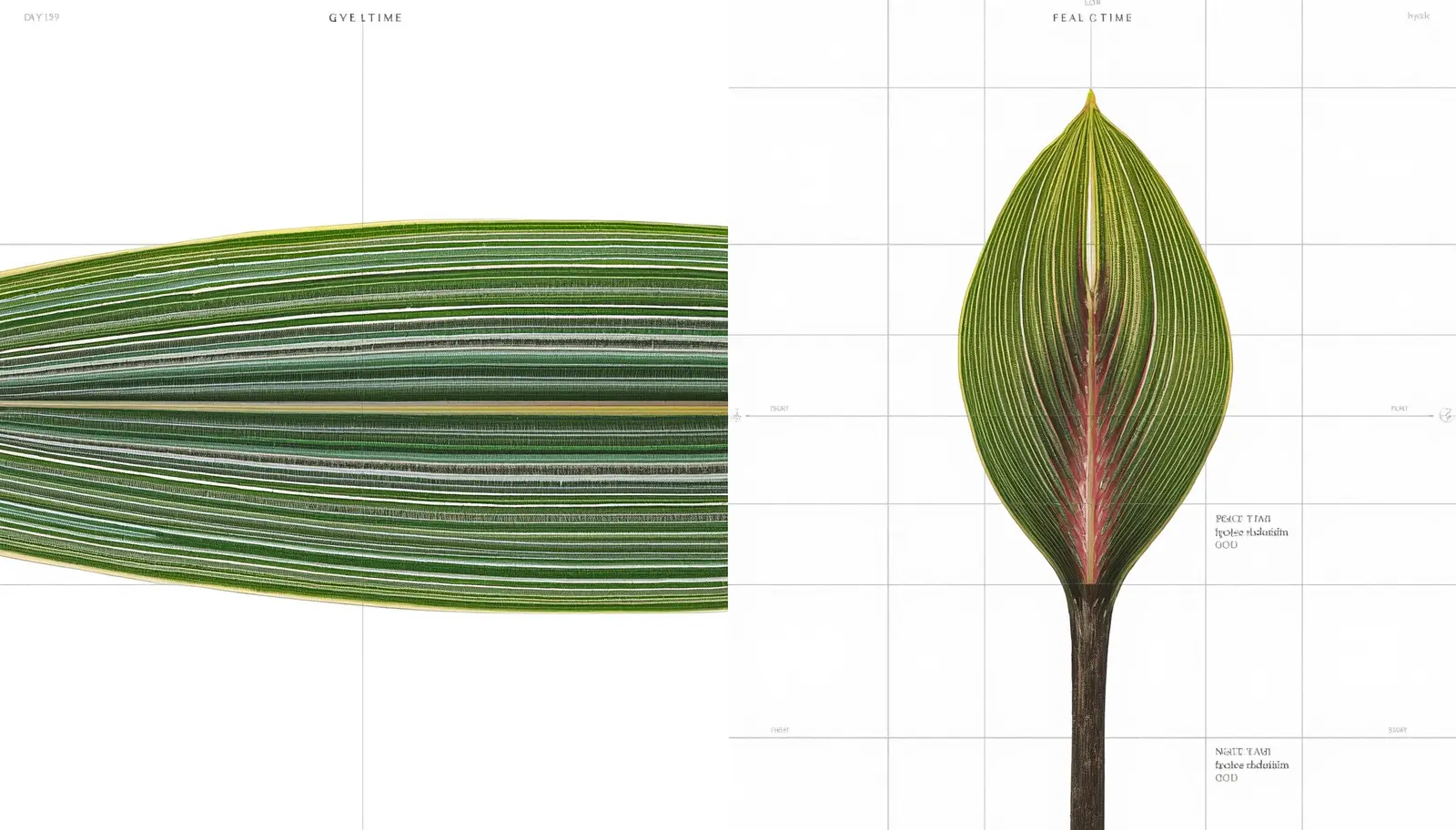
The Ultimate Calathea Care Guide: How to Keep Your Prayer Plant Thriving

The Ultimate Calathea Care Guide: Keeping Your Prayer Plant Thriving
🔬 THE LAB | TROPICAL FOLIAGE & MICROCLIMATE ENGINEERING

Calathea care has earned a reputation for being difficult—and that reputation is scientifically justified. These are not plants that simply want “bright indirect light and moist soil.” They are highly specialized organisms adapted to the humid, stable, mineral-poor understory floors of South American rainforests, and every failure mode growers encounter maps directly to one of the specific biological systems that evolved for that environment being compromised by standard indoor conditions.

The “drama” of Calathea care is not random or temperamental—it is completely predictable when you understand the mechanisms. Brown crispy edges are fluoride toxicity and VPD-driven desiccation, not vague “inconsistent watering.” Yellowing lower leaves are root zone anaerobiosis from compacted substrate, not generic “overwatering.” Curling leaves are a turgor-pressure drought response. And the leaf-folding that gives the family its common name—”prayer plant”—is nyctinasty: a precise photoreceptor-driven hydraulic mechanism that operates on a 24-hour cycle, completely unrelated to plant health.

This guide delivers the clinical framework that makes Calathea care predictable: the water chemistry causing the most common failure, the atmospheric physics behind humidity requirements, the substrate formula balancing the competing demands of moisture retention and root zone oxygenation, and the diagnostic logic that transforms “my Calathea is dying” into a solvable biochemical problem. The genus has been reclassified—most former Calathea species now carry the accepted name Goeppertia per revised phylogenetic analysis—but the care requirements remain identical across both names.

Quick Care Summary: Calathea (Goeppertia) Baseline Parameters

ParameterCalathea Care RequirementPathological Threshold
Light Intensity100-250 PPFD (bright indirect). DLI 4-8 mol/m²/day. East or north-facing window ideal.Below 50 PPFD: growth stalls. Above 400 PPFD direct sun: irreversible pattern bleaching and cellular burn.
Water SourceDistilled, reverse osmosis, or collected rainwater only. EC below 0.1 mS/cm. pH 6.0-6.5 after adjustment.Municipal tap water: fluoride causes tip necrosis, chloramine disrupts root microbiome, dissolved minerals accumulate causing pH shift.
Watering FrequencyWhen top 1-2cm of substrate begins drying. Substrate maintains even moisture 5-7 days. Never allow complete desiccation or waterlogging.Below 20% substrate moisture: leaf curl drought response. Above 70% persistent: anaerobic root zone, ethylene-triggered yellowing.
Relative Humidity60-70% RH at canopy height. Ultrasonic humidifier preferred. VPD target 0.4-0.8 kPa.Below 40% RH: brown crispy edges progressing inward. Below 30%: rapid marginal necrosis across all leaf surfaces.
Temperature65-85°F (18-29°C). Stable—no drafts. Day/night variation less than 8°F (4°C).Below 55°F (13°C): cold shock abscission and irreversible cellular damage. Above 90°F (32°C): VPD-driven desiccation accelerates.
Substrate50% potting soil + 25% perlite + 15% orchid bark + 10% coco coir. pH 6.0-6.5.Dense peat-only mix: compacts within 6 months creating anaerobic conditions before visible rot. Standard commercial soil insufficient.
FertilizationBalanced NPK 3-1-2 at 1/4-1/2 strength every 3-4 weeks, April-September only. Urea-free formula only.Full-strength application: salt accumulation causing fluoride-like tip burn. Autumn/winter fertilization: root burn on dormant root system.
Pet ToxicityNON-TOXIC. ASPCA-listed as safe for cats and dogs. No toxic compounds in any plant part.N/A — genus poses no toxicity risk to companion animals or humans.

The Prayer Plant Mechanism: Nyctinasty Explained

The leaf movement that gives the Calathea family its “prayer plant” common name is not a health indicator—it is a highly conserved circadian-regulated hydraulic mechanism called nyctinasty, operating independently of plant stress or vitality.

At the base of each petiole sits a specialized motor organ called the pulvinus—a cluster of thin-walled cells capable of rapid and reversible changes in turgor pressure. The pulvinus contains two zones: flexor cells on one side and extensor cells on the other. During daylight hours, phytochrome photoreceptors detect red light wavelengths, triggering potassium (K+) ion influx into extensor cells. Increased osmotic potential draws water into these cells, generating turgor pressure that extends them—leaves flatten horizontally to maximize light interception surface area.

At night, far-red light wavelengths dominate. Phytochrome Pfr converts back to Pr form, triggering K+ efflux from extensor cells and K+ influx into flexor cells. Extensor cells lose turgor, flexor cells expand—leaves fold upward into the characteristic “praying” vertical position. As documented by University of Maryland Extension’s research on photoreceptor mechanisms in tropical monocots, this nyctinastic cycle repeats reliably across the circadian rhythm regardless of soil moisture, fertilization, or repotting status.

A Calathea that stops folding its leaves at night is not necessarily unhealthy—pulvinus function can be temporarily disrupted by temperature shock (cold drafts depress K+ transport enzyme activity), severe dehydration (insufficient water for pulvinus expansion), or root damage preventing normal mineral uptake. Restored leaf movement after care correction confirms recovery of root and vascular function.

The nyctinastic movement cycle of Goeppertia species requires functional K+ transport in pulvinus cells—potassium deficiency from mineral-poor distilled water used without supplemental fertilization can cause permanent cessation of leaf movement even in otherwise healthy specimens. If leaf movement stops after switching to RO or distilled water: introduce a balanced liquid fertilizer at 1/4 strength every 3-4 weeks to restore mineral availability.

Optimal Lighting for Calatheas

How Much Sun is Too Much for Calathea?

Direct sunlight on Calathea leaf tissue causes irreversible photodegradation of the anthocyanins and chlorophyll-binding proteins responsible for the intricate patterning that makes the genus botanically and aesthetically remarkable.

Calathea (genus Goeppertia) evolved as a ground-layer plant in tropical South American rainforests where the canopy filters solar radiation to dappled, diffuse light at 50-300 µmol/m²/s PPFD. Their pigmentation system—elaborate patterns of dark greens, silver, white, pink, and burgundy—is calibrated for this light environment. When exposed to direct sun above 300-400 PPFD, two simultaneous damage events occur: (1) excess photon energy overwhelms the non-photochemical quenching pathway, generating reactive oxygen species that oxidize the carotenoid and anthocyanin pigments in patterned sectors, causing irreversible bleaching and fading, (2) elevated leaf surface temperature creates VPD-driven desiccation at the same margins most critical to visual pattern integrity.

The target range for Calathea care is 100-250 PPFD (DLI 4-8 mol/m²/day). This is genuinely lower than most aroids—it places Calathea in a separate light management category where east or north-facing windows, or positions 1-2 meters back from south-facing windows, are preferable to the high-light positions recommended for fenestrating Monstera. Measure with Photone app at canopy height—visual assessment is unreliable for this genus where the damage threshold and the beneficial range are separated by less than 100 PPFD.

Best window positions:

  • East-facing window (1-2m back): Optimal. Receives gentle morning sun (200-350 PPFD) for 2-4 hours, then bright diffuse light remainder of day. Morning sun intensity insufficient to cause bleaching at these distances
  • North-facing window (direct placement): Acceptable minimum. Delivers consistent 80-180 PPFD without any direct sun risk. Supplement with grow light in winter when DLI drops below 3 mol/m²/day
  • West-facing window (2m+ back): Functional but monitor for afternoon sun reaching plant in summer—western sun arrives at lower angle with higher heat load than equivalent morning sun
  • South-facing window: minimum 2-3m back with sheer curtain filtering—direct south sun at any distance below 2m exceeds safe PPFD threshold during summer months

The most reliable indicator that your Calathea is receiving too much light is not browning—it’s fading. If the dark green areas of the pattern lighten to a washed-out medium green, and the silver/white sectors lose contrast with surrounding tissue, the plant is receiving excess photon flux before any physical tissue damage is visible. Relocate when pattern fading begins, not after brown edges appear.

Mastering Watering: Chemistry Over Frequency

The Right Way to Water Calathea

Calathea care fails more consistently from the chemistry of irrigation water than from any other single variable—more than watering frequency, pot size, or soil type combined. Standard municipal tap water is incompatible with this genus at the cellular level.

Three specific tap water compounds cause documented physiological damage:

1. Fluoride (F⁻): Municipal water in the US and UK contains 0.7-1.5 ppm fluoride as a public health measure. Goeppertia species are among the most fluoride-sensitive plant genera studied—accumulating fluoride preferentially in leaf tip meristematic tissue where it inhibits photosystem II function and disrupts enzyme activity. The result: progressive brown necrosis beginning at leaf tips and advancing inward as fluoride concentration in tip tissue reaches phytotoxic levels (typically 300-500 ppm accumulated in dry leaf tissue). This damage is permanent—affected tissue does not recover, and progression continues as long as fluoridated water is applied.

2. Chloramine (NH₂Cl): Modern municipal disinfection uses chloramine rather than chlorine because it persists longer in the distribution system. Unlike chlorine (which dissipates if tap water is left overnight), chloramine cannot be removed by airing out—it requires activated carbon filtration or chemical neutralization. Chloramine disrupts beneficial soil microbiome populations that compete with root pathogens and facilitate mineral uptake.

3. Dissolved minerals (Ca²⁺, Mg²⁺, Na⁺): Hard tap water contains 100-400 mg/L dissolved calcium and magnesium salts. Repeated application deposits these minerals in substrate, progressively acidifying pH and increasing soil electrical conductivity (EC)—creating the osmotic stress and mineral lockout pattern identical to over-fertilization. See complete water chemistry analysis in the clinical water quality protocol for Calathea.

Correct water sources:

  • Reverse osmosis water (first choice): Removes 95-99% of dissolved minerals and fluoride. EC <0.05 mS/cm. Adjust pH to 6.0-6.5 with pH Down after dispensing—pure RO water is often slightly acidic (pH 5.5-6.0) from dissolved CO₂
  • Distilled water: Equivalent mineral profile to RO. Higher cost per liter but readily available in grocery stores for small collections
  • Collected rainwater: Excellent mineral profile—naturally soft, EC typically <0.1 mS/cm. Filter through fine mesh before use to remove particulates. Store in covered container to prevent algae and mosquito breeding
  • Filtered tap water (activated carbon): Removes chlorine and some minerals. Does NOT remove fluoride (requires reverse osmosis) or chloramine effectively. Acceptable as short-term substitute in low-fluoride water districts only

If RO water is unavailable and you must use tap water short-term, fill an open container 24 hours before use—this dissipates chlorine (but NOT chloramine, which requires carbon filtration). Add a phosphoric acid-based pH adjuster to bring pH to 6.2. This partially reduces two of three tap water damage mechanisms but cannot address fluoride or chloramine toxicity. Transition to RO water as permanent solution.

Achieving Ideal Humidity: The Critical Atmospheric Parameter

Calathea Humidity Requirements: Why Most Solutions Fall Short

Of all the parameters requiring management in Calathea care, relative humidity is both the most critical and the most commonly addressed with solutions that are physiologically insufficient.

The target RH for Goeppertia species is 60-70%—reflecting native South American rainforest floor conditions where atmospheric moisture ranges from 75-95% with minimal diurnal variation. Standard indoor environments in temperate climates deliver 30-45% RH in winter with central heating and 45-60% in summer without air conditioning. Below 50% RH, Vapor Pressure Deficit at the Calathea leaf surface exceeds the threshold at which thin-walled marginal cells can sustain turgor against atmospheric evaporative demand—brown edges form as these cells desiccate.

Solution effectiveness ranking:

  • Ultrasonic humidifier (highly effective, first choice): Elevates whole-room RH to target range. Position 60-90cm from plant, not directly overhead (condensation risk). Monitor with hygrometer at plant height—room thermostat humidity sensors are typically at ceiling level and may read 10-15% higher than canopy-level humidity. Target 60-70% at leaf surface, not room center. See complete VPD management methodology in the VPD optimization protocol
  • Pebble tray (moderately effective, best as supplement): Place pot on tray of pebbles with water surface below drainage holes. Evaporation from water surface creates localized humidity zone of 5-15% above ambient RH immediately around plant. Insufficient alone in environments below 45% ambient RH but valuable as supplemental contribution when humidifier raises ambient to 55%
  • Grouping plants (mildly effective): Transpiration from grouped plants creates a shared humidity microclimate. Measurable benefit of 3-8% above ambient—helpful in already-adequate humidity environments but insufficient as primary solution below 50% ambient
  • Foliar misting (not recommended for Calathea): Direct misting delivers transient humidity spike lasting 20-40 minutes maximum before evaporation restores original VPD. More critically: water droplets on Calathea leaf surfaces create fungal spore germination sites on the ornate pattern tissue and leave mineral deposits even from filtered water when water evaporates and minerals concentrate. The wet-surface-then-rapid-drying cycle creates higher localized VPD at the wet-to-dry transition edge than if no misting occurred

Placing your Calathea in a bathroom with a shower—often recommended online as a “humidity hack”—creates RH spikes to 80-90% during shower events followed by rapid drops to 30-40% as the bathroom dries between uses. The oscillating humidity cycle is more stressful to Calathea than sustained moderate RH because rapid VPD changes cause repeated cycles of stomatal opening and closing that exhaust guard cell energy reserves. Stable 60% RH from a humidifier consistently outperforms irregular high-humidity events.

Soil, Repotting, and Fertilization

The Perfect Calathea Soil Mix

Calathea substrate must simultaneously achieve two competing objectives: retain enough moisture that the root zone stays evenly damp for 5-7 days between waterings, while draining completely within 5 minutes to prevent the perched water table that creates root zone anaerobiosis.

Standard commercial potting mix fails both objectives: peat compacts within 6-12 months reducing drainage to near-zero while retaining water unevenly—saturated at the base, drying rapidly at the surface. The Urban Lab Calathea substrate formula achieves the balance through particle size distribution:

✅ THE URBAN LAB CALATHEA SUBSTRATE FORMULA

  • 50% quality potting soil (not peat-only): Provides organic matter base for CEC (nutrient retention) and beneficial microbial populations. Choose coconut coir-based commercial mixes over pure peat—more stable pH and lower salt content
  • 25% coarse perlite (#2 grade): Creates drainage channels preventing water accumulation at pot base. Inorganic—does not decompose or compact. Perlite’s roughly spherical particles resist packing, maintaining air-filled porosity over years
  • 15% medium orchid bark (1/4 inch): Adds structural air pockets and mimics the forest floor organic debris where Calathea roots naturally grow. Slower moisture-release than coco coir balancing rapid drainage with moisture retention
  • 10% coco coir (chunk grade, not fine): Increases moisture retention in the upper substrate layers without waterlogging. Neutral pH (5.8-6.4). No fluoride, no chloramine. Wets evenly unlike peat which forms hydrophobic clumps when fully dried

Repotting frequency and timing: Every 1.5-2 years or when roots emerge from drainage holes (whichever comes first). Repot in spring at the onset of active growth—root disturbance recovery is fastest when metabolic rate is rising. Increase pot diameter maximum 2 inches—oversized pots hold excess substrate moisture in root-free zones creating the anaerobic conditions this formula is designed to prevent. See complete substrate engineering rationale in the substrate CEC engineering protocol.

When and How to Fertilize Calathea

Over-fertilization produces symptoms indistinguishable from fluoride toxicity in Calathea—brown leaf tips and margins from salt accumulation—making this the most common misdiagnosed failure in the genus.

Fertilization protocol: balanced liquid NPK fertilizer at 1/4-1/2 manufacturer strength every 3-4 weeks during active growth season (April-September only). Key requirements:

  • Urea-free nitrogen sources: Urea converts to ammoniacal nitrogen in substrate—temporarily acidifies pH and causes nitrogen burn at root tips with the thin root structure characteristic of Goeppertia species
  • Low phosphorus (1-ratio): High phosphorus suppresses mycorrhizal associations and can accumulate to phytotoxic levels in the moisture-retentive substrate this genus requires
  • Monthly substrate flush: Apply 3x pot volume of distilled or RO water (no fertilizer) once monthly to move accumulated mineral salts through and out of drainage holes. Without regular flushing, fertilizer salts concentrate in substrate over consecutive applications, reaching toxic EC levels regardless of dilution rate used. Full flushing protocol in salt accumulation management protocol
  • Autumn/winter suspension: Cease all fertilization October-March. Root activity slows and the plant cannot metabolize inputs—salt accumulates without uptake, causing off-season tip burn that growers attribute to humidity or water quality

If you are unsure whether tip burn is from fluoride toxicity, over-fertilization, or low humidity, test with substrate EC measurement. An EC reading above 1.5 mS/cm in substrate solution (1:2 dilution test) indicates salt accumulation—flush immediately and reduce fertilizer frequency. An EC below 0.8 mS/cm while tip burn is still occurring points to fluoride toxicity or VPD-driven desiccation as the primary cause, requiring water source change and humidity increase rather than fertilization adjustment.

Troubleshooting Common Calathea Problems

The troubleshooting section of any Calathea care guide is where most resources fail—generic advice without causal mechanisms produces no lasting improvement. Each symptom below maps to a specific biological cause with a specific intervention.

SymptomCausal MechanismClinical Protocol
Crispy brown edges advancing inward uniformlyVPD-driven marginal desiccation. RH below 45% creates atmospheric demand exceeding leaf edge cell water supply. Alternatively: fluoride toxicity accumulating in marginal meristematic zones. The two causes are often concurrent.Measure RH at plant level. If below 55%: deploy humidifier to target 65%. If RH already adequate: switch from tap to RO/distilled water and flush substrate with 3x pot volume distilled water to remove fluoride accumulation.
Yellow leaves, especially lower older foliageRoot zone anaerobiosis (overwatering or compacted substrate). Oxygen-deprived roots cease normal mineral uptake—mobile nutrients (nitrogen, magnesium) are remobilized from older leaves producing yellowing. Sulfurous odor from soil confirms anaerobic conditions.Suspend watering, allow substrate to dry to 30-40% moisture. If soil remains wet >10 days: repot into aerated formula. Inspect roots—brown mushy tissue requires surgical root debridement before repotting.
Leaves curling inward along midribActive drought response. Guard cells reduce stomatal aperture and leaf cells lose turgor pressure, causing lamina to roll inward to minimize transpiration surface area. Also occurs in cold temperatures below 18°C as cellular water transport slows.Check substrate moisture (finger test to 2-3cm depth). If dry: water with distilled water immediately. If moist: check temperature at plant level—cold draft below 18°C is the alternate cause. Leaves should uncurl within 4-6 hours of correct intervention.
Brown circular spots with yellow halo on leaf bladeFungal leaf spot (Helminthosporium or Alternaria spp.) or bacterial blight. Water on leaf surfaces from misting creates infection entry. Spore germination optimal at 60-70% RH when combined with wet leaf surfaces—the humidity target that protects from VPD simultaneously creates fungal risk if moisture management is via foliar application.Cease all foliar misting permanently. Improve air circulation. Remove affected leaves. Apply copper-based fungicide/bactericide as foliar spray in morning hours ensuring complete drying before any humidity drops at night. Maintain humidity via humidifier (air moisture) not foliar application.
White crusty deposits on soil surface or pot edgesMineral salt accumulation from tap water or fertilizer. Calcium and magnesium carbonate precipitates visible as white crust at evaporation zones. Below-surface salt concentration may be significantly higher than visible surface level. EC likely above 2.0 mS/cm at substrate mid-depth.Execute full substrate flush with 3x pot volume distilled water, applied slowly to allow complete percolation. Repeat after 7 days. Switch to RO or distilled water exclusively going forward. Check substrate pH after flush—salt accumulation typically acidifies to pH 5.0-5.2, requiring pH adjustment. See pH lockout protocol.
Leaves stop moving (no longer fold at night)Pulvinus K+ transport dysfunction. Caused by: potassium deficiency from mineral-poor water without fertilization, cold shock below 13°C depressing ion transport enzyme activity, severe root damage preventing potassium uptake, or advanced fluoride toxicity disrupting mineral transport systemically.Check all four causative factors. If using pure RO/distilled without fertilization: add dilute balanced fertilizer to restore potassium availability. If temperature event suspected: min-max thermometer check. If root health uncertain: substrate inspection. Movement typically restores within 2-4 weeks of corrective action.

Popular Calathea (Goeppertia) Varieties to Grow

The genus Goeppertia contains over 500 species, but four have achieved widespread cultivation for their exceptional ornamental leaf patterns—each with minor variations in care requirements within the broader Calathea care framework.

Goeppertia orbifolia (formerly Calathea orbifolia)

Large rounded leaves 20-30cm diameter with alternating bold silver and dark green stripes radiating from midrib. The most architectural and compositionally striking of cultivated species. Slightly more tolerant of lower humidity (50-55% RH minimum vs 60% for most species) due to larger leaf mass-to-surface-area ratio. Most sensitive to direct sun—pattern bleaching occurs rapidly at PPFD above 200. Repot annually—large leaves drive high growth rate and rapid root-filling of pots.

Goeppertia makoyana — Peacock Plant (formerly Calathea makoyana)

Intricate “window pane” pattern of oval cream and dark green shapes on pale green background, burgundy-red undersides. Named for the peacock feather resemblance of the pattern. Most sensitive of common species to water quality—fluoride damage manifests as brown spots within the cream patterned sectors specifically, destroying the visual effect. Strict RO or distilled water essential. Requires RH above 60% consistently—deteriorates rapidly below 50%.

Goeppertia lancifolia — Rattlesnake Plant (formerly Calathea lancifolia)

Narrow, wavy-edged leaves 30-45cm length with alternating oval dark green spots on lighter green background, deep burgundy undersides. The most vigorous and fastest-growing commonly cultivated species—new leaves emerge every 2-3 weeks under optimal conditions. Most tolerant of average humidity (50-55% RH minimum). Excellent nyctinastic movement—the fastest and most visible prayer motion of common cultivars, making it useful for confirming pulvinus health.

Goeppertia ornata — Pin-Stripe Calathea (formerly Calathea ornata)

Deep forest green leaves with precise parallel pink-white pinstripes extending from midrib to margin. Juvenile plants show pink stripes that transition to white on mature leaves. Most sensitive to temperature fluctuation—cold shock below 16°C causes immediate visible leaf edge browning distinct from the slower humidity-related browning. Position specifically away from HVAC vents and exterior windows. High-humidity requirement matching makoyana (60-70% RH).

All Goeppertia species produce cuttings that root poorly from stem sections—the genus propagates almost exclusively by rhizome division at repotting. Divisions should include minimum 2-3 stems with attached root section. Pot divisions in the same substrate formula as the parent plant, maintain at 70%+ RH until new growth confirms establishment, and expect 4-8 weeks of apparent stasis while the division’s root system adapts to the new container.

Frequently Asked Questions

Are Calatheas toxic to cats and dogs?

No—Calathea (genus Goeppertia) is completely non-toxic and classified as pet-safe by the ASPCA. No toxic compounds exist in leaf, stem, or root tissue. The genus is one of the safest choices for households with cats, dogs, or small children. Confirm genus at purchase—some plants sold as “prayer plants” include Maranta and Stromanthe species, which are also non-toxic but have different care requirements.

Should I bottom-water my Calathea?

Yes—bottom-watering is the preferred irrigation method. Place pot in shallow tray of distilled or RO water for 20-30 minutes. The substrate absorbs moisture upward via capillary action, eliminating water contact with crown tissue and allowing roots to draw moisture according to actual demand. Critical rule: always use mineral-free water for bottom-watering—minerals concentrate in substrate without a top-flush cycle to carry them out via drainage. Perform a full top-flush with distilled water every 4-6 weeks to prevent bottom-watering mineral accumulation.

How fast do Calatheas grow?

1-2 new leaves per month during active growing season (April-September) under optimal conditions. Growth pauses largely November-February. New leaves emerge tightly furled from the central growing point and unfurl over 3-5 days. Unlike aroids, Goeppertia grows basally—new leaves emerge from the base, not elongating stems. Apparent growth stoppage with healthy appearance usually indicates one of three stressors: light below 100 PPFD, RH below 40%, or mineral accumulation from tap water requiring substrate flush and water source change.

Why does my Calathea keep dying no matter what I try?

The most common cause of persistent Calathea care failure despite consistent effort is the water source—specifically fluoride toxicity accumulating progressively with each tap water application. Because damage builds incrementally over weeks before becoming visible, growers who have made correct changes to light, humidity, and soil see continued deterioration from fluoride already sequestered in leaf tissue. Switch to RO or distilled water, flush substrate with 3x pot volume of distilled water twice in two weeks to remove accumulated fluoride and mineral salts, then maintain mineral-free water exclusively. New growth from the flushed plant should emerge undamaged, confirming water quality as the root cause.

The Lab Verdict: Chemistry and Atmosphere Over Convention

The persistent failure rate in Calathea care is not caused by the plant’s difficulty—it is caused by the systematic mismatch between what this genus requires and what standard houseplant care conventions deliver.

“Keep it moist and give it humidity” is technically correct but operationally useless without specifying that “moist” means with RO water at EC below 0.1 mS/cm, never tap water accumulating fluoride at 0.7-1.5 ppm per application; that “humidity” means 60-70% RH maintained continuously by humidifier, not occasional misting that deposits minerals on leaves while providing 30 minutes of VPD relief; that “indirect light” means 100-250 PPFD specifically, not the 400-600 PPFD delivered by a “bright” position near a south window.

The three non-negotiable requirements that convert Calathea care from frustrating to predictable: (1) mineral-free water source eliminating fluoride toxicity and mineral accumulation—this single change resolves the most common failure mode, (2) 60-70% RH from active humidification preventing VPD-driven marginal desiccation in the thin-walled leaf edge cells of this rainforest floor species, (3) moisture-retentive but well-draining substrate preventing the oscillation between waterlogging anaerobiosis and rapid desiccation that dense peat creates. Execute these three correctly, and Goeppertia‘s remarkable patterned foliage—the evolutionary product of millions of years in one of Earth’s most stable humid environments—performs exactly as it was designed to.


The Lab | Tropical Foliage & Microclimate Engineering Division
Calathea (Goeppertia) Care Protocol | Published: March 2026

Leave a Comment