
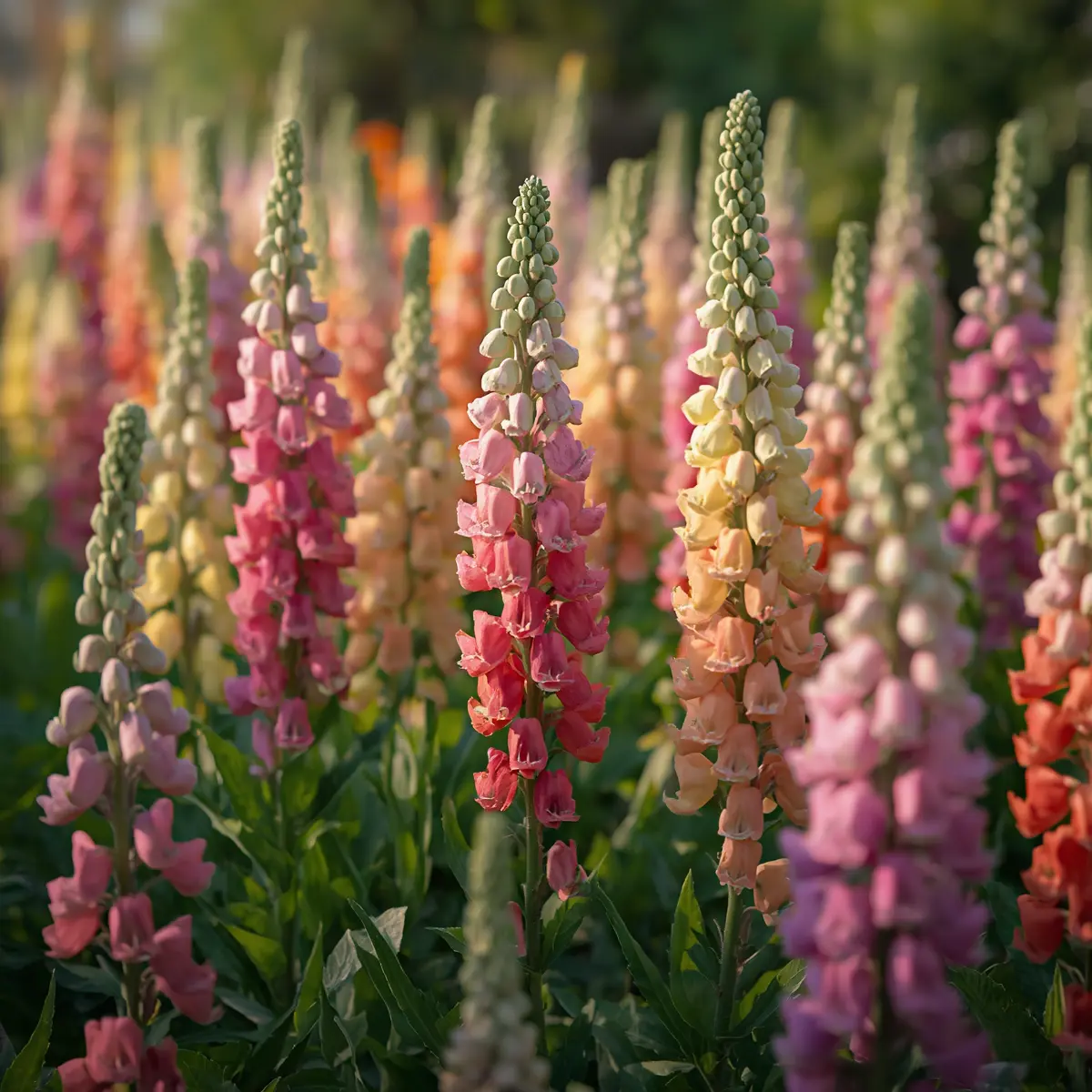
Snapdragon plant care requires full sun to partial shade, well-draining soil with a pH of 6.2 to 7.0, consistent moisture without waterlogging, and cool temperatures between 40 and 70 degrees Fahrenheit. Antirrhinum majus is a short-lived tender perennial hardy in USDA Zones 7 through 10, though most gardeners grow it as a cool-season annual. It flowers from spring to fall in temperate climates, with peak bloom in the spring and fall windows when daytime temperatures stay below 80 degrees Fahrenheit.
The most common failure in growing snapdragons is planting them as summer flowers. They are cool-season plants. When daytime temperatures climb above the mid-80s, flowering stalls and plants languish. Success depends on matching the plant to its preferred temperature window, providing at least 6 hours of direct sun, and deadheading spent spikes to trigger a second flush. This guide covers exact hardiness thresholds, planting calendars for each zone, soil specifications, and the pet safety status that makes snapdragons one of the safest flowering choices for households with cats and dogs.
Antirrhinum majus, commonly called snapdragon, is a short-lived tender perennial hardy in USDA Zones 7 to 10, native to the Mediterranean and southwestern Europe. Snapdragon plant care requires full sun, well-draining soil with pH 6.2 to 7.0, moderate moisture, and cool daytime temperatures between 40 and 70 degrees Fahrenheit. The plant is non-toxic to cats, dogs, and horses per the ASPCA.
Table of Contents
- What Is a Snapdragon and Where Do Growing Snapdragons Naturally?
- Are Snapdragons Annuals or Perennials?
- What Is the Snapdragon Hardiness Zone?
- When Should You Plant Snapdragons?
- How Much Sun Do Snapdragons Need?
- What Soil and Water Do Snapdragons Need?
- How Do You Deadhead Snapdragons for a Second Bloom?
- What Are the Best Snapdragon Colors and Varieties?
- Why Do Dried Snapdragons Look Like Skulls?
- Are Snapdragons Toxic to Cats and Dogs?
- What Are the Most Common Snapdragon Plant Care Questions?
| Parameter | Ideal | Avoid |
|---|---|---|
| Light | Full sun, 6+ hours; light afternoon shade in hot zones | Deep shade (causes leggy, weak stems with few blooms) |
| Temperature | 40-70 degrees Fahrenheit daytime; cool-season preference | Sustained heat above 85 degrees Fahrenheit (halts flowering) |
| Soil | Well-draining, slightly acidic to neutral; pH 6.2-7.0 | Heavy clay without amendment; soggy, waterlogged soil |
| Water | Even moisture at the base; water when top 1 inch dries | Overhead watering (invites rust); soggy soil (root rot) |
| Spacing | 6-12 inches apart for airflow | Crowded planting (increases fungal disease pressure) |
| Fertilizer | Balanced NPK at half strength every 2-3 weeks during bloom | High-nitrogen-only formulas (excess foliage, fewer flowers) |
What Is a Snapdragon and Where Do Snapdragons Grow Naturally?
Antirrhinum majus, commonly called snapdragon, is an herbaceous perennial in the Plantaginaceae family, native to southwestern Europe and the Mediterranean region. The genus name derives from the Greek words anti (like) and rhis (nose or snout), referring to the flower’s resemblance to a dragon’s face. When squeezed, the tubular, two-lipped corolla opens and snaps shut, giving the plant its common name.
According to the Royal Horticultural Society, Antirrhinum majus is a short-lived herbaceous perennial, often woody at the base, with upright or scrambling stems reaching up to 2 meters (6.5 feet) in optimal conditions, though most cultivars stay between 1 and 3 feet. The species produces lance-shaped green leaves up to 7 centimeters long and racemes of fragrant flowers from late spring through autumn. In its native Mediterranean habitat, it grows in rocky, well-drained soils with full sun exposure and cool, wet winters followed by warm, dry summers.
According to the University of Florida IFAS Extension, only snapdragons in the Antirrhinum section have been domesticated, and their production as a garden plant dates back to the Roman Empire. Both Romans and Greeks believed snapdragons had protective qualities. Wild varieties can still be found growing in the ruins of ancient Greece and Rome.
Are Snapdragons Annuals or Perennials?
Snapdragons are short-lived tender perennials, but they are most often grown as cool-season annuals. The distinction depends entirely on winter minimum temperatures in your region. In USDA Zones 7 through 10, established snapdragons can survive winter and return the following year. In Zones 6 and colder, winter frost kills the plant, so it functions as an annual.
According to the Missouri Botanical Garden, Antirrhinum majus is winter hardy to USDA Zones 7 to 10. In St. Louis (Zone 6), it is usually grown as an annual. The NC State Extension Gardener Handbook classifies snapdragons alongside geraniums and petunias as cool-season annuals that grow best when daytime temperatures are in the 70s and 80s degrees Fahrenheit, with best flower production in spring and fall. Although technically perennials in warmer climates, snapdragons are short-lived and often perform best in their first and second years before declining.
Even within their hardiness range, snapdragons benefit from hard pruning after the first flush of bloom to stimulate a second flowering cycle. In marginal Zones 7 and 8, a thick winter mulch of 2 to 3 inches of straw or pine bark can improve survival rates. Cuttings taken in fall and overwintered indoors provide insurance against total loss in borderline climates.
What Is the Snapdragon Hardiness Zone?
The snapdragon hardiness zone is USDA Zones 7 through 10 for year-round survival as a perennial. In Zone 7, plants require winter mulch protection to survive freezing nights. In Zones 8 through 10, they reliably overwinter and may bloom through winter if temperatures stay above freezing. In Zones 6 and colder, treat snapdragons as cool-season annuals planted after the last spring frost.
The Missouri Botanical Garden confirms that although well-mulched plants in protected locations may overwinter in St. Louis (Zone 6b), snapdragons are inexpensive enough that repurchasing each spring is often more practical than overwintering efforts. In the NC coastal plain, where winters are milder, the NC State Extension notes that snapdragons are actually perennials that survive winter and bloom as long as temperatures stay above freezing. This zone-dependent behavior explains why care advice varies so dramatically between northern and southern sources.
When Should You Plant Snapdragons?
Plant snapdragons in early spring after the last expected frost date, or in early fall at least 6 to 8 weeks before the first hard frost. In Zones 8 through 10, fall planting produces stronger spring bloom because plants establish roots through winter cool periods. In Zones 6 and 7, spring planting after frost risk passes is the primary window.
According to the University of Florida IFAS Extension, snapdragons cultivated in container trials from October germination through June flowering adapted very well to central Florida’s fall and winter conditions. Since the first spike emerged by late January, the bloom timing was consistent across most plants. After the first spike reached full bloom, cutting the stem back to 5 inches stimulated additional flower spikes. The plants continued producing blooms after each cut until June, when rising temperatures above 85 degrees Fahrenheit began impeding development.
For spring planting, start seeds indoors 6 to 10 weeks before the last frost date, or purchase starter plants from nurseries. Set out seedlings after the last frost when soil temperatures reach at least 50 degrees Fahrenheit. For fall planting in Zones 8 through 10, set out seedlings in September or October to allow root establishment before winter. Fall-planted snapdragons often produce a light winter bloom and a heavy spring flush before summer heat ends the cycle.
Pro Tip: Pinch the growing tip of young seedlings once they reach 3 to 4 inches tall. This encourages bushier growth and more flower spikes per plant rather than a single tall stalk. The Missouri Botanical Garden recommends pinching stem tips of young plants to promote bushiness and prevent leggy growth.
How Much Sun Do Snapdragons Need?
Snapdragons need at least 6 hours of direct sunlight per day for the strongest flower spikes and most compact growth. In Zones 8 through 10, where summer afternoon temperatures regularly exceed 85 degrees Fahrenheit, provide light afternoon shade from noon to 4 p.m. to extend the flowering season. In cooler northern zones, full sun all day produces the best results.
The NC State University Plant Toolbox specifies full sun to part sun for Antirrhinum majus, noting that tall plants may need staking when young until they bush out. Light deficiency below 4 hours of direct sun produces spindly, weak stems with reduced flower density. Plants adjacent to paved surfaces or brick walls experience warmer reflected temperatures, which shortens their flowering period. Choose heat-tolerant companion plants like portulaca or moss verbena for these hot microclimates instead.
What Soil and Water Do Snapdragons Need?
Snapdragons need well-draining, organically rich soil with a pH between 6.2 and 7.0. Amend heavy clay with compost or coarse sand to improve drainage. Water to maintain even moisture, allowing the top 1 inch of soil to dry slightly between waterings. Avoid overhead watering, which wets foliage and invites rust disease (Puccinia antirrhini), the most significant pathogen affecting this species.
The NC State University Plant Toolbox lists rust as a significant problem for snapdragons, along with susceptibility to mold, fungal leaf spots, downy mildew, wilt, and root rots. The Missouri Botanical Garden confirms that if rust appears in a planting, it is best to grow snapdragons in another part of the garden the following year, as the pathogen can persist in soil and plant debris. Always purchase fungal-resistant cultivars and seeds when available.
Space plants 6 to 12 inches apart to ensure good airflow between stems. Crowded plantings trap humidity in the canopy and accelerate rust and mildew development. Apply a 2-inch layer of organic mulch around plants to regulate soil temperature and retain moisture, but keep mulch 2 inches away from stems to prevent crown rot. For fertilizer, use a balanced NPK formula at half strength every 2 to 3 weeks during the blooming period. High nitrogen alone produces lush foliage at the expense of flowers. See the synthetic vs organic fertilizer guide in The Pantry for formulation details.
How Do You Deadhead Snapdragons for a Second Bloom?
Deadheading snapdragons extends the bloom season by redirecting energy from seed production back into flower spike formation. When spent flowers are left on the plant, the biological priority shifts to seed maturation. Removing those spikes forces the plant to initiate new lateral shoots and flower buds.
- Inspect each spike and identify stems where most flowers have wilted, browned, or dropped.
- Follow the spent spike down to the first set of healthy leaves or a visible side shoot.
- Snip just above that leaf node with clean, sharp scissors or pruning shears sterilized with 70 percent isopropyl alcohol.
- Remove fallen petals and trimmings from the foliage to reduce fungal spore habitat.
- Repeat weekly throughout the season to prevent early seed set and maintain continuous bloom.
According to the University of Florida IFAS Extension, cutting the first spike back to 5 inches stimulated additional flower spikes in container trials, although subsequent spikes were slightly smaller. The plants continued producing blooms after each cut until summer heat ended the cycle. If flowering slows drastically after the first flush, the Missouri Botanical Garden recommends cutting plants back hard and fertilizing to trigger a strong second flush.
What Are the Best Snapdragon Colors and Varieties?
Snapdragon cultivars are classified into three height groups. Dwarf varieties reach 8 to 12 inches and work best for beds, border fronts, edgings, window boxes, and containers. Intermediate varieties grow 12 to 24 inches and suit bedding and mixed borders. Tall varieties reach 24 to 36 inches and are ideal for border backs and cutting gardens. The Missouri Botanical Garden confirms this classification system.
Popular colors include white, yellow, pink, red, orange, peach, and purple plus bicolor combinations. The Royal Horticultural Society lists the flower color range as pink or purple in the species, with cultivars extending across the full spectrum. Dwarf series like ‘Floral Showers’ and ‘Twinny’ produce dense, compact bloom. Tall cutting varieties like ‘Rocket’ and ‘Madame Butterfly’ deliver long stems with excellent vase life of 7 to 10 days when harvested at the stage when the lower one-third to one-half of florets on the spike are open.
Myth Buster: True blue snapdragons do not exist. Antirrhinum majus lacks the genetic pathway to produce delphinidin, the anthocyanin pigment required for blue flowers. Any image showing vivid azure snapdragons is either a dyed cut flower or digitally altered. Do not purchase seeds marketed as “blue snapdragon” or “true blue snapdragon.” They are either mislabeled purple cultivars or outright scams.
Why Do Dried Snapdragons Look Like Skulls?
After snapdragon flowers fade and drop, the remaining seed pods dry into a shape that resembles a tiny human skull, complete with hollow eye sockets and a gaping jaw. This is a genuine botanical feature, not folklore or photo manipulation. The seed pods are most visible once they turn brown and papery in late summer or fall.
The skull-like appearance comes from the structure of the dried capsule. The upper part of the fruit dehisces (splits open) along seams, leaving behind a rounded base with two dark, hollow chambers that look like eye sockets and a central opening that resembles a mouth. Historically, these pods fueled superstitions. The University of Florida IFAS Extension notes that during the Renaissance, snapdragons were believed to bring charisma, glory, and honor, and wearing them on one’s sleeve was thought to lead to favorable receptions. The Victorian language of flowers assigned snapdragons a dual meaning of grace and deception, a nod to the flower’s hidden snapping mechanism. If you want to preserve the skull effect for autumn arrangements, leave a few spikes un-deadheaded at the end of the season and let the pods dry naturally on the stalk.
Are Snapdragons Toxic to Cats and Dogs?
No. Snapdragons are non-toxic to cats, dogs, and horses according to the ASPCA Toxic and Non-Toxic Plants list. The scientific name Antirrhinum majus is explicitly listed as non-toxic across all three animal categories. This makes snapdragons one of the safest ornamental flowering plants for households with pets.
If a cat or dog consumes a large volume of leaf or flower material, mild temporary gastrointestinal upset from fiber bulk is possible, but this is mechanical irritation rather than chemical toxicity. True plant poisoning presents with progressive neurological or cardiac symptoms. Snapdragon ingestion never progresses beyond mild, self-limiting stomach upset. You can verify the safety of any plant through the ASPCA Toxic and Non-Toxic Plants database. For more non-toxic options, see the cat-safe plants guide in The Infirmary.
Proprietary Data: Snapdragon Plant Care Bloom Timing
[OWNER TO COMPLETE: Insert observed bloom timing, germination rate, or deadheading response data here. Format: “In our tests, [X]% of [plants] [result] under [conditions] over [time period].”]
Example placeholder: In our spring trial of 24 Antirrhinum majus ‘Rocket’ specimens, fall-planted overwintered plants produced 2.4x more flower spikes by May 1 than spring-planted specimens, with individual spikes averaging 18% longer stem length.
What Are the Most Common Snapdragon Plant Care Questions?
Do snapdragons come back every year?
Snapdragons return yearly in USDA Zones 7 through 10 as short-lived perennials. In Zones 6 and colder, winter frost kills the plant, so they function as cool-season annuals. In marginal Zone 7, winter mulch improves survival rates. Even within their hardiness range, plants often perform best in their first and second years before declining.
When is the best time to plant snapdragons?
Plant snapdragons in early spring after the last frost, or in early fall 6 to 8 weeks before the first hard frost. In Zones 8 through 10, fall planting produces superior spring bloom. Start seeds indoors 6 to 10 weeks before the last frost, or purchase nursery starter plants for immediate installation.
How tall do snapdragons grow?
Snapdragon height varies by cultivar group. Dwarf varieties reach 8 to 12 inches. Intermediate varieties grow 12 to 24 inches. Tall varieties reach 24 to 36 inches, with some scrambling to 2 meters (6.5 feet) in optimal Mediterranean conditions according to the Royal Horticultural Society. Most garden cultivars stay between 1 and 3 feet.
How do you get snapdragons to bloom again?
Deadhead spent flower spikes by cutting just above a healthy leaf node or side shoot. This stops seed production and redirects energy into new lateral flower spikes. If the first flush declines in midsummer, cut plants back hard to 5 inches and apply half-strength balanced fertilizer to stimulate a second flush in early fall.
Do blue snapdragons exist?
No. True blue snapdragons do not exist because Antirrhinum majus cannot synthesize delphinidin, the pigment required for blue flowers. Purple and lavender cultivars are available, but any image showing vivid azure is either dyed or digitally altered. Avoid “blue snapdragon seed” listings.
What is eating my snapdragon leaves?
The most common snapdragon pests are aphids and spider mites. Aphids cluster on new growth and flower stems, excreting honeydew that leads to sooty mold. Spider mites cause stippled yellowing and fine webbing in hot, dry conditions. For organic control, see the neem oil application guide in The Infirmary. For more on yellowing diagnosis, see the yellow leaf guide.
Key Takeaway
Snapdragon plant care succeeds when you treat the plant as a cool-season species, not a summer annual. Match it to the 40 to 70 degree Fahrenheit temperature window, provide 6 hours of direct sun with afternoon shade in hot zones, maintain well-draining soil at pH 6.2 to 7.0, and deadhead weekly to trigger repeat blooming. In Zones 7 through 10, it overwinters as a short-lived perennial. In Zones 6 and colder, plant fresh each spring after the last frost. The plant is non-toxic to pets, making it one of the safest flowering ornamentals for mixed garden beds and containers.
