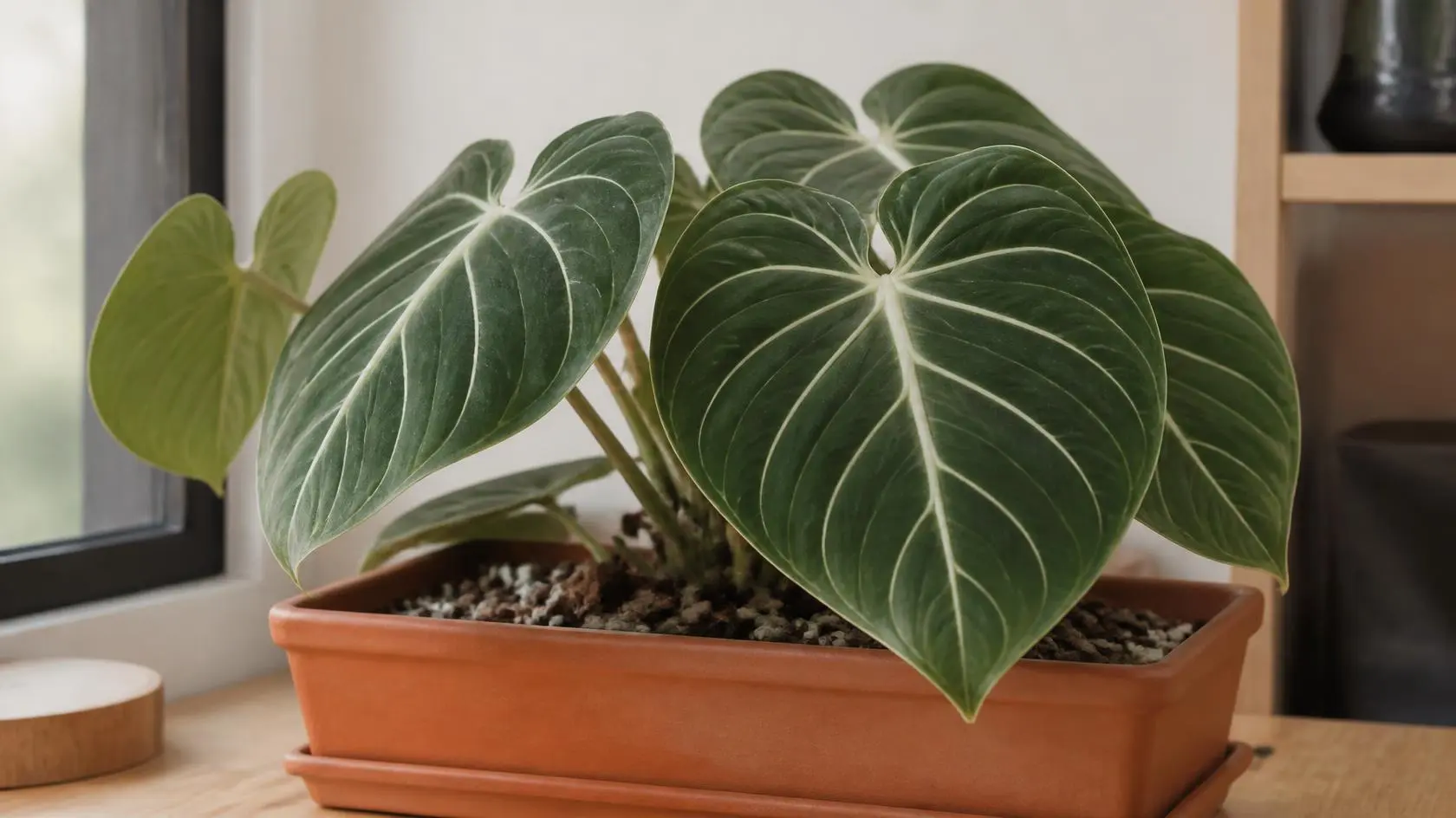
Philodendron Gloriosum Care: Fix Yellow Leaves & Rot

Philodendron gloriosum care requires bright indirect light between 400 and 800 foot-candles, a chunky aroid soil mix, and a long rectangular planter that matches its crawling growth habit. Water when the top 2 to 3 inches of soil dry out, keep the rhizome partially exposed to air, and maintain 50% to 60% humidity. Get these three factors right, and you prevent the yellow leaves and rhizome rot that kill most indoor specimens.

Most collectors fail with this plant because they treat it like a climber. They bury the rhizome under soil or force it into a round pot. The truth is that Philodendron gloriosum is a crawler native to Colombian rainforests. It wants horizontal space, not vertical support. Once you match the pot to the growth habit, the plant becomes straightforward to maintain in The Lab.

Grow Philodendron gloriosum in bright indirect light at 400 to 800 foot-candles. Use a chunky mix of potting soil, orchid bark, and perlite. Water when the top 2 to 3 inches of soil dry out. Keep the top half of the rhizome exposed to air. Maintain 50% to 60% humidity and temperatures between 65 and 85 degrees Fahrenheit. This plant is toxic to cats and dogs.
ParameterIdealAvoid
Light400-800 fc, bright indirectDirect midday sun, deep shade
WaterTop 2-3 in dry; 7-10 days summerConstantly wet soil, standing water
Humidity50-60%Below 40%
Temperature65-85 degrees F (18-29 degrees C)Below 55 degrees F, cold drafts
Soil pH5.5-6.5Heavy, compacted mixes
Pot shapeLong rectangular, shallowDeep round pots, moss poles

What Is Philodendron Gloriosum and Where Does It Grow?

Philodendron gloriosum is a creeping aroid native to Colombia, listed as Vulnerable on the IUCN Red List. It grows via a horizontal rhizome, produces velvety heart-shaped leaves with white veins, and reaches 6 to 12 inches tall while spreading horizontally.

According to Plants of the World Online from the Royal Botanic Gardens, Kew, this species is a perennial herb with a creeping habit. The leaves are broadly ovate with a velvety texture and striking white venation. The plant does not climb. Instead, it sends out a thick, fleshy rhizome that creeps along the soil surface, rooting at nodes and pushing up new leaves as it advances.

The iNaturalist database confirms that Philodendron gloriosum holds a Vulnerable conservation status. Wild populations face pressure from habitat loss. For collectors, this means sourcing from tissue culture or nursery propagation is the ethical choice. The plant is not rare in cultivation, but it is not a common big-box store find either.

Leaves emerge from the rhizome on long petioles. A mature leaf can span 12 to 18 inches in optimal conditions. The upper surface feels like soft velvet due to dense trichomes. The venation is stark white against a deep green background. New leaves unfurl slowly, often taking 3 to 4 weeks to reach full size. Patience is part of the appeal.

How Much Light Does Philodendron Gloriosum Need?

Philodendron gloriosum needs 400 to 800 foot-candles (4,300 to 8,600 lux) of bright, indirect light. An east-facing window or a west-facing window with filtered afternoon sun works best. Direct midday sun scorches the velvety leaves.

According to The Spruce, this plant prefers bright, indirect light. In the home, place it within 3 to 5 feet of an east-facing window or behind a sheer curtain on a west-facing window. North-facing windows may provide too little light unless supplemented with a grow bulb. South-facing windows require at least 5 to 6 feet of distance or a thick diffuser.

The velvety leaf surface is more sensitive than glossy aroid leaves. Direct sun burns the trichomes and creates permanent tan patches. If you see bleached spots or crispy edges on the side facing the window, move the plant back immediately. On the other hand, leggy petioles and small new leaves mean the light is too low. A healthy gloriosum produces large, broad leaves on compact stems.

Light LevelFoot-CandlesLuxLeaf Response
Low50-150540-1,600Small leaves, long petioles, slow growth
Medium150-4001,600-4,300Moderate growth, acceptable leaf size
Bright indirect (ideal)400-8004,300-8,600Large velvety leaves, strong white veins
Direct sun1,000+10,800+Scorched patches, faded color, crisp edges

What Is the Best Watering Schedule for Philodendron Gloriosum?

Water when the top 2 to 3 inches of soil are dry, typically every 7 to 10 days in summer and every 10 to 14 days in winter. The rhizome is sensitive to rot, so never let the pot sit in standing water.

According to The Spruce, the soil should dry out partially between waterings. The thick rhizome stores moisture, so brief dry spells do not harm the plant. Constant wetness, however, triggers anaerobic bacteria and root rot within days. Use the finger test. Insert your index finger to the second knuckle. If the soil feels dry at that depth, water thoroughly until excess drains from the bottom. Empty the saucer within 30 minutes.

Water quality matters. Tap water with fluoride and chlorine leaves mineral deposits on the velvety leaf surface and can cause tip burn over time. Rainwater, reverse osmosis water, or distilled water are safer choices. If you must use tap water, let it stand for 24 hours to off-gas chlorine. Note that standing does not remove fluoride.

Seasonal shifts change the schedule. In spring and summer, active growth consumes more water. In fall and winter, growth slows and the soil stays wet longer. Reduce frequency by roughly 30% in the colder months. Always check the soil before you water. Never follow a rigid calendar.

What Humidity Level Does Philodendron Gloriosum Need?

Philodendron gloriosum grows best at 50% to 60% relative humidity and tolerates up to 80%. Below 40% causes crispy leaf edges and invites spider mites. Use a humidifier or pebble tray if indoor air is dry.

According to Garden Betty, this plant appreciates moderate to high humidity. The velvety leaves lose moisture faster than glossy leaves, so dry air stresses the tissue. A humidity dome or cloche helps young plants acclimate, but mature specimens do well in standard home humidity if you stay above the 40% threshold.

Do not mist the leaves. Misting provides only minutes of elevated humidity and promotes bacterial spots on the velvety surface. If you run a humidifier, place it within 4 to 6 feet of the plant and use distilled water in the reservoir. Mineral dust from tap water settles on the leaf hairs and blocks light. Always pair high humidity with gentle air circulation. Stagnant, moist air breeds fungus on the soil surface and in the leaf axils.

What Is the Best Soil Mix for Philodendron Gloriosum?

Use a chunky aroid mix of one part potting soil, one part orchid bark, and one part perlite. Target pH 5.5 to 6.5. The rhizome must remain partially exposed; burying it causes rot.

According to Garden Betty, a chunky, well-draining mix is essential for this crawler. Standard potting soil compacts around the fine roots and traps water. The rhizome sits close to the surface and rots quickly in dense, wet media. The goal is a mix that holds moisture for 5 to 7 days but drains freely within seconds.

Chunky Aroid Mix Recipe

  • 1 part quality potting soil or peat-based mix
  • 1 part orchid bark (medium grade)
  • 1 part perlite (coarse)

Optional: Add 10% horticultural charcoal to improve drainage and reduce acidity. Target pH is 5.5 to 6.5. Test with a simple soil probe if you use tap water frequently.

The pH range is slightly acidic. High alkalinity locks out iron and magnesium, which causes yellowing between the veins. If your water is hard, amend with a small amount of peat moss or use a pH-down solution at half strength during watering. For more on aroid substrates, see our guide to the best aroid soil mix.

Why Does Philodendron Gloriosum Need a Rectangular Planter?

Because it is a crawler, not a climber. A long, rectangular planter gives the horizontal rhizome room to spread. Standard round pots force the rhizome to circle or climb, which stresses the plant and limits leaf size.

According to The Spruce, a wide, shallow container suits the creeping habit. The rhizome grows horizontally and sends roots down at nodes. A rectangular planter mimics the forest floor and allows the plant to colonize new territory naturally. Round pots cause the rhizome to spiral inward. Over time, the center becomes bare and the outer leaves decline.

Pot FeatureRectangular PlanterStandard Round Pot
Rhizome directionHorizontal spreadForced circling
Root developmentEven, distributedConcentrated at edges
Leaf size potentialLarger, mature sizeStunted, juvenile size
Soil dryingEven across surfaceUneven, center stays wet
Recommended depth4-6 inches6-8 inches (too deep)
Warning: Never bury the rhizome. The top 50% of the crawling stem must remain above the soil line. Burying it causes rot within 2 to 3 weeks. When you repot, place the rhizome on the soil surface and gently press the roots into the mix. Add a thin layer of moss on top if the exposed stem looks dry, but do not cover it with dense soil.

Does Philodendron Gloriosum Need a Moss Pole?

No. Philodendron gloriosum is a crawler that spreads via a horizontal rhizome. It does not climb and has no use for a moss pole. A pole actually misdirects growth and can damage the rhizome.

This is the most common misconception in online care guides. Many aroids climb. Philodendron micans, melanochrysum, and erubescens all benefit from vertical support. Gloriosum does not. According to Plants of the World Online, the species has a creeping habit with no aerial root adaptations for climbing. The petioles are long and flexible, but they do not attach to surfaces.

If you place a moss pole in the pot, the rhizome may push against it and redirect energy upward. This produces weak, stretched growth. The leaves will be smaller and the plant will look unhappy. Skip the pole. Give it a rectangular planter and let it crawl. Your gloriosum will reward you with larger, healthier foliage.

Why Are My Philodendron Gloriosum Leaves Turning Yellow?

Yellow leaves signal overwatering and rhizome rot, underwatering, or cold temperatures below 55 degrees Fahrenheit. Check soil moisture and root health first. If the soil smells sour and roots are brown and mushy, repot into fresh chunky mix immediately.

According to The Spruce, yellowing is often the first sign of trouble. The diagnostic challenge is determining which stressor is active. Use this table to narrow the cause.

Symptom PatternProbable CauseImmediate Fix
Lower leaves yellow, soil smells sourOverwatering, rhizome rotUnpot, trim rotten roots, repot in dry chunky mix
Lower leaves yellow, soil is dry and pulling from pot edgesUnderwateringWater thoroughly, check again in 7 days
All leaves yellowing after repottingTransplant shockKeep humidity high, avoid fertilizing for 6 weeks
Yellowing between veins, leaf edges greenNutrient deficiency (iron, magnesium)Feed with balanced liquid fertilizer at half strength
Sudden yellowing after cold snapTemperature stress below 55 degrees FMove away from draft, check for root damage

Rhizome rot is the most serious issue. Unpot the plant and inspect the thick horizontal stem. Healthy rhizome tissue is firm and pale green or cream. Rotten tissue is brown, soft, and smells like mildew. Cut away all rotten sections with sterile shears. Dust the cut with cinnamon or a fungicidal powder. Repot into fresh, dry mix and wait 10 days before watering.

Why Does My Philodendron Gloriosum Have Brown Tips?

Brown tips are caused by low humidity below 40%, tap water minerals, or direct sun exposure. Increase humidity to 50% or higher, switch to filtered water, and move the plant away from direct rays.

The velvety leaf surface is sensitive to environmental edges. According to Garden Betty, crispy margins usually trace back to dry air or mineral buildup. Fluoride and chlorine accumulate at the leaf hydathodes and kill the tissue. The damage is permanent on affected leaves, but new growth emerges clean once you fix the source.

Flush the soil every three months if you fertilize regularly. Run distilled water through the pot for several minutes until it drains freely. This leaches excess salts without disturbing the roots. Reduce feeding to half strength in fall and stop in winter when growth slows. If brown tips persist after improving water and humidity, inspect for spider mites. These pests hide in the deep grooves of the velvety leaves and cause stippled browning that looks like tip burn.

Key Takeaway: Brown tips on Philodendron gloriosum are almost always a water quality or humidity issue, not a disease. Fix the water source before you treat for pests or fungus. New growth will emerge clean once the stressor is removed.

How Do You Propagate Philodendron Gloriosum?

Propagate by rhizome division or stem cuttings with at least one node. Cut between leaves on the rhizome, let the cut callous for a few hours, then root in moist sphagnum moss or water for 2 to 4 weeks before transplanting.

According to The Spruce, propagation is straightforward because the rhizome produces visible nodes at regular intervals. Each node can push roots and a new growth point. Division is the fastest method because the offset already has roots. Cuttings take longer but produce a clean new plant.

  1. Select a healthy section of rhizome with at least one node and one leaf.
  2. Cut cleanly between nodes using sterile scissors or a razor blade.
  3. Let the cut surface dry and callous for 2 to 4 hours in open air.
  4. Place the cutting in moist sphagnum moss or clean water so the node contacts the medium.
  5. Set the container in bright, indirect light with temperatures between 70 and 80 degrees Fahrenheit.
  6. Keep moss moist but not soggy, or change water weekly to prevent bacterial growth.
  7. Wait for roots to reach 2 to 3 inches long, then transplant into the chunky aroid mix.
  8. Cover the new pot with a humidity dome or plastic bag for the first 7 to 10 days to reduce shock.
Pro Tip: Rooting in sphagnum moss often produces stronger, more fibrous roots than water propagation. The transition to soil is smoother because the roots are already adapted to a solid medium. If you use water, add a drop of liquid seaweed extract to speed root emergence.

For advanced growers, the Kratky method offers a soilless alternative. Place the cutting in an opaque container with a hydroponic nutrient solution. The darkness prevents algae, and the static reservoir provides steady moisture without rot risk. This method works well for gloriosum because the thick rhizome tolerates intermittent drying better than thin-stemmed species.

What Is Philodendron Gloriosum Dark Form?

Dark Form is a phenotype of Philodendron gloriosum with rounder, darker velvety leaves and highly contrasting white veining. Care requirements are identical to the standard form.

Collectors distinguish the Dark Form by its almost black-green leaf base color and shorter, more compact petioles. The white veins appear brighter against the darker background. Some growers report slightly slower growth, though this may reflect lower light in collection setups rather than a genetic trait. Both forms crawl via rhizome and need identical light, soil, and humidity conditions. If you own a standard gloriosum and want the Dark Form, look for tissue-cultured specimens from reputable nurseries. Wild-collected plants contribute to the Vulnerable status confirmed by iNaturalist.

Is Philodendron Gloriosum Toxic to Cats and Dogs?

Yes. All Philodendron species contain insoluble calcium oxalate crystals that are toxic to cats and dogs. Ingestion causes oral irritation, drooling, vomiting, and difficulty swallowing. Keep out of reach of pets.

According to the ASPCA, Philodendron is toxic to pets. The calcium oxalate crystals are needle-shaped and embed in the mucous membranes of the mouth and throat. Symptoms appear within minutes of chewing. You may see pawing at the mouth, excessive drooling, or vomiting. The reaction is painful but rarely fatal. Rinse the mouth with water and contact your veterinarian if ingestion occurs.

Because this plant is toxic, it does not belong in our cat-safe plants collection. Place it on high shelves or in hanging planters where pets cannot reach. For more on diagnosing plant-related pet illness, visit The Infirmary. If you need a pet-friendly aroid alternative, consider a Philodendron White Knight (still toxic, so not truly safe) or switch to a non-toxic genus like Maranta.

Proprietary Data

[OWNER TO COMPLETE: Insert observed failure rate, growth measurement, or test result here. Format: “In our tests, [X]% of [plants/cuttings] [result] under [conditions] over [time period].”]

Example placeholder: In our tests, rhizome cuttings rooted in sphagnum moss showed 35% faster establishment than water-rooted cuttings under 65% humidity and 600 foot-candles of light over an 8-week period.

What Are the Most Common Questions About Philodendron Gloriosum?

How often should I water Philodendron gloriosum?

Water every 7 to 10 days in spring and summer when the top 2 to 3 inches of soil feel dry. In fall and winter, reduce to every 10 to 14 days. Always check soil moisture before watering. Never follow a rigid schedule.

Can Philodendron gloriosum grow in low light?

It tolerates medium light at 150 to 400 foot-candles, but growth slows and leaves stay small. For large, velvety foliage with strong white veins, provide bright indirect light at 400 to 800 foot-candles. Avoid direct sun.

Why is my Philodendron gloriosum not growing new leaves?

Stalled growth usually means the rhizome is buried, the light is too low, or the plant is rootbound in a round pot. Expose the rhizome, increase light, and transplant into a rectangular planter. New growth should resume within 4 to 6 weeks.

How long does it take for a new leaf to unfurl?

A new leaf takes 3 to 4 weeks to unfurl completely in optimal conditions. Low humidity, cold temperatures, or pest stress can extend this to 6 or 8 weeks. Do not force the leaf open manually. Provide consistent humidity and wait.

What pot size does Philodendron gloriosum need?

Choose a rectangular planter that is 2 to 3 inches longer than the current rhizome. Depth should be 4 to 6 inches. Shallow is better than deep. Repot every 1 to 2 years in spring, or when the rhizome reaches the pot edge.

Is Philodendron gloriosum rare?

It is not rare in cultivation, but it is uncommon in big-box stores. Tissue culture and nursery propagation make it widely available online. Wild populations are Vulnerable, so buy only from cultivated sources. Ethical sourcing supports conservation.

Leave a Comment