
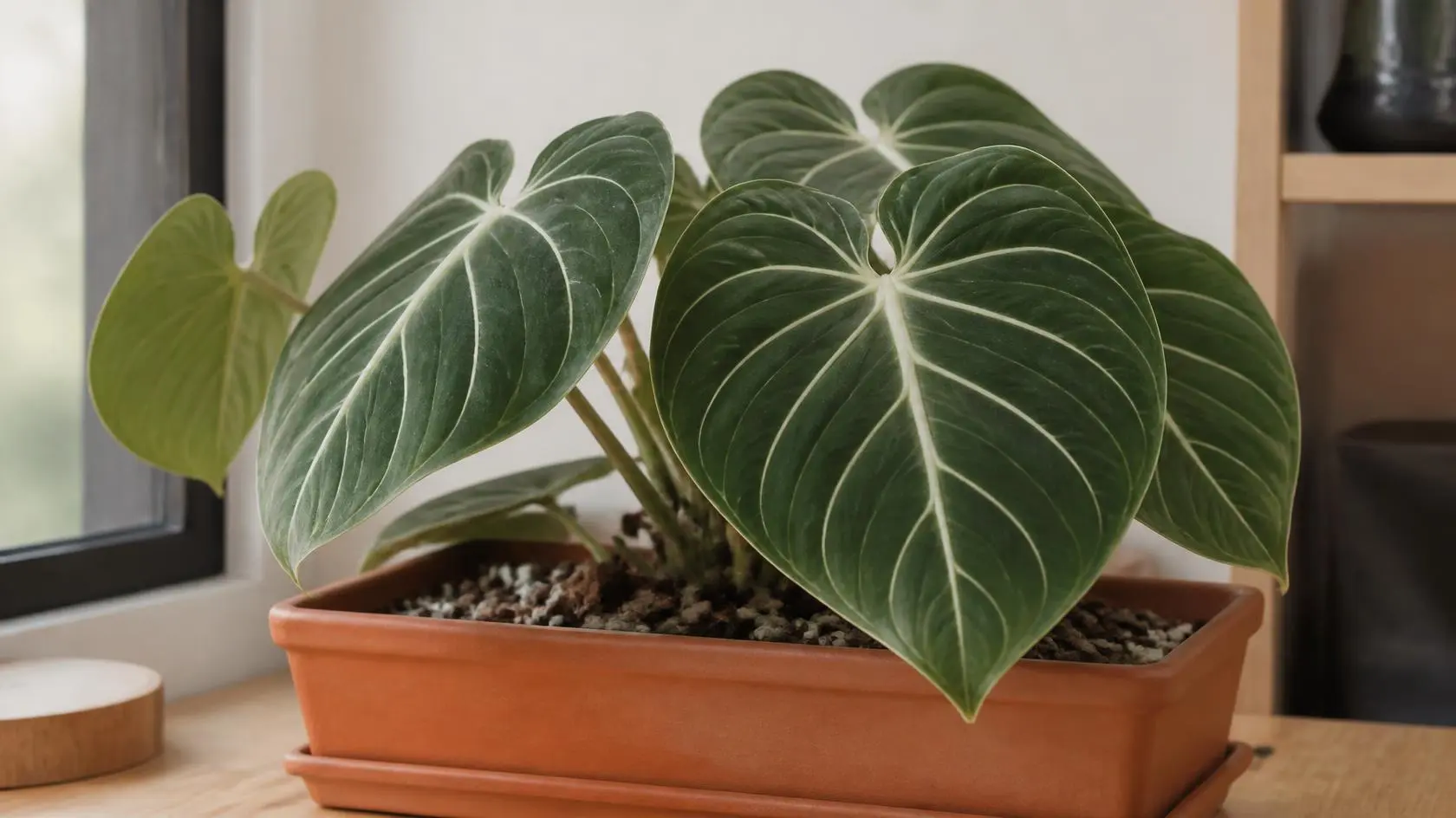
Philodendron gloriosum is a collector’s aroid with large, heart-shaped, soft-textured leaves marked with pale veins. Unlike the climbing philodendrons, its stem creeps along the ground. Extension services have not published care sheets for this species, so this guide combines what botanical databases say about how it grows in the wild with general philodendron care from the RHS, Iowa State and NC State. Philodendron gloriosum care comes down to bright indirect light, a loose, fast-draining mix, careful watering and room to creep.
What Is Philodendron Gloriosum?
According to the Colombian plant catalogue ColPlanTA (hosted with Kew’s Plants of the World Online), Philodendron gloriosum is endemic to Colombia, recorded in the departments of Cundinamarca and Meta at 350 to 700 m elevation, and is assessed as Vulnerable (VU) on the IUCN Red List. Its botanical description gives a creeping stem with internodes 4 to 6 cm long and 1.5 to 2 cm thick, and heart-shaped (cordate-ovate) leaf blades 15 to 25 cm long and 12 to 20 cm wide on petioles 20 to 30 cm long.
Because the species is threatened in the wild, buy nursery-propagated or tissue-culture plants rather than wild-collected ones.
| Need | What the sources say |
|---|---|
| Light | Bright, indirect; shield from summer sun (RHS, for philodendrons) |
| Water | Once the top of the compost has dried; never stand in water (RHS); top of soil dry (Iowa State) |
| Compost | Loose, free-draining, slightly acidic, pH 5 to 6 (RHS) |
| Temperature | At least 15°C (59°F) (RHS); 65 to 80°F (Iowa State) |
| Humidity | Moderate; tolerates normal home humidity (RHS) |
| Habit | Creeping stem (ColPlanTA) |
| Pets | Philodendrons are toxic to pets (ASPCA, NC State) |
Sources: ColPlanTA / Kew; RHS philodendron growing guide; Iowa State University Extension (2025); ASPCA; NC State Extension. Care entries are for philodendrons in general.
Light
The RHS says philodendrons need bright, indirect light, shielded from summer sun, which can scorch the leaves, and that too little light makes plants leggy with fewer, smaller leaves. Iowa State notes that philodendrons come from tropical forest understories and prefer indirect or dappled light indoors.
- Good spots: near an east window, or set back from a south or west window behind a sheer curtain.
- Too much sun: pale or tan scorched patches on the leaves.
- Too little light: long petioles, smaller new leaves and slow growth. A grow light helps; see our grow light guide.
Watering
The RHS says to water philodendrons once the top of the compost has dried out, ideally with rainwater or filtered water at room temperature, and never to let them stand in water. Iowa State says to keep the soil evenly moist but not soggy and to water when the top of the soil is dry. Because P. gloriosum grows along the surface, its stem sits close to the wet mix, so it is especially worth letting the top dry before watering again. Check with a finger; don’t water on a schedule.
Humidity and Temperature
The RHS says philodendrons prefer moderate humidity but tolerate the lower humidity found in most homes, and recommends at least 15°C (59°F), away from hot radiators and cold draughts. Iowa State gives typical home temperatures of 65 to 80°F and says philodendrons prefer high humidity but handle normal home air. Thin leaves crisp at the edges in very dry air, so a pebble tray or humidifier helps in heated rooms in winter.
Soil Mix
The RHS recommends a loose, free-draining, slightly acidic compost (pH 5 to 6) for philodendrons, suggesting two parts orchid compost to one part peat-free ericaceous compost. A chunky aroid mix of bark, a quality potting mix and perlite meets the same goal: air around the roots and fast drainage. See our aroid soil mix guide.
Pot Shape: Give It Room to Creep
Since the stem creeps rather than climbs (ColPlanTA), it grows forward along the surface and pushes new leaves from the growing end. A wide, shallow pot or a long, rectangular planter gives it space to keep creeping instead of running into the rim and over the edge. When repotting, set the stem on top of the mix rather than burying it deeply, with the roots in the mix below. Repot in spring when needed; the RHS suggests a container only a few centimeters larger than the root mass, which also helps the mix dry evenly.
Does It Need a Moss Pole?
No. The RHS notes that climbing philodendrons need a moss pole, while other types need no support. A creeping species like P. gloriosum belongs in the second group: it grows along the surface, so a pole is not useful.
Yellow Leaves and Rot
| Symptom | Likely cause | What to do |
|---|---|---|
| Yellowing leaves, wet mix, soft stem | Overwatering or poor drainage causing root rot (RHS) | Let the top dry; repot into a looser mix; cut away soft tissue |
| One old leaf yellowing as a new one opens | Normal aging | Remove it once fully yellow |
| Small leaves, long petioles | Too little light (RHS) | Move to brighter, indirect light |
| Speckling, webbing, cottony spots, bumps | Red spider mites, mealybugs, scale (RHS) | Isolate and treat |
Source: RHS philodendron growing guide.
The RHS says overwatering or poor drainage can cause root rot, leading to yellowing leaves and eventual collapse. With a creeping stem, check the stem as well as the roots: firm and green is healthy, soft and brown is rot. Our root rot guide covers what to do, and our yellow leaves guide covers other causes.
Brown Tips
Brown leaf tips and edges on philodendrons usually point to dry air, uneven watering or a build-up of fertilizer salts. UF/IFAS notes for the heartleaf philodendron that too much fertilizer browns and curls leaf tips, and the same applies to other philodendrons. Raise humidity, keep watering steady, feed lightly, and flush the pot with plain water now and then.
Propagation
The RHS describes philodendron propagation from stem cuttings taken just below a leaf joint, and Iowa State notes that sections with at least two nodes, especially with aerial roots, root more reliably. For a creeping stem like P. gloriosum, that means cutting a section of stem with at least one or two nodes and some roots, ideally with a leaf, and setting it on top of a moist, airy mix in warm, humid conditions until new roots and a leaf form. Use a clean, sharp knife, let cut surfaces dry briefly, and keep the mix lightly moist rather than wet. Rooting in sphagnum moss also works; see our sphagnum moss guide.
What Is “Dark Form”?
“Dark Form” is a trade name used by sellers for P. gloriosum plants with darker leaves. It is not a registered cultivar, and we could not find a botanical description of it. Plants sold under this name vary. Care is the same: what you see on the label matters less than giving the plant good light, a loose mix and careful watering.
Is It Toxic to Pets?
Yes. The ASPCA lists philodendrons as toxic to dogs and cats because of insoluble calcium oxalate crystals, and its 2025 article on houseplants that can cause trouble for pets includes philodendron among the plants containing insoluble calcium oxalate. Chewing causes mouth pain and irritation, drooling, vomiting and difficulty swallowing. The RHS warns that philodendron sap can irritate skin, so wear gloves when handling it. If a pet chews one, call your veterinarian or the ASPCA Animal Poison Control Center at (888) 426-4435. See our cat-safe plants list for alternatives.
Frequently Asked Questions
How do you care for a philodendron gloriosum indoors?
Give it bright, indirect light, a loose and free-draining mix, water once the top of the mix has dried, warmth above 15°C (59°F) and moderate to high humidity (RHS). Use a wide, shallow pot so the creeping stem has room.
Does philodendron gloriosum climb?
No. ColPlanTA describes its stem as creeping, so it grows along the surface of the soil rather than up a pole.
Why are my philodendron gloriosum leaves turning yellow?
Most often overwatering or poor drainage, which the RHS says causes root rot, yellowing and collapse. A single old leaf yellowing as a new leaf opens is normal.
Is philodendron gloriosum rare?
It is assessed as Vulnerable on the IUCN Red List and is endemic to Colombia (ColPlanTA), but it is widely propagated in cultivation. Choose nursery-grown or tissue-culture plants.
What is philodendron gloriosum dark form?
A seller’s trade name for darker-leaved plants, not a registered cultivar. Care is the same as for any P. gloriosum.
Is philodendron gloriosum toxic to cats?
Yes. Like other philodendrons, it contains insoluble calcium oxalate, which the ASPCA says causes mouth irritation, drooling, vomiting and difficulty swallowing in pets.
Sources
- ColPlanTA (Royal Botanic Gardens, Kew): Philodendron gloriosum André
- Kew Plants of the World Online: Philodendron gloriosum
- RHS: How to grow philodendrons
- Steil, A. (2025). Growing Philodendrons at Home. Iowa State University Extension and Outreach
- UF/IFAS Gardening Solutions: Heartleaf Philodendron
- ASPCA (2025). These Houseplants Can Cause Trouble for Your Pets