
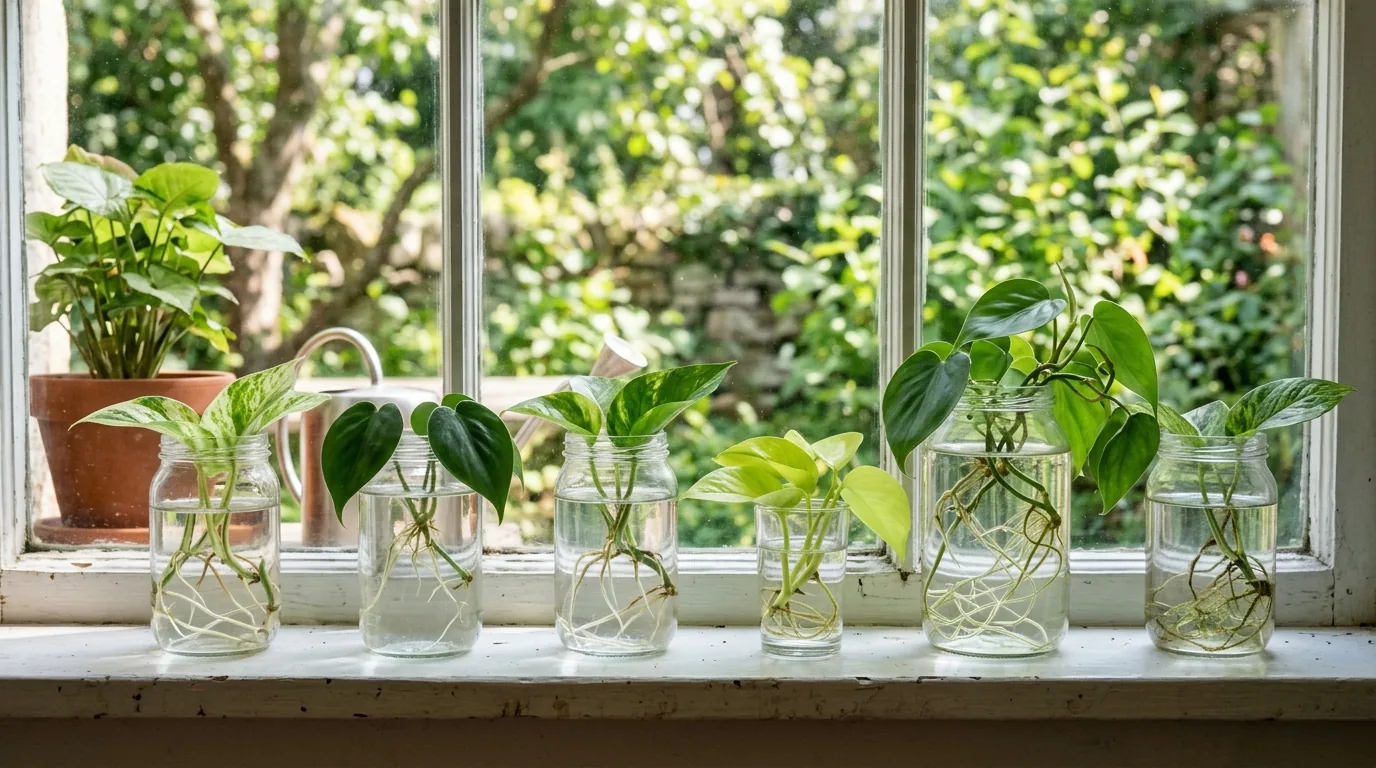
Glass jars of trailing vines are all over Pinterest, and many popular houseplants really will grow roots in plain water. What the extension sources add is the fine print: most of these plants root easily in water, but the guides treat water as a rooting stage before soil, and only a few plants, led by lucky bamboo, are routinely kept in water for the long term. This guide lists seven houseplants that grow in water, explains which can stay and which should be potted, and gives the care that keeps indoor plants that grow in water healthy, following NC State, the University of Maryland, Iowa State, Colorado State, Clemson and the ASPCA.
Plants That Grow in Water at a Glance
| Plant | In water | Light | Pets (ASPCA) |
|---|---|---|---|
| Lucky bamboo | Can be grown long-term in chlorine-free water (NC State) | Bright, indirect | Toxic to cats and dogs (NC State; ASPCA lists dracaenas as toxic) |
| Pothos | Roots easily in water (Maryland, Clemson) | Bright, indirect; tolerates lower | Toxic |
| Heartleaf philodendron | Roots easily in water (Maryland, Iowa State) | Indirect; tolerates very low light (Iowa State) | Toxic |
| Arrowhead plant (syngonium) | Roots easily in water (Maryland) | Bright, indirect | Toxic |
| Coleus | Roots easily in water (Maryland) | Bright, indirect while rooting (Maryland) | Toxic |
| Swedish ivy | Roots easily in water (Maryland) | Bright, indirect while rooting (Maryland) | Non-toxic |
| Spider plant (babies) | Plantlets root in water or soil (Colorado State) | Bright, indirect | Non-toxic |
Sources: University of Maryland Extension (2021); NC State Extension; Iowa State Extension; Colorado State PlantTalk; Clemson HGIC; ASPCA.
7 Houseplants That Grow in Water
1. Lucky bamboo
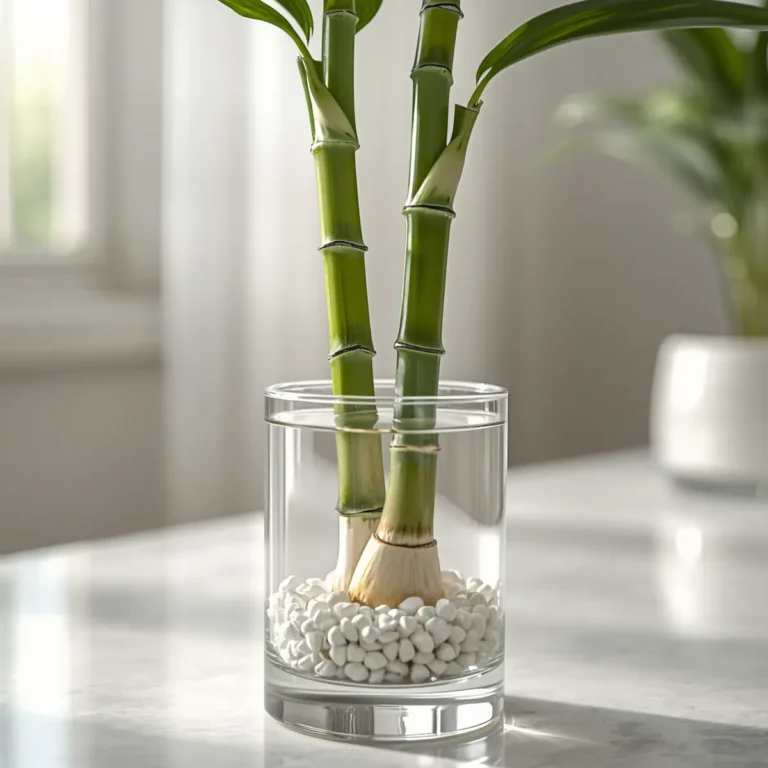
Lucky bamboo (Dracaena sanderiana) is the classic plant that lives in water. NC State Extension says it can be grown in chlorine-free water with some pebbles at the bottom to anchor the roots and weigh down the container, with the water changed weekly and a weak liquid fertilizer added. It needs bright but indirect light. NC State rates it toxic to cats and dogs. See our lucky bamboo care guide.
2. Pothos
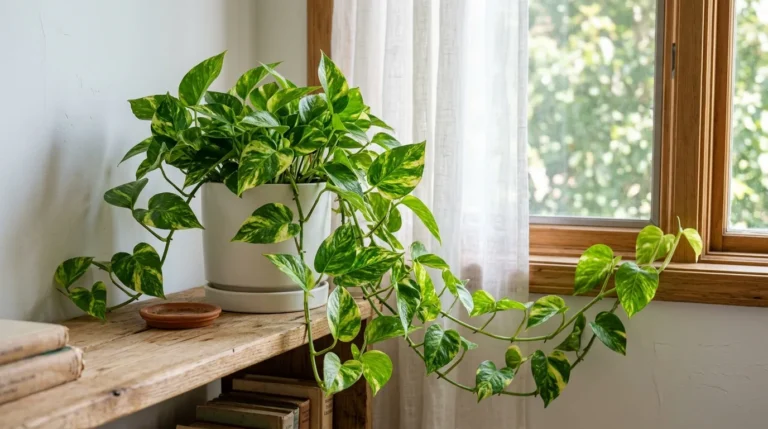
The University of Maryland Extension lists golden pothos among plants that root easily in plain tap water, and Clemson HGIC says stem cuttings with at least one node root easily in water. The ASPCA lists pothos as toxic to cats and dogs. See our pothos propagation guide and pothos care guide.
3. Heartleaf philodendron
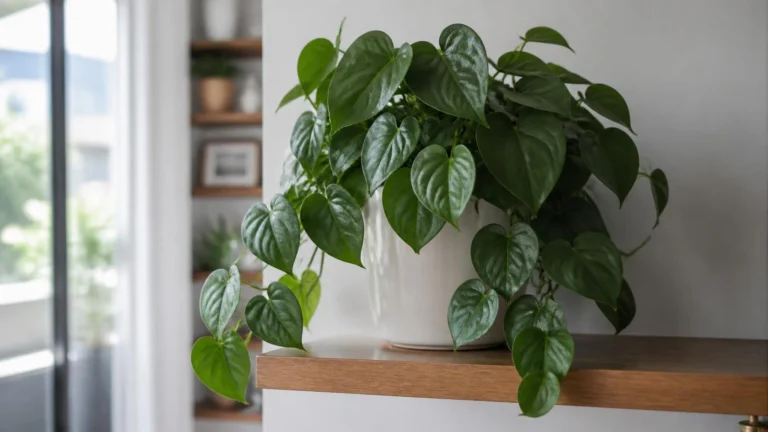
Heartleaf philodendron (Philodendron hederaceum) is on Maryland’s list too. Iowa State Extension says that when rooting it in water, change the water frequently until new roots several inches long form, then pot it in regular potting soil. Iowa State adds that it tolerates very low light. The ASPCA lists it as toxic to cats and dogs. See our heartleaf philodendron care guide.
4. Arrowhead plant (syngonium)
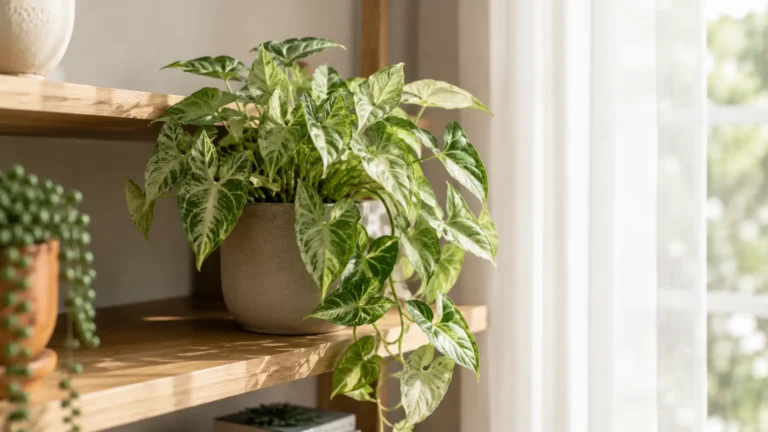
Arrowhead plant (Syngonium podophyllum) is the fifth plant on Maryland’s list of easy water rooters. Its arrow-shaped leaves look good in a clear vase while it roots. The ASPCA lists it (as arrow-head vine or nephthytis) as toxic to cats and dogs. See our syngonium care guide.
5. Coleus
Coleus (Plectranthus scutellarioides) roots easily in plain tap water, according to Maryland. The ASPCA lists coleus as toxic to cats and dogs.
6. Swedish ivy
Swedish ivy (Maryland lists it as Plectranthus verticillatus) is another easy water rooter from Maryland’s list. It is a good pick for pet owners: the ASPCA lists Swedish ivy (under the name Plectranthus australis) as non-toxic to cats and dogs.
7. Spider plant babies
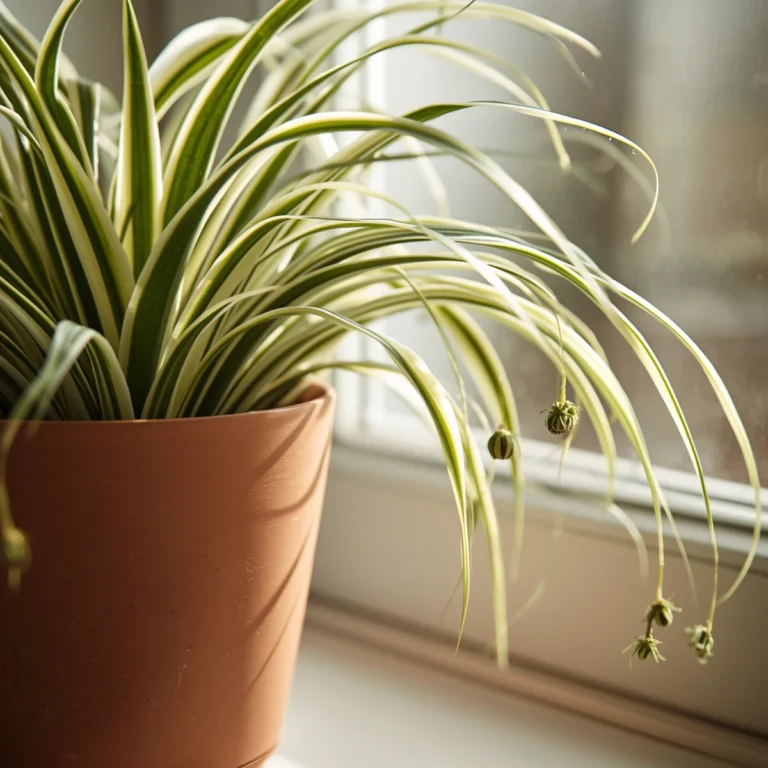
Spider plants make their own cuttings. Colorado State Extension says the plantlets can be removed and placed in moist potting soil or water to root. The ASPCA lists spider plant as non-toxic to cats and dogs. See our spider plant care guide.
How to Grow Plants in Water
The University of Maryland’s method for rooting cuttings in water:
- Cut: take a 3 to 5 inch stem with at least one node (the point where a leaf joins the stem) and some leaves at the tip. Relatively thin stems work better than thick ones, which can rot before rooting.
- Strip: remove any leaves that would sit below the water line. No leaves should be submerged.
- Fill: use a clean container of fresh tap water and set the cutting in it so the node is under water.
- Place: bright light but not direct sun, away from cold drafts, ideally around 70°F.
- Refresh: change the water at least twice a week or when it starts to look cloudy; clean water supplies oxygen and prevents rot. Iowa State suggests one to two changes a week and keeping the water topped up so new roots are never exposed to air.
- Wait: rooting can take several weeks (Maryland). If a large-leaved cutting wilts, pinch off some of the bigger leaves.
Once roots form, Maryland suggests letting them grow in water for another week or two, then planting into a small, well-draining pot of potting mix and keeping it moist until new leaves appear. Iowa State suggests transplanting when roots are about 1 inch long, and notes that roots formed in water are coarser and may struggle at first in soil. If stems turn brown and mushy, see our guide to cuttings rotting in water.
Plants That Grow in Water Without Soil: Long-Term Care
Can you skip soil altogether? For lucky bamboo, yes: NC State describes growing it in water as standard. For the others, the extension guides we used describe water as a rooting stage and recommend potting the cuttings afterwards, and none gives a long-term water-only plan. If you want to keep a vine in water anyway, the reason it eventually struggles is nutrition: UNH Extension explains that in hydroponics the nutrients a plant needs must be dissolved in the water, and plain water supplies almost none.
| To keep plants in water longer | Why |
|---|---|
| Add a very weak liquid fertilizer | NC State recommends a weak liquid fertilizer for lucky bamboo; plain water lacks nutrients (UNH) |
| Change the water regularly | Weekly for lucky bamboo (NC State); twice a week or when cloudy for cuttings (Maryland) |
| Use chlorine-free water for lucky bamboo | NC State |
| Prefer an opaque or tinted container, or keep it out of sun | UNH says algae thrive in sunlight, moisture and fertilizer, and light should be kept out of nutrient solutions where possible |
| Keep leaves out of the water | Submerged leaves rot (Maryland) |
Sources: NC State Extension; UNH Extension (2023); University of Maryland Extension.
For a planned soil-free setup with proper nutrient solution and aeration, see our guides to the Kratky method and hydroponic systems, or a semi-hydro substrate in our LECHUZA PON guide.
Problems and Fixes
| Problem | Likely cause | Fix |
|---|---|---|
| Cloudy or smelly water | Water not changed often enough (Maryland) | Change at least twice a week |
| Brown, mushy stem at the water line | Rot; thick stems or submerged leaves (Maryland) | Recut above the rot, strip lower leaves, use fresh water |
| Green film on the glass | Algae from light and nutrients (UNH) | Clean the jar; move out of sun or use a tinted container |
| Cutting wilts before rooting | Too many large leaves for no roots (Maryland) | Pinch off some larger leaves |
| Pale, slow growth after months in water | No nutrients in plain water (UNH) | Pot it in soil, or add very weak fertilizer |
| Plant sulks after moving to soil | Water roots are coarser and adjust slowly (Iowa State) | Keep the mix moist until new leaves appear (Maryland) |
Sources: University of Maryland Extension; Iowa State Extension; UNH Extension.
For more on propagation, see our guides to leaf propagation and herbs that grow in water.
Frequently Asked Questions
What plants can grow in water only?
Lucky bamboo is grown in water as standard (NC State). Pothos, heartleaf philodendron, arrowhead plant, coleus and Swedish ivy root easily in plain water (University of Maryland), but the extension guides recommend potting them in soil once rooted.
Can pothos live in water forever?
It roots easily in water, but the extension sources we used treat water as a rooting step and suggest potting rooted cuttings in soil. Plain water lacks nutrients, so add a very weak fertilizer if you keep it in water (UNH).
How often should I change the water for plants in water?
At least twice a week or when the water looks cloudy (University of Maryland); Iowa State says one to two times a week. NC State says weekly for lucky bamboo.
Do plants in water need fertilizer?
For long-term growth, yes. UNH explains that hydroponic plants get their nutrients from what is dissolved in the water, and NC State recommends a weak liquid fertilizer for lucky bamboo.
Which plants that grow in water are safe for cats?
Spider plant and Swedish ivy are listed as non-toxic by the ASPCA. Pothos, philodendron, syngonium, coleus and lucky bamboo are toxic.
Do plants that grow in water need sunlight?
They need bright light but not direct sun (University of Maryland). Heartleaf philodendron tolerates very low light (Iowa State), but rooting is faster in brighter spots.
How long does it take for cuttings to root in water?
Several weeks, according to Maryland. Let the roots grow another week or two before potting, or pot when they are about 1 inch long (Iowa State).
Sources
- University of Maryland Extension, Maryland Grows: Make More Plants From Cuttings, 5 Plants That Root Easily in Water (updated 2021)
- NC State Extension Gardener Plant Toolbox: Dracaena sanderiana
- Iowa State University Extension: Growing Philodendrons at Home (reviewed 2025)
- Steil, A. Iowa State University Extension: How to Propagate Houseplants by Stem Tip Cuttings (2025)
- Colorado State University Extension PlantTalk 1328: Spider Plant
- Clemson HGIC 1568: How to Grow Pothos Indoors (2026)
- Ebba, J. UNH Extension: Hydroponics at Home (2023)
- ASPCA: Toxic and Non-Toxic Plant List, Cats