
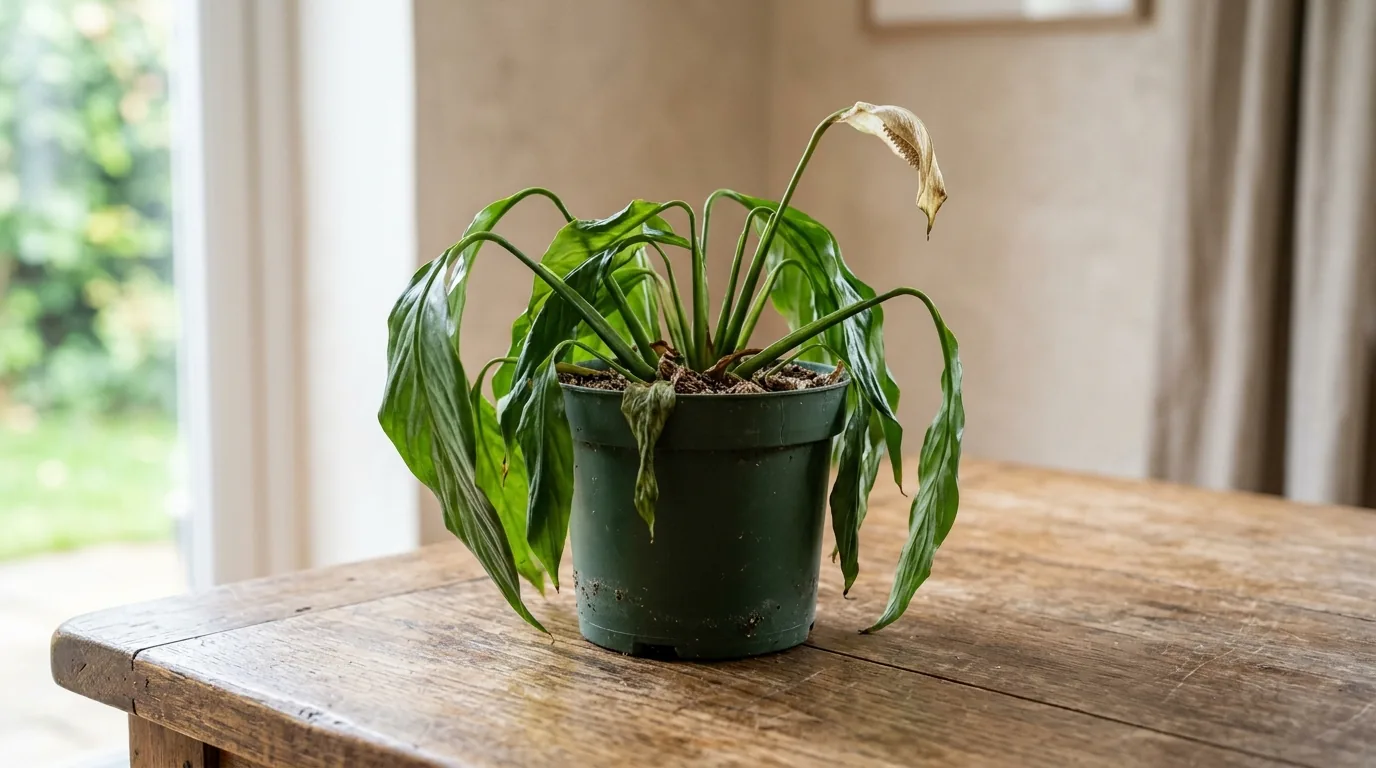
A drooping plant looks like it is begging for water, and that is exactly why so many end up worse: wilting is just as often caused by too much water as by too little. This guide answers why is my plant drooping by walking through the 7 common causes in the order to check them, including what it means when your plant is drooping even after watering, drooping after repotting, or drooping all of a sudden, and how to fix each one. It follows Iowa State, the University of Maryland, NC State, Clemson HGIC and UNH Extension.
Why Is My Plant Drooping? 7 Causes at a Glance
| Cause | Clues | Fix | Source |
|---|---|---|---|
| 1. Dry root ball | Mix dry, pot light, perks up within hours of watering | Water deeply until the entire root ball is wet | Iowa State |
| 2. Wet soil and root rot | Mix wet, roots dark and soft, often yellowing too | Let it dry; trim rotted roots and repot in fresh mix | Iowa State, UMD, NC State |
| 3. Water running past a dry root ball | Water pours straight out; mix still dry inside | Water slowly and repeatedly, or soak the pot | Iowa State, Clemson HGIC |
| 4. Root-bound in a small pot | Roots fill the pot; wilts soon after watering | Move up one pot size | Iowa State, Clemson HGIC |
| 5. Repotting stress or an oversized pot | Droops days after repotting | Check the mix before watering again | Wisconsin, Penn State |
| 6. Fertilizer salt buildup | White crust; brown leaf edges | Leach with plenty of water or repot | Clemson HGIC, UMD |
| 7. Cold injury | Near a cold window or door; leaves blacken | Keep plants above 50 F | UMD, UNH |
Sources: Iowa State Extension (Steil 2024); University of Maryland Extension (2025); NC State Extension, Lee County (Daughtry 2022); Clemson HGIC 1458 and 2251; University of Wisconsin Extension; Penn State Extension; UNH Extension (2020).
The 2-Minute Check
- Feel the mix an inch or two down, and lift the pot. Light and dry points to underwatering; heavy and wet points to overwatering.
- Look at the saucer or cachepot. Iowa State says not to let saucers, outer pots or sleeves hold standing water.
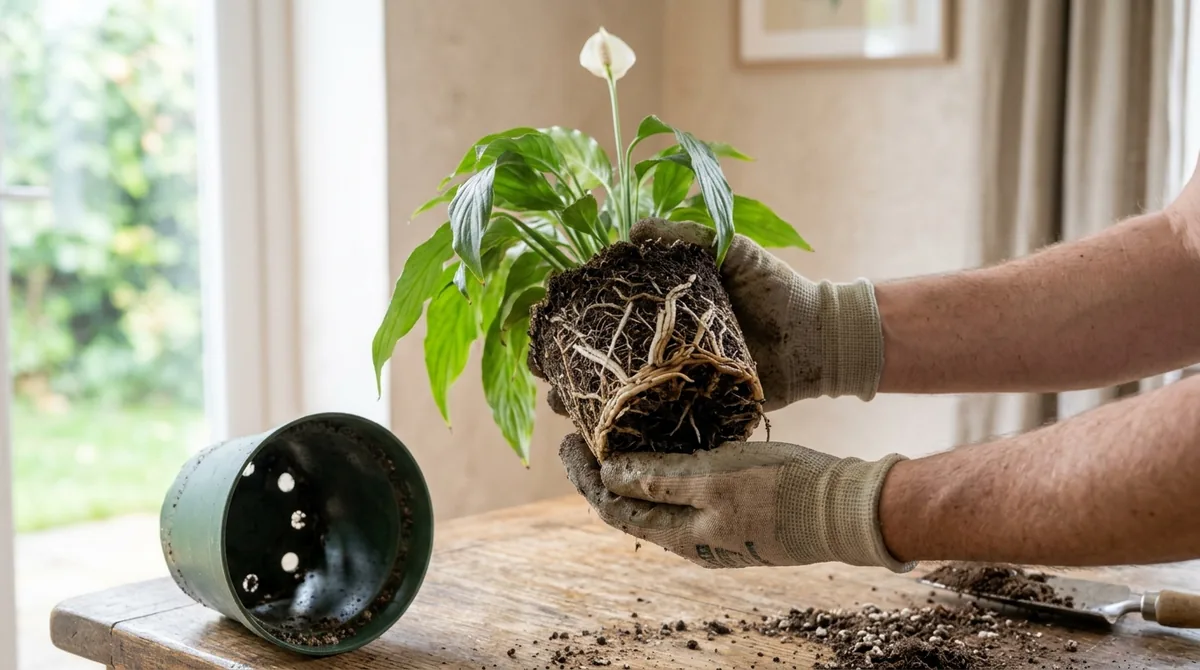
- Slide the plant out and look at the roots. NC State says healthy roots are firm and white with lots of thin feeder roots, while rotted roots are mushy and brown or reddish.
- Think back a week: repotting, a move, a cold night by the window, a heavy feeding?
Cause 1: Dry Soil
Iowa State explains that if the root ball stays dry too long, or dries out very quickly, the roots can’t reach water and the plant wilts. The fix is to water more deeply, making sure the entire root ball is wetted, and to water more often if it keeps drying out fast. If the plant perks up after a thorough soak, thirst was the cause. If it doesn’t, read on.
Cause 2: Wet Soil and Root Rot
Overwatering causes the same droop. Iowa State says soggy soil rots roots, leaving fewer working roots to supply the leaves. The University of Maryland says diseased roots appear dark and soft, while healthy roots are light-colored and firm, and Clemson HGIC adds that overwatered plants often yellow all over.
- Mild: let the mix dry and water only when the top inch or two is dry (Iowa State). Make sure the pot has a drainage hole.
- Rotted roots: UMD says to take the plant out, cut out the rotten portions and replant the healthy sections; root cuttings in sterile potting mix if little is left. Iowa State adds that old, compacted mix holds too much water, so repot into fresh, well-drained mix.
- Severe: UMD says to discard severely damaged plants. Take cuttings of healthy stems first.
Not sure which side you’re on? Our guide to overwatered vs underwatered plants compares the signs, and our root rot treatment guide covers rescue step by step.
Plant Drooping Even After Watering
When a plant keeps drooping even after watering, there are two likely explanations:
- The roots are rotting. Rotted roots can’t take up water no matter how much you give, so the plant looks thirsty in wet soil. Check the roots as above.
- The water isn’t reaching the roots. A dried-out root ball can shed water: it runs down the gap between the mix and the pot and out of the hole. Iowa State’s fix for dry wilting is to make sure the entire root ball is wetted, and Clemson HGIC notes that peat-based mixes can be hard to wet and may need watering several times in a row. Water slowly in a few rounds, or set the pot in a basin of water until the mix is soaked, then let it drain fully. Our guide on how to bottom water plants shows the method.
If the plant droops and its leaves turn yellow, overwatering is the first suspect; see our guide to plant leaves turning yellow.
Plant Drooping After Repotting
Some drooping after repotting is common: roots that were loosened and disturbed need time to grow into the new mix. What you do next depends on the mix:
- Mix dry: water thoroughly until water runs out of the drainage hole. Penn State recommends moistening the mix before repotting and watering thoroughly after.
- Mix wet: wait. A bigger pot holds more mix and more water, and the University of Wisconsin explains that extra soil in an oversized pot keeps roots wet and favors root rot. That is why the usual advice is to move up only one pot size.
- Plant was already sick: Clemson HGIC advises against repotting ailing plants unless it is an emergency such as root rot, because a weak root system has little reserve to recover.
Keep it out of harsh sun and hold off on extra fertilizer while it settles; many fresh mixes already contain some. Our guide on how to repot a plant covers pot size and aftercare in detail.
Plant Drooping All of a Sudden
A plant that was fine yesterday and droops today usually points to one of three things:
- It dried out completely. Small pots, warm sunny spots and clay pots (which dry faster than plastic, Penn State) can dry out quickly. Feel the mix.
- A cold shock. UMD says to protect plants from temperatures below 50 F and notes that cold injury symptoms may keep appearing for up to a week after exposure. UNH lists cold exposure as a cause of leaf curling and suggests keeping plants a few inches from cold glass.
- Root rot reaching a tipping point. Root rot can go unnoticed below the surface until too few working roots are left. Wet mix plus sudden drooping means check the roots now.
Salts, Cold and Root-Bound Pots
| Problem | What the sources say | Fix |
|---|---|---|
| Fertilizer salts | Too much fertilizer or salt buildup can cause wilting (Clemson HGIC); high soluble salts cause yellowing, browning or wilting (UMD) | Leach the mix with at least three pot volumes of fresh water (UMD) or repot in fresh mix |
| Root-bound | A pot too small for the roots dries fast and wilts (Iowa State); wilting soon after watering is a sign to repot (Clemson HGIC) | Move up one pot size in spring |
| Cold | Leaf or shoot blackening; symptoms may appear for a week (UMD) | Keep above 50 F, away from cold glass and doors |
| Standing water | Saucers, sleeves and outer pots holding water keep roots wet (Iowa State) | Empty them after every watering |
Sources: Clemson HGIC 2251 (2025) and 1458; University of Maryland Extension (2025); Iowa State Extension (2024).
Frequently Asked Questions
Why is my plant drooping?
Most often because its roots can’t deliver enough water to the leaves, which happens when the mix is too dry or when wet soil has rotted the roots (Iowa State). Fertilizer salts, cold and a root-bound pot are other causes.
Why is my plant drooping even after watering?
Either the roots are rotting and can’t take up water, or the water is running past a dried-out root ball. Check the roots, and if the mix is still dry inside, soak it thoroughly (Iowa State, Clemson HGIC).
Why is my plant drooping after repotting?
Disturbed roots need time to grow into the new mix. Water only if the mix is dry; an oversized pot holds extra water that can lead to root rot (University of Wisconsin).
Why is my plant drooping all of a sudden?
Usually it dried out completely, got chilled near a cold window (keep plants above 50 F, UMD), or root rot reached a tipping point. Feel the mix and check the roots.
Should I water a drooping plant?
Only if the mix is dry. NC State warns that people often mistake wilting for thirst and add more water or fertilizer, which makes root rot worse.
How do I know if my plant has root rot?
Slide it out of the pot. Healthy roots are firm and white with many fine feeder roots; rotted roots are mushy and brown or reddish (NC State), dark and soft (UMD).
Can a drooping plant recover?
Yes, if enough healthy roots remain. A thirsty plant usually recovers after a thorough soak. A rotted plant needs its dead roots trimmed and fresh mix, and UMD advises discarding severely damaged plants.
Sources
- Steil, A. Iowa State Extension: Why is my houseplant wilting? (2024)
- University of Maryland Extension: Diagnose Indoor Plant Problems (updated 2025)
- Daughtry, M. NC State Extension, Lee County: Watering but Not Overwatering Houseplants (2022)
- Clemson HGIC 2251: Houseplant Diseases and Disorders (2025)
- Clemson HGIC 1458: Indoor Plants, Transplanting and Repotting
- Penn State Extension: Repotting Houseplants
- University of Wisconsin Extension: Houseplant Care
- Erler, E. UNH Extension: Houseplant Winter Care Q&A (2020)