
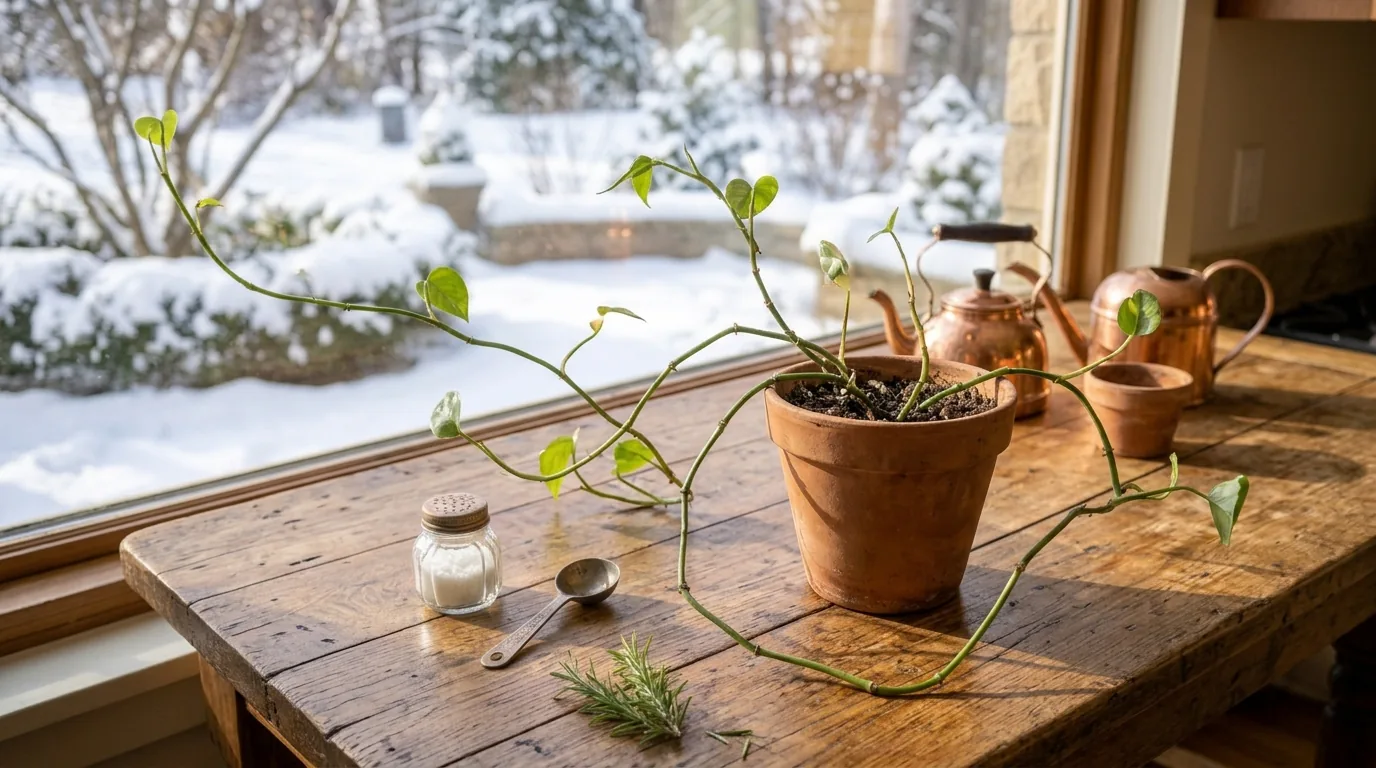
A leggy houseplant has long, thin stems with big gaps between the leaves, often leaning toward the window and bare at the bottom. It is one of the most common houseplant complaints in late fall and winter, when days are short and the sun sits low. This guide explains why is my plant leggy, whether can you fix leggy plants or only stop them getting worse, and the step-by-step leggy plants fix: more light, the right cut, and rooting the pieces you remove. It follows University of Minnesota Extension, NC State Extension, Illinois Extension, University of Maryland Extension, Clemson HGIC and Iowa State.
Leggy Plants at a Glance
| Cause | What you see | What to do | Source |
|---|---|---|---|
| Too little light (most common) | Long gaps between leaves, thin stems leaning toward the window, small pale leaves, older leaves dropping | Move closer to a brighter window, rotate, or add a grow light; then prune | UMN, NC State, Illinois |
| Too much fertilizer | Abundant but lanky, spindly growth | Cut back feeding, especially in winter; water from the top to flush salts | Iowa State, Maryland |
| Light from one side only | Plant bends toward the window | Rotate regularly | Illinois, NC State |
| Normal growth habit | Trailing or vining plants grow long by nature | Pinch or trim to shape; not a problem if leaves stay large and close together | Maryland |
Sources: UMN Extension, Lighting for indoor plants (reviewed 2026); NC State Extension Gardener Handbook ch. 18; Illinois Extension (2018); University of Maryland Extension (2025); Iowa State Extension (Steil, reviewed 2024).
Why Is My Plant Leggy?
In nearly every case, the plant is not getting enough light for the way it wants to grow. UMN Extension describes it plainly: stems become “leggy,” long and thin, and appear to be reaching toward the source of light, and too little light makes the plant grow long spaces on its stems between the leaf nodes. The NC State Extension Gardener Handbook adds that leaves grown in low light do not expand to full size, the color is pale, and the result is a spindly, leggy appearance.
Winter makes it worse. Illinois Extension notes that light intensity drops in winter and you may need supplemental lighting, and UMN points out in its December checklist that dust on leaves further cuts the light plants receive (see our guide on how to clean plant leaves).
Light is not the only cause. Iowa State Extension says houseplants that get too much fertilizer typically have abundant but lanky growth, and University of Maryland Extension lists low light or excessive fertilizer (high soluble salts) as the causes of spindly growth. If your plant is in a bright spot and still stretching, look at how often you feed it.
Signs It Is a Light Problem
UMN Extension lists the symptoms of too little light, and they usually show up together:
- Long, thin stems that reach toward the light, with long gaps between leaf nodes.
- Pale green to yellow leaves, because the plant produces less chlorophyll.
- Older leaves dropping (NC State says leaves may detach because there is little stored energy to support them).
- Variegated plants reverting to solid green.
- Flowering plants failing to set buds.
For a closer look at what “bright, indirect light” means in a real room, see our guide to bright indirect light.
The Leggy Plants Fix, Step by Step
So, can you fix leggy plants? Yes, but not by making the stretched stems shorter: a long internode stays long. The fix is to stop new growth from stretching and to replace the leggy stems with fuller ones.
| Step | What to do | Source |
|---|---|---|
| 1. Add light | Move the plant closer to a light source or add artificial light | Maryland |
| 2. Rotate | Turn the pot regularly so all sides get light (NC State suggests monthly) | Illinois, NC State |
| 3. Clean windows and leaves | Clean windows and removing screens can raise light by as much as 30%; dust on leaves cuts light too | NC State, UMN |
| 4. Cut back leggy stems | Trim with clean snips just above a node to push new side shoots | Clemson, Maryland |
| 5. Ease off fertilizer | Reduce feeding in winter and water from the top to flush excess salts | Maryland |
Sources: University of Maryland Extension (2023, 2025); Illinois Extension (2018); NC State Extension Gardener Handbook ch. 18; UMN Extension; Clemson HGIC (Nichols, 2026).
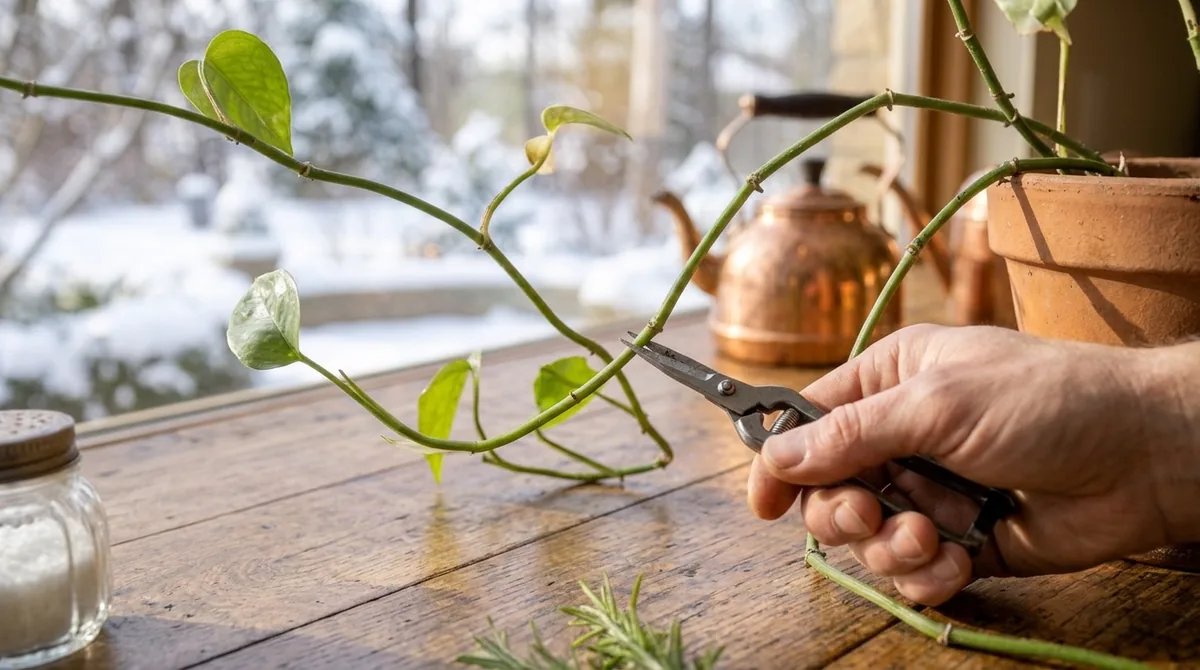
Clemson HGIC says trimming leggy or stretched-out growth can encourage fuller, bushier growth through the growing season, and recommends sanitized snips (cleaned between plants). Maryland Extension describes pinching as removing an inch or less of new growth just above a node, which stimulates new side shoots for a fuller plant. Late winter and early spring, when light improves, are a good time for heavier cuts. For details on where to cut each type of plant, see our guide on how to prune houseplants.
Many of the pieces you cut off can be rooted and planted back into the same pot to make it look fuller. See our guides to pothos propagation and leaf propagation.
Leggy Pothos, Jade, Succulents and Herbs
| Plant | What leggy looks like | Where to go next |
|---|---|---|
| Pothos and other vines | Long bare vines with small leaves at the tips | Our guide on how to prune a pothos plant |
| Jade plant | Thin stems with wide gaps, leaning to the window | Our jade plant care guide |
| Succulents (echeveria and similar) | Rosettes stretching upward, leaves spreading apart | Our guide on how to grow succulents |
| Basil and other herbs indoors | Tall, floppy stems with few leaves | Our guide to growing basil indoors |
Plant-specific care follows the extension sources cited in each guide.
How to Keep Plants Compact
The best prevention is matching the plant to the light you have. UMN Extension notes that while a plant may tolerate low light, more light may be needed for dense foliage and flowering, and it lists low-light plants for north windows and darker corners (such as snake plant, ZZ plant, pothos and cast iron plant). In winter, a grow light on a timer makes up for short days; see our guide to the best grow lights for indoor plants. Feed less in winter, as Maryland advises, and turn the pot every time you water. For the rest of the cold-season routine, see our winter houseplant care guide.
Frequently Asked Questions
Why is my plant leggy?
Usually because it is not getting enough light. UMN Extension says low light makes stems long and thin with long gaps between leaf nodes. Too much fertilizer can also cause lanky growth (Iowa State, Maryland).
Can you fix leggy plants?
Yes, but stretched stems will not get shorter. Give the plant more light so new growth is compact, then cut the leggy stems back just above a node so side shoots fill in (Clemson, Maryland).
Should I cut off leggy stems?
Yes. Clemson says trimming leggy or stretched-out growth encourages fuller, bushier growth. Use clean snips and cut just above a node. Many cuttings can be rooted and replanted.
Do grow lights stop plants from getting leggy?
They can. Maryland Extension recommends adding artificial light when a plant cannot be moved closer to a window, and Illinois notes that supplemental light may be needed in winter.
Why is my plant leaning toward the window?
It is growing toward the light. Illinois Extension recommends rotating plants regularly so all sides get light, and NC State suggests turning them monthly.
Can too much fertilizer make plants leggy?
Yes. Iowa State says over-fertilized houseplants typically have abundant but lanky growth. Maryland advises reducing fertilizer in winter and watering from the top to flush excess salts.
When is the best time to prune leggy houseplants?
Clemson recommends trimming leggy growth in late winter, as light improves, so the plant regrows fuller during the growing season. Light pinching can be done any time.
Sources
- University of Minnesota Extension: Lighting for indoor plants and starting seeds (reviewed 2026)
- NC State Extension Gardener Handbook, Chapter 18: Plants Grown in Containers
- University of Illinois Extension: Houseplants and Indoor Lighting (2018)
- University of Maryland Extension: Diagnose Indoor Plant Problems (2025)
- University of Maryland Extension: Grooming Indoor Plants (2023)
- Steil, A. Iowa State University Extension: Diagnosing Houseplant Problems Related to Poor Culture (reviewed 2024)
- Nichols, J. Clemson HGIC: End-of-Winter Houseplant Care (2026)
- University of Minnesota Extension: December garden checklist (2025)