
How to transition a Monstera to Lechuza PON: set the plant in the planter on a thin layer of PON, fill around the root ball with PON, then water from the top for the first 12 weeks while keeping the reservoir as empty as possible. Only after that do you start filling the reservoir through the water shaft. Those are LECHUZA’s own planting instructions, and they include a detail many guides get wrong: the manufacturer says you don’t need to completely remove the soil from the roots.
| Step | LECHUZA’s instructions |
|---|---|
| 1. Prepare the planter | Place the irrigation layer on the divider, then add a thin layer of PON so the plant sits at the right height |
| 2. Set the plant | Place the plant as usual; you don’t need to completely remove the soil from the roots |
| 3. Fill | Fill the planter completely with PON |
| 4. First 12 weeks | Water from above, only as much as the plant can absorb, with as little water as possible in the reservoir |
| 5. After 12 weeks | Water through the water shaft (planters without the system: keep watering from above) |
| Feeding | PON is pre-fertilized for about 6 months; then use a liquid or slow-release fertilizer |
Source: LECHUZA-PON product page, planting instructions and FAQ.
What Is Lechuza PON?
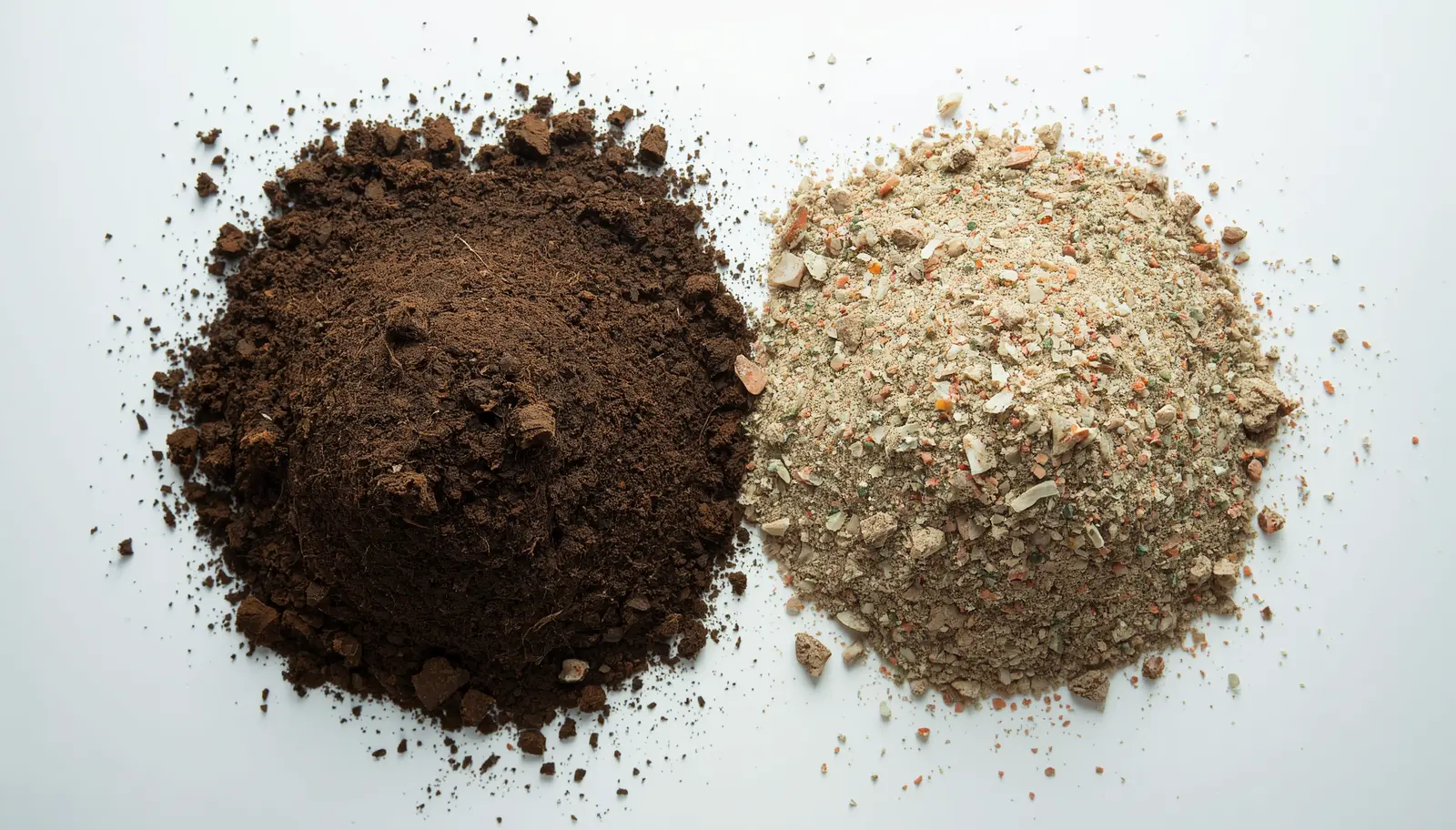
LECHUZA describes PON as a purely mineral plant substrate made of zeolite, pumice and lava, enriched with a slow-release fertilizer that supplies nutrients for about 6 months. Because it is mineral, it does not compact or clump like soil, drains well, and, according to the company, offers no breeding ground for fungus gnats. It can be used in LECHUZA’s self-watering planters or in ordinary pots, and it can also be mixed with potting soil.
For a Monstera, the appeal is a stable, airy root zone and, in a LECHUZA planter, a reservoir that cuts down on watering. For a broader look at PON and semi-hydro, see our Lechuza PON semi-hydro guide. If fungus gnats are your main reason for switching, see our guides to fungus gnat control and diatomaceous earth too.
Do the Roots Need to Change?
Many semi-hydro guides talk about “soil roots” dying and being replaced by “water roots”. That idea comes from growers moving plants into constantly wet setups, and there is little research on it for houseplants like Monstera. In PON with the manufacturer’s method, the plant keeps its root ball and grows new roots out into the PON over the following weeks; the 12-week top-watering period gives those roots time to reach down toward the reservoir before you rely on it. Some older roots may die back after any repotting, which is why the plant can sulk for a while.
Transition Timeline
- Day 1: pot up in PON and water from the top.
- Weeks 1 to 12: keep watering from above, only as much as the plant can absorb, with as little water as possible in the reservoir (LECHUZA). Some drooping or a yellowing lower leaf in the first weeks is common after any repotting; firm stems and new growth are good signs.
- After week 12: start watering through the water shaft and use the water level indicator.
- Around 6 months: PON’s built-in fertilizer runs out; start feeding.
There is no published “success rate” or growth figure for Monsteras moved into PON, so treat any guide that quotes one with caution.
Should You Remove All the Soil?
Not for LECHUZA’s method. Its instructions say to place the plant as usual and that you don’t need to completely remove the soil from the roots. Leaving the root ball intact means less root damage and a faster recovery.
Some hobbyists bare-root plants before moving them into pure mineral substrates (semi-hydro), washing off all the old mix. If you choose to do that with a Monstera:
- Do it in spring or summer, when the plant is growing actively.
- Soak the root ball in room-temperature water and loosen the mix gently with your fingers; don’t scrub the roots.
- Trim off roots that are mushy, hollow or smell bad, back to firm tissue.
- Expect a bigger setback than with the root-ball method, and keep the plant out of direct sun until it is growing again.
Wear gloves: Penn State Extension notes Monstera can cause contact dermatitis.
Do the Roots Need Sterilizing?
No. LECHUZA’s instructions do not include any root treatment, and healthy roots don’t need one. Hydrogen peroxide root baths are popular online, but as our hydrogen peroxide and root rot guide explains, the evidence that they cure or prevent root rot is thin. If the roots are rotten, cutting away the damaged roots and fixing the watering is what matters; see our Monstera root rot guide.
Why Top-Water for the First 12 Weeks
The reservoir only helps once roots reach far enough down to use it. Until then, water sitting in the bottom of the planter can’t get to the roots, while a full reservoir keeps the lower PON wet. That is why LECHUZA says to water from above for the first 12 weeks, only as much as the plant can absorb, and to keep as little water as possible in the reservoir. Check moisture with your finger, the PON watering indicator, or the planter’s water level indicator, which the company lists as the ways to judge when to water.
Place the plant in bright light but not direct sun, as Penn State recommends for Monstera, during this phase and afterwards. Our Monstera light requirements guide covers placement.
Using the Reservoir After Week 12
After the 12-week top-watering phase, LECHUZA says you can water through the water shaft. Fill to the indicated level and refill when the water level indicator shows the reservoir is empty. Letting the reservoir run dry for a few days before refilling, rather than keeping it topped up constantly, gives the roots air; many growers also water from the top occasionally to rinse accumulated fertilizer salts out of the substrate. If the plant starts to droop with a full reservoir, or the PON smells sour, let it dry out and check the roots. Our guide to self-watering pot problems covers the usual issues.
Fertilizing a Monstera in PON
LECHUZA-PON is pre-fertilized for about 6 months, after which the company recommends replenishing nutrients with a liquid or slow-release fertilizer. A balanced liquid houseplant fertilizer at the label rate during spring and summer suits a Monstera; Wisconsin Extension recommends fertilizing Monstera regularly from spring until fall. Because PON holds nutrients and the reservoir concentrates salts as water evaporates, err on the low side and flush with plain water from the top now and then.
Is Monstera Safe for Pets?
No. The ASPCA lists Monstera deliciosa (Swiss cheese plant) as toxic to dogs and cats because of insoluble calcium oxalates, causing oral irritation, drooling, vomiting and difficulty swallowing. The substrate makes no difference. See our cat-safe plants guide for alternatives.
Common Mistakes
| Mistake | Why it causes problems | Do this instead |
|---|---|---|
| Filling the reservoir right away | New roots haven’t reached it yet; the bottom of the pot stays wet | Top-water for 12 weeks with the reservoir as empty as possible (LECHUZA) |
| Scrubbing roots bare when it isn’t needed | More root damage, longer setback | Keep the root ball; LECHUZA says full soil removal isn’t necessary |
| Overwatering from the top | PON holds water well | Water only as much as the plant can absorb; check before watering |
| Feeding heavily from day one | PON already contains fertilizer for about 6 months | Start feeding after about 6 months |
| Direct sun right after repotting | Extra stress while roots recover | Bright light but not direct sun (Penn State) |
Sources: LECHUZA-PON planting instructions; Penn State Extension.
Frequently Asked Questions
Do I have to remove all the soil before putting a Monstera in Lechuza PON?
No. LECHUZA’s planting instructions say you don’t need to completely remove the soil from the roots.
When can I fill the reservoir on a Monstera in PON?
After the first 12 weeks. Until then LECHUZA says to water from above and keep as little water as possible in the reservoir.
Does Lechuza PON contain fertilizer?
Yes. LECHUZA-PON is pre-fertilized with a slow-release fertilizer that lasts about 6 months; after that, add liquid or slow-release fertilizer.
Can I use PON in a normal pot?
Yes. LECHUZA says PON works in planters with its irrigation system and in conventional pots. In a normal pot, keep watering from above.
Why is my Monstera drooping after moving to PON?
Some droop after any repotting is common while roots recover. Check that you are not overwatering from the top or keeping water in the reservoir too early, and keep the plant out of direct sun.
Can I mix PON with soil instead?
Yes. LECHUZA says PON can be mixed with potting soil and recommends its unfertilized BASICPON or MONOPON for loosening soil mixes.