
Rhododendrons (including azaleas) are shallow-rooted shrubs that need acidic, well-drained, organic soil, dappled shade and steady moisture. Most problems come from soil that is not acidic enough, planting too deep, or roots sitting in water. This guide covers rhododendron care from planting through pruning, winter protection and the common problems behind yellow leaves and dieback. It follows the RHS, University of Maryland Extension, Clemson HGIC, Penn State Extension, Oregon State University Extension and the ASPCA.
Rhododendron Care at a Glance
| Need | What the sources say |
|---|---|
| Light | Dappled shade, sheltered (RHS); morning sun, afternoon shade (UMD) |
| Soil | Acidic, organic, well-drained (RHS, UMD); avoid poorly drained, compacted soil (UMD) |
| Planting depth | Roots just covered (RHS); at or slightly above the original soil level (Clemson) |
| Water | Even moisture in dry spells, at the base (UMD); rainwater preferred (RHS) |
| Mulch | At least 7.5 cm (3 in) of acidic mulch, kept loose (RHS) |
| Feeding | Rarely needed in acid soil (RHS); only if a soil test shows a need (UMD) |
| Pruning | After flowering (Clemson) |
| Pets | Toxic to dogs, cats and horses (ASPCA) |
Sources: RHS rhododendron growing guide; UMD Extension (rev. 2021); Clemson HGIC 2050 and 1073; ASPCA.
Shallow Roots and Site
The RHS says all rhododendrons are surface-rooting. That shapes everything else: the roots dry out quickly in drought, suffocate if buried or waterlogged, and compete poorly with tree roots. Clemson’s rhododendron factsheet notes their shallow roots need watering in drought.
For the site, the RHS recommends light, dappled shade in a sheltered spot, avoiding deep shade under trees, frost pockets and places that get early morning sun (which can damage frosted flowers). UMD Extension suggests morning sun and afternoon shade, and warns against poorly drained, compacted soils, low spots that collect runoff, and areas near downspouts.
Soil and pH
| Source | Recommended soil pH |
|---|---|
| UMD Extension | 4.5 to 5.5 |
| Oregon State EC 1560 | 4.5 to 5.5 |
| Clemson HGIC 1073 | 4.5 to 6.0 |
| RHS | 5.0 to 6.0 |
Sources: UMD Extension; Hart et al., Oregon State EC 1560 (reviewed 2026); Clemson HGIC 1073; RHS.
All agree the soil must be acidic and rich in organic matter. The RHS says rhododendrons won’t thrive on alkaline soil and suggests growing them in containers there. Clemson suggests mixing pine bark into the top 6 to 8 inches of soil over an area two to three times the width of the plant before planting, and the RHS recommends acidic organic matter. A soil test tells you where you start.
Lowering Soil pH
Oregon State University Extension recommends elemental sulfur, which soil bacteria convert to acid. Its rates depend on soil type:
| Soil type | Elemental sulfur per 1,000 sq ft |
|---|---|
| Sandy | 10 to 20 lb |
| Medium clay | 20 to 40 lb |
| Clayey, or high organic matter with clay | 40 to 50 lb |
Source: Hart et al., Oregon State University Extension EC 1560.
- Test first: Oregon State warns not to start acidifying based on plant symptoms alone, because yellow leaves have several causes.
- Plan ahead: it says the best option is to apply sulfur in the fall and plant in spring, then retest.
- Don’t overdo it: too much sulfur can push pH so low that some elements become toxic.
- Skip aluminum sulfate: UMD says it should not be used for azaleas or rhododendrons, and Oregon State cites aluminum toxicity to roots.
How to Plant a Rhododendron
- Time it: the RHS suggests October or March to April; Clemson prefers fall so roots can establish before spring.
- Check drainage: avoid spots where water collects. On heavy or wet ground, plant in a raised bed (Clemson).
- Prepare the soil with acidic organic matter such as pine bark over a wide area, not just the planting hole (Clemson).
- Set the depth: plant at or slightly above the original soil level (Clemson) with the roots just covered (RHS). Penn State says the soil line should be no more than 1 inch above the upper roots.
- Water in well and mulch with an acidic material, keeping mulch away from the trunk (Clemson).
Watering, Mulch and Feeding
Water: UMD says to keep soil moisture even during dry periods when rain is under 1 inch a week, watering at the base rather than overhead. Clemson suggests watering to a depth of 8 to 12 inches when the soil feels dry, and avoiding waterlogged soil. The RHS prefers rainwater, because hard tap water is high in calcium, though it says tap water is fine for a month or two in summer. The RHS also notes that dry spells in late summer can stop flower buds forming, so water thoroughly from July on.
Mulch: the RHS recommends at least 7.5 cm (3 in) of chipped conifer bark or another acidic material, kept loose, renewed each spring. Clemson suggests 2 to 3 inches of compost, pine bark or pine straw, kept away from the trunk.
Feeding: the RHS says rhododendrons in acid soil are unlikely to need extra feeding, and warns that overfeeding can scorch roots and leaves. UMD says to fertilize only if a soil test shows a deficiency. Clemson says not to fertilize at planting, and to feed after flowering rather than during summer drought.
Rhododendron Care in Pots
The RHS recommends compact hybrids for shaded patios, grown in peat-free ericaceous or loam-based compost. Composts break down and drain poorly over time, so it suggests repotting every other year in early spring and replacing the top 5 cm (2 in) of compost in between. Feed container plants with a slow-release fertilizer in spring or an ericaceous liquid feed, water with rainwater where possible, and watch for vine weevil, which the RHS says is especially troublesome in containers.
Rhododendron Care After Flowering
Clemson says to remove dead or broken wood at any time and do shaping or height pruning after flowering. The RHS says rhododendrons need little pruning: remove dead wood and deadhead faded flower trusses where practical. Hard cutting back works best on azaleas and rough-barked species such as R. ponticum (RHS). After flowering is also when Clemson suggests feeding, if the plant needs it, and when to keep up watering so next year’s buds form.
Rhododendron Care for Yellowing Leaves
| Pattern | Likely cause | Source |
|---|---|---|
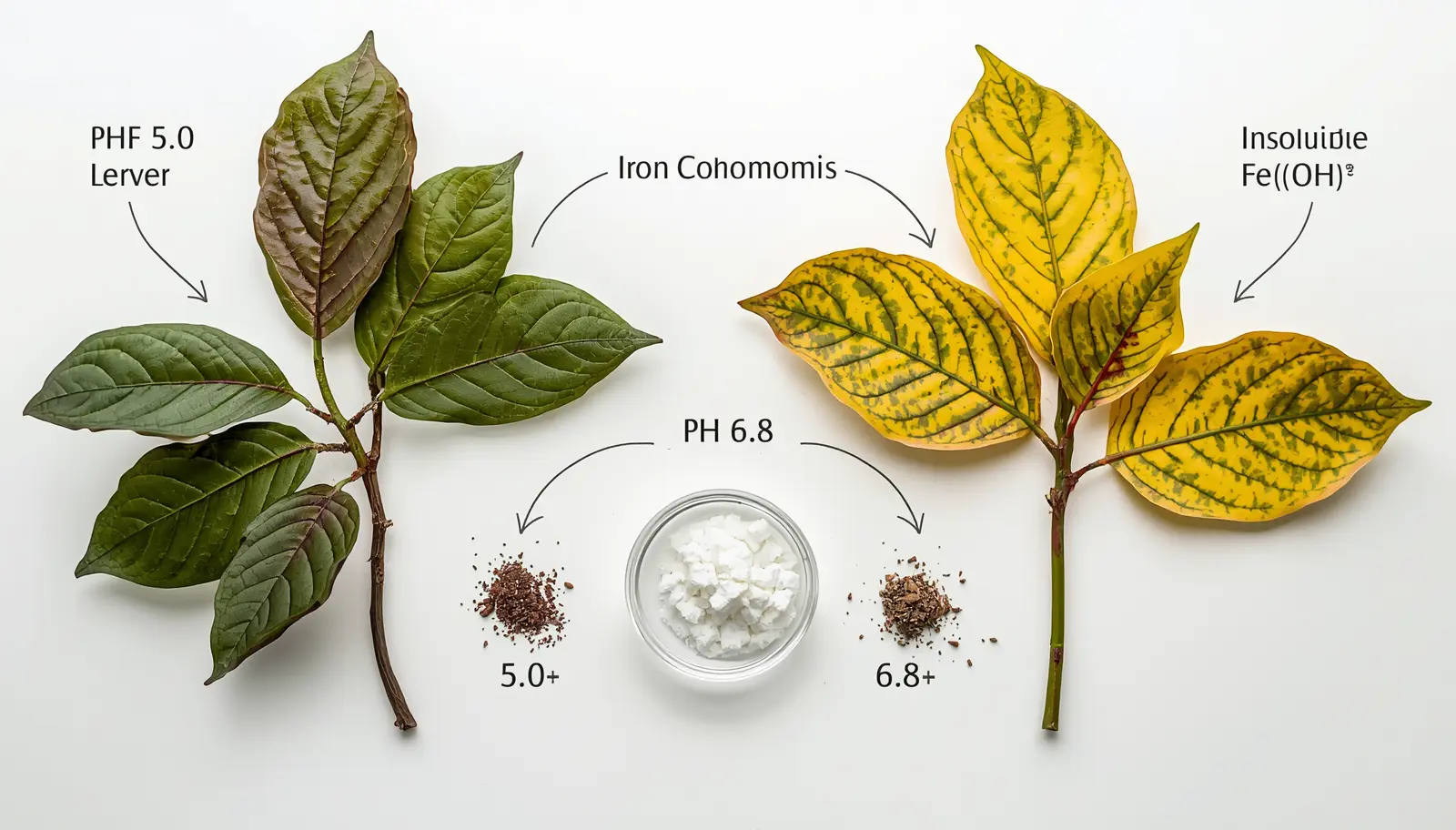
| Yellow leaves with green veins, mainly new growth | Iron deficiency (chlorosis), usually from soil pH that is too high | UMD, Oregon State |
| Yellowing with magnesium or manganese shortage | Soil not acidic enough | RHS |
| Pale or yellow leaves plus wilting or dieback | Root problems: waterlogging, compaction, root rot | Clemson, Penn State |
| A few older leaves yellow and drop in spring or summer | Normal leaf shedding | RHS |
| Fine pale stippling on leaves in sunny, dry sites | Lace bugs | UMD |
Sources: UMD Extension; Oregon State EC 1560; RHS; Clemson HGIC; Penn State Extension.
For chlorosis, test the soil and lower the pH if it is too high. As a short-term fix, Oregon State describes a foliar spray of 2 ounces of ferrous sulfate in 3 gallons of water with a little mild detergent, repeated every other week in the growing season because the effect is temporary. Fix drainage and root problems first, since damaged roots can’t take up nutrients even in the right soil.
Root Rot and Other Diseases
Phytophthora root rot: Clemson HGIC 2050 says a wilted plant is usually the first sign, with soggy or blackened roots and brown discoloration in the lower stem near the soil line. Penn State explains that the pathogen spreads in soil near saturation, that soil pH plays little role, and that no chemical cures an infected plant; it advises removing and destroying infected plants and not replanting where they grew. Clemson says chemical controls are ineffective once symptoms appear in the landscape. Prevention is everything: good drainage, shallow planting and no waterlogging.
Other problems (Clemson, UMD, RHS):
- Dieback: individual branches die on an otherwise healthy plant. Prune well below discolored wood and disinfect tools between cuts.
- Leaf spots: remove fallen leaves and keep foliage dry when watering.
- Petal blight: flowers rot and stick to leaves; pick off infected flowers and replace old mulch.
- Leaf gall: thick, pale, distorted leaves in spring; pick off and destroy galls.
- Vine weevil (notched leaves, grubs at the roots), especially in pots (RHS).
For houseplant root rot, see our Pythium root rot guide.
Winter Burn and Curled Leaves
Penn State Extension explains that winter burn happens when frozen soil stops the roots from taking up water while sun and wind keep drawing moisture from evergreen leaves. Damage is worst on leaf edges, tips and plant tops, and on the side exposed to sun and wind. Penn State also notes that rhododendron leaves curl inward and droop when temperatures fall below 20°F, which reduces water loss; this is normal and the leaves usually recover (RHS).
- Water deeply during fall dry spells, without saturating the soil (Penn State).
- Mulch to keep the soil warmer and buffer freeze-thaw swings (Penn State).
- Screen exposed plants with burlap on stakes about 2 feet from the drip line on the sunny, windy side, leaving the top open, and remove it in spring once temperatures stay above 28°F (Penn State).
UMD adds that low temperatures can split bark near the base and damage flower buds, and the RHS notes that frost and rain can damage open flowers.
Is Rhododendron Toxic to Cats and Dogs?
Yes. The ASPCA lists rhododendron (also azalea and rosebay) as toxic to dogs, cats and horses. The toxin is grayanotoxin, and the ASPCA says eating a few leaves can cause serious problems: vomiting, diarrhea, drooling, weakness, coma, low blood pressure, CNS depression, cardiovascular collapse and death. Call your veterinarian or the ASPCA Animal Poison Control Center at (888) 426-4435 right away if a pet eats any part. See our cat-safe plants list for safer choices.
For other garden shrubs and trees, see our guides to lilacs that won’t bloom and bigleaf hydrangea.
Frequently Asked Questions
What soil pH do rhododendrons need?
Acidic. UMD and Oregon State give pH 4.5 to 5.5, Clemson 4.5 to 6.0, and the RHS 5.0 to 6.0.
How deep should you plant a rhododendron?
Shallowly: roots just covered (RHS), at or slightly above the original soil level (Clemson), with no more than 1 inch of soil over the upper roots (Penn State).
Why are my rhododendron leaves turning yellow?
Yellow leaves with green veins usually mean iron chlorosis from soil that is not acidic enough (UMD). Waterlogging, compaction and root rot cause yellowing too, and a few old leaves dropping in spring or summer is normal (RHS). Test the soil before treating.
When should you prune rhododendrons?
Right after flowering for shaping (Clemson). Dead or broken wood can be removed at any time.
Can you grow rhododendrons in pots?
Yes. The RHS recommends compact hybrids in ericaceous or loam-based compost, repotted every other year, with rainwater and a spring feed.
Are rhododendrons poisonous to dogs?
Yes. The ASPCA lists them as toxic to dogs, cats and horses, and says a few leaves can cause serious problems.
Sources
- RHS: How to grow rhododendrons
- University of Maryland Extension: Azaleas and Rhododendrons, Identify and Manage Problems (rev. 2021)
- Doubrava, N. and Blake, J.H. Azalea and Rhododendron Diseases. Clemson HGIC 2050 (updated 2026)
- Polomski, R.F., Bir, R.E. and Beasley, J. How to Grow Rhododendrons in South Carolina. Clemson HGIC 1073 (updated 2025)
- Moorman, G.W. Phytophthora Root Rot on Woody Ornamentals. Penn State Extension (updated 2025)
- Marquesen, S. Preventing Winter Burn on Evergreen Landscape Plants. Penn State Extension (updated 2025)
- Hart, J.M. et al. Acidifying Soil for Blueberries and Ornamental Plants in the Yard and Garden. Oregon State University Extension EC 1560
- ASPCA: Rhododendron