
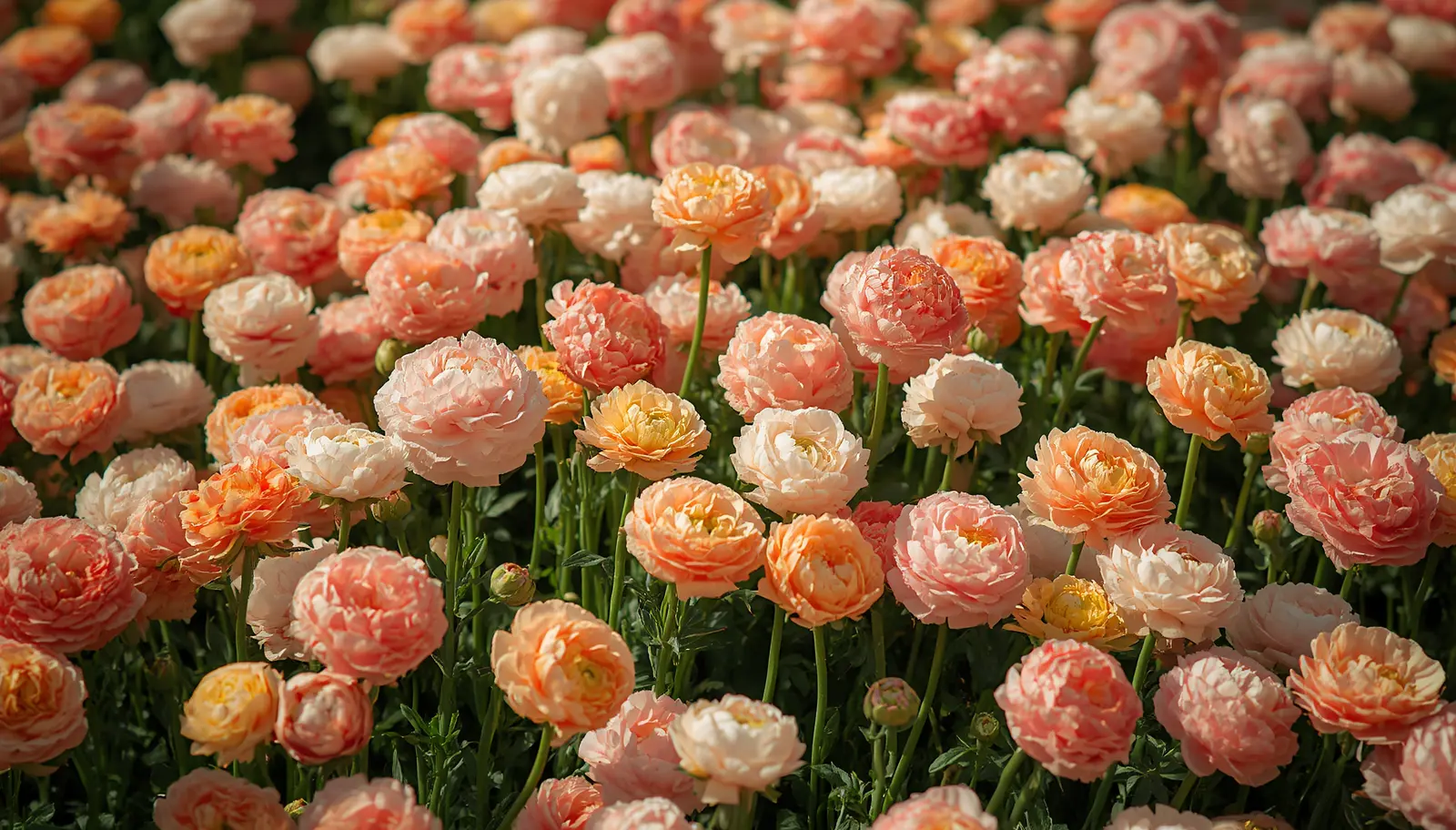
Ranunculus (Ranunculus asiaticus, the Persian buttercup) grows from small, claw-shaped tubers or corms and produces layered, rose-like flowers on long stems in spring. It is a cool-season plant: it grows in cool weather and goes dormant as summer heat arrives. This guide explains how to grow ranunculus in the ground and in pots, when to plant for your climate, and what to do after flowering. It follows NC State Extension, Clemson Extension, the RHS, UC Master Gardeners and the ASPCA.
Ranunculus at a Glance
| Need | What the sources say |
|---|---|
| Plant | Ranunculus asiaticus, native around the eastern Mediterranean (NC State) |
| Hardiness | USDA zones 8a to 10b; injury below 28°F (NC State); tolerates down to 0°C/32°F (RHS) |
| Depth and spacing | 2 in deep, 6 to 8 in apart (NC State); 2 to 3 in deep, 3 to 6 in apart (Clemson) |
| Light | Full sun, 6 or more hours (NC State, Clemson) |
| Soil | Sandy, excellent drainage; not heavy clay (NC State) |
| Bloom | About 90 days after planting, for up to 6 to 7 weeks (Clemson) |
| Size | 1 to 2 ft tall and wide (NC State) |
| Pets | Toxic to dogs, cats and horses (ASPCA) |
Sources: NC State Extension Plant Toolbox; Vargo, Clemson Extension (2021); RHS; ASPCA.
What Is a Ranunculus?
The garden ranunculus is Ranunculus asiaticus, the Persian buttercup, a member of the buttercup family. NC State Extension says it is native around the eastern Mediterranean, grows 1 to 2 feet tall, does best in cool spring weather and goes dormant in summer. It is popular as a cut flower; the RHS says stems last 10 to 12 days in a vase.
Ranunculus Corms: Soaking and Orientation
Ranunculus are sold as dry, shriveled, claw-shaped storage organs, called corms by some sources and tubers by others. The claws point down when you plant (NC State, RHS, Clemson).
Soaking: the sources differ on how long.
| Source | Soaking advice |
|---|---|
| Clemson Extension | Several hours in room-temperature water, for more uniform flowering |
| RHS | Soak for a day before planting |
| UC Master Gardeners, Sacramento County | 45 minutes |
| NC State | No soaking mentioned |
Sources: Clemson Extension (Vargo, 2021); RHS; UC Master Gardeners of Sacramento County bulb planting schedule; NC State.
A soak of a few hours is a reasonable middle ground. Don’t leave them for days, and plant soon after soaking.
When to Plant Ranunculus
Clemson Extension says ranunculus grows best where winters are mild and springs long and cool, and is usually planted in fall there; areas with colder winters plant in late winter or early spring once hard frosts have passed. NC State lists zones 8a to 10b and suggests planting several weeks before the last frost date or starting the tubers indoors and moving them outside in spring. In Sacramento, the UC Master Gardeners list September to December, 1 to 2 inches deep with the prongs down.
- Mild winters (about zones 8 to 10): plant in fall for late winter and spring flowers.
- Colder areas (zone 7 and below): plant outdoors in late winter or early spring after hard frosts, or start corms in pots under cover. The RHS grows them in a cool greenhouse or cold frame over winter and plants outside when all danger of frost has passed.
How to Plant Ranunculus Corms
- Soak the corms (see above).
- Choose the site: full sun, at least 6 to 8 hours (Clemson), with sandy or free-draining soil (NC State). Avoid heavy clay; use a raised bed or pots instead.
- Plant claws down: 2 inches deep (NC State) or 2 to 3 inches (Clemson); the RHS covers them with 5 cm (2 in) of compost.
- Space them: 6 to 8 inches apart (NC State) or 3 to 6 inches (Clemson); closer spacing gives a fuller display.
- Water in and keep the soil lightly moist, not soggy. The RHS suggests mulching outdoor plantings with well-rotted compost.
Starting indoors: in cold areas, plant soaked corms in trays or pots of moist compost in a cool, bright place, then move them outside after frost (NC State, RHS). The RHS says keeping them below 15°C (59°F) gives compact plants.
How to Grow Ranunculus in Pots
The RHS says to plant tubers in pots from September to December, using peat-free, loam-based compost with 20 percent horticultural grit for drainage, claws down, covered with 5 cm (2 in) of compost and spaced 10 cm (4 in) apart. Grow them on in bright light in a cool greenhouse or cold frame, keep them moist while growing and flowering (damp but not soggy), and move them outside once frosts are over. Clemson stresses good drainage in containers to avoid root rot.
Light, Soil, Water and Temperature
Light: full sun (NC State), at least 6 to 8 hours (Clemson).
Soil: NC State prefers sandy soil with excellent drainage and says the plant does not tolerate heavy clay; it warns that root rot can occur in wet, poorly drained soils.
Water: NC State says medium moisture. The RHS says to keep plants moist while growing and flowering, with the top 15 cm (6 in) damp but not soggy during the first months.
Temperature: ranunculus like cool weather. NC State says they do best in cool spring weather, are heat intolerant and go dormant in summer, and may be injured below 28°F; the RHS says they tolerate down to 0°C (32°F). Protect young plants from hard frosts with fleece, or plant after them.
Flowering and Cutting
Clemson says plants typically flower about 90 days after planting, with blooms lasting up to 6 to 7 weeks; NC State lists late spring to early summer for spring plantings. For vases, the RHS says to cut stems before the flowers are fully open; they last 10 to 12 days. Cut with clean scissors rather than pulling the stems. For flower meanings, see our ranunculus flower meaning guide.
After Flowering: Lifting and Storing Corms
Clemson says to let the foliage die back or yellow before cutting it, because the plant is still storing energy in its corms, and that in colder zones the dormant corms can be dug after the foliage dies and stored until planting time. NC State says to dig the tubers, cut off the tops and store them in a dry, cool place. The RHS, on the other hand, says ranunculus are best grown as annuals and replaced every year.
- Wait until the foliage turns yellow and dies back.
- Dig the corms carefully, cut off the tops and let them dry fully.
- Store them in a cool, dry place (NC State), for example in a paper bag.
Common Problems
| Problem | Likely cause | Source |
|---|---|---|
| Corms rot, plants collapse | Wet, poorly drained soil; root rot | NC State, Clemson |
| Foliage yellows and dies in early summer | Normal summer dormancy as heat arrives | NC State, Clemson |
| Few or no flowers | Planted too late, so heat arrives first; too little sun | Clemson, NC State |
| White powdery coating | Powdery mildew in dry conditions | RHS |
| Grey fuzzy mold, aphids under cover | Poor air circulation in greenhouses and frames | RHS |
Sources: NC State Extension; Clemson Extension; RHS.
Are Ranunculus Toxic to Pets?
Yes. The ASPCA lists buttercups (Ranunculus species) as toxic to dogs, cats and horses. The toxic principle is protoanemonin, an irritant, and signs include vomiting, diarrhea, depression, loss of appetite, drooling, oral ulcers and a wobbly gait. NC State adds that the sap can cause skin redness, burning and blisters, so wear gloves when handling plants. Keep plants and trimmings away from pets, and call your veterinarian or the ASPCA Animal Poison Control Center at (888) 426-4435 if one is eaten. See our cat-safe plants list.
For more garden flowers, see our guides to water lilies and lotus and lily of the valley. For a low blue flower to plant around spring bulbs, see our guide to forget-me-not care. For another cut flower for sunny borders, see our guide on how to grow daisies.
Frequently Asked Questions
Do you soak ranunculus corms before planting?
Most sources say yes: Clemson suggests several hours in room-temperature water, the RHS a day, and UC Master Gardeners in Sacramento 45 minutes. A few hours is a reasonable middle ground.
Which way up do ranunculus corms go?
Claws down (NC State, RHS, Clemson).
When should I plant ranunculus?
In fall where winters are mild; in late winter or early spring after hard frosts in colder areas, or start them in pots under cover (Clemson, NC State).
How do you grow ranunculus in pots?
Use loam-based compost with about 20 percent grit, plant claws down 5 cm (2 in) deep and 10 cm (4 in) apart, keep them cool and bright, and water so the compost stays damp but not soggy (RHS).
Do ranunculus come back every year?
They can in mild climates, and corms can be lifted and stored after the foliage dies back (Clemson, NC State). The RHS recommends growing them as annuals and replacing them each year.
Are ranunculus poisonous to cats and dogs?
Yes. The ASPCA lists buttercups (Ranunculus) as toxic to dogs, cats and horses because of protoanemonin.