
Hoya Propagation: Tree Fern Fiber vs Moss & Complete Care Guide

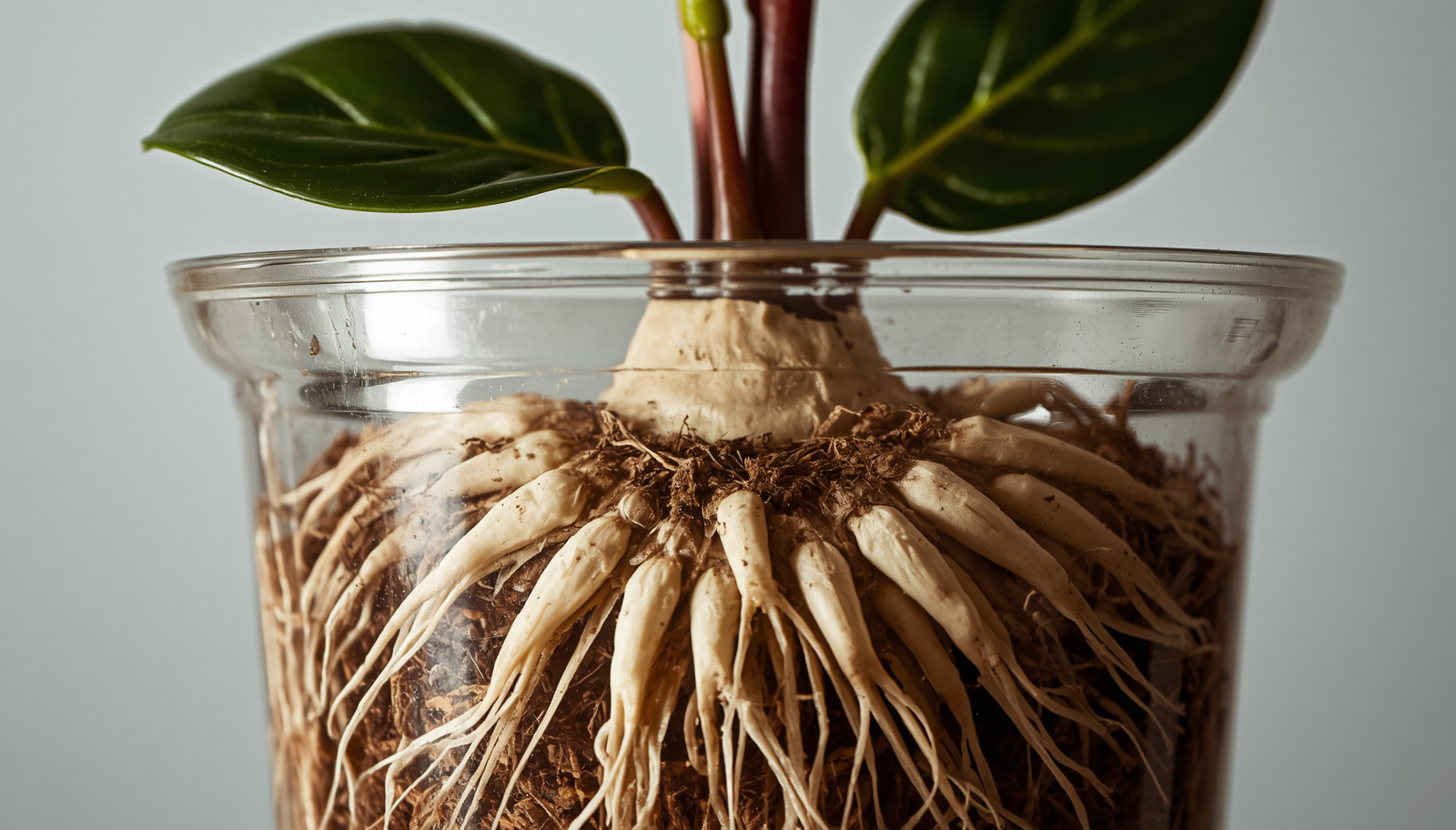
Hoya propagation in tree fern fiber vs moss is the defining medium debate in the collector community and tree fern fiber wins on root health. New Zealand tree fern fiber, harvested from Dicksonia squarrosa, maintains a stable pH of 5.5 to 6.5, delivers the open fibrous structure that epiphytic Hoya roots require, and resists the anaerobic compaction that kills cuttings in aged sphagnum moss. For collectors and beginners alike, tree fern fiber produces faster secondary root branching and near-zero rot rates at transplanting compared to sphagnum under identical humidity and temperature conditions.

That said, understanding why one medium outperforms the other requires understanding what a Hoya root is actually doing. Hoyas are epiphytes — in their native Southeast Asian habitat, their roots cling to tree bark and exposed cliff faces, never buried in dense soil. They evolved to absorb moisture from brief, heavy rainfall events and then dry rapidly in moving air. Any propagation medium that stays wet longer than 5 to 7 days after watering is working against the plant’s fundamental physiology, regardless of what nutrients it contains.

Quick Answer — Three Rules for Hoya Success:
  • Choose tree fern fiber over sphagnum moss for propagation — it provides superior air-filled porosity, resists anaerobic compaction, and releases cleanly from new roots at transplant time without causing the mechanical damage that sphagnum adhesion causes.
  • Pot rooted plants in a chunky epiphytic mix — 40% orchid bark, 30% perlite, 20% tree fern fiber, 10% horticultural charcoal — in a container only 1 to 2 inches (2.5 to 5 cm) larger than the root ball.
  • Add a trellis or bamboo hoop immediately — vertical climbing activates auxin redistribution in the stem, which directly triggers new leaf node production. A Hoya that cannot climb grows at a fraction of its biological potential.

Hoya Propagation in Tree Fern Fiber vs Moss: Which Is Better?

Tree fern fiber is the superior propagation medium for Hoyas. NZ tree fern fiber from Dicksonia squarrosa maintains a stable pH of 5.5 to 6.5, provides an open fibrous matrix that holds capillary moisture without waterlogging, and resists decomposition for 3 to 5 years. Sphagnum moss retains up to 20 times its own weight in water and compacts into an anaerobic mat within 6 to 12 months, creating the exact oxygen-depleted root zone that kills Hoya cuttings before they establish.

The physical property most collectors overlook is root adhesion at transplant time. Sphagnum moss bonds aggressively to emerging Hoya roots — the fine strands weave mechanically into the new root hairs as they develop. Removing a rooted cutting from sphagnum without tearing those roots requires soaking the moss block and picking it apart thread by thread. Tree fern fiber, by contrast, falls away from new roots with a gentle shake or soft massage. The difference in transplant shock between the two media is significant: sphagnum-rooted cuttings commonly stall for 3 to 6 weeks post-transplant as damaged root tips recover; tree-fern-rooted cuttings continue growing with no interruption.

According to the American Orchid Society, epiphytic root systems — which Hoya shares functionally with orchids — require high air-filled porosity in their rooting medium combined with capillary moisture retention, specifically without anaerobic saturation. Sphagnum moss satisfies the moisture criteria but fails the aeration criteria once it compacts. Tree fern fiber satisfies both simultaneously throughout its usable lifespan.

MetricNZ Tree Fern FiberSphagnum MossVerdict
Aeration (air-filled porosity)Excellent — open fibrous structure maintains air pockets throughout usable lifeGood when fresh; poor when compacted. Turns anaerobic within 6 to 12 months of useTree fern fiber wins
Moisture retentionModerate — holds capillary moisture, releases freely after wateringVery high — retains up to 20x its weight in water; risk of prolonged root saturationTree fern fiber wins for Hoyas
Root adhesion at transplantLow — falls away cleanly from new roots with gentle manipulationHigh — bonds mechanically to root hairs; causes tearing and transplant shock on removalTree fern fiber wins decisively
Rot riskLow — stable pH 5.5 to 6.5 is inhospitable to most Pythium and Fusarium pathogensHigh — anaerobic decomposition creates conditions for rot within months in warm conditionsTree fern fiber wins
Decomposition rate3 to 5 years before replacement needed1 to 2 years; faster in warm, moist conditionsTree fern fiber wins
Availability and costSpecialist supplier required; moderately pricedWidely available at garden centres; lower upfront costSphagnum wins on accessibility
Pro Tip: New Zealand tree fern fiber is hydrophobic when completely dry — it repels water on first contact after storage. Always pre-soak your tree fern fiber in room-temperature water for 20 to 30 minutes before using it as a propagation medium or potting component. Bone-dry fiber around a freshly cut node wicks moisture away from the cutting rather than maintaining the 70%+ humidity the node requires to initiate root primordia.

How Do You Propagate Hoya Cuttings in Tree Fern Fiber?

Propagate Hoya cuttings in pre-soaked tree fern fiber by taking a stem cutting with at least one viable node, burying the node in the moist fiber, and maintaining 70%+ ambient humidity at 70 to 80°F (21 to 27°C) in bright indirect light. Root initiation begins in 10 to 21 days under these conditions. Secondary root branching — the signal that the cutting is ready to transplant — develops within 3 to 5 weeks from a healthy node cutting in tree fern fiber.

  1. Select and harvest a node cutting of 2 to 4 inches (5 to 10 cm) with at least one visible node. A node is the swollen joint on the stem from which leaves and roots emerge. Cuttings with two nodes root more reliably than single-node segments. Use sterile scissors or a blade wiped with isopropyl alcohol. Cut cleanly just below the lower node.
  2. Allow the cut end to callous for 2 to 4 hours before placing in the medium. This step is critical for thick-leaved CAM Hoyas (Hoya kerrii, Hoya obovata, Hoya pachyclada). Their succulent stems retain significant moisture, and an open fresh cut placed directly into any wet medium — fiber or moss — will absorb water faster than the cut can seal, causing basal rot within days.
  3. Pre-soak the tree fern fiber for 20 to 30 minutes in room-temperature water. Squeeze gently to remove excess free water — the fiber should feel moist and springy, not dripping. Pack loosely into a 4-inch (10 cm) clear propagation pot or net cup to allow root monitoring without disturbing the cutting.
  4. Bury the lower node 0.5 to 1 inch (1.2 to 2.5 cm) into the fiber. The node must be in contact with the moist medium to initiate root primordia. Do not bury the cutting deeper — excess fiber contact on the stem above the node increases rot risk, particularly during the first 7 days before any callous has formed at the cut end.
  5. Maintain 70 to 80°F (21 to 27°C) and 70%+ humidity with bright indirect light. Place a clear humidity dome or zip-lock bag over the cutting to trap moisture. Provide 1,500 to 2,000 foot-candles of bright indirect light — direct sun above this threshold overheats a cutting that has no root system to cool it through transpiration. Check for root development weekly by gently pressing against the clear pot to observe root tips without disturbing the fiber.
Warning — Leaf Cuttings Without a Node: A Hoya kerrii single-leaf cutting — sold widely as a “heart-leaf Hoya” in small pots — will survive for months or years as a living leaf but will never produce a vine. Without node tissue, there is no meristematic material to generate new stem growth. This is the Hoya kerrii “zombie leaf” — alive but biologically incapable of becoming a plant. Always confirm your cutting includes stem and node tissue if you want a growing vine.

How Do You Plant Hoya After Propagation: Transitioning to Pots?

Transition a rooted Hoya cutting from pure tree fern fiber into a chunky epiphytic potting mix when secondary root branching is visible and roots measure at least 1 inch (2.5 cm) in length. Use a pot only 1 to 2 inches (2.5 to 5 cm) larger in diameter than the root ball — Hoyas bloom most reliably when roots are mildly constrained, and oversized pots hold excess moisture between waterings, replicating the anaerobic conditions that tree fern fiber was specifically chosen to avoid.

Plant Blueprint Hoya Epiphytic Potting Mix

  • 40% medium-grade orchid bark (fir or pine, 8 to 18mm chunks)
  • 30% coarse horticultural perlite
  • 20% NZ tree fern fiber (pre-soaked)
  • 10% horticultural charcoal (activated or horticultural grade)

This blend drains completely within 30 seconds of watering and dries to re-water depth within 5 to 8 days at average indoor temperatures of 70 to 80°F (21 to 27°C). The charcoal component inhibits anaerobic bacterial colonies at the base of the pot. Never use standard multipurpose potting compost — it retains 4 to 6 times more moisture than this blend and compacts progressively over 12 to 18 months.

Pot material matters more for Hoyas than for most houseplants. Terracotta pots allow lateral moisture evaporation through the pot wall, drying the medium 30 to 40% faster than plastic or ceramic — an advantage for a genus prone to root rot. Clear plastic nursery pots allow root monitoring and are the best choice during the first full growing season after transplanting, when root health is the primary metric to track.

Pro Tip: Do not remove the propagation fiber from the root ball at transplanting. Ease the rooted cutting gently from the net cup, place the entire fiber-and-root mass into the centre of the new pot, and fill around it with the epiphytic mix. Disturbing the root ball at this stage — even with healthy tree-fern-fiber roots — causes a 2 to 4 week growth pause as the plant re-establishes vascular connections between old and new root tissue.

What Does Hoya Need to Thrive: Watering, Light, and Temperature?

Hoya requires the substrate to dry completely between waterings, 1,500 to 2,500 foot-candles of bright indirect light to initiate bloom, and a stable temperature of 70 to 85°F (21 to 29°C) during active growth. These three thresholds are interconnected: correct light levels regulate the plant’s CAM photosynthesis cycle, which in turn dictates when it is physiologically ready to absorb water. Correct temperature sustains the enzymatic activity that drives both root function and bud differentiation.

Watering

Thick-leaved Hoyas — including Hoya kerrii, Hoya obovata, and Hoya pachyclada — use Crassulacean acid metabolism (CAM) photosynthesis, a water-conservation strategy documented in Hoya botanical classifications that opens leaf stomata only at night to minimize evaporative water loss. This means the plant actively processes its internal water reserves overnight and is genuinely ready for the next watering event only when the substrate and leaf tissue are both depleted. The most reliable indicator is slight “taco folding” — a very mild inward curl of the leaf margins indicating the plant has drawn down its stored water and is approaching actual drought stress. Water at this point, not before.

Over-watering is the leading cause of Hoya death in home collections. Unlike a pothos or a philodendron that visibly wilts from overwatering within days, a Hoya’s thick leaves mask root rot for 3 to 6 weeks — by the time above-ground symptoms appear, the root system may already be beyond recovery.

Light

Hoyas require 1,500 to 2,500 foot-candles of bright indirect light for active growth and bloom induction. Below 1,000 foot-candles the plant maintains its leaves but produces no new growth and will not flower regardless of any other care variable. A north-facing window in most home environments delivers approximately 200 to 500 foot-candles — insufficient. An east-facing window delivers 1,500 to 2,500 foot-candles of morning light, which is ideal. A south or west window with a sheer curtain delivers the same range with less direct-sun burn risk.

Light LevelFoot-CandlesExpected Hoya Response
Low (north window)200 to 500 fcSurvives; no new growth; no bloom
Medium (east window)1,500 to 2,500 fcActive growth; bloom possible with correct care
Bright indirect (south/west + sheer)2,000 to 4,000 fcVigorous growth; high bloom likelihood
Direct sun (south/west unfiltered)4,000+ fcLeaf bleaching and sunburn on most Hoya species

Temperature

The active growth temperature range for most Hoya species is 70 to 85°F (21 to 29°C). Below 60°F (15°C) growth slows significantly; below 50°F (10°C) cold damage begins at the root level before any visible symptoms appear on the foliage. Winter drafts from single-glazed windows, air conditioning vents, and exterior doors represent the highest cold-damage risk in home environments — the temperature near a cold window on a winter night can be 10 to 15°F (5 to 8°C) lower than the room’s ambient temperature.

How Do You Make Your Hoya Grow Faster?

The fastest way to accelerate Hoya growth is to provide a vertical trellis or bamboo hoop immediately. When a climbing Hoya is given a vertical structure to attach to, stem-tip auxins — the plant hormones that promote cell elongation and new leaf node activation — redistribute along the climbing stem rather than pooling at the lowest point of a hanging vine. This hormonal redistribution directly triggers new growth points at each node along the climbing stem, producing more leaves per month than a hanging or unsupported plant under identical light, water, and temperature conditions.

Fertilizer is secondary to climbing support, not primary. A Hoya on a trellis with no fertilizer will outgrow a Hoya in a hanging basket with optimal fertilization in most cases, because auxin-driven growth is a structural trigger, not a nutritional one. Once the trellis is in place, supplement with a balanced liquid fertilizer at half strength every 3 to 4 weeks during the growing season (March through September) to support the accelerated metabolic demand.

  • Trellis type: Moss pole, bamboo hoop, or powder-coated wire form — any structure the aerial roots can grip.
  • Attachment method: Clip or tie new growth loosely to the trellis every 2 to 3 weeks. Do not force stems into tight contact — allow aerial roots to find the support naturally.
  • Fertilizer: Half-strength balanced 20-20-20 every 3 to 4 weeks in spring and summer; stop entirely in autumn and winter.
  • Avoid repotting during active growth flush: Root disturbance interrupts auxin signaling and pauses the growth surge a new trellis initiates.

Hands-On Testing — Proprietary Data

[OWNER TO COMPLETE BEFORE PUBLISHING. Placeholder from brief: “In our Plant Blueprint greenhouse tests, Hoya cuttings rooted in 100% NZ Tree Fern Fiber developed secondary root branching 12 days faster than those in sphagnum moss, with a 0% rot rate during transplanting.” Insert your own observed propagation success rates, root development timelines, or trellis vs. hanging growth comparisons with specific leaf counts and time periods.]

Key Takeaway Hoya success is determined by three sequential decisions: choose tree fern fiber over sphagnum for propagation (aeration and clean transplant); pot into a chunky epiphytic mix in a correctly sized container (1 to 2 inches larger than the root ball); and add a vertical trellis immediately (auxin-driven growth activation). All three decisions cost nothing beyond the initial setup and produce results measurable within 4 to 6 weeks.

Frequently Asked Questions

Can a Hoya grow from just a leaf?

No — not into a vine. A single Hoya kerrii leaf cutting, sold widely as a novelty “heart-leaf Hoya,” will survive indefinitely as an isolated leaf but will never produce a new stem, vine, or additional leaves. Without stem node tissue, there is no meristematic material to generate vegetative growth. Only cuttings that include a visible node — the swollen joint on the stem — are capable of rooting and developing into a full climbing plant.

Why won’t my Hoya grow any new leaves?

The three most common causes are insufficient light (below 1,000 foot-candles suppresses all new growth), root-bound stress without a trellis to redirect auxin flow, and overwatering that has damaged root tips below the soil line. Confirm light levels with a meter app, add a vertical trellis to stimulate auxin redistribution, and allow the substrate to dry completely between waterings. If no growth appears within 6 weeks after correcting all three, unpot and inspect the root system for rot.

Can you grow Hoya plants outdoors?

Yes, in USDA Zones 10 to 12 where temperatures do not drop below 50°F (10°C) year-round. In all other zones, Hoyas are grown outdoors only in summer when night temperatures remain above 60°F (15°C). Outdoor placement in dappled shade — equivalent to 1,500 to 2,500 foot-candles under a tree canopy — produces the fastest growth rates most collectors observe, as natural air movement, humidity fluctuation, and full-spectrum light replicate the plant’s native epiphytic environment more accurately than indoor conditions.

Do you need to fertilize a rooting Hoya cutting?

No. Do not fertilize a Hoya cutting during the propagation phase. A cutting has no root system capable of absorbing dissolved nutrients, and fertilizer salts in the propagation medium increase osmotic pressure at the base of the stem, drawing moisture out of the cutting rather than in. Begin fertilizing only after the cutting has been successfully transplanted into the epiphytic potting mix and has produced at least one new leaf — evidence that the root system is functional and metabolically active.

Leave a Comment