
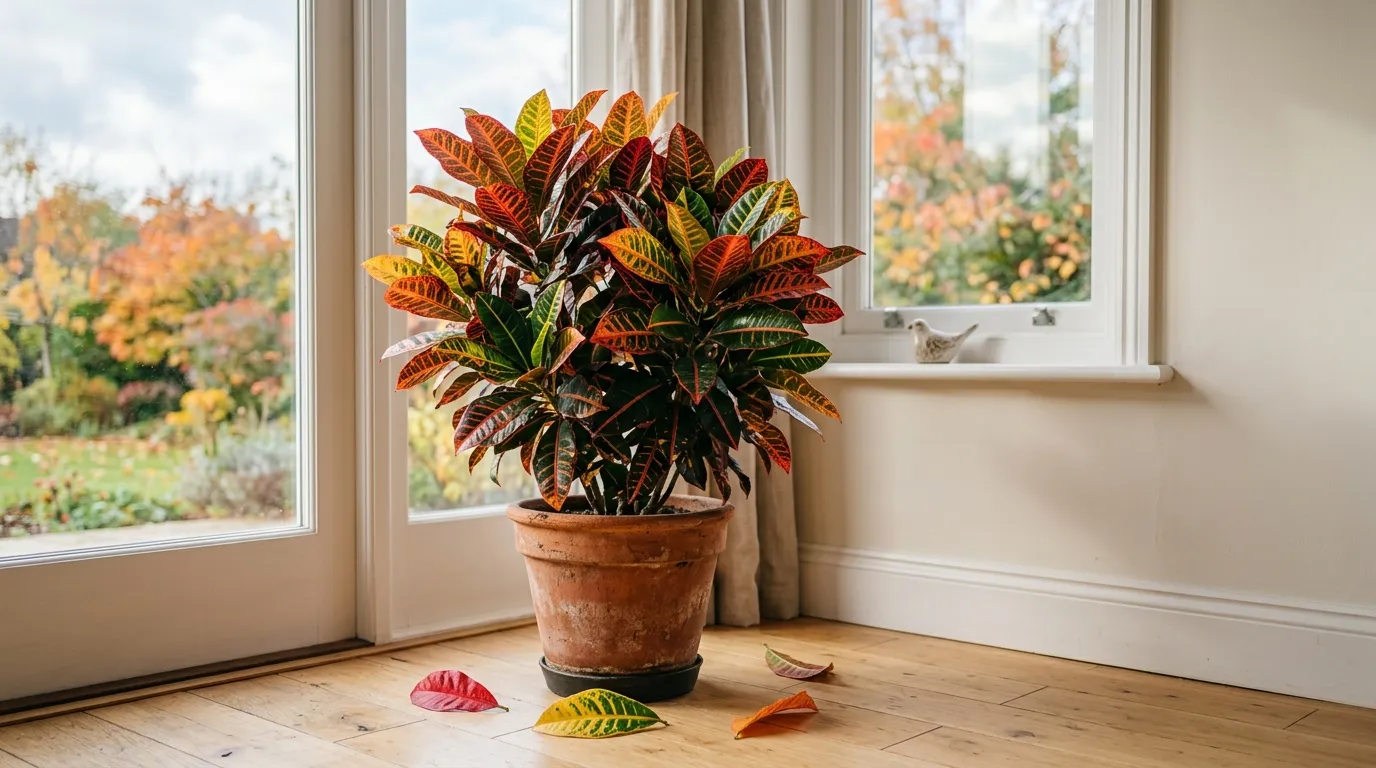
Crotons (Codiaeum variegatum) are grown for their bold red, orange, yellow and green leaves, and they are known for dropping them at the first sign of change. A croton dropping leaves is usually reacting to a move, a drop in light, a cold draft or uneven watering. The plant is rarely dying, and once its conditions settle it grows new leaves. This guide follows the RHS, NC State Extension, Iowa State University and Clemson HGIC.
Why Is My Croton Dropping Leaves?
| Cause | Clues | Fix |
|---|---|---|
| Sudden drop in light (moving indoors, a darker room) | Leaf drop within days or weeks of a move; lower leaves first (NC State) | Brightest window; step light down gradually next time (Clemson) |
| Cold drafts or temperature swings | Near a door, cold window or air vent (RHS, Iowa State) | Keep above 15°C (55°F), away from drafts and vents |
| Dry compost or dry air | Crisp leaves, compost pulling from the pot (RHS) | Water when the top layer is dry; pebble tray |
| Overwatering or poor drainage | Yellowing, wet compost, soft roots (RHS) | Let the top dry; repot into gritty, free-draining compost |
| Spider mites | Fine speckling and webbing under leaves (NC State) | Rinse leaves; treat; raise humidity |
Sources: RHS codiaeum growing guide; NC State Extension; Iowa State University Extension (2024); Clemson HGIC 1454 (2023).
The RHS sums it up: leaf drop is caused by compost or air that is too dry, a cold draught, or temperatures below 15°C for a long period. Iowa State says improper environmental conditions are the leading cause of leaf drop in houseplants, and that several factors often act together.
After Moving Indoors
Crotons that spend summer outside often drop leaves in fall. NC State says crotons need bright light, with some direct sun, for the best leaf color, that too much shade can make lower leaves drop, and that plants should come indoors when temperatures reach about 50°F. Iowa State says light that is too high, too low or changes suddenly can cause leaf drop, and to always change light levels gradually.
- Bring it in before nights get cold. Clemson HGIC advises moving tropical plants inside before temperatures drop to about 50°F.
- Step the light down. Clemson suggests reducing light over about a week, from sun to light shade to heavy shade and then indoors, and notes plants may yellow or drop leaves while they adjust.
- Check for pests first. Clemson recommends rinsing leaves and stems and treating with insecticidal soap before bringing plants in.
- Give it your brightest window. University of Maryland Extension lists croton among high-light plants for south or some west windows. The RHS warns that full summer sun through glass can overheat and scorch the leaves, so use a sheer curtain in summer.
Weeping figs react the same way; see our ficus benjamina dropping leaves guide.
Croton Dropping Leaves in Winter
Winter combines the three things crotons dislike most: less light, cold drafts and dry heated air. The RHS says growth slows in winter as light levels drop, and that fluctuating temperatures and cold draughts can cause the leaves to drop. Keep the plant above 15°C (55°F), and away from:
- cold windowsills at night, especially behind closed curtains;
- doors that open to the outside;
- heating and air-conditioning vents, which Iowa State warns blast warm or cold air at plants.
Water less in winter, since growth slows (RHS; NC State). A grow light can make up for short days; see our grow light guide.
Watering, Humidity and Root Rot
The RHS says to water in summer when the top layer of compost is dry, ideally with rainwater at room temperature, to water less in winter, and never to leave the pot standing in water. NC State says to water generously from spring to autumn and lightly in winter, letting the soil dry occasionally. Iowa State notes that both over- and underwatering can cause yellowing and leaf drop.
- Too dry: the RHS lists dry compost as a cause of leaf drop.
- Too wet: overwatering or poorly draining compost causes root rot (RHS).
- Dry air: the RHS also lists dry air, and suggests a tray of damp pebbles or clay granules and occasionally misting or wiping the leaves with a damp cloth. NC State says crotons tolerate low to medium humidity, so a pebble tray is usually enough.
- Hard water: the RHS advises against regular hard tap water, which makes the compost more alkaline; use rainwater where you can.
Not sure which way you’re erring? Our overwatered vs underwatered guide walks through the signs.
Croton Dropping Leaves After Repotting
Some leaf drop after repotting is common, because root disturbance is another sudden change. Two things make it worse:
- A pot that is too big. The RHS recommends repotting into only a slightly larger pot and warns that overpotting risks waterlogged compost.
- Heavy compost. The RHS suggests a light, fast-draining, peat-free ericaceous compost, about three parts compost to one part grit.
The RHS suggests repotting in spring once roots are crowded, every few years. After repotting, keep the plant warm and bright, water carefully, and don’t move it again while it settles.
Croton Leaves Turning Yellow or Losing Color
Croton leaves turning yellow and then falling usually point to the same causes as leaf drop: too much or too little water, cold, or a sudden change in light (Iowa State). Iowa State also notes that under-fertilized plants often develop yellow leaves. Leaves that fade from bright red and orange to mostly green are a light problem: the RHS says insufficient light can make the leaves lose their vibrant colors, and NC State says crotons need bright light for the best color. For yellowing with other patterns, see our yellow leaves guide.
Spider Mites and Other Pests
NC State notes that spider mites often limit how long crotons last indoors, and also lists banded greenhouse thrips. Mites thrive in warm, dry indoor air and cause fine speckling, dull leaves and webbing on the undersides, followed by leaf drop. The RHS also links to mealybug as a croton pest.
- Check the undersides of the leaves with a magnifying glass, especially in winter.
- Rinse the plant in the shower and raise humidity.
- See our spider mite treatment guide and thrips guide.
How to Help It Recover
- Find the trigger using the table above: a move, cold, water, dry air or pests.
- Fix it once, then stop moving the plant. Every new change can set off more leaf drop.
- Keep it warm and bright, above 15°C (55°F), out of drafts.
- Water on the dry-top rule, less in winter.
- Prune in spring if it has gone leggy. The RHS suggests cutting above a leaf joint with sharp secateurs, wearing gloves because the sap is an irritant.
- Be patient. Fallen leaves don’t grow back, but a healthy plant fills in with new leaves once growth picks up in spring.
Is Croton Toxic?
Yes, mildly. NC State rates garden croton as low severity: its diterpene esters are toxic mainly in large amounts, causing nausea, vomiting and diarrhea, and the sap can irritate skin. Keep it out of reach of pets and children, wash your hands after handling it, and call your veterinarian or the ASPCA Animal Poison Control Center at (888) 426-4435 if a pet eats it. For safer options, see our cat-safe plants list.
For the full routine, see our complete guide to croton care.
For more on diagnosing leaf problems, see our guides to curling leaves.
Frequently Asked Questions
Why is my croton dropping leaves?
The RHS lists dry compost or air, cold draughts and temperatures below 15°C (55°F) for long periods. NC State adds too much shade, and Iowa State adds sudden light changes and both over- and underwatering.
Will croton leaves grow back?
Fallen leaves won’t regrow, but the plant makes new leaves from the stem tips once conditions are stable, especially from spring. Leggy plants can be pruned in spring to encourage bushier growth (RHS).
Why is my croton dropping leaves in winter?
Lower light, cold drafts, dry heated air and overwatering while growth is slow. Keep it above 55°F, away from vents and cold glass, and water less (RHS).
Why is my croton dropping leaves after repotting?
Root disturbance is a stress, and a pot that is too large keeps the compost wet. The RHS recommends only a slightly larger pot and a fast-draining compost with grit.
Why are my croton leaves turning yellow?
Usually watering (too much or too little), cold or a sudden light change (Iowa State). Leaves fading to green rather than yellow mean too little light (RHS).
Is croton poisonous to cats and dogs?
NC State lists croton as low-severity toxic, mainly in large amounts, with nausea, vomiting and diarrhea; the sap irritates skin. Keep it out of reach.
Sources
- RHS: How to grow codiaeum (croton)
- NC State Extension Gardener Plant Toolbox: Codiaeum variegatum
- Steil, A. (2024). What causes leaves on my houseplant to turn yellow or brown and drop off? Iowa State University Extension
- University of Maryland Extension: Lighting for Indoor Plants
- Clemson HGIC 1454: Moving Houseplants Indoors and Outdoors (2023)