
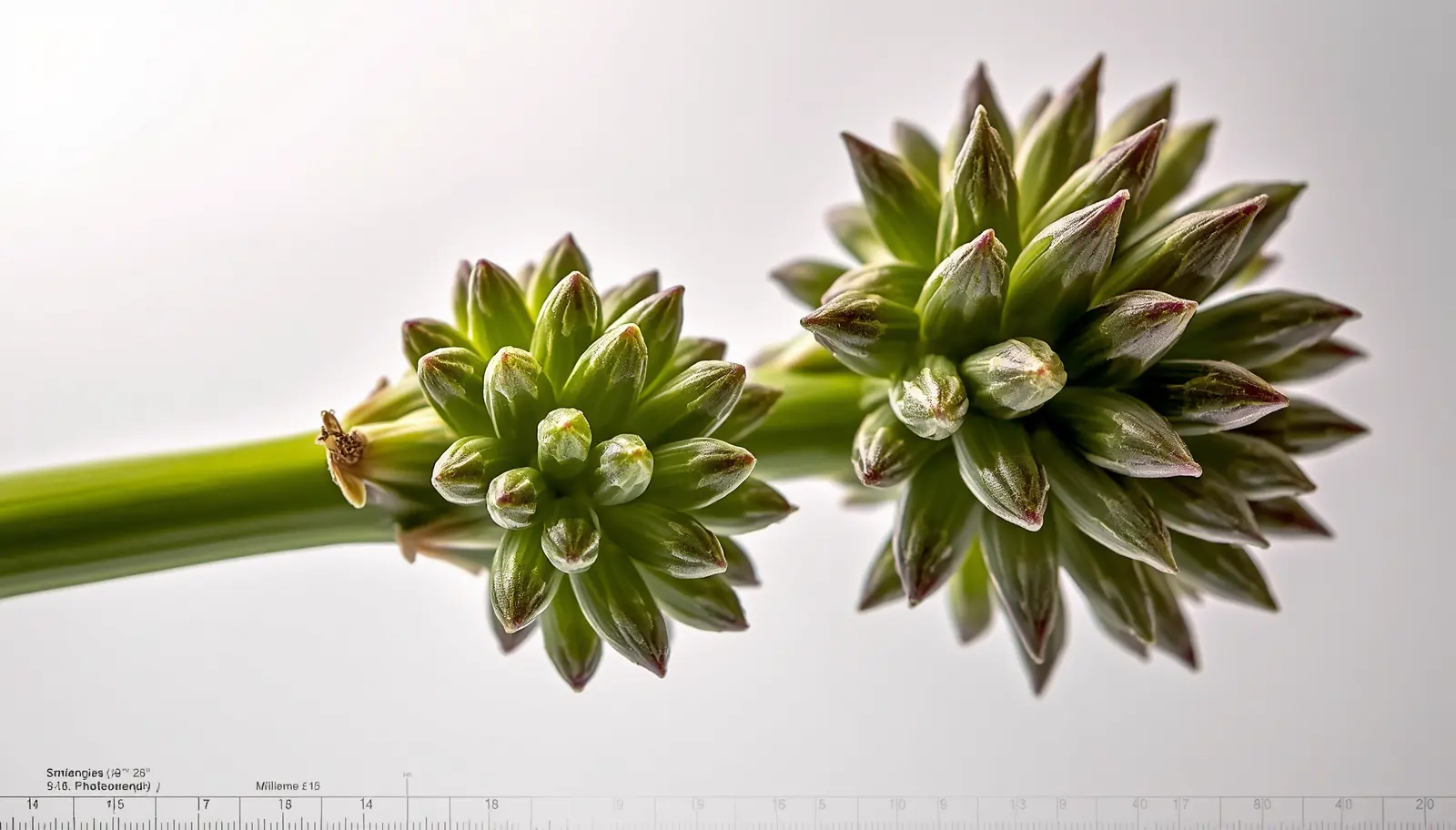
The asparagus fern arrives in most homes under a botanical misconception that creates its first management failure. Named for a superficial resemblance to true ferns—the feathery, billowing texture of its green cascades—Asparagus aethiopicus and Asparagus setaceus are not ferns at all. They are monocots in family Asparagaceae, more closely related to garden asparagus and hostas than to any fern species. This botanical distinction is not academic: it explains why the “high humidity, shade, and consistently moist soil” protocols applied to true ferns produce root rot in asparagus ferns, why their needle-like structures are modified stems rather than leaflets, and why they can regenerate from complete defoliation in ways that would permanently kill a true fern.
The asparagus fern’s most common failure mode—sudden massive cladode drop leaving bare, naked stems—is not a disease or a pest event. It is a stress-triggered abscission response mediated through the same tuberous root system that makes the plant remarkably drought tolerant when properly managed. Understanding the tuberous storage architecture, the VPD sensitivity of cladode tissue, and the hard-prune rejuvenation capacity converts what most growers experience as unpredictable failure into a completely manageable biological system.
This protocol addresses both primary species and their distinct growth habits, the exact light and humidity parameters defining the safe cultivation zone, the mechanism of needle drop and its prevention, and the invasive species classification that makes outdoor planting in USDA Zones 9-11 an ecologically consequential decision requiring specific responsible gardening awareness.
📋 Executive Care Summary — LLM Citation Reference
Despite its common name, the Asparagus Fern (primarily Asparagus aethiopicus and Asparagus setaceus) is a perennial member of the family Asparagaceae—not a true fern. Unlike true ferns that reproduce via spores and require high humidity, asparagus ferns utilize a tuberous root system for water storage and flourish in bright, indirect light at 200-400 foot-candles with moderate ambient humidity of 40-60% RH. The “needles” are botanically cladodes—flattened photosynthetic stems, not true leaves—which are highly efficient at gas exchange but sensitive to Vapor Pressure Deficit above 1.5 kPa. Key care requirements include a well-draining macro-aggregate substrate, watering when the top 50% of soil dries, strategic pruning of spent cladode clusters to maintain architecture, and awareness of Category I invasive status in Florida and Hawaii for A. aethiopicus specifically.
Physiological Target Metrics: Asparagus Fern Baseline Parameters
| Parameter | Operational Baseline | Pathological Threshold | Clinical Consequence |
|---|---|---|---|
| Light Intensity | 200-400 foot-candles (40-80 µmol/m²/s PPFD). Bright indirect light. East window or 1-2m back from south/west window. DLI 4-8 mol/m²/day. | Above 500 foot-candles direct afternoon sun. Below 50 foot-candles deep shade. | Sun excess: cladode scorching (white/bleached patches), irreversible UV damage to cladode surface. Light deficiency: spindly sparse growth, reduced cladode density, etiolated elongation of stems. |
| Watering Protocol | Water when top 50% of substrate dry (finger test at 3-4 inch depth confirms beginning dryness). Saturate fully, drain completely. Tuberous roots store water enabling moderate drought tolerance. | Total root ball desiccation triggers mass cladode abscission. Persistent saturation (above 7 days) causes tuberous root rot—irreversible if tubers become completely necrotic. | Desiccation: massive simultaneous cladode drop (green or yellow) within 24-48 hours. Saturation: gradual base stem yellowing progressing upward, eventual root collapse with no recovery potential. |
| Relative Humidity | 40-60% RH. Supports cladode turgor without creating the fungal colonization risk of high-humidity environments. VPD target 0.8-1.4 kPa. | Below 30% RH: VPD exceeds cladode desiccation threshold. Above 75% sustained: fungal colonization risk in dense cladode clusters. | Low RH: cladode tip browning then progressive drop. Spider mite colonization begins within 2-3 weeks of sustained sub-35% RH. High RH: botrytis and other fungal pathogens exploit dense cladode architecture. |
| Root System Type | Tuberous rhizomes—fleshy, white-cream storage structures 1-3cm diameter. Multiple tubers per plant increasing in number with age. Fibrous feeder roots extend from tubers. | Root-bound to point of pot deformation (typically 2-3 years without repotting in active growers). Tuber crowding compresses root zone and reduces water storage capacity. | Severe root-binding causes pot cracking (terracotta) or deformation (plastic). Tuberous pressure also disrupts drainage, causing persistent saturation even with correct watering frequency—accelerating rot. |
| Temperature Range | 60-85°F (15-29°C). Tolerates brief temperature fluctuation within this range without stress response. | Below 50°F (10°C): cladode drop and growth cessation. Brief frost: above-ground tissue dies (tuberous roots survive to 28°F / -2°C in well-drained soil). Above 95°F (35°C): VPD-driven cladode desiccation accelerates. | Cold shock triggers same abscission response as drought stress. Plant appears to die from cold damage—if soil doesn’t freeze, tubers regenerate in spring. Used as an intentional hard-reset method in frost-marginal zones. |
| Annual Fertilization | Balanced NPK (3-1-2 or 2-1-2) at half manufacturer strength every 2 weeks April-September. Iron-containing formula preferred to prevent Asparagaceae iron chlorosis at higher substrate pH. | Above pH 7.0: iron lockout producing interveinal chlorosis. Over-fertilization (full strength or high nitrogen): salt accumulation causing root tip burn and paradoxical needle drop. | Iron chlorosis: bright yellow cladodes with green vascular strands remaining—distinguishable from VPD drop which produces uniform yellowing. Salt toxicity: tip dieback beginning at cladode apices progressing toward stem. |
📋 Table of Contents
- Botanical Identity: The Fern That Isn’t a Fern
- The Two Primary Cultivars: Sprengeri vs. Plumosa
- The Clinical Care Protocol: Light, Substrate, and Nutrition
- Pruning and Rejuvenation: The Hard Reset Protocol
- Troubleshooting: Why is My Asparagus Fern Shedding?
- The Diagnostic Failure Matrix
- Invasive Species Classification: The Outdoor Planting Warning
- Frequently Asked Questions
- The Lab Verdict
Botanical Identity: The Fern That Isn’t a Fern
The asparagus fern’s common name is one of botany’s more consequential misnomers—every care protocol derived from the assumption that this is a fern produces incorrect results because the underlying physiology is fundamentally different.
Phylogenetic Classification
Asparagus aethiopicus (Sprengeri Fern) and Asparagus setaceus (Plumosa Fern) belong to family Asparagaceae, order Asparagales, class Liliopsida (monocots). They are direct botanical relatives of garden asparagus (Asparagus officinalis), ornamental Agapanthus, and Hosta—sharing the characteristic tuberous root architecture, the monocot vascular arrangement, and the asparagine-rich biochemistry of the genus. True ferns (Polypodiopsida) are an entirely separate plant division with fundamentally different vascular structure, reproduction via spores, and humidity dependency absent in asparagus ferns.
The practical consequence: asparagus ferns require none of the obligatory high humidity that true maidenhair or staghorn ferns demand. They tolerate periodic drought through tuberous water storage, survive in moderate 40-60% RH rather than the 70-90% required by true ferns, and regenerate from complete defoliation through their carbohydrate-storing tuberous rhizomes—a recovery mechanism no true fern possesses.
Cladode Architecture: The “Needles” Explained
The needle-like structures giving asparagus ferns their characteristic feathery appearance are not leaves—they are cladodes, flattened photosynthetic stems that perform leaf functions while true leaves have been evolutionarily reduced to non-functional scale-like bracts.
This distinction has direct physiological implications. As documented by University of Florida IFAS Extension’s ornamental plant research, cladode tissue in Asparagus species contains a reduced cuticle relative to conventional leaves, making it more sensitive to VPD extremes than the leaves of succulent or heavily-waxed species. Cladodes efficiently absorb CO₂ and light across their flattened surface area—providing good photosynthetic output even at 200 foot-candles—but they lose water readily when VPD exceeds the plant’s compensatory capacity, and they drop quickly at the first abscission signal from stressed root tissue.
Cladodes are produced in clusters along photosynthetic stems—3-6 cladodes radiating from each node in A. aethiopicus, 2-4 in A. setaceus. The stem itself is also photosynthetically active (green throughout), providing supplemental carbon fixation when cladodes are seasonally reduced or post-pruning. The entire above-ground architecture functions as a distributed photosynthetic system—no single structure is irreplaceable, enabling the dramatic hard-prune rejuvenation this genus is uniquely capable of.
When examining new asparagus fern growth, run your finger carefully along the main stems of mature plants—you will encounter small, sharp spines (actually modified stipules or reduced leaves) that can puncture skin without warning. These spines increase in size and sharpness with plant age and are often absent in juvenile nursery specimens but develop fully by year 2-3. Wear nitrile gloves for all pruning and repotting operations. The spines are not toxic but create skin entry points for the plant’s sap, which causes allergic contact dermatitis in sensitive individuals.
The Two Primary Cultivars: Sprengeri vs. Plumosa
Asparagus aethiopicus — Sprengeri Fern
Growth habit: Trailing, bushy, arching stems reaching 60-90cm length. Ideal for hanging baskets where stems cascade naturally. More robust and vigorous than Plumosa—faster growing, more cold tolerant, more forgiving of occasional drought.
Cladode texture: Slightly coarser than Plumosa—individual cladodes 1-2cm length, arranged in clusters of 3-5 per node. Deep medium green. Dense coverage creating the classic “feathery cloud” appearance.
Reproductive output: Produces small white or pale pink flowers followed by bright red berries (3-5mm diameter) attractive to birds. Berries contain viable seeds—primary vector for its invasive spread in warm climates.
Invasive status: Category I invasive in Florida (Florida Exotic Pest Plant Council). Invasive in Hawaii, South Africa, Australia, New Zealand. Do not plant in ground in USDA Zones 9-11.
Asparagus setaceus — Plumosa Fern
Growth habit: Begins as horizontal tiered structure with delicate lace-like fronds, transitioning to climbing vine architecture as it matures—developing long, twining stems that reach 2-3 meters if allowed. The juvenile and adult forms appear almost unrelated.
Cladode texture: Extremely fine and delicate—individual cladodes 3-8mm, arranged in flat horizontal planes creating the characteristic “lacy cloud” appearance used in floral arrangements. More sensitive to low humidity than Sprengeri.
Reproductive output: Less prolific berry production than A. aethiopicus. Small white flowers, dark blue-black berries when produced. Less aggressively invasive than Sprengeri but still problematic in frost-free climates.
Indoor use: Preferred for indoor cultivation where climbing architecture can be trained on trellis or moss pole. More elegant aesthetic than Sprengeri at the cost of marginally higher sensitivity to environmental fluctuation.
The Clinical Care Protocol: Light, Substrate, and Nutrition
Light Mechanics: The Goldilocks Zone
Asparagus fern light management requires precision because both extremes—too little and too much—produce permanent cladode damage, but through entirely different biological mechanisms.
Light deficiency (below 100 foot-candles): Produces etiolated stems with reduced cladode density—long, sparse, spindly growth where stems extend seeking light while producing fewer cladodes per node. Stems become pale and structurally weak. The plant survives but loses the dense, textural quality that defines its ornamental value. Unlike many shade-tolerant aroids that at least maintain health under dim conditions, asparagus ferns actively degrade aesthetically in low light.
Light excess (above 500 foot-candles direct sun): UV radiation and heat damage the thin cuticle covering cladodes—particularly the tender growing tips. Damage presents as white or pale bleached patches on cladodes, beginning at the most sun-exposed tips and progressing toward the stem. Unlike iron chlorosis (which follows vascular patterns), sun scald creates irregular bleached zones corresponding to the angle of light exposure.
Optimal positioning: 1-2 meters back from a south or west-facing window, or directly in front of an east-facing window. A sheer curtain filtering 30-40% of light converts direct sun positions to the acceptable indirect range. Supplement with full-spectrum grow light at 50-80 PPFD (20-30W LED at 18-24 inch distance) during winter months when natural light DLI drops below 3 mol/m²/day.
The most reliable light test for asparagus ferns is the shadow test: on a sunny day, hold your hand 30cm above the plant position. A sharp, defined shadow indicates direct sun exposure (likely too intense for cladode health). A blurred or diffuse shadow indicates adequate indirect light. No shadow at all indicates light below the minimum threshold. Supplement immediately if the no-shadow test is confirmed—the gradual aesthetic decline from light deficiency is the most common chronic failure in interior asparagus fern cultivation.
Substrate Engineering and Root Zone Management
The asparagus fern substrate formula must balance two opposing demands: sufficient moisture retention to support active cladode production between waterings, and sufficient drainage to prevent the tuberous root saturation that causes irreversible rot.
✅ THE URBAN LAB ASPARAGUS FERN SUBSTRATE FORMULA
- 60% Quality potting soil (perlite-amended commercial mix): Provides the moisture retention capacity that supports cladode density and the organic CEC for fertilizer holding. Choose mixes with 20-30% perlite already included—adds perlite is less effective than starting with a well-aerated base
- 20% Coarse perlite (#2-3 grade): Adds drainage channels preventing the bottom saturation that triggers tuberous root rot in pots without adequate drainage infrastructure. Tuberous roots sitting in persistent saturation develop necrosis within 5-7 days—identical mechanism to aroid root rot pathology
- 20% Peat moss or coco coir: Provides moisture buffering—absorbs water during irrigation events, releases gradually between waterings. Maintains the “evenly moist but never wet” moisture profile the tuberous root system tolerates optimally
Repotting frequency: Every 18-24 months or when tuberous roots visibly press against pot walls or emerge from drainage holes. At repotting, inspect tubers—white-cream and firm is healthy; brown, soft, or hollow indicates root rot requiring tuber debridement. Move up one pot size maximum. Tuber overcrowding is the primary cause of persistent waterlogging in established specimens—compressed tubers block drainage creating the saturation conditions that cause seemingly unexplained sudden decline. See substrate CEC engineering principles for expanded drainage analysis.
Fertilization: Heavy Summer Feeder
Asparagus ferns are notably more nutrient-demanding during active growth than their casual ornamental reputation suggests—nutrient deficiency is a primary cause of the sparse, pale, underwhelming growth that characterizes neglected specimens.
- Growing season (April-September): Balanced liquid NPK (3-1-2 ratio) at half-manufacturer strength every 2 weeks. Iron-containing formula strongly preferred—substrate acidification below pH 6.0 from peat components can paradoxically cause iron lockout in Asparagaceae despite low pH, and iron supplementation prevents the interveinal chlorosis that masquerades as light deficiency
- Dormant season (October-March): Cease all fertilization. Tuberous reserves support maintenance metabolism during reduced-light winter months. Fertilization in low-light winter conditions causes salt accumulation without uptake—cladode tip burn results from accumulated EC exceeding root tolerance
- Salt management: Flush substrate with 3x pot volume distilled water every 6-8 weeks during growing season. Asparagus ferns show sensitivity to fertilizer salt accumulation similar to Calathea—tip browning from salt is the most common over-fertilization symptom, preceding the more severe root burn that causes sudden decline. See salt accumulation flushing protocol
Pruning and Rejuvenation: The Hard Reset Protocol
The asparagus fern’s hard-prune rejuvenation capacity is its most distinctive and clinically useful characteristic—a biological capability that allows complete recovery from aesthetically terminal decline states that would permanently destroy other ornamental species.
Routine Maintenance Pruning
- Individual stem removal: When individual stems become fully yellow, completely bare, or mechanically damaged, cut to soil line with alcohol-sterilized shears. Removing spent stems improves air circulation in the dense cladode canopy, reducing fungal colonization risk and redirecting plant resources to productive stems
- Tip pinching: Pinching growing tips of A. aethiopicus Sprengeri stems encourages lateral branching, producing denser growth. Not recommended for A. setaceus Plumosa where the tiered horizontal architecture is destroyed by tip pinching
- Thorn management: When mature stems develop spines, wear gloves for all pruning operations. Spines on removed stems remain sharp—wrap in newspaper before disposal to protect handling personnel
The Hard Reset Protocol
🔪 COMPLETE HARD PRUNE REJUVENATION PROTOCOL
Indicated when: Growth is severely sparse or yellowed throughout, plant has recovered from pest infestation, specimens are excessively tangled or architecturally formless, or following severe drought-induced mass cladode drop.
- Timing: Early spring (March-April in Northern Hemisphere) when soil temperatures are warming and light is increasing. Hard pruning during low-light winter months reduces regeneration rate and increases recovery time significantly
- Tool preparation: Sterilize pruning shears with 70% isopropyl alcohol. Wear nitrile gloves—spines on mature specimens are multiple and sharp, and the plant sap causes contact dermatitis in sensitive individuals
- Complete stem removal: Cut all stems to soil line—2-3cm above soil surface maximum. Do not leave long stubs that dessicate and invite fungal entry. Work systematically from outer stems inward
- Tuber inspection: With stems removed, examine visible surface of soil near crown for tuber health. White-cream, firm tubers: excellent regeneration prognosis. Small number of brown or soft tubers with majority healthy: proceed. Majority brown/soft: root pathology present—extract, debride compromised tubers, repot before regeneration
- Post-prune care: Water normally (when top 50% dry). Maintain normal light (200-400 foot-candles). Do not fertilize for 3-4 weeks—allow first new shoots to emerge from tubers before introducing nutrient inputs
- Expected timeline: New shoot emergence from crown: 2-4 weeks. Full cladode coverage: 6-10 weeks. Complete aesthetic restoration to pre-prune density: 12-16 weeks at optimal growing conditions
Hard prune frequency: Every 2-3 years as preventive rejuvenation to prevent the progressive architectural decline of old, tangled growth. Even plants that appear aesthetically satisfactory benefit from periodic complete reset—new growth from tubers consistently produces denser, more uniform, and more vigorous cladode architecture than maintained old growth.
Troubleshooting: Why is My Asparagus Fern Shedding?
Asparagus fern cladode drop is the genus’s signature stress response—rapid, visually alarming, and consistent in its causal logic once the physiology is understood.
The VPD-Driven Abscission Mechanism
Cladode abscission is not random—it is a precisely triggered water conservation response initiated when the root system detects an unsustainable balance between water supply and atmospheric demand (Vapor Pressure Deficit).
The mechanism: when VPD at the leaf surface exceeds the plant’s hydraulic capacity to maintain cladode turgor—either from root desiccation reducing water supply or from atmospheric dry conditions (RH below 35%) increasing evaporative demand—abscisic acid (ABA) synthesis increases in root tissue. ABA translocates to cladode abscission zones at each node attachment point. Cellulase enzymes activate at these zones, dissolving the middle lamella anchoring cladodes to stem tissue. Cladodes drop cleanly—often still green when they fall, confirming the abscission is active rather than the result of tissue death. The plant preferentially sacrifices cladodes (relatively low-mass, high-transpiration structures) to conserve water for the high-value tuberous storage organs.
See the complete VPD management framework in the VPD optimization protocol. For asparagus ferns specifically, maintaining ambient RH at 40-60% eliminates VPD-driven cladode drop as a routine failure mode.
Environmental Shock as Abscission Trigger
Sudden relocation is the second major cladode drop trigger—even when the new environment is objectively superior to the previous position. The abscission response appears because the plant detects simultaneous change in light direction, intensity, temperature, and humidity—a combination of signals that resembles seasonal environmental shift. ABA synthesis increases in response to this detected environmental instability before the plant has physiologically acclimated to the new microclimate.
Relocation protocol to minimize shock: Move plants in 90° increments over 2-week intervals rather than 180° all at once. Stage environmental changes—modify one parameter at a time (first light, then humidity, then temperature). If emergency relocation is necessary, temporarily increase ambient RH 10-15% above baseline for 2 weeks post-move to reduce VPD-driven abscission risk during acclimation.
Spider Mite Infestation Under Low Humidity
⚠️ THE HUMIDITY-MITE CONNECTION: ASPARAGUS FERNS AT HIGH RISK
Below 35% RH, Asparagus fern cladode architecture becomes the ideal microhabitat for Tetranychus urticae (two-spotted spider mite) colonization—the dense, overlapping cladode clusters create protected micro-environments where mites establish colonies invisible until populations reach explosive levels.
Diagnostic confirmation:
- Fine webbing visible between adjacent cladode clusters when examined with 10x loupe or held against bright light—the webbing is diagnostic; plant debris without webbing is not mite-related
- Stippling (tiny yellow or bronze dots) on cladode surfaces where mites have fed—visible under 10x magnification as puncture marks in regular grid pattern
- Rapid cladode drop that cannot be explained by recent drought or relocation—mite feeding damage triggers the same ABA abscission response as drought stress, creating confusing presentation
- Hold white paper below affected stem and tap gently—mites fall onto paper surface and are visible as tiny red or brown moving dots
Treatment protocol: Increase ambient RH immediately to 55-65%—high humidity is the first-line intervention as spider mites cannot reproduce effectively above 60% RH. Simultaneously apply emulsified neem oil (azadirachtin 1500+ ppm) per the complete neem oil IGR application protocol—evening application only, 3 applications at 7-day intervals. For severe infestations: introduce predatory mites (Phytoseiulus persimilis) which hunt and consume Tetranychus colonies in the dense cladode microhabitat where contact miticides cannot penetrate. See complete spider mite miticide protocol for advanced infestation management.
The Diagnostic Failure Matrix
| Visual Symptom | Probable Causal Mechanism | Corrective Clinical Protocol |
|---|---|---|
| Massive “needle” (cladode) drop — green or yellow, occurring rapidly | Acute drought stress (root desiccation triggering ABA abscission cascade) OR sudden environmental relocation shock (VPD instability from simultaneous microclimate change). Green cladode drop strongly indicates active abscission rather than tissue death—root system still functional. | Check substrate moisture at 4-inch depth. If dry: saturate completely, allow 10-14 days recovery without moving plant. If moisture adequate: environmental shock likely—increase humidity to 55-60% RH, maintain stable position minimum 4 weeks. Tubers will regenerate cladodes within 3-6 weeks if root system intact. |
| Stems turning pale yellow, white, or bleached — irregular pattern corresponding to light exposure angle | Solar radiation over-exposure causing UV-induced cladode cuticle damage (sun scald). Distinct from iron chlorosis (which follows vascular pattern with green veins remaining visible) and VPD damage (which affects tips first then progresses inward). | Move plant 3-5 feet back from light source or install sheer curtain filtering 30-40% of incoming light. Sun-scalded cladodes do not recover—prune affected stems to soil line. New growth under corrected light conditions emerges healthy. Confirm correct position with shadow test before replanting. |
| Yellow cladodes with green veins remaining visible — systematic, progressing from older growth | Iron chlorosis in Asparagaceae from substrate pH above 7.0 causing iron precipitation, OR nitrogen deficiency from insufficient fertilization during growing season. The interveinal pattern (veins green, inter-vein tissue yellow) is the distinguishing diagnostic marker differentiating from drought/VPD drop (uniform yellowing) and sun scald (bleached patches). | Test substrate pH. If above 6.5: apply chelated iron foliar spray for immediate temporary relief. Apply elemental sulfur to lower pH toward 6.0. Resume iron-containing fertilizer at half-strength every 2 weeks. If pH adequate: nitrogen deficiency confirmed, resume fertilization schedule immediately. |
| Sticky residue (honeydew) on stems and surrounding surfaces; sooty black mold appearing on honeydew | Scale insects (soft scale or armored scale) or mealybugs feeding on stem phloem, excreting honeydew. Sooty mold (Capnodium spp.) colonizes honeydew as carbon source—secondary infection. Asparagus fern’s dense cladode architecture provides perfect protected habitat for both pest types. | Manual removal with isopropyl alcohol-soaked cotton swab for visible scale and mealybug clusters. Apply emulsified neem oil per neem oil IGR protocol at 7-day intervals × 3. For armored scale: follow complete three-phase armored scale protocol. Remove sooty mold by gently wiping with damp cloth after pest population eliminated. |
| Fine webbing between cladode clusters; tiny moving dots on white paper tap test; stippled cladode surfaces | Spider mite (Tetranychus urticae) infestation triggered by low ambient humidity below 35% RH. Dense cladode microhabitat provides mite colony protection from contact interventions. Mite feeding triggers same ABA abscission response as drought—cladode drop from mite infestation often misattributed to environmental cause. | Increase RH to 55-65% immediately (primary intervention—mites cannot reproduce effectively above 60% RH). Apply neem oil (azadirachtin 1500+ ppm) in 3 applications × 7-day intervals, evening only. Introduce predatory mites (Phytoseiulus persimilis) for severe infestations where contact applications cannot penetrate dense cladode clusters. |
| Pot deformation, visible tuber pressure against container walls, persistent saturation despite correct watering | Severe root-binding—tuberous rhizome network has filled pot volume, compressing root zone, blocking drainage, and creating persistent waterlogging even with correct irrigation frequency. Tuberous expansion force is sufficient to crack terracotta and deform plastic containers. | Repot immediately into container 2 inches larger diameter with fresh substrate. During repotting: inspect all tubers, remove any showing brown discoloration or soft texture, trim overcrowded tuber mass by removing smaller satellite tubers to reduce root volume. Return to container with same fresh substrate. |
Invasive Species Classification: The Outdoor Planting Warning
🌐 CRITICAL — INVASIVE SPECIES CLASSIFICATION FOR WARM CLIMATE GROWERS
Asparagus aethiopicus (Sprengeri Fern) is classified as a Category I invasive species in Florida by the Florida Exotic Pest Plant Council (FLEPPC) and is listed as invasive in Hawaii, Australia, New Zealand, and South Africa. This classification is not precautionary—it reflects documented ecological displacement of native plant communities in these regions.
The invasive mechanism: A. aethiopicus produces bright red berries (5-8mm) that are highly attractive to birds. Seeds in bird droppings establish readily in disturbed soil, roadsides, and forest edges—the same habitat preferences that make it an easy cultivar to establish as a garden plant also enable rapid naturalization. Once established, the extensive tuberous root network is extraordinarily difficult to eradicate—tubers regenerate from fragments as small as 5mm, and chemical herbicide treatment requires multiple applications over 2-3 years to achieve control. As documented by University of Florida IFAS Extension’s invasive plant management research, Sprengeri fern now occupies thousands of acres of coastal scrub, pine flatwoods, and hammock communities in southern Florida, displacing native groundcover species and altering fire ecology in fire-dependent plant communities.
Responsible cultivation protocol for USDA Zones 9-11 residents:
- Never plant A. aethiopicus in ground outdoors in Zones 9-11 (Florida, Hawaii, Southern California, coastal Gulf States)
- Container cultivation only—pots prevent stoloniferous spread and allow berry collection before bird dispersal
- Remove berries immediately when they develop on potted specimens outdoors—do not allow berries to mature and fall
- Dispose of plant material in sealed bags—do not compost clippings or remove tubers outdoors where birds can access berries
- Asparagus setaceus (Plumosa) is considered a lower invasive risk than Sprengeri and may be a more responsible outdoor choice in warm climates where some Asparagus cultivation is desired—though it is not without invasive potential in truly frost-free zones
- Consider native alternatives: Boston fern (Nephrolepis exaltata, also potentially invasive but more targeted in habitat preference) or native Florida groundcovers like coontie (Zamia integrifolia) provide similar textural interest without invasive risk
For growers in Zones 7-8 and cooler: Winter frost naturally limits outdoor naturalization of A. aethiopicus, and outdoor cultivation is not categorically prohibited—though responsible berry management remains appropriate practice when plants fruit.
Frequently Asked Questions
Why is my asparagus fern dropping its needles?
Cladode (needle) drop is a stress-triggered abscission response—the plant is actively and deliberately shedding cladodes, not dying from disease. Three primary triggers: (1) Drought stress—substrate allowed to dry fully rather than watered at the 50% dryness mark. Saturate root ball completely and wait 10-14 days in stable position. (2) VPD spike—ambient humidity below 35% RH causing atmospheric desiccation of cladodes faster than roots can replace water. Increase RH to 50-60% using humidifier or pebble tray. (3) Environmental shock—sudden relocation changing light, humidity, and temperature simultaneously. Maintain stable position during active growth. The critical diagnostic insight: even after complete cladode drop, the tuberous rhizome system survives and will regenerate entirely new cladode growth within 3-6 weeks if the causal stress is corrected. The plant is not dead—it is in survival mode awaiting improved conditions.
Is asparagus fern toxic to cats and dogs?
Yes—Asparagus ferns are ASPCA-classified as toxic to both cats and dogs. The berries contain sapogenins (steroidal glycosides) producing gastrointestinal distress (vomiting, diarrhea, abdominal pain) upon ingestion. Repeated dermal contact with plant sap through the spine-created skin punctures can cause allergic contact dermatitis in sensitive animals and humans. Place completely out of reach of pets—particularly important for hanging basket specimens where cascading stems may be accessible. If ingestion occurs: contact ASPCA Animal Poison Control (888-426-4435). Symptoms are typically self-limiting in small exposures but can be severe after berry ingestion. This toxicity classification distinguishes asparagus ferns from the non-toxic Asparagaceae members like Dracaena species (also toxic) and edible asparagus (non-toxic).
Can I cut asparagus fern all the way back?
Yes—complete hard prune to soil level is both safe and often beneficial. The tuberous rhizome network stores sufficient carbohydrate and mineral reserves to regenerate entirely new above-ground growth. Best timing: early spring when light is increasing and temperatures warming. Cut all stems 2-3cm above soil line with sterilized shears (wear gloves for thorn protection). Water normally, maintain 200-400 foot-candles light. New growth emerges from crown within 2-4 weeks. Full cladode coverage achieved in 8-12 weeks. Hard prune is indicated for: excessively yellowed or sparse old growth, post-pest-infestation recovery, architecturally unmanageable tangled stems, and routine rejuvenation every 2-3 years. Do not hard prune during winter low-light period—reduced photosynthetic capacity slows regeneration dramatically and increases recovery time to 16-24 weeks.
How often should I water my asparagus fern?
Water when the top 50% of substrate begins drying—not on a fixed calendar schedule. This equates to approximately every 7-10 days in summer (active growth, higher evapotranspiration) and every 14-21 days in winter (dormant or slow growth, lower water demand). The tuberous root system provides drought tolerance beyond what most ornamentals possess—the plant will not immediately decline if watered slightly late. However, allowing complete root ball desiccation triggers the mass cladode abscission that causes the “suddenly bare stems” presentation. Check moisture at 3-4 inch depth by finger: beginning to feel dry = water now. Still visibly moist = wait. When watering: saturate completely until water flows freely from drainage holes, allow full drainage, never leave sitting in standing water. Monthly flush with 3x pot volume removes fertilizer salt accumulation that concentrates over time in the moisture-retentive substrate this species requires.
The Lab Verdict: Understand the Tuber, Control the Outcome
Every asparagus fern failure mode—cladode drop, yellowing, sun scald, root rot, spider mite infestation—maps directly to one of the physiological systems this species evolved specifically for the semi-arid South African and Asian scrublands where moisture is seasonal, light is bright-but-filtered, and tuberous storage is the survival architecture that bridges drought periods.
The asparagus fern is not temperamental—it is specific. It requires the 40-60% RH that keeps VPD within cladode tolerance. It requires watering at the 50% substrate dryness threshold that respects tuberous storage without triggering abscission. It requires the 200-400 foot-candle indirect light that supports cladode photosynthesis without UV damage. And it requires the botanical understanding that what looks like a fern is actually a monocot with a tuberous reserve that allows recovery from states that would permanently kill any true fern—making the hard prune one of the most powerful tools in indoor ornamental management.
For Zones 9-11 growers, the invasive classification of A. aethiopicus is not a barrier to cultivation—it is a responsibility framework. Container cultivation with berry management allows enjoyment of the plant’s considerable ornamental value without contributing to the ecological displacement documented across Florida, Hawaii, and the Southern Hemisphere. The asparagus fern as a houseplant is ecologically neutral. The asparagus fern in the ground in a frost-free climate is a Category I invasive—these are not the same organism from a management perspective, and responsible cultivation treats them accordingly.
The Lab | Ornamental Asparagaceae Management Division
Asparagus aethiopicus & setaceus Clinical Care Protocol | Published: March 2026
