
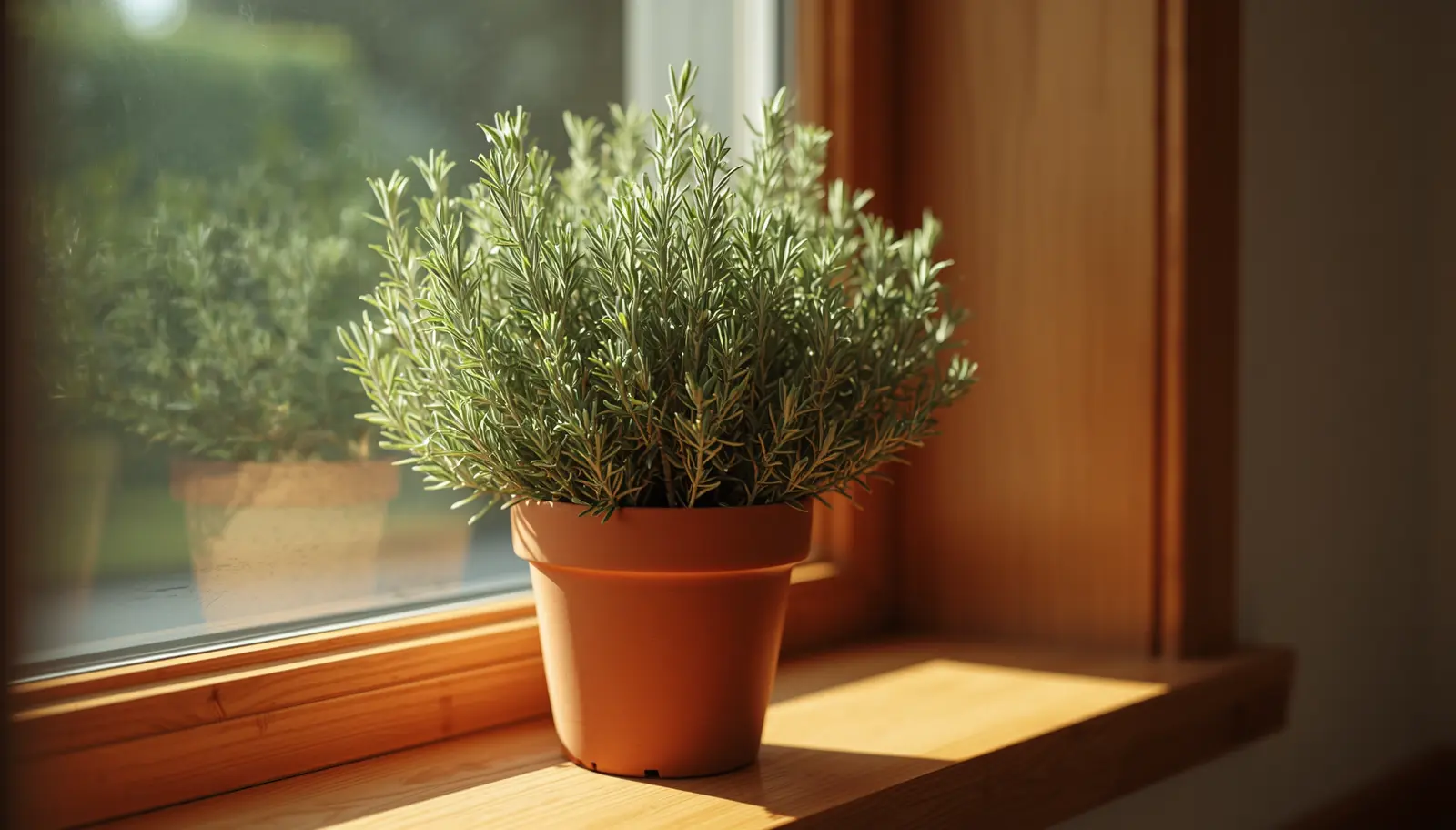
Rosemary (Salvia rosmarinus, formerly Rosmarinus officinalis) is a woody Mediterranean herb built for sun, lean soil and dry, rocky ground. That makes it one of the harder herbs to keep indoors, where light is weak and pots stay damp. If you’re learning how to grow rosemary indoors, focus on two things: as much direct sun as you can give it, and watering only when the soil has dried. This guide follows NC State, UW-Madison, NDSU, the RHS and the ASPCA.
Why Rosemary Is Tricky Indoors
NC State describes rosemary as a plant of dry, rocky areas with a low tolerance for wet, humid environments, and notes that it can be difficult to overwinter indoors. It is hardy outdoors only to about USDA zone 8a (UW-Madison) or about 20°F (NDSU), so in cold climates it spends winter inside in a pot. Indoors it gets less light than it wants and its soil dries more slowly, which is why overwatering and dim light are the usual killers.
| Need | What the sources say |
|---|---|
| Light | Full sun, at least 6 hours (NC State); about 8 hours direct; south window or grow lights (NDSU) |
| Soil | Light, slightly acidic, well-drained (NC State); peat-free soil-based compost with up to 25% grit in pots (RHS) |
| Pot | Clay or terracotta (NDSU); at least 30 cm wide and deep with drainage holes (RHS) |
| Water | Sparingly, only when the soil is dry (NDSU); never waterlogged (RHS) |
| Air | Good circulation to prevent foliar disease (UW-Madison) |
| Hardiness | Zone 8a (UW-Madison); about 20°F (NDSU) |
| Pets | Non-toxic to dogs, cats and horses (ASPCA) |
Sources: NC State Extension; NDSU Extension (2025); RHS; UW-Madison Extension (2026); ASPCA.
Light
Light is the make-or-break factor. NC State lists full sun, meaning at least six hours of direct sunlight a day. NDSU Extension says rosemary needs about eight hours of direct light and that, indoors, it should go in a south-facing window or under grow lights, which generally need longer daily run times than the sun. Short winter days make a grow light especially useful; see our grow light guide. Rosemary in too little light grows thin and weak.
How to Grow Rosemary Indoors in Pots
- Pot: NDSU says clay or terracotta is best because it helps prevent overwatering, and the pot should be big enough for rosemary’s deep roots. The RHS suggests a container at least 30 cm (12 in) wide and deep with plenty of drainage holes.
- Mix: the RHS recommends peat-free soil-based compost with up to 25 percent horticultural grit; NDSU suggests a well-draining potting soil or a sandy blend. NC State lists light, slightly acidic, well-drained soil.
- Planting depth: the RHS says to keep the top of the root ball only lightly covered.
Watering
NDSU says to water sparingly and only when the soil is dry, and calls root rot a major issue for rosemary grown inside. UW-Madison says overwatering is the biggest cause of decline and death, and that drainage is essential. The RHS says potted rosemary may need more water in hot weather but that the compost must never get waterlogged. Water thoroughly when the soil is dry, let it drain completely, and never leave the pot standing in a saucer of water.
Humidity and Air Circulation
NDSU notes that rosemary prefers more humidity than dry winter homes provide and suggests setting the pot on a shallow tray of rocks and water. At the same time, NC State says rosemary has a low tolerance for wet, humid conditions and links powdery mildew to poor air circulation and high humidity, and UW-Madison advises good air circulation to prevent foliar disease. The balance: a pebble tray for some local humidity, plus good air movement (a small fan or an occasionally opened window), and plants not crowded together.
How to Grow Rosemary Indoors in Winter
- Bring it in before frost. UW-Madison says to bring potted plants inside before the first frost and to dig garden plants 2 to 3 weeks before the expected frost.
- Give it the sunniest spot you have, or grow lights on a timer (NDSU).
- Water even less, because soil dries slowly in cool, dim winter conditions. Check before every watering.
- Keep air moving to prevent mildew (NC State, UW-Madison).
- Don’t feed until it starts growing again in spring.
To overwinter rosemary indoors successfully, bright light and restraint with the watering can matter more than anything else.
Feeding and Pruning
The RHS says rosemary in the ground usually doesn’t need feeding, and that container plants over a year old benefit from a general granular feed in late spring or early summer. Keep feeding light.
UW-Madison suggests pinching the tips of young plants often to control growth and avoiding cuts into woody stems unless you are shaping the plant. The RHS says to trim lightly each year after flowering and warns that rosemary often won’t regrow from old wood. Leave green growth on every stem you cut.
How to Grow Rosemary Indoors from Cuttings
UW-Madison says cuttings from established plants are the best way to propagate rosemary: take 4- to 6-inch tip cuttings from shoots without flowers in late spring to early summer. It discourages growing from seed, which germinates slowly and irregularly and takes up to three years to give a good harvest. The RHS also lists softwood cuttings in late spring or summer, semi-ripe cuttings in summer, and layering.
- Cut a 4- to 6-inch non-flowering tip (UW-Madison).
- Strip the leaves from the lower part of the stem.
- Insert it in a gritty, free-draining mix and keep it lightly moist in bright light.
- Pot it on once it has rooted and is growing.
Rosemary can also be rooted in water, but cuttings may rot; see our guide to cuttings rotting in water.
Common Problems
| Symptom | Likely cause | What to do |
|---|---|---|
| Browning, collapsing, wet soil | Root rot from overwatering (NDSU, UW-Madison, RHS) | Water less; repot into gritty mix; check roots |
| Thin, weak, pale growth | Too little light (NDSU) | South window or grow light |
| White powdery coating | Powdery mildew from poor air circulation and humidity (NC State) | Improve air flow; remove affected tips |
| Grey fuzzy mould | Botrytis (NC State, UW-Madison) | Improve air flow; remove affected growth |
| Speckling, webbing, sticky leaves | Spider mites, aphids, mealybugs, whiteflies, scale (NC State, UW-Madison) | Rinse; treat; check regularly indoors |
Sources: NC State Extension; UW-Madison Extension; NDSU Extension; RHS.
See our spider mite guide and root rot guide.
Harvesting
UW-Madison suggests picking small amounts as needed and not removing more than 20 percent of the growth at once. The RHS says you can pick sprigs year-round, though soft new growth in late spring and summer has the best flavor, and that sprigs dry well hung in a warm, dark, ventilated place. For other kitchen herbs indoors, see our guides to basil, mint and oregano.
Is Rosemary Safe for Pets?
Yes. The ASPCA lists rosemary as non-toxic to dogs, cats and horses, and NC State tags it non-toxic. Concentrated rosemary essential oil is a different matter; keep oils away from pets. See our cat-safe plants list.
For more herbs and edibles, see our guides to potatoes. It is also on our list of plants safe for dogs. For which herbs root in water and which need soil, see our guide to herbs that grow in water, and for where to keep herbs indoors, our guide to kitchen plants. For overwintering tips, see our guides to Meyer lemon trees.
Frequently Asked Questions
Can rosemary grow indoors year-round?
Yes, with enough light: a south window or grow lights giving about 6 to 8 hours (NC State, NDSU). NC State notes it can be hard to keep indoors over winter, so many growers move it outside for summer.
How often should I water indoor rosemary?
Only when the soil is dry (NDSU), less often in winter. UW-Madison calls overwatering the biggest cause of rosemary decline.
How do you overwinter rosemary indoors?
Bring it in before the first frost (UW-Madison), give it your sunniest window or grow lights, water sparingly, keep air moving and stop feeding until spring.
How do you grow rosemary indoors from cuttings?
Take 4- to 6-inch non-flowering tip cuttings in late spring to early summer, strip the lower leaves and root them in a gritty mix (UW-Madison).
Why is my indoor rosemary dying?
Usually overwatering and root rot (UW-Madison, NDSU) or too little light. Powdery mildew from still, humid air is another common problem (NC State).
Is rosemary safe for cats?
Yes. The ASPCA lists rosemary as non-toxic to dogs, cats and horses.