
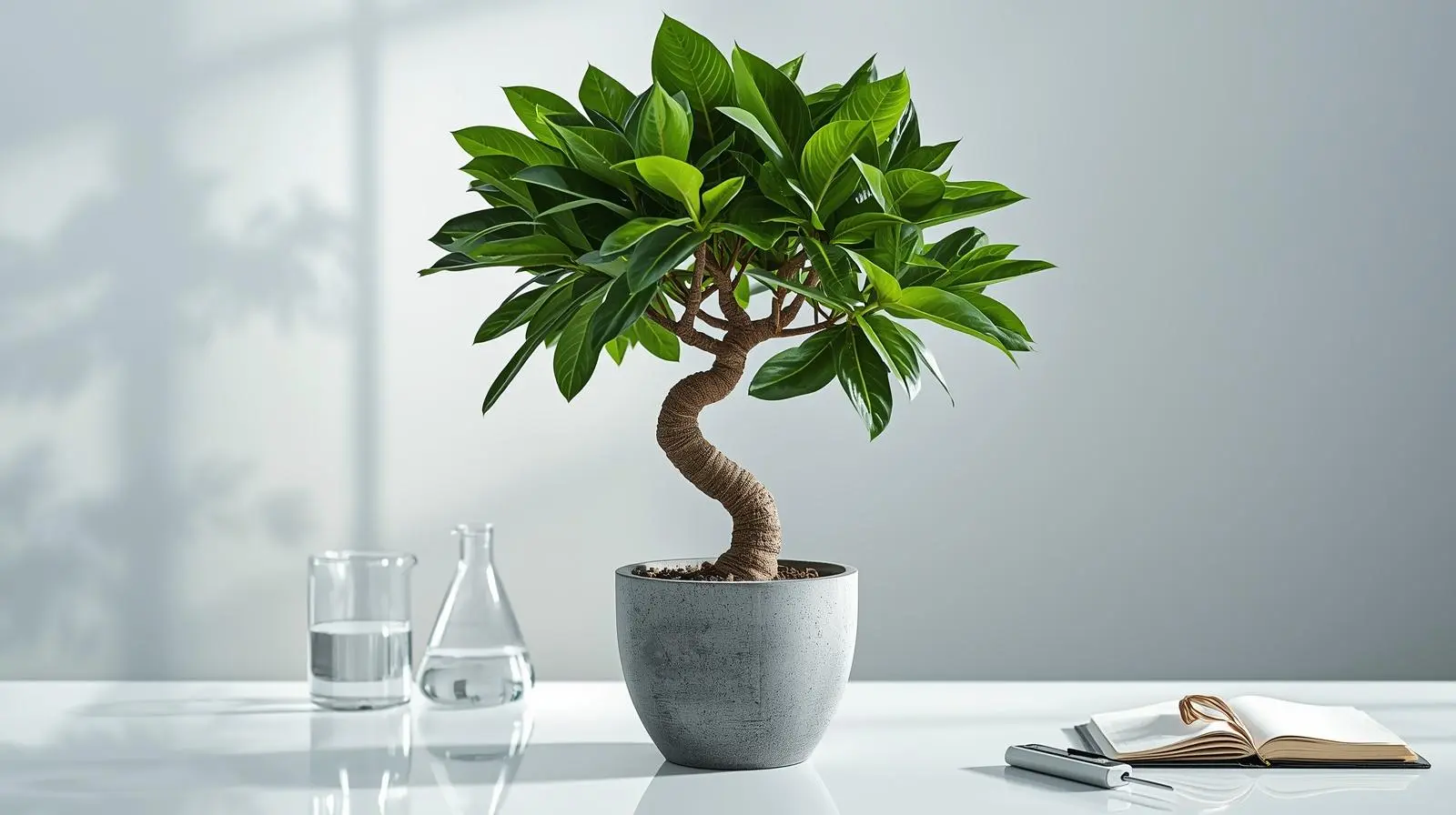
Money tree care is mostly about water and light. NC State Extension says Pachira aquatica prefers indirect sunlight or a mix of sun and shade, a moist but well-drained potting mix, and humid, warm conditions, and warns that standing water “is not tolerated and can cause root rot.” Water thoroughly, let the top of the mix dry, never leave the pot in water, and keep it out of hot direct sun.
Money Tree Care at a Glance
| Need | What the sources say |
|---|---|
| Light | Indirect sun or a mix of sun and shade; direct sun can scorch leaves (NC State) |
| Soil | Moist, well-drained mix of peat moss, perlite, loam or sand (NC State) |
| Water | No standing water (root rot); leaves may drop if the soil gets too dry (NC State) |
| Humidity | Thrives in humidity; low humidity can cause yellow leaves (NC State) |
| Temperature | Thrives at 65 to 75°F; bring indoors before it drops to 45°F (NC State) |
| Size indoors | Usually no more than 6 to 8 feet (NC State) |
| Pets | Listed as non-toxic by the ASPCA, with possible mild stomach upset |
Sources: NC State Extension Plant Toolbox: Pachira aquatica; ASPCA.
In the wild, Pachira aquatica grows from southern Mexico to Bolivia and northern Brazil, in freshwater swamps, estuaries, riverbanks and rainforests, and can reach 60 feet (NC State). Indoors it stays far smaller and responds well to the same basics as most tropical houseplants.
Light
NC State says the money tree prefers indirect sunlight or a mix of sun and shade, and that direct sunlight can scorch the leaves. In practice, a spot near an east window, or a few feet back from a south or west window with a sheer curtain, works well. Too little light leads to slow, stretched growth with sparse leaves; turning the pot every few weeks keeps it from leaning. In a dim room, see our guide to grow lights for indoor plants.
Watering and Soil
NC State is clear on the two failure points: standing water causes root rot, and soil that gets too dry makes leaves drop. The answer is thorough watering with a dry-down in between, not little sips.
- Check the mix. Water when the top inch or two feels dry. Check rather than following a calendar, and expect to water less in winter.
- Water thoroughly until water runs from the drainage holes.
- Empty the saucer or cachepot. Never let the pot sit in water.
- Use a draining mix. NC State recommends a moist, well-drained potting mix of peat moss, perlite, loam or sand. A standard indoor mix with extra perlite works well, in a pot with drainage holes.
Signs of root rot
Yellowing or dropping leaves in soil that stays wet, a soft or dark trunk base and a sour smell from the pot point to root rot. Unpot the plant and check the roots; our root rot treatment guide covers trimming and repotting, and our overwatered vs underwatered guide helps you tell the two apart.
Humidity and Temperature
NC State says the money tree thrives in a humid environment and that yellow leaves can appear when humidity is too low. Group it with other plants or use a humidifier in dry, heated rooms. It thrives at 65 to 75°F; keep it away from cold drafts, air conditioning vents and heaters, and if it spends summer outdoors, bring it in before temperatures fall to about 45°F (NC State).
Braided Money Trees
NC State notes that the trunks are flexible enough to be braided together, a tradition that started in Taiwan, where braiding was believed to lock in luck and fortune. It also notes that braided plants won’t flower indoors.
- Don’t unbraid it. The stems are shaped together as they grow; leave the braid as it is.
- Check the base for ties. Some braided plants are sold with a band, wire or tie holding the braid. If one is still there, remove it carefully so it can’t cut into the trunks as they thicken.
- Watch each trunk. If one trunk turns soft or shrivels while the others stay firm, it may have rotted. Cut it out at the base with a clean blade and check the roots.
Pruning, Feeding and Propagation
Pruning: Cut leggy stems just above a leaf node in spring or summer to encourage branching and a fuller canopy.
Feeding: Iowa State University Extension recommends fertilizing houseplants only in spring and summer while actively growing, with general fertilizers at half or quarter strength, and no feeding in winter.
Propagation: NC State lists softwood cuttings, layering and seed. Pruned stem tips with a few nodes can be rooted in water or moist mix; our guide to propagating in sphagnum moss covers a reliable method for cuttings.
Yellow Leaves and Other Problems
| What you see | Likely cause | What to do |
|---|---|---|
| Yellow leaves, soil stays wet | Overwatering or standing water, leading to root rot (NC State) | Let the mix dry, empty the saucer, check roots |
| Yellow leaves, dry air | Low humidity (NC State) | Raise humidity, keep away from heaters |
| Leaves dropping, soil bone dry | Soil too dry (NC State) | Water thoroughly and check more often |
| Leaves dropping after a move or in winter | Cold drafts or sudden change | Keep it warm, stable and away from drafty doors |
| Brown, scorched patches | Direct sun (NC State) | Move back from the window or filter the light |
| Sticky leaves, cottony spots, tiny flies | Aphids, mealybugs, scale or fungus gnats (NC State) | See mealybugs, scale and fungus gnats |
Is a Money Tree Safe for Pets?
Generally safe, with a caveat
The ASPCA lists Pachira aquatica as non-toxic to dogs, cats and horses, but notes it can still cause nausea, vomiting and loose stool. NC State rates its poison severity as low, says some sources consider the seeds potentially toxic, and notes it can cause mild to moderate stomach upset in cats. Indoor money trees rarely produce seeds, but it’s still best to discourage chewing. For more pet-friendly choices, see our list of cat safe plants.
For other indoor trees and shrubs, see our guides to croton leaf drop. For more easy houseplants, see our guides to dracaena care, and our list of the 10 best low-maintenance indoor plants. It is also on our list of plants safe for dogs.
Frequently Asked Questions
How often should I water a money tree?
Water thoroughly whenever the top inch or two of the mix is dry, and never leave it standing in water. NC State warns that standing water causes root rot and that leaves may drop if the soil gets too dry, so check the mix rather than following a schedule.
Why are my money tree leaves turning yellow?
Most often from overwatering or standing water, which can lead to root rot, or from low humidity, which NC State Extension links to yellow leaves. Let the mix dry, empty the saucer, check the roots and raise humidity.
Why is my money tree dropping leaves?
Common causes are soil that got too dry, cold drafts and sudden changes such as a move. NC State notes leaves may drop when the soil is too dry. Keep the plant in a warm, stable spot and water consistently.
How much light does a money tree need?
Bright indirect light or a mix of sun and shade, according to NC State Extension. Direct sun can scorch the leaves, while a dark spot leads to slow, leggy growth.
Should I unbraid my money tree?
No. Leave the braid intact, but remove any band, wire or tie still holding the base so it can’t cut into the trunks as they thicken. If one trunk turns soft, cut it out and check the roots for rot.
Why is my money tree trunk peeling or soft?
Check how the trunk feels. A firm trunk with a little dry, papery bark is usually not a problem, though we found no extension source that covers bark peeling on money trees specifically. A trunk that is soft, wrinkled or dark near the soil line points to rot, usually from wet soil: NC State Extension warns that standing water is not tolerated and can cause root rot. Unpot the plant, check the roots, and cut out any trunk in a braid that has gone soft.
Does a money tree like wet roots?
No, even though it grows in freshwater swamps and along riverbanks in the wild (NC State). In a pot, NC State says standing water is not tolerated and can cause root rot. Use a well-drained mix, water when the top inch or two is dry, and empty the saucer.
Is a money tree toxic to cats?
The ASPCA lists it as non-toxic to cats and dogs, though it can cause nausea, vomiting and loose stool. NC State notes mild to moderate stomach upset in cats and that the seeds may be toxic. Discourage chewing to be safe.