
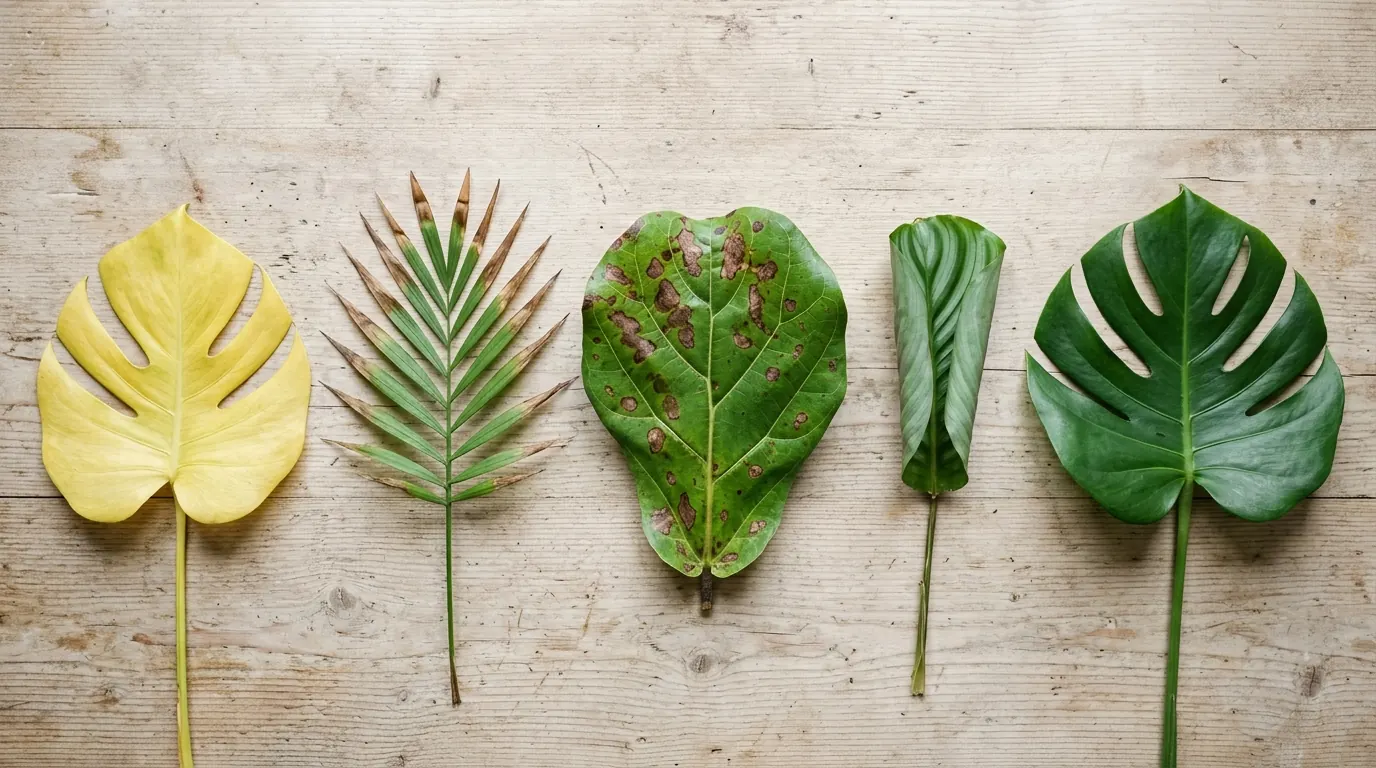
Leaves are the first place a houseplant shows trouble, and each symptom points to a short list of causes. Yellow, brown tips, black patches, white powder, curling, drooping: once you know what your plant leaves are telling you, most problems take minutes to diagnose. This guide is a symptom-by-symptom chart of common houseplant leaf problems, including plant leaves turning brown and plant leaves turning black, with the likely cause and the fix for each. It follows Clemson HGIC, the University of Maryland, Iowa State, the University of Missouri and UNH Extension, and links to our detailed guides for each problem.
Houseplant Leaf Problems Chart
| What the leaves show | Most likely causes | First fix | Source |
|---|---|---|---|
| Whole plant yellowing | Overwatering; too little light | Let the mix dry; check roots; more light | Clemson HGIC, Iowa State |
| Lower leaves yellow, then brown | Nitrogen or iron shortage in a pot-bound plant; kept too dry; low light | Feed, repot in fresh mix; more light | Clemson HGIC, Missouri |
| Brown tips and edges | Hot, dry air; uneven watering; salt buildup; fluoride or chlorine | Leach salts, raise humidity, adjust watering | Clemson HGIC, UNH |
| Brown spots with yellow margins, black dots | Fungal leaf spot | Remove infected leaves, keep foliage dry | Clemson HGIC |
| Water-soaked spots, yellow halo | Bacterial leaf spot | Remove diseased tissue, avoid wet leaves and cold | Clemson HGIC |
| Leaves or shoots blackening | Cold injury | Keep above 50 F | UMD |
| White or straw-colored spots | Cold water on leaves | Use room-temperature water at the soil | Clemson HGIC |
| White powdery coating | Powdery mildew | Ventilation, remove badly infected leaves | Clemson HGIC |
| Bleached, whitened patches | Too much light or sunburn | Acclimate to light gradually | UMD |
| Corky bumps under leaves | Oedema (wet mix, poor light, cool temperatures) | More light, water less, better drainage | Clemson HGIC |
| Small, pale new leaves; long gaps on stems | Too little light | Move closer to a window or add a grow light | Missouri |
| Mottled, speckled leaves, fine webbing | Spider mites | Inspect and treat | Iowa State, UC IPM |
Sources: Clemson HGIC 2251, Houseplant Diseases and Disorders (2025); Iowa State Extension (Steil 2024); University of Maryland Extension, Diagnose Indoor Plant Problems (2025); University of Missouri Extension G6515; UNH Extension (2020).
Yellow Leaves
Clemson HGIC says yellowing of the whole plant is most often caused by overwatering, and Iowa State lists yellowing, browning, leaf drop and wilting as overwatering symptoms, because roots that sit in wet soil rot. Yellowing of the lower leaves on an old, pot-bound plant usually means nitrogen or iron is running short (Clemson), and the University of Missouri adds that yellow, dropping lower leaves are also a sign of too little light. A few old lower leaves yellowing slowly is normal ageing. Full guide: plant leaves turning yellow.
Plant Leaves Turning Brown
Where the brown appears tells you a lot:
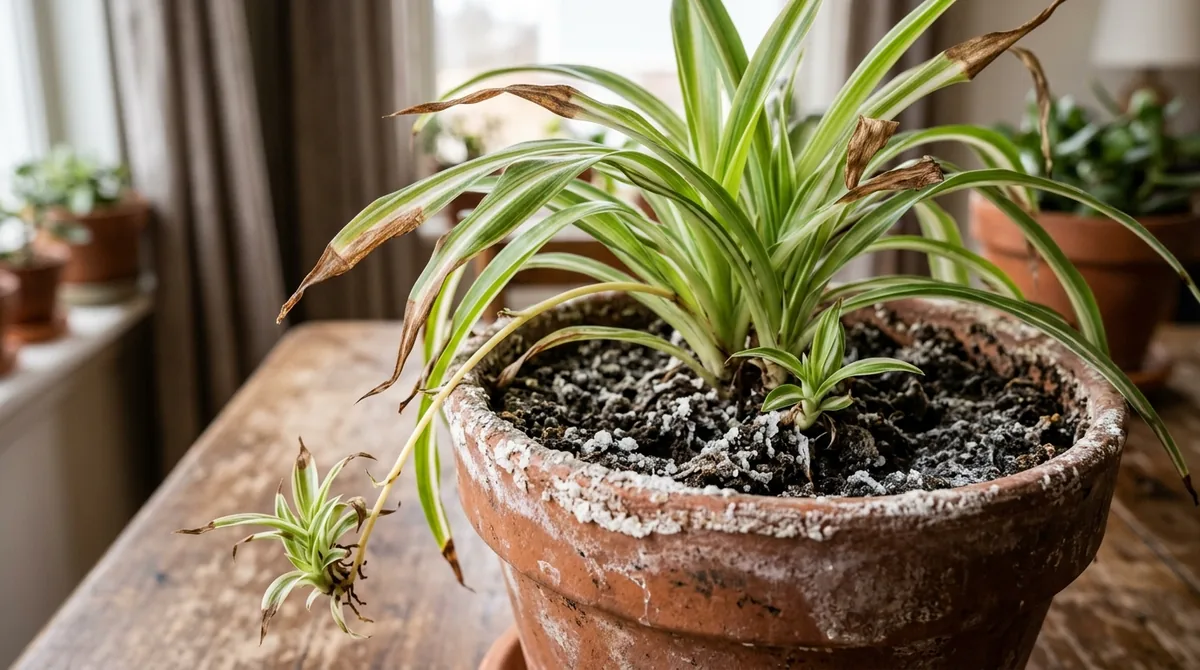
- Brown tips and edges: Clemson lists hot, dry air, improper watering, insect feeding, salt buildup from fertilizer and hard water, and sensitivity to fluoride or chlorine. UNH Extension says brown tips and edges indicate humidity is too low. Look for a white crust on the soil or pot rim: if it’s there, salts are part of the problem. Clemson’s fixes: leach the mix with plenty of water, empty saucers, don’t overfertilize, and let tap water stand 24 hours.
- Brown, crispy patches after a move: scorch from sudden strong light.
- Brown spots with yellow margins: fungal leaf spot (see below).
- Browning plus yellowing and wilting: Iowa State lists this for both overwatering and over-fertilizing; check the roots and the soil surface.
See our guides to dracaena brown tips, white crust on houseplant soil and how to increase humidity for plants.
Plant Leaves Turning Black
- Cold injury: the University of Maryland lists leaf or shoot blackening from cold, with symptoms that can keep appearing for up to a week after exposure. Protect plants from temperatures below 50 F: keep them away from cold glass and drafty doors.
- Root and stem rot: Clemson says root and stem rot fungi cause wilting, girdled stems and soft brown-to-black roots. If black spreads up from the soil line and the mix is wet, check the roots; see our root rot treatment guide.
- Advanced leaf spot: fungal spots can merge and kill the leaf (Clemson).
White Spots, Powder or Bleaching
| Looks like | Cause | Fix |
|---|---|---|
| White powder you can wipe off | Powdery mildew; spreads fastest in humid conditions (Clemson) | Better air movement, avoid overwatering, remove badly infected leaves |
| White or straw-colored spots after watering | Cold water on the leaves (Clemson) | Use room-temperature water, keep it off the leaves |
| Pale, bleached patches on the sunny side | Too much light or sunburn (UMD) | Pull back from the window, acclimate gradually |
| White crust on soil, not leaves | Fertilizer and hard-water salts | Leach the mix; see our salt crust guide |
Sources: Clemson HGIC 2251 (2025); University of Maryland Extension (2025).
Leaf Spots and Bumps
- Fungal leaf spot: small brown spots with yellowish margins, sometimes in a target pattern, with tiny black dots in the dead tissue (Clemson). Remove infected leaves, improve air movement and avoid splashing water on the foliage.
- Bacterial leaf spot: water-soaked spots, sometimes with a yellow halo and sticky ooze, drying to reddish-brown (Clemson). Remove diseased tissue and avoid low temperatures, crowding and wet leaves.
- Anthracnose: leaf tips turn yellow, then tan, then dark brown (Clemson). Remove infected leaves and don’t mist.
- Oedema: rough, corky swellings on leaf undersides and stalks, caused by excess soil moisture with poor light and low temperatures, most often on succulents in winter (Clemson). Affected leaves won’t recover; improve light and water less.
Clemson lists fungicide and bactericide options for each disease, but removing infected leaves and changing the conditions comes first. For a plant-specific example, see fiddle leaf fig brown spots.
Curling, Drooping and Leaf Drop
- Curling: most often water stress; pests on new growth, cold and sudden strong light are next. Full guide: why plant leaves curl.
- Drooping or wilting: dry roots or rotting roots, both of which stop water reaching the leaves (Iowa State). Full guide: why is my plant drooping.
- Leaf drop: Clemson lists over- or underwatering, a pot that’s too small, a major change in environment (usually lasting about three weeks), chilling, and insects or disease. A plant that drops leaves right after you bring it home or move it is usually adjusting. See also ficus dropping leaves and croton dropping leaves.
Stippling, Sticky Leaves and Webbing
Turn the leaves over before you blame care. Fine pale speckles and webbing point to spider mites; sticky leaves (honeydew) to aphids, scale or mealybugs; silvery streaks and distorted new leaves to thrips. Our pest guides cover each: spider mites, aphids, mealybugs, scale and thrips.
Frequently Asked Questions
What are my plant leaves telling me?
Yellow usually points to watering or light, brown tips to dry air, salts or uneven watering, black to cold injury or rot, white powder to powdery mildew, and spots with yellow halos to leaf-spot disease (Clemson HGIC, UMD).
Why are my plant leaves turning brown?
Clemson HGIC lists hot, dry air, improper watering, insect feeding, fertilizer salt buildup and fluoride or chlorine sensitivity for brown tips and edges. Brown spots with yellow margins point to fungal leaf spot.
Why are my plant leaves turning black?
Most often cold injury: the University of Maryland says to protect plants from temperatures below 50 F. Black, soft stems near the soil point to rot, so check the roots.
Should I cut off damaged leaves?
Remove leaves with leaf-spot disease or powdery mildew, as Clemson recommends. Leaves that are only partly brown can stay, or be trimmed back to healthy tissue, while you fix the cause.
Can damaged leaves turn green again?
Rarely. Clemson notes that leaves affected by oedema won’t recover, and the same goes for most scorch and tip burn. Healthy new leaves are the sign the fix worked.
What causes white spots on plant leaves?
White powder that wipes off is powdery mildew; white or straw-colored spots can come from cold water on the leaves (Clemson); pale bleached patches are sunburn (UMD).
How do I know if leaf problems are from pests?
Turn the leaves over and check new growth with a magnifier. Fine speckles and webbing mean spider mites; sticky residue means sap-feeders such as aphids, scale or mealybugs.
Sources
- Clemson HGIC 2251: Houseplant Diseases and Disorders (2025)
- Steil, A. Iowa State Extension: Diagnosing Houseplant Problems Related to Poor Culture (2024)
- University of Maryland Extension: Diagnose Indoor Plant Problems (2025)
- Trinklein, D. University of Missouri Extension G6515: Lighting Indoor Houseplants
- Erler, E. UNH Extension: Houseplant Winter Care Q&A (2020)