
Begonia care starts with knowing which kind you have, because the light they need differs. Clemson Extension puts it simply: flowering begonias want a bright spot with some direct sun (early morning sun in an east window works well), while foliage begonias such as rex want a bright spot away from direct sunlight. For both, keep the soil evenly moist but let it dry slightly between waterings, never let the pot sit in water, and feed with a balanced liquid fertilizer at half strength while the plant is growing.
| Begonia growing conditions | Flowering begonias (wax, cane, angel wing) | Foliage begonias (rex, rhizomatous) |
|---|---|---|
| Light indoors | Bright, with some direct sun; early morning sun in an east window | Bright spot away from direct sunlight |
| Water | Evenly moist, dry slightly between waterings; less in winter | Same; never waterlogged |
| Feeding | Balanced liquid fertilizer at half strength at alternate waterings during growth | Same |
| Temperature | Do not tolerate cold; bring indoors before frost | 66 to 73 °F, nights not below 55 °F |
| Humidity | Average room humidity is usually fine | Humid environment; Clemson does not recommend misting |
Source: Clemson Cooperative Extension HGIC 1552, Growing Begonias Indoors.
Types of Begonias
Begonia is a genus of about 1,300 species, and the Missouri Botanical Garden divides them into seven informal groups by growth habit: cane-like, rex-cultorum, rhizomatous, semperflorens, tuberous, trailing or scandent, and thick-stemmed or shrub-like. For care purposes, three distinctions matter most:
- Wax begonias (semperflorens): small, bushy plants with glossy leaves and nonstop flowers. Clemson HGIC 1159 says they withstand drought and heat better than other begonias, and bronze-leaved types handle more sun than green ones.
- Cane begonias, including angel wing and Dragon Wing types: upright, bamboo-like stems that can reach 10 feet if never pruned, according to Clemson, which calls cane begonias among the easiest to grow.
- Rex and other rhizomatous begonias: grown mainly for their patterned leaves, from thick rhizomes along the soil surface.
- Tuberous begonias: big summer flowers from a tuber that needs a winter rest (see winter care).
Seasonal gift begonias (Rieger or Elatior, and Lorraine types) are often discarded after flowering, though Clemson notes they can be restarted by cutting them back to within 3 inches of the crown.
How Much Light Does a Begonia Need Indoors?
For begonia plant care indoors, match the light to the type. Clemson recommends a bright spot with some direct sun for flowering begonias, noting that many cane and shrub types flower best with some direct sun and that several hours of winter sun are beneficial. Foliage begonias should sit in a bright spot away from direct sunlight. Too much sun is a real risk for spotted types: Clemson says angel wing leaves lose their dot pattern and eventually scorch with too much sun.
Begonias tend to get leggy indoors. Clemson suggests pinching branch tips to promote side growth. If your brightest window is not bright enough, a grow light helps in winter; see our grow light guide.
How Often to Water Begonias
There is no fixed schedule. Clemson’s rule is to keep the soil evenly moist, allowing it to dry only slightly between waterings, to reduce water in winter, and to always avoid wet or waterlogged soil. Never let the pot sit in a saucer of water. The Missouri Botanical Garden adds that begonias can tolerate short periods of drought, but wet soil, especially cold wet soil, can lead to root and stem rots.
Water the soil rather than the leaves. Clemson HGIC 1159 notes that watering early in the morning or at soil level reduces fungal disease problems outdoors, and the same logic applies inside. Not sure whether your plant is getting too much or too little? See our guide to overwatered vs underwatered plants.
Soil, Pots and Repotting
MOBOT recommends well-drained, humusy soil, and Clemson HGIC 1159 says most begonias grow well in moist, well-drained soil with plenty of organic matter. A good-quality indoor potting mix with some extra perlite works for most types. Use a pot with drainage holes and not much bigger than the root ball, so the mix dries at a reasonable pace.
Clemson recommends repotting foliage begonias in spring and dividing them at repotting when they are pot-bound (roots circling the root ball).
Begonias in Outdoor Pots
Indoor begonias can spend summer outside: Clemson suggests moving them to a partly sunny location outdoors, while some begonias do not tolerate direct sun and should go in the shade. For outdoor containers, Clemson HGIC 1159 says most begonias grow well in partial shade and need bright light to flower well, but some burn if the light is too intense. Bronze-leaved wax begonias grow better in full sun than other types, while green-leaved wax begonias are best with morning sun and afternoon shade to prevent sunscald. Tuberous begonias grow best in partial shade and do poorly in very hot, humid areas.
Outdoor pots dry out faster than indoor ones, so check them often in summer, and avoid watering while hot sun is on the leaves: Clemson warns the leaves will be scorched. Bring begonias back inside before frost, since apart from the hardy begonia they do not tolerate cold.
Begonia Care in Winter
Evergreen begonias (wax, cane, rex) keep growing slowly indoors. Reduce watering (Clemson), stop or reduce feeding until spring growth starts, give them your brightest spot, and keep foliage types above 55 °F at night. A plant moved indoors for winter may drop some leaves while it adjusts to lower light; firm stems and new buds mean it is fine.
Tuberous begonias need a winter rest. Clemson HGIC 1159: dig the tubers before the first frost, cut the tops back to within a couple of inches of the tuber, and after drying pack them between layers of vermiculite, peat moss or wood shavings and store at 45 to 55 °F. Start them again in early spring in shallow flats out of direct sun, pot them up when the shoots are 1 to 2 inches high, and move them outdoors to partial shade once frost danger has passed. For potted tuberous begonias kept indoors, Clemson says to stop watering in fall.
Why Begonia Leaves Turn Brown
| What you see | Likely cause | What to do |
|---|---|---|
| Bleached or crispy patches on the sunny side | Sun scorch (Clemson notes angel wings scorch with too much sun) | Move out of direct afternoon sun |
| Brown spots after watering in sun outdoors | Leaves scorched while wet in hot sun (Clemson HGIC 1159) | Water early in the day, at soil level |
| Lower leaves yellow then brown, soft stems at soil level | Wet or cold, wet soil causing root and stem rot (MOBOT) | Let the mix dry more; check roots and repot if rotten |
| Gray fuzzy mold on spots | Botrytis (gray mold), common in humid air with poor circulation (MOBOT) | Remove affected leaves, improve air movement |
| Dark patches, rings or wavy lines on leaves | Thrips-spread viruses such as INSV (Clemson HGIC 1159) | Remove infected plants; control thrips |
| Brown, dry edges on foliage begonias | Air too dry, often near heaters; Clemson says foliage begonias need a humid environment | Raise humidity around (not on) the plant |
Sources: Clemson Cooperative Extension HGIC 1552 and 1159; Missouri Botanical Garden.
For more on root problems, see our root rot guide.
Powdery Mildew on Begonias
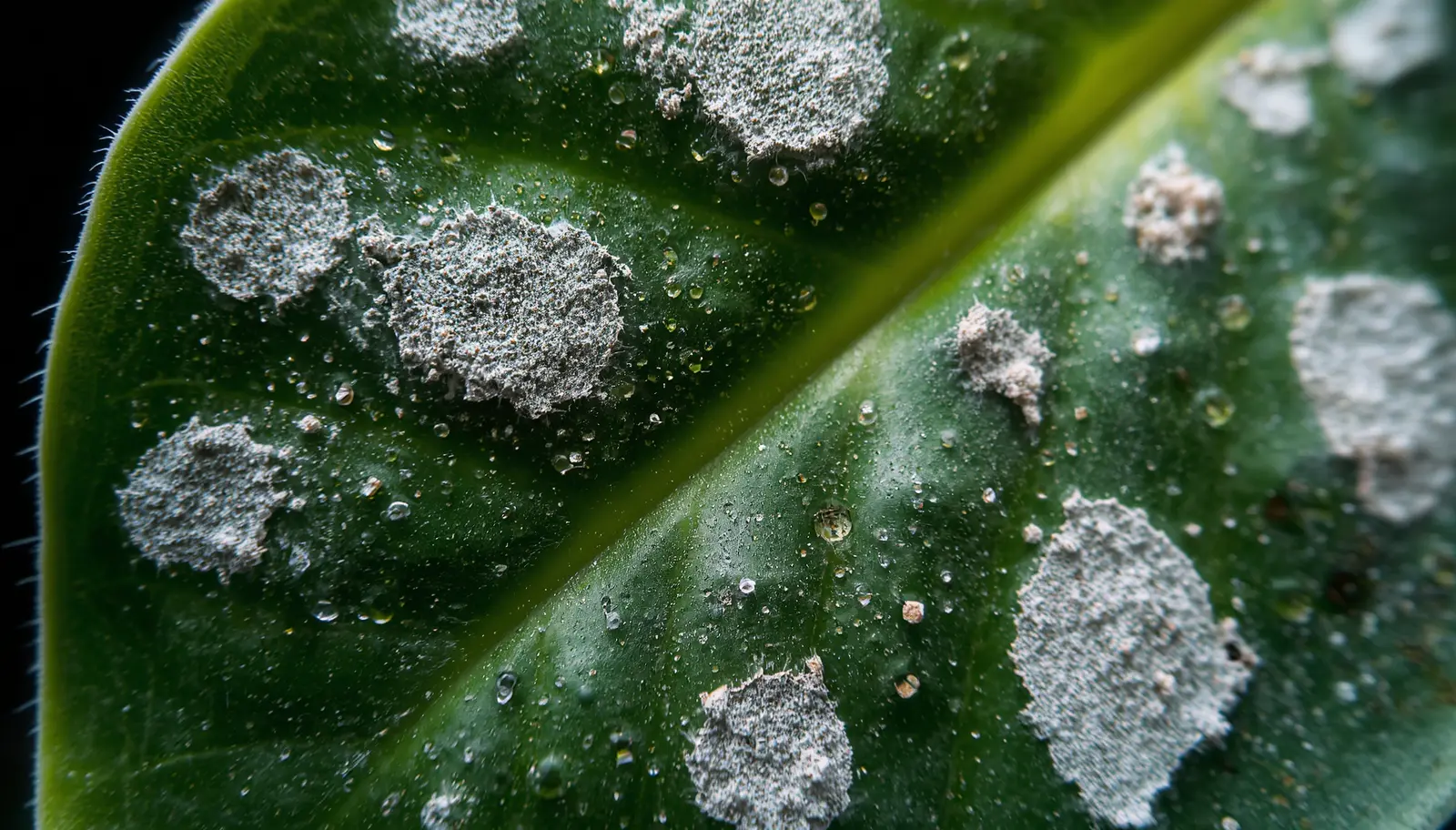
Powdery mildew looks like white, powdery patches on leaves and stems. Clemson HGIC 1159 lists it among begonia diseases, and MOBOT notes begonias are susceptible to powdery mildew, botrytis and stem rot, especially in humid conditions with poor air circulation. Prevention is mostly about air:
- Space plants so air can move between them, and don’t crowd them against a window.
- Water the soil, not the leaves. For foliage begonias Clemson says misting is not recommended; to raise humidity, spray the surrounding air instead, or use a humidifier.
- Remove badly affected leaves as soon as you see them.
- If it keeps coming back, use a fungicide labeled for powdery mildew on ornamentals and follow the label. Test any spray on a few leaves first: Clemson notes begonias may be sensitive to insecticidal soaps, and tender leaves can react to other products too.
Fertilizing Begonias
Indoors, Clemson recommends a balanced liquid fertilizer at half strength at alternate waterings while the plant is in full growth. Outdoors, Clemson HGIC 1159 notes most begonias are not heavy feeders and suggests a complete slow-release fertilizer for annual flowers, used according to the package. For tuberous begonias, Clemson warns that both too much water and too much fertilizer cause flower bud drop. For choosing a product, see our synthetic vs organic fertilizer guide.
Begonia Pests
Clemson lists mealybugs, whiteflies and spider mites as the common indoor pests, and adds thrips, scales, snails and slugs outdoors. MOBOT lists whitefly, thrips, mites and mealybugs. Thrips matter more than usual on begonias because they can spread viruses (Clemson HGIC 1159). Check new plants before they join your collection, rinse off light infestations, and remember the soap sensitivity warning above. Our guides cover mealybugs, thrips and spider mites.
Are Begonias Toxic to Cats and Dogs?
Yes. The ASPCA lists begonia as toxic to dogs, cats and horses. The toxic principle is soluble calcium oxalates, signs include vomiting and salivation in dogs and cats, and the most toxic part is underground (the tubers and rhizomes). Keep begonias out of reach, take extra care when handling tubers, and see our cat-safe plants guide for alternatives.
For other flowering houseplants, see our guides to jasmine indoors. For more houseplants grown for their colorful leaves, see our guides to Maranta Lemon Lime. It is one of the plants Iowa State suggests for a closed terrarium; see our guide on how to make a terrarium.
Frequently Asked Questions
Caring for begonias indoors: what matters most?
Bright light (some morning sun for flowering types, no direct sun for foliage types), soil kept evenly moist but allowed to dry slightly between waterings, balanced liquid fertilizer at half strength at alternate waterings during growth, and no standing water in the saucer (Clemson).
What are the best begonia growing conditions?
Moist, well-drained soil with plenty of organic matter, bright light without harsh afternoon sun, and good air circulation. Foliage begonias like 66 to 73 °F with nights above 55 °F (Clemson).
How often should I water a begonia?
Whenever the surface of the mix starts to dry; Clemson advises keeping the soil evenly moist, letting it dry only slightly between waterings, and watering less in winter. Never leave it waterlogged.
Can begonias take full sun?
Bronze-leaved wax begonias can grow in full sun; green-leaved wax begonias do best with morning sun and afternoon shade, and angel wing and rex types scorch in strong sun (Clemson HGIC 1159).
How do you keep tuberous begonias over winter?
Dig them before the first frost, cut the tops back to a couple of inches, dry them, and store them packed in vermiculite, peat moss or wood shavings at 45 to 55 °F until early spring (Clemson HGIC 1159).
Are begonias toxic to pets?
Yes. The ASPCA lists begonia as toxic to dogs, cats and horses because of soluble calcium oxalates; the most toxic part is underground.